15 Burgundy Wedding Color Palette Ideas for Rich and Refined Celebrations
Burgundy offers a versatile foundation for weddings that feel grounded, warm, and visually substantial. Unlike brighter reds, this deep wine tone pairs naturally with earthy textures, cool metals, and soft neutrals, making it adaptable across various venues and seasons. Whether you are planning an intimate autumn reception or a formal winter ceremony, the key to a cohesive look lies in balancing rich color with contrasting materials. The following ideas focus on practical applications of burgundy in tablescapes, ceremonies, and guest experiences. By considering factors like lighting, venue architecture, and seasonal flora, you can integrate this palette in ways that feel intentional rather than overwhelming.
1. Velvet Draping with Amber Glassware
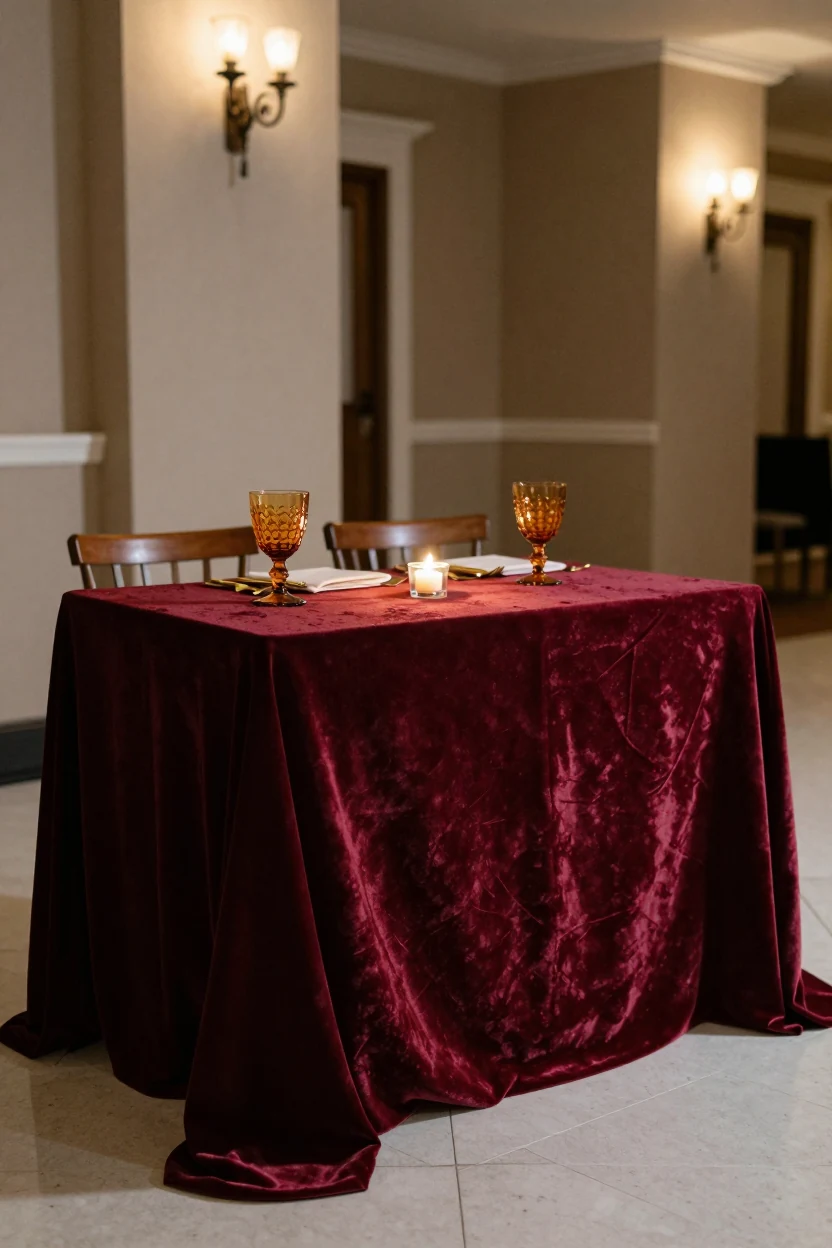
Transform a standard head table into an intimate lounge by draping heavy burgundy velvet over the surface and chair backs. The deep red fabric creates a soft, light-absorbing backdrop that contrasts sharply with the cool, hard edge of white marble. Place warm amber glassware and gold cutlery on the stone to catch the glow of nearby candlelight, highlighting the interplay between soft cloth and polished rock. This setup works well for smaller receptions in ballrooms or hotel suites where a formal banquet row feels too rigid. To recreate this look, source velvet in a deep wine shade and layer it loosely for a relaxed, gathered appearance rather than tight pleating. Use mercury glass or vintage amber tumblers to enhance the warm glow. Keep the arrangement uncluttered by limiting floral elements to low-slung greenery or single stems, ensuring the texture of the fabric remains the focal point. This style offers a cozy, refined atmosphere suitable for fall or winter weddings.
2. Autumn Garden with Rustic Wood
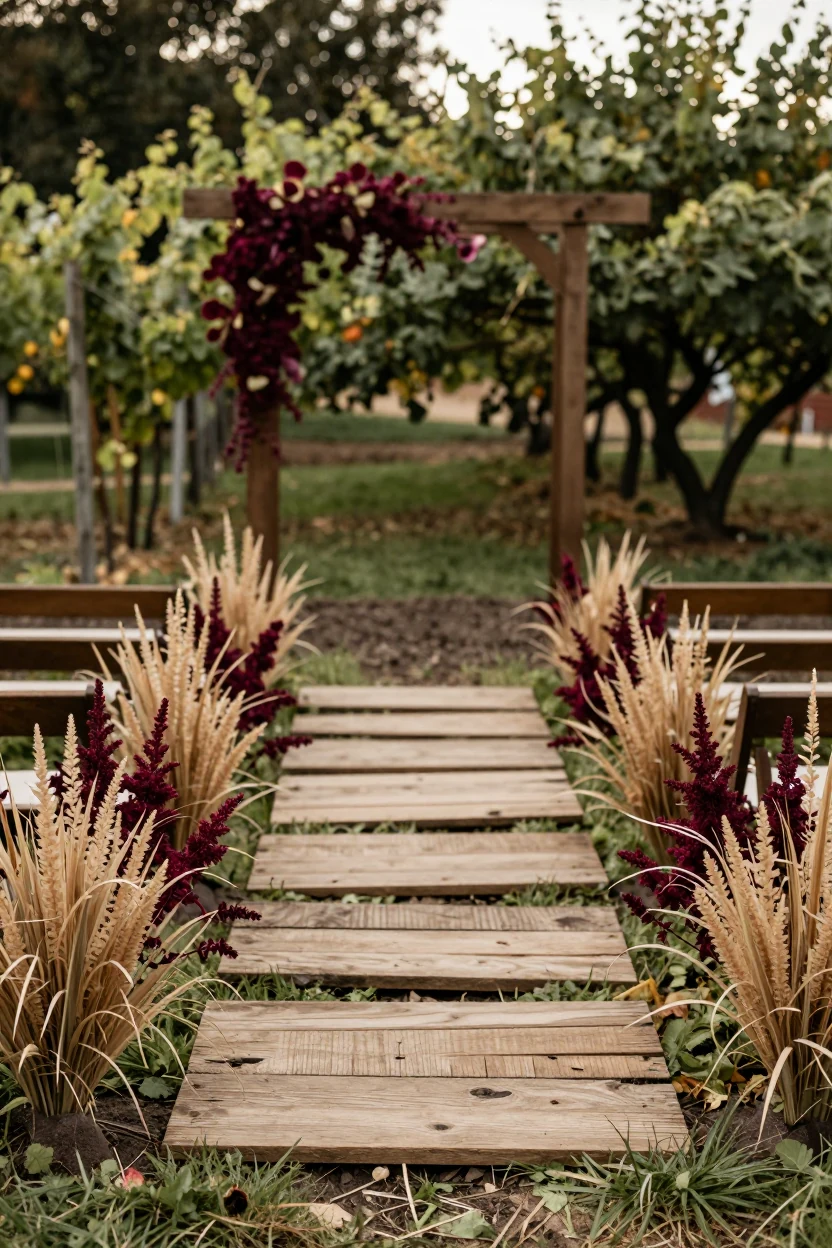
Ground your burgundy wedding palette in the earth by styling an outdoor ceremony aisle with rough-hewn wood planks and low-lying florals. Instead of a traditional carpet, lay weathered timber boards directly on the grass or soil to create a textured, organic runner. Along the edges, cluster deep burgundy astilbe with dried grasses and preserved greenery. The plumes of the astilbe contrast beautifully against the dark, uneven grain of the wood, while the dried elements introduce warm, autumnal tones that complement the wine-colored blooms. This setup works best in a vineyard, garden, or wooded area where natural light filters through surrounding trees. The rustic texture of the wood prevents the rich burgundy from looking overly polished or formal, keeping the vibe relaxed and seasonal. If fresh astilbe is difficult to source in your specific season, dried alternatives or preserved stems offer a realistic substitute that maintains the structural shape without requiring complex hydration. This approach keeps the aisle clear for guests while adding significant visual depth to the ceremony space.
3. Minimalist Burgundy Bouquet
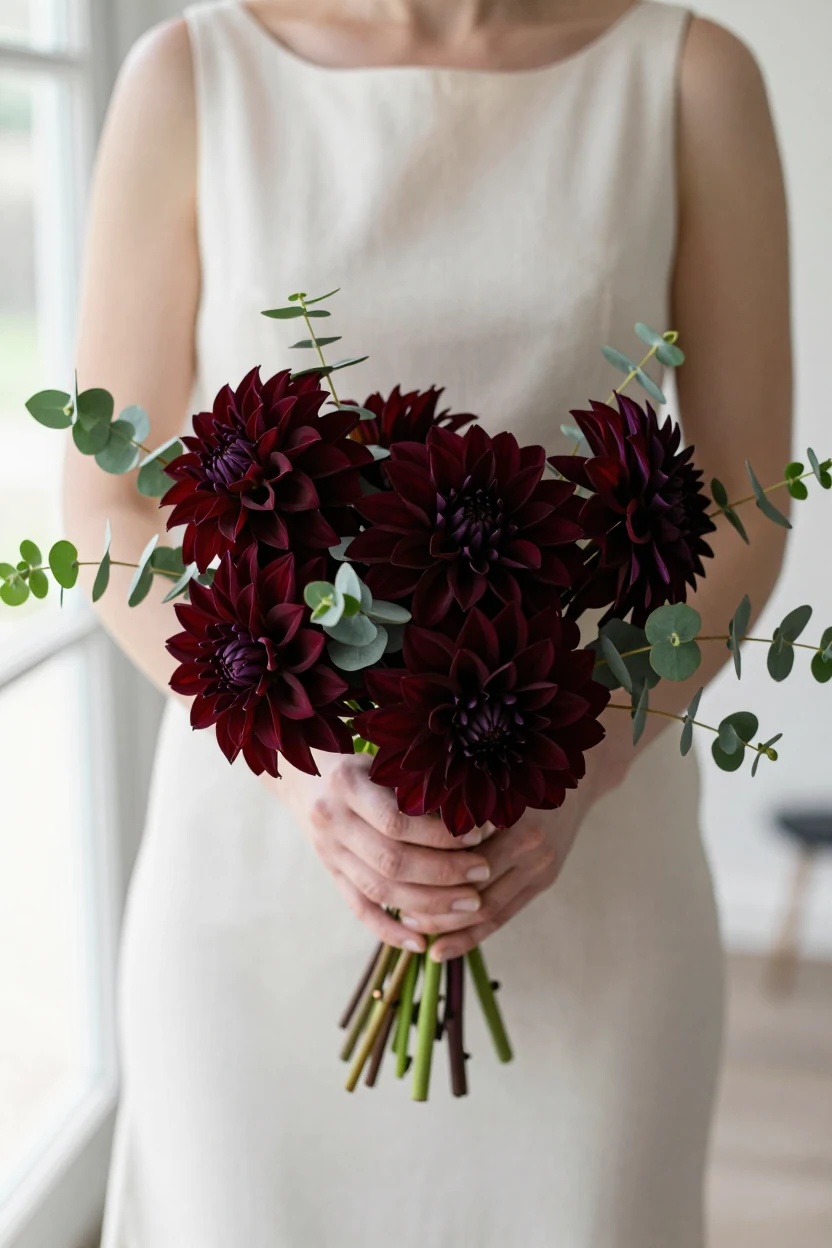
This hand-tied bouquet centers on large, deep burgundy dahlias paired with slender sprigs of eucalyptus. The composition is tight and structured, allowing the rich floral pigment to stand out without heavy wrapping or distracting filler. Held against a neutral linen wedding dress, the dark tones create a striking contrast that works particularly well in bright, airy venues. This minimal approach delivers color impact without overwhelming volume, suiting modern brides who prefer clean lines. The palette relies on the natural depth of the flowers rather than added accessories. For adaptation, consider swapping dahlias for other large-bloom varieties like garden roses or anemones if preferred. Keep the stem structure visible and organic to maintain the relaxed yet refined aesthetic. This setup is ideal for ceremonies in light-filled spaces where the bouquet serves as the primary focal point of the bridal look.
4. Terracotta and Wine Table Setting
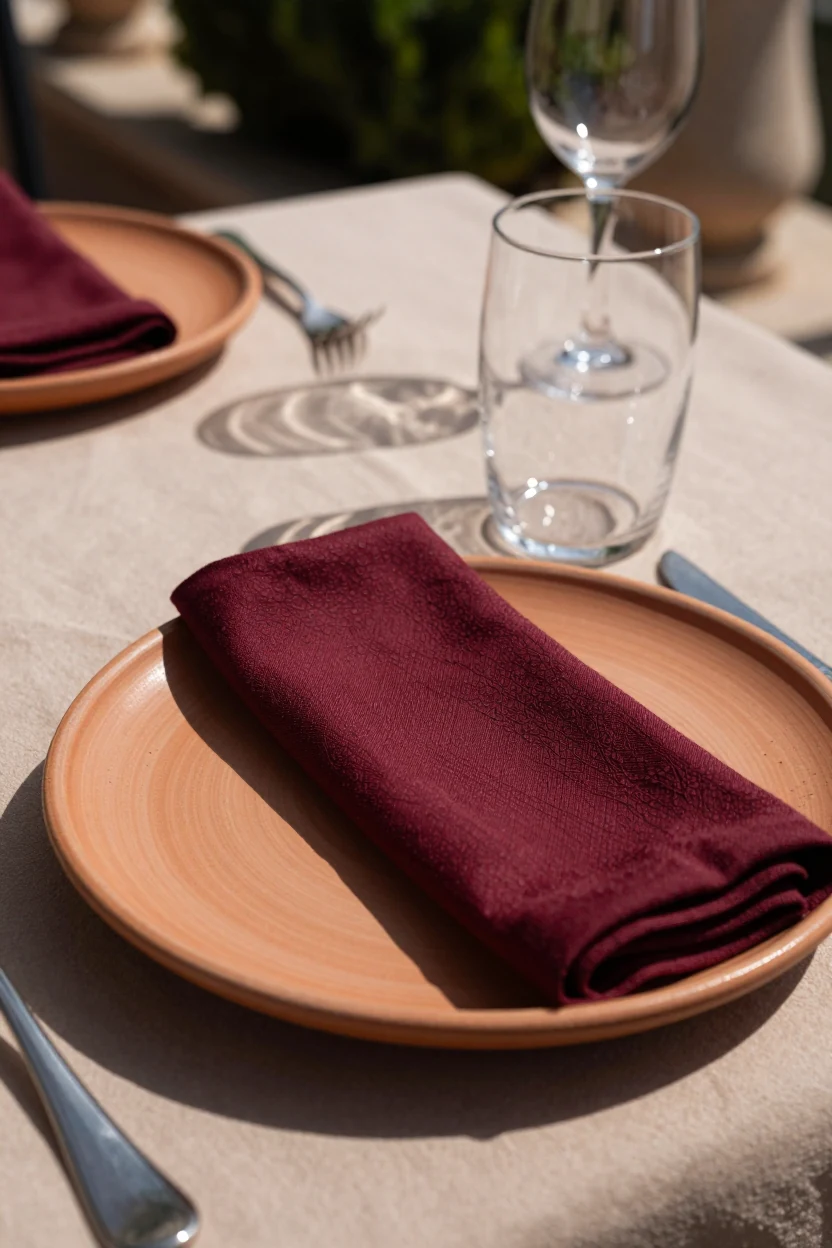
This tablescape relies on tactile contrast rather than heavy ornamentation. Start with matte terracotta ceramic dinner plates, which provide a warm, earthy base that complements the deep wine-red linen napkins folded neatly at each place setting. The glossy clarity of simple stemware catches the ambient light, creating a visual break between the rough clay and the smooth fabric. This setup works best in an outdoor venue with ample natural light, such as a sun-drenched patio or courtyard, where direct sunlight enhances the richness of the burgundy tones without needing artificial lighting. Keep the center minimal; a single low vase of seasonal blooms or a small cluster of unlit tapers keeps sightlines open. The earthy palette grounds the reception, offering a rustic yet refined alternative to traditional white and gold schemes. It is an adaptable concept for late spring or early autumn celebrations.
5. Ivory and Burgundy Arch
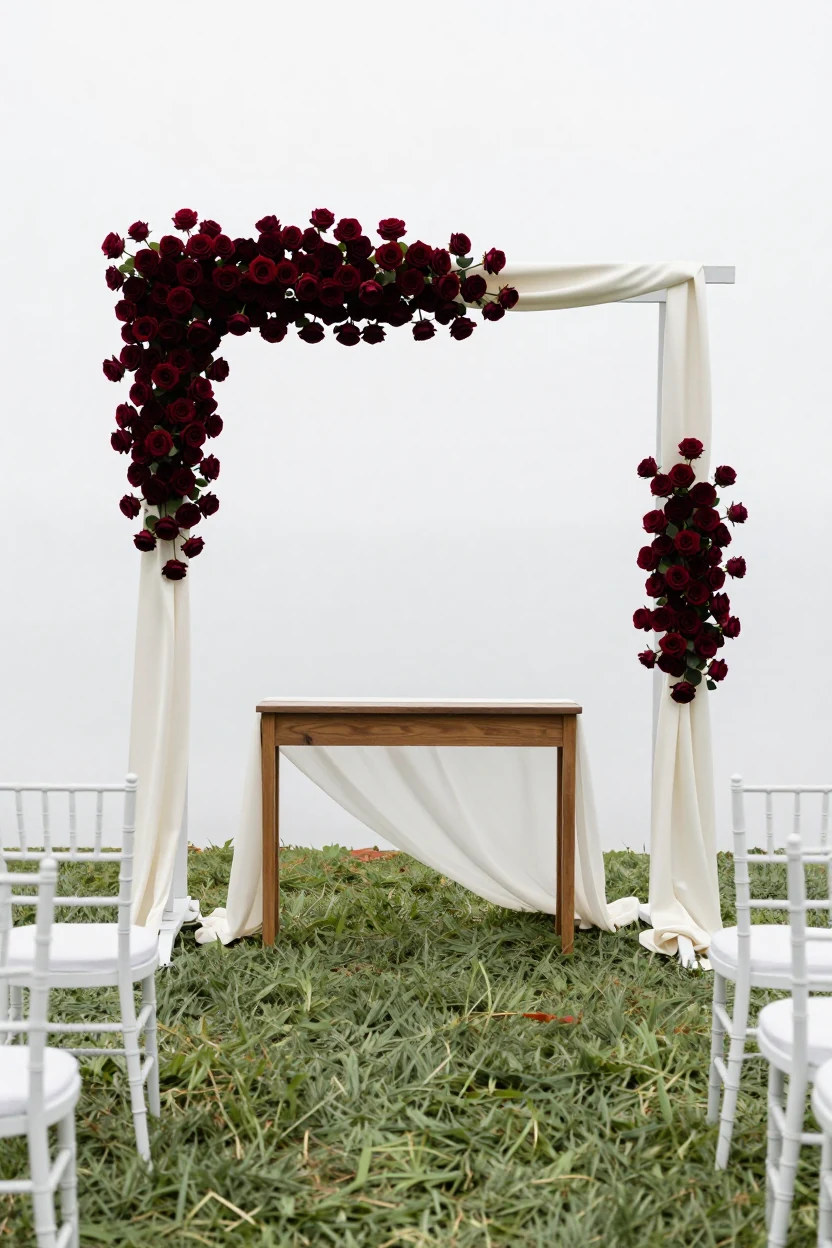
A white metal ceremony arch stands on a manicured lawn, wrapped in wide bands of matte ivory satin ribbon that create soft, vertical lines along the frame. Large, structured clusters of deep burgundy garden roses are positioned exclusively at the four corners and the apex, providing high-contrast focal points against the pale structure. The arch is centered between rows of white Chiavari chairs, with a clear aisle leading to a simple wooden altar table draped in sheer ivory fabric. The background features clean, white architectural walls or a bright sky, ensuring the saturated wine tones of the flowers remain the primary visual anchor. This setup relies on minimalism; by limiting floral coverage to specific structural nodes, the design avoids visual clutter and highlights the arch’s geometry. For real-world application, this concept works well in bright venues where you want color to pop without overwhelming the space. If fresh roses are unavailable or out of budget, high-quality silk roses in a similar hue offer a durable alternative that maintains the color intensity. Ensure the ribbon is secured with strong floral wire and hot glue at the joints to prevent slipping during the ceremony.
6. Plum and Burgundy Cake Tiers
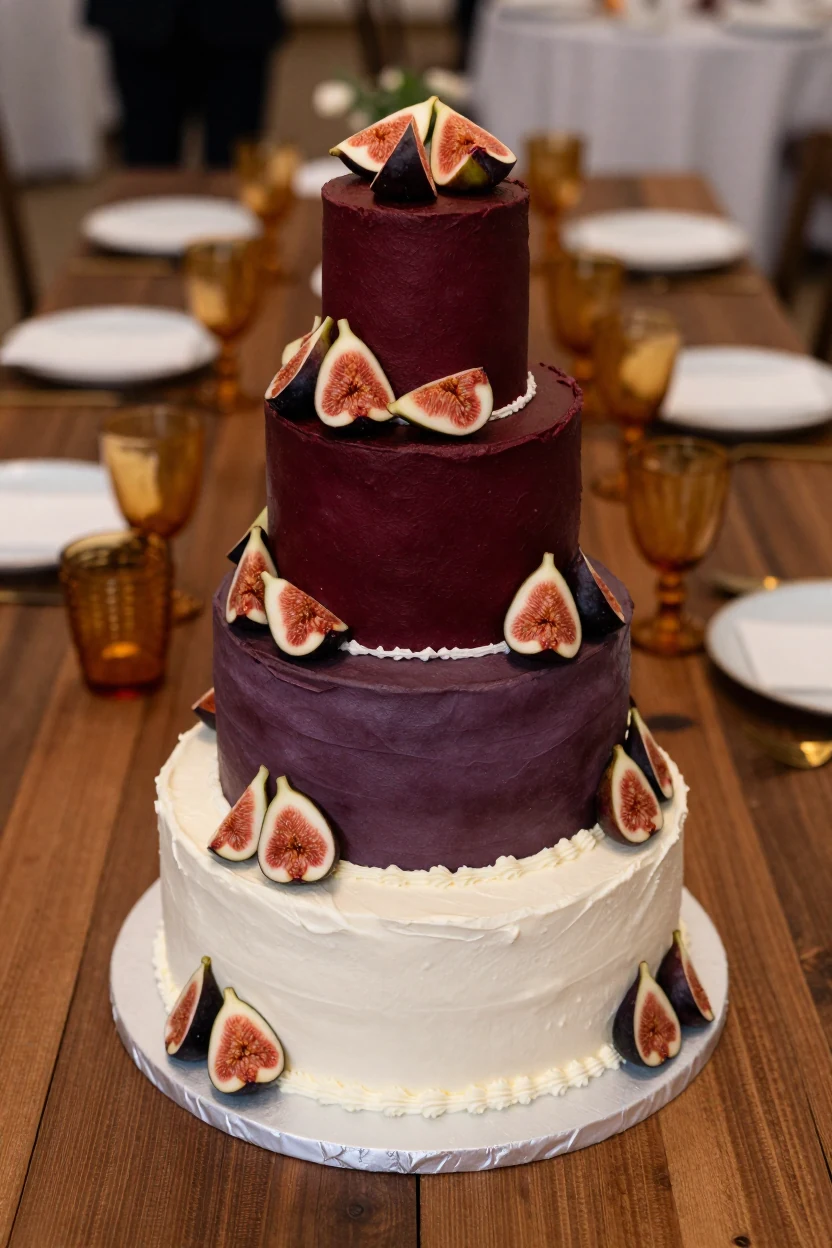
A three-tier wedding cake serves as a rich focal point for the dessert table, featuring distinct color blocks that mimic a deep wine gradient. The base tier is coated in smooth vanilla buttercream, providing a neutral foundation, while the middle tier transitions into a matte plum finish. The top tier completes the look with a velvety burgundy frosting. Fresh figs are sliced and arranged along the bottom edge of each tier, adding organic texture and visual interest without overwhelming the clean lines. This edible centerpiece works well in a reception area where guests gather, offering a sophisticated alternative to traditional floral toppers. The gradient of deep reds and purples creates a luxurious feel that pairs well with dark wood tables or marble surfaces. For adaptation, bakers can adjust the frosting consistency to achieve a matte versus glossy finish, and seasonal fruits like pomegranate seeds or dried berries can substitute for figs depending on local availability.
7. Burgundy Leather Seating
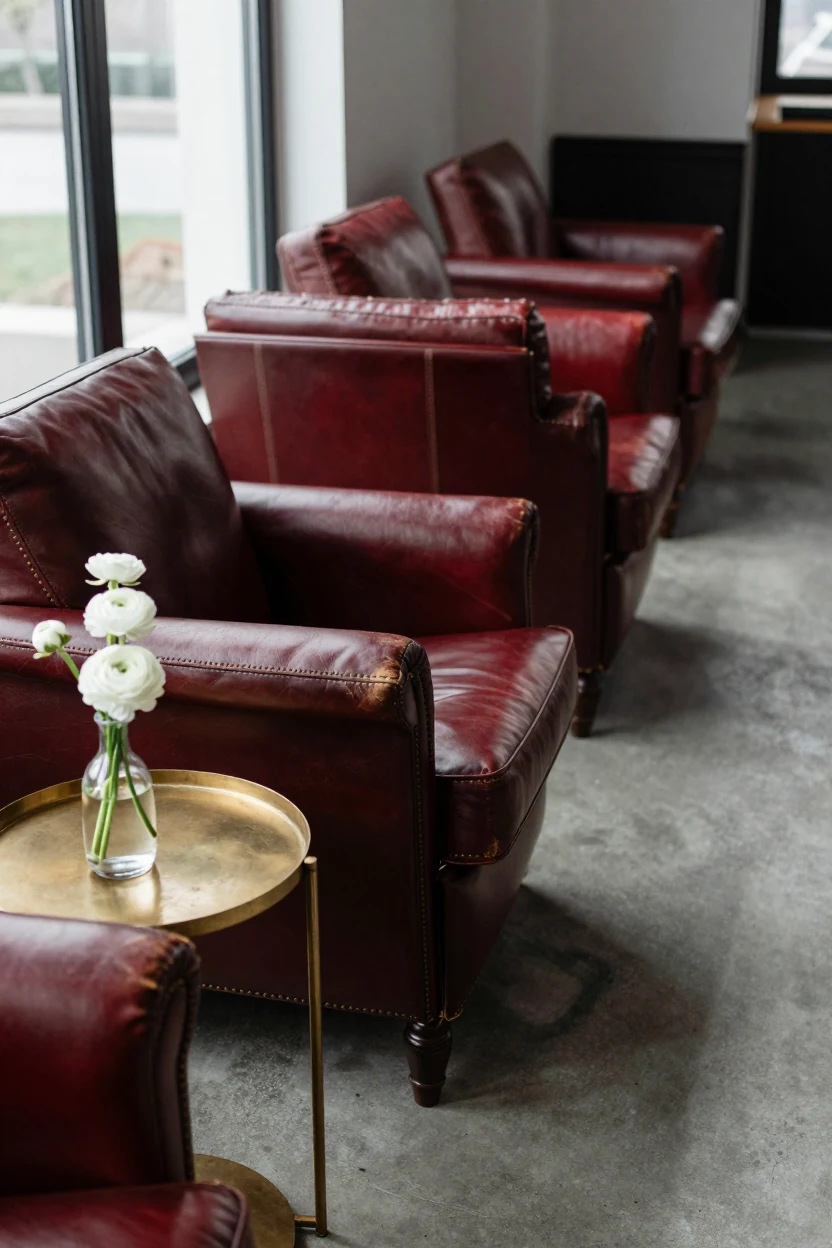
Swap standard folding chairs for vintage burgundy leather armchairs to ground the wedding in tactile warmth and mid-century character. This approach works best for smaller ceremonies or intimate receptions where seating defines the atmosphere. Place these substantial pieces along the aisle or at the head table, anchoring them with neutral natural wood flooring or polished concrete to prevent the space from feeling too dark. The deep red material contrasts beautifully with lighter elements like ivory linen napkins or matte white dinnerware on adjacent tables. This setup suits couples who prefer a relaxed, sophisticated vibe over rigid formality. If vintage leather is unavailable, modern cognac-colored leather chairs offer a similar textural depth while maintaining a contemporary feel. Ensure the chairs are stable and positioned to allow clear pathways for guests to enter and exit without tripping over legs or backrests.
8. Wine Barrel Centerpieces
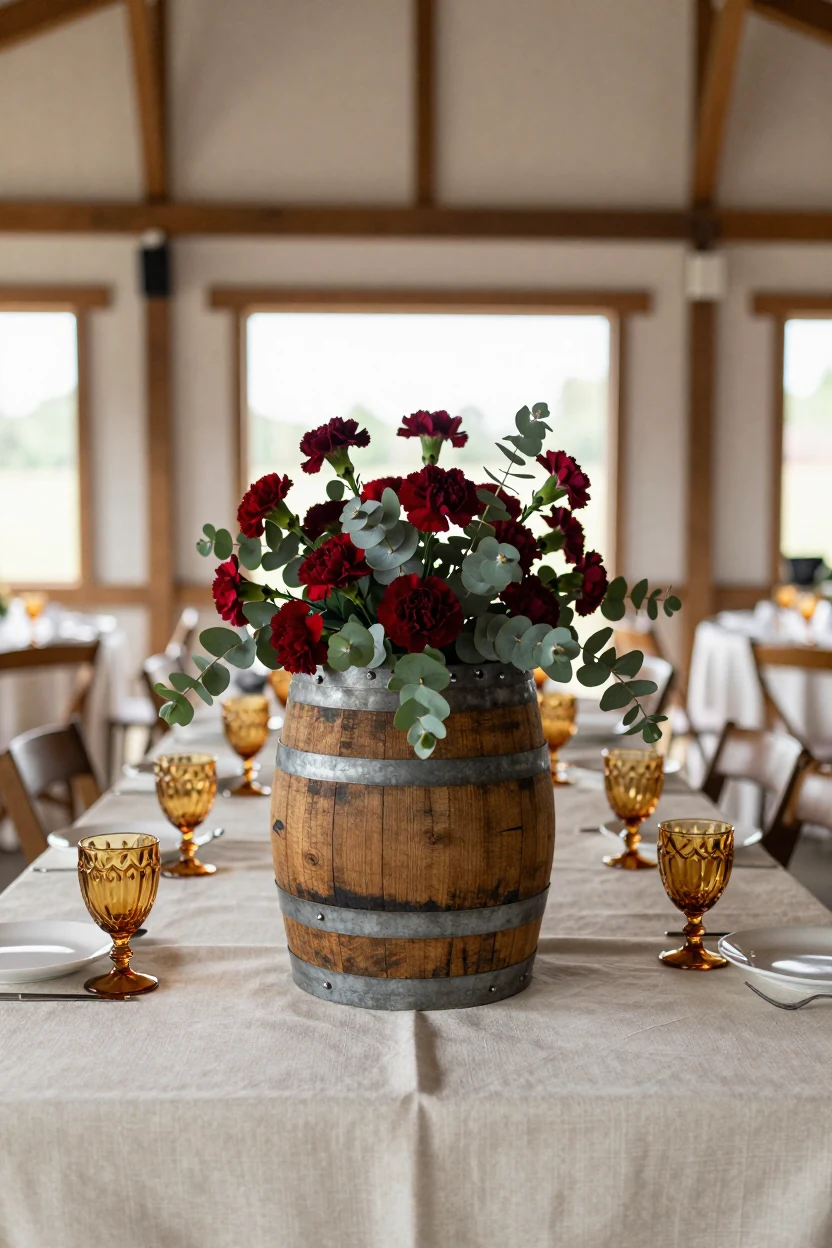
Transform small decorative wine barrels into low, sprawling centerpieces that anchor the tablescape with rustic structure. The dark, aged wood of the barrel base contrasts sharply with lush burgundy carnations and trailing eucalyptus, creating a vertical focal point rather than a flat floral mat. This setup works best in barns or winery venues where exposed beams and metal hardware complement the industrial-chic aesthetic. Keep the arrangement low enough to allow eye contact across the table while ensuring the barrel’s curved shape adds visual interest. Pair with cream linen runners and amber glassware to soften the deep red tones. If barrels are unavailable, sturdy wooden crates or stacked crates can mimic the silhouette. Ensure all bases are stable on flat surfaces and keep aisles clear for guest movement.
9. Burgundy Silk Runner
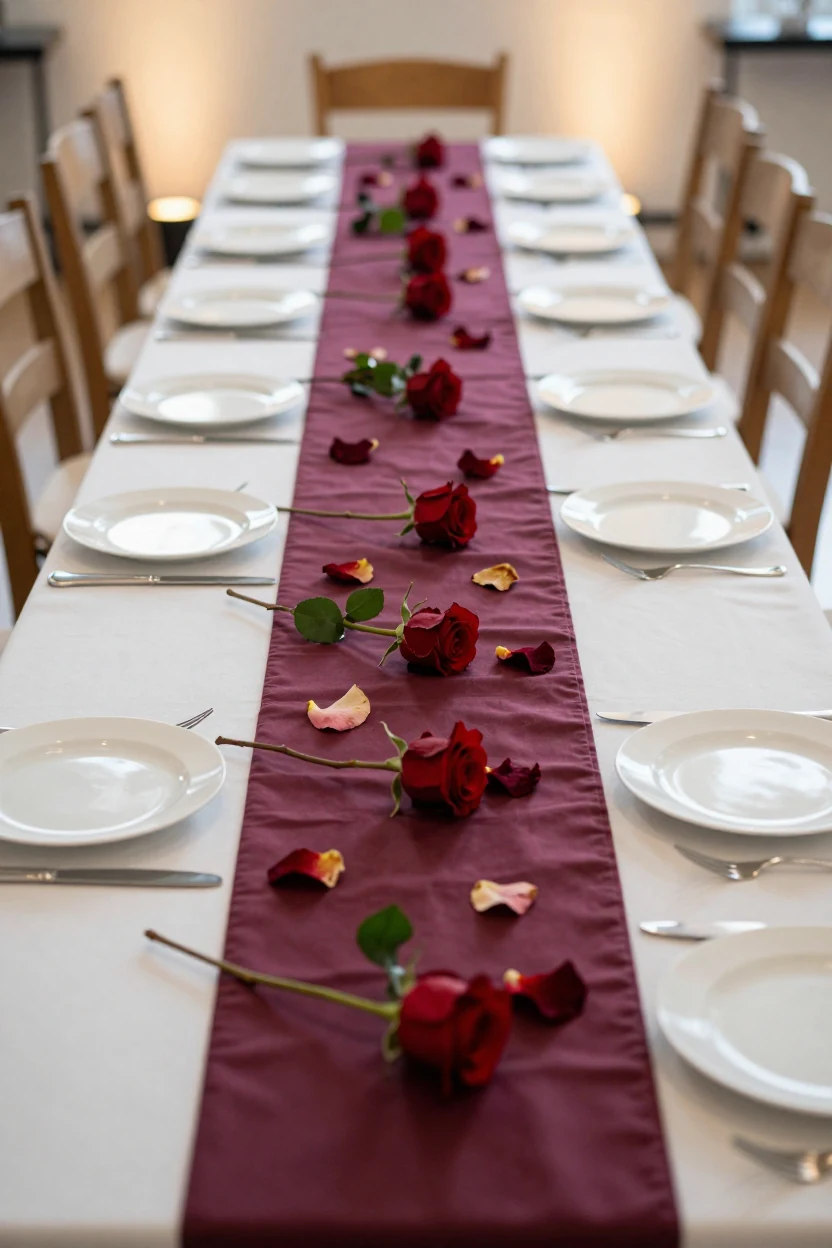
A narrow burgundy silk runner stretches down the center of a long rectangular banquet table, providing a linear visual anchor without covering the entire surface. The fabric’s subtle sheen contrasts with the matte texture of white linen napkins and simple ceramic plates at each place setting. Scattered loosely along the runner are single-stemmed deep red roses and dried rose petals, creating an organic, asymmetrical arrangement that guides the eye down the length of the table. This setup works well for larger guest counts because it focuses floral resources on a central accent rather than individual centerpieces. The surrounding area features neutral wooden chairs and soft ambient lighting, allowing the rich color to stand out. This approach is adaptable to various venues by swapping the silk for satin or velvet depending on the desired weight and drape. It offers a refined look that feels intentional rather than maximalist, suitable for autumn or winter receptions where deeper tones complement natural light or candlelight.
10. Deep Red Candlelight
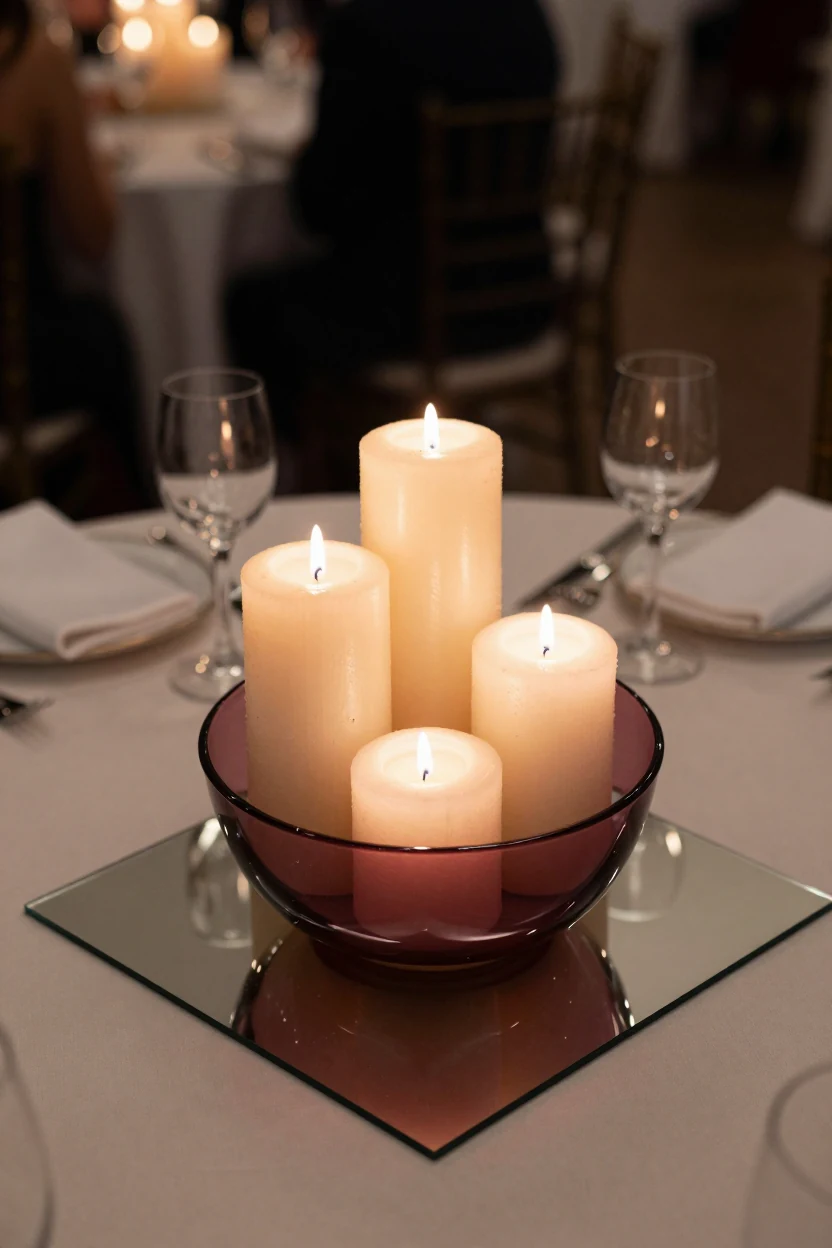
Transform a standard candle setup into a glowing focal point by clustering multiple pillar candles of varying heights inside a shallow, burgundy-tinted glass bowl. Place this vessel on a polished mirrored tray to reflect the flames, amplifying the warm light and creating a sense of depth on the table. This arrangement works best during evening receptions when ambient lighting is dimmed, allowing the flickering glow to cast soft shadows across the surrounding place settings. Pair the deep red glass with neutral ivory linen napkins and simple silver cutlery to keep the focus on the light. The mirrored base ensures the setup feels substantial without adding height that could block guest sightlines. For a cohesive look, use unscented candles to prevent overpowering the room's atmosphere. This low-profile centerpiece is ideal for round tables where conversation is prioritized over towering floral displays. It offers a rich, moody aesthetic that complements darker seasonal palettes while remaining practical for indoor venues with limited natural light.
11. Burgundy Signage and Menu
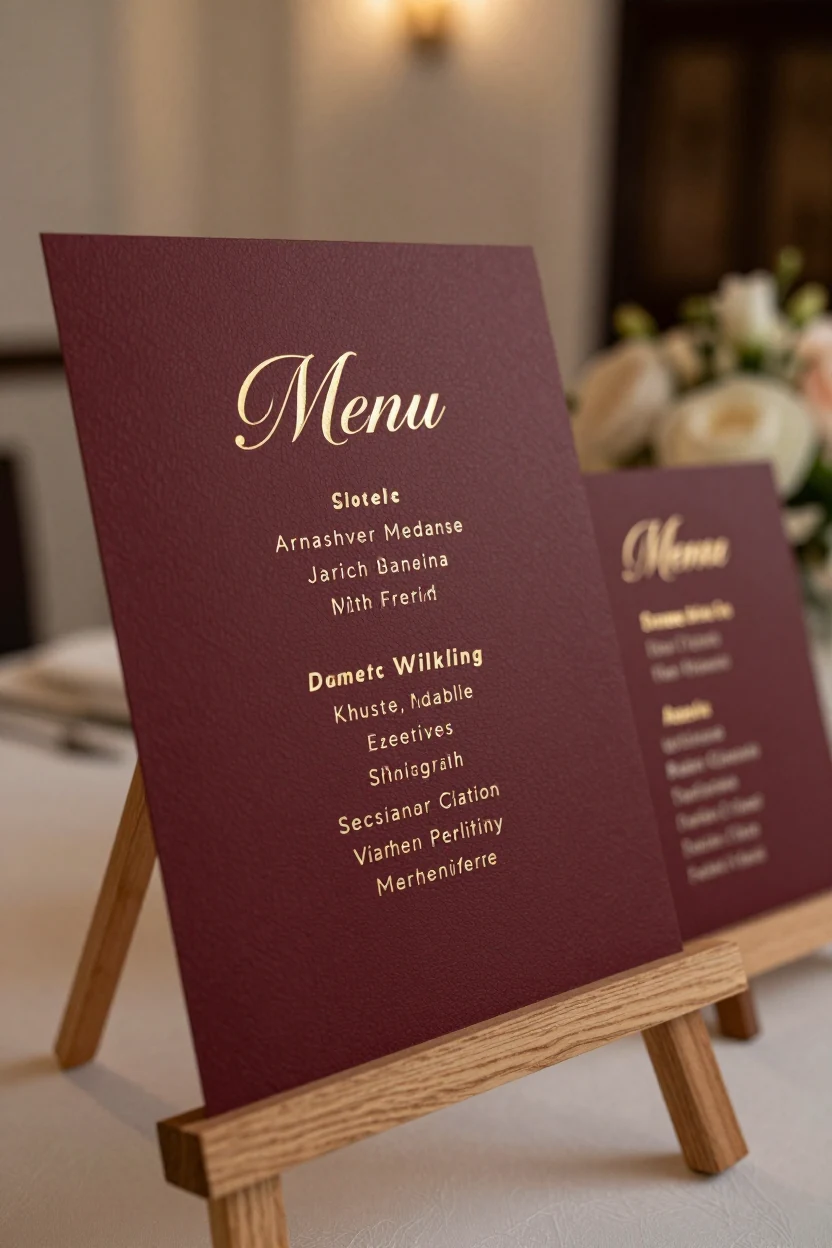
Deep burgundy paper goods anchor the guest experience at key transition points without requiring structural changes to the venue. A sturdy wooden easel stands near the reception entrance, holding a menu card printed on heavy, textured stock. The background is a rich, matte burgundy, while the typography features gold foil stamping that catches the ambient light. Nearby, a matching seating chart rests on a small pedestal, using the same material palette to create visual continuity. This approach keeps the color story consistent from the ceremony to the bar area. The textured paper adds tactile depth, contrasting with the smooth wood of the stands. Guests encounter the palette immediately upon entering the space, reinforcing the theme through functional items rather than large installations. The setup remains unobtrusive, ensuring aisles and emergency exits remain clear. This method allows for easy customization; swapping the paper stock or foil color can adjust the formality level while maintaining the core aesthetic. It is a practical way to integrate burgundy into the guest journey without overwhelming the venue’s existing architecture.
12. Burgundy Draped Head Table
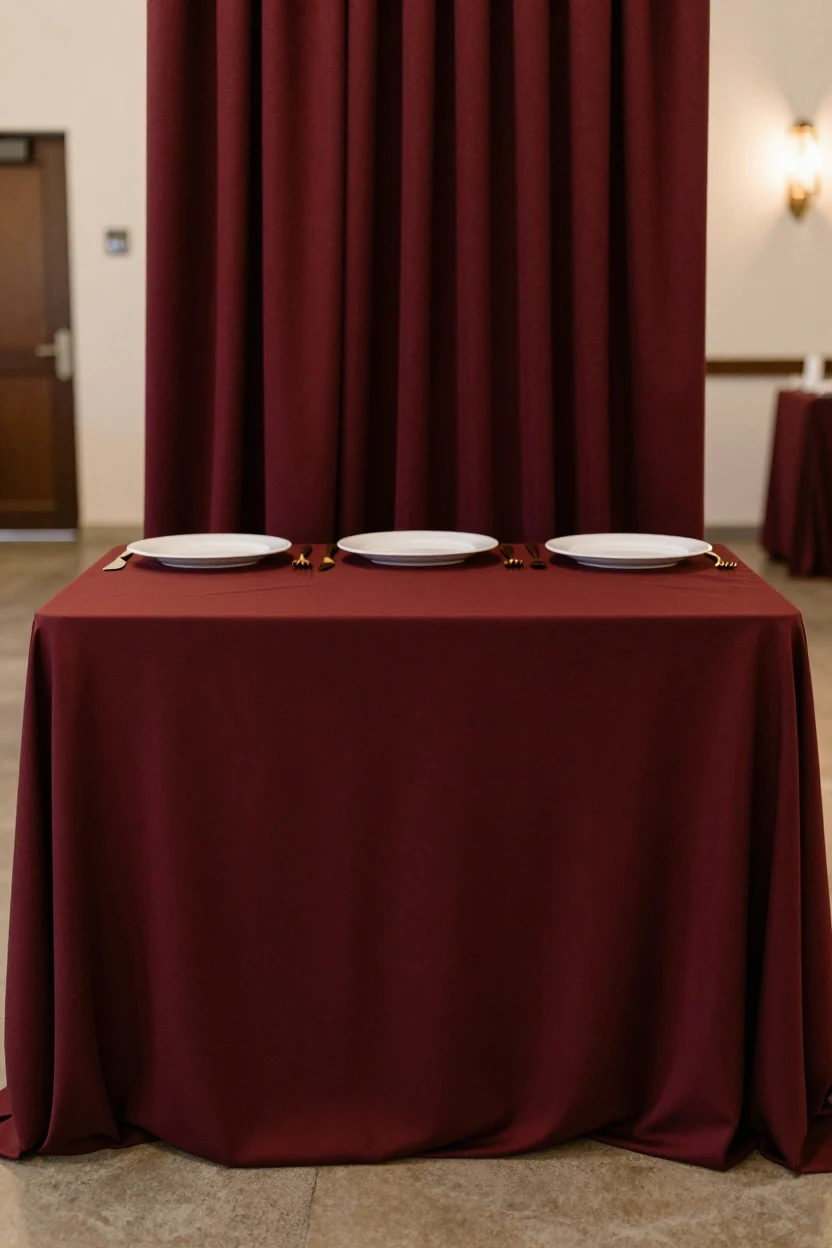
Transform the head table into a bold architectural feature by wrapping it entirely in floor-length burgundy fabric. This technique turns standard banquet furniture into a solid block of deep color, eliminating the need for complex floral arrangements at the front. Place white ceramic plates and gold flatware directly on the rich textile to create high-contrast visual interest. The heavy drape should fall smoothly from the table edge to the floor, hiding the chair legs and base structure while maintaining a clean, continuous line. This setup works best in intimate venues where the head table serves as the primary focal point for guest entry and photography. For a softer look, layer a sheer ivory overlay behind the solid burgundy cloth to add depth without obscuring the saturated hue. Keep the centerline clear of tall centerpieces so the draping remains the dominant element. The result is a dramatic, gallery-style backdrop that frames the couple or speakers with intense, uniform color saturation.
13. Berry Branch Arrangements
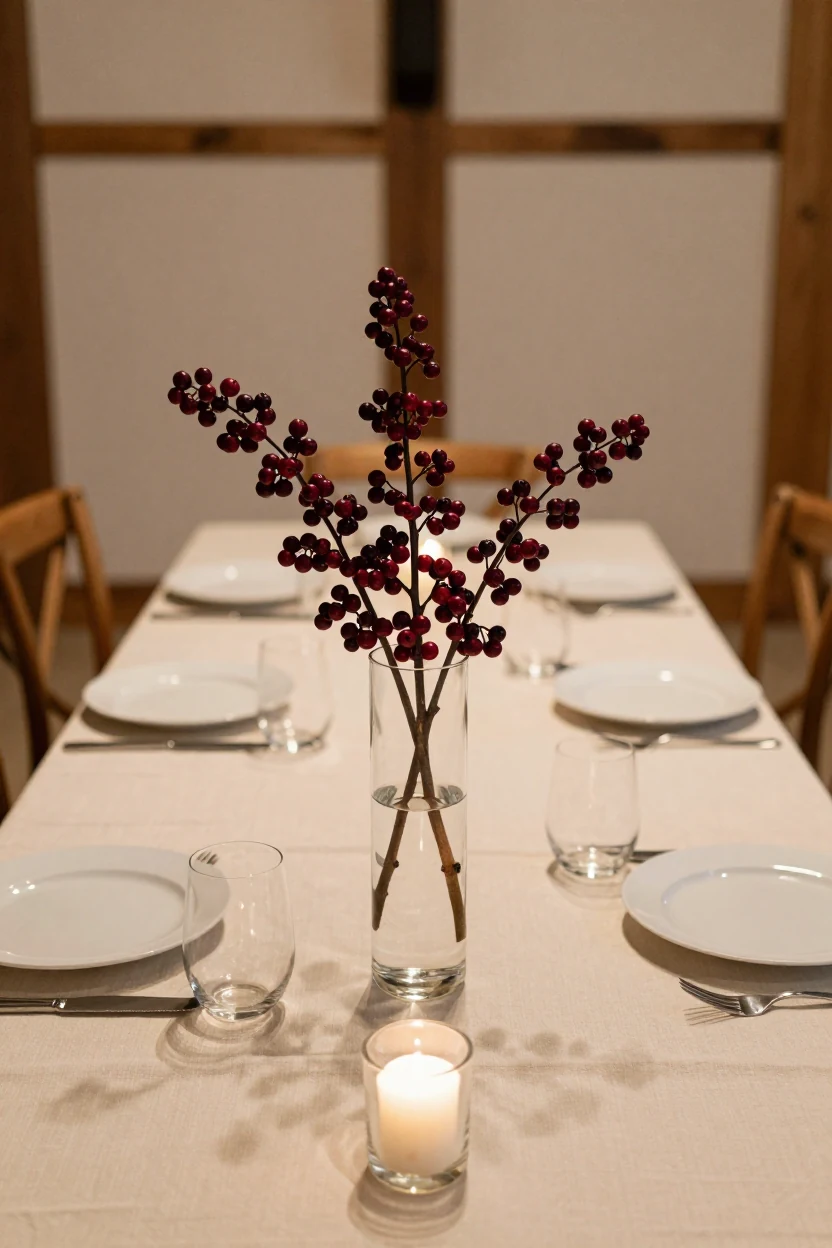
Lean into the structural beauty of winter flora with linear centerpieces featuring hawthorn branches laden with deep burgundy berries. This arrangement offers a sophisticated alternative to traditional floral clusters, relying on texture and form rather than dense petals. Place the branches in tall, slender clear glass vases to maximize verticality while keeping the table surface uncluttered. The dark, glossy fruits provide a striking contrast against bare, gnarled wood, evoking a moody woodland aesthetic that works well for late autumn or winter receptions. Pair this focal point with simple ivory linen and minimal candlelight to ensure the berry tones remain the visual anchor. This setup is particularly effective at long rectangular tables, where the height creates dimension without obstructing guest sightlines. For a practical adaptation, source hawthorn or similar berry-laden stems from local florists who specialize in seasonal botanicals, ensuring the branches are sturdy enough to support their own weight within the vase.
14. Burgundy and Cream Plaid
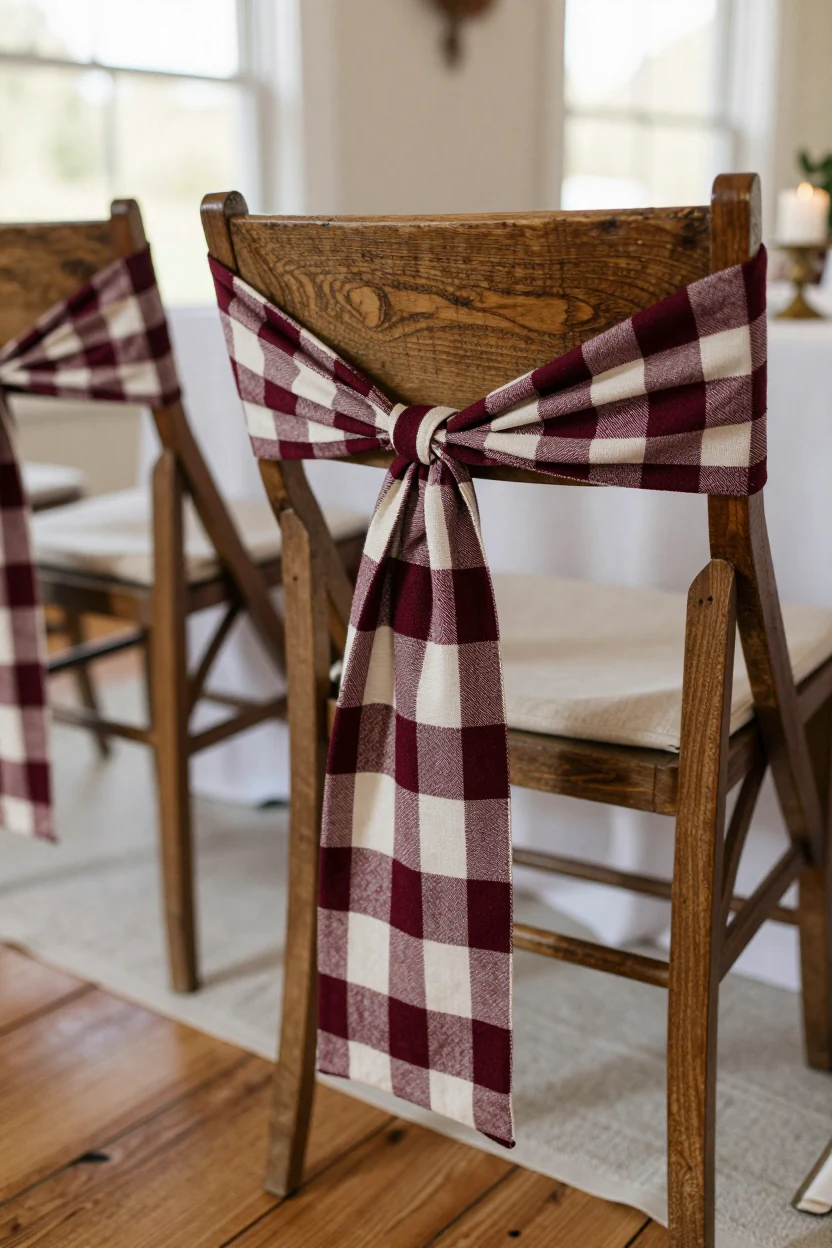
Burgundy and cream plaid transforms simple textiles into a cohesive design element for cottage-style weddings. Instead of relying on floral variety, this pattern creates visual interest through repetition, offering a cozy, heritage feel that pairs well with rustic venues or fall celebrations. Apply the motif to chair sashes, folded napkins, or even a bridal veil to tie the look together without overwhelming the space. The checkered texture contrasts beautifully against smooth linens or wooden furniture, adding depth while maintaining a relaxed aesthetic. This approach works particularly well when balanced with solid neutral tones elsewhere in the room. Consider using the plaid fabric for aisle markers or pocket squares to maintain continuity. The pattern’s rustic charm complements natural wood tones and soft lighting, creating an inviting atmosphere that feels grounded rather than overly formal. It is a versatile way to introduce color without needing elaborate floral installations.
15. Wine Glass Backsplash
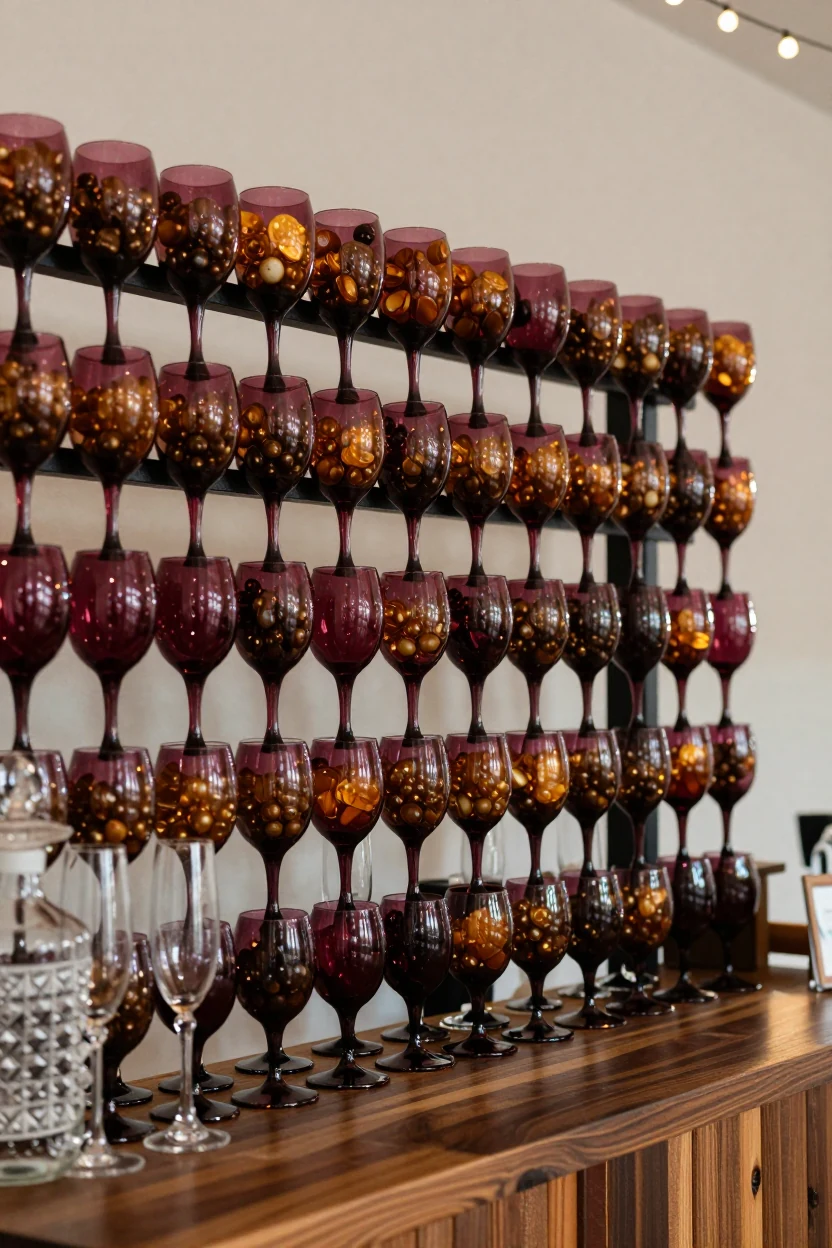
Transform a standard bar station into a functional focal point by mounting a grid of burgundy wine glasses against the back wall. Fill each glass with colored sand, glass beads, or small pebbles to create a textured, mosaic-like effect that catches the light without requiring liquid. This setup works best when paired with a solid walnut or dark metal bar counter to anchor the visual weight of the glassware. The contrast between the translucent deep red of the filled glasses and the matte finish of the wood creates a sophisticated, modern aesthetic. It serves as an interactive backdrop for cocktail hour, allowing guests to see their reflections in the curved glass while the station remains fully usable for serving drinks. For a cohesive look, match the bead color to your secondary palette, such as amber or cream, to ensure the display reads as a unified design element rather than a cluttered arrangement.
Selecting the Right Burgundy Approach
Choosing the right burgundy concept depends on your venue’s natural light and desired atmosphere. For dark or enclosed spaces, glossy glassware and reflective surfaces help amplify warmth, while outdoor settings benefit from matte fabrics and rustic wood to ground the color. Consider your guest count and layout; smaller ceremonies can support bold leather seating or draped head tables, whereas larger receptions may work better with linear runners or signage for consistency. Adapt these ideas by swapping floral varieties based on local availability and adjusting fabric weights to suit your season, ensuring the palette feels cohesive without overwhelming the space.
