14 Tropical Wedding Color Palettes That Feel Fresh, Not Frilly
Tropical inspiration often defaults to neon pinks and dense foliage, but the aesthetic can be far more nuanced. These 14 color palettes demonstrate how to capture the spirit of a tropical celebration without relying on overly saturated or traditional choices. Each concept considers practical factors like venue lighting, seasonal floral availability, and table layout constraints. Whether you are planning a minimalist garden ceremony or a modern poolside reception, these ideas focus on realistic textures and coherent layouts. Use them as a starting point to select hues that complement your specific setting and personal style, ensuring the decor feels intentional rather than decorative.
1. The Classic Palm and Papaya
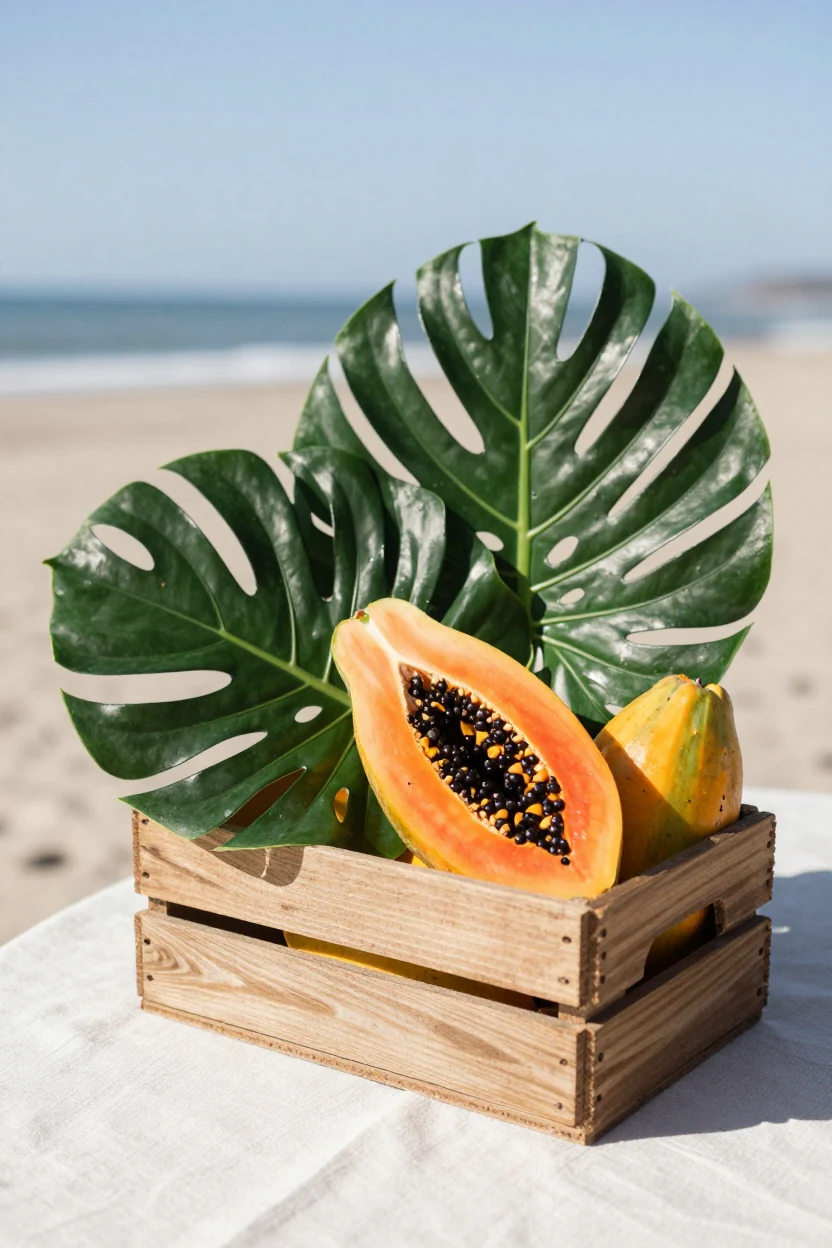
This high-contrast daytime setup anchors the ceremony in deep emerald monstera leaves and vibrant orange papaya fruit arranged in rustic wooden crates. The palette pairs rich green with warm orange and crisp white linen table settings to create a bold, natural focal point. Large tropical foliage provides heavy texture against the smooth fruit skins, while the white linens offer a clean visual reset that prevents the colors from feeling overwhelming. This look works best for midday ceremonies where strong sunlight highlights the veined structure of the leaves and the glossy surface of the fruit. The arrangement is low-profile, keeping sightlines open for guests seated at the front rows. For adaptation, use similar large-leafed greenery like bird of paradise if monstera is unavailable. Keep the fruit display contained in stable, weighted crates to ensure safety on outdoor surfaces. A single variation involves replacing the wooden crates with woven baskets to soften the rustic edge while maintaining the natural material palette.
2. Dusty Teal and Blush Minimalist
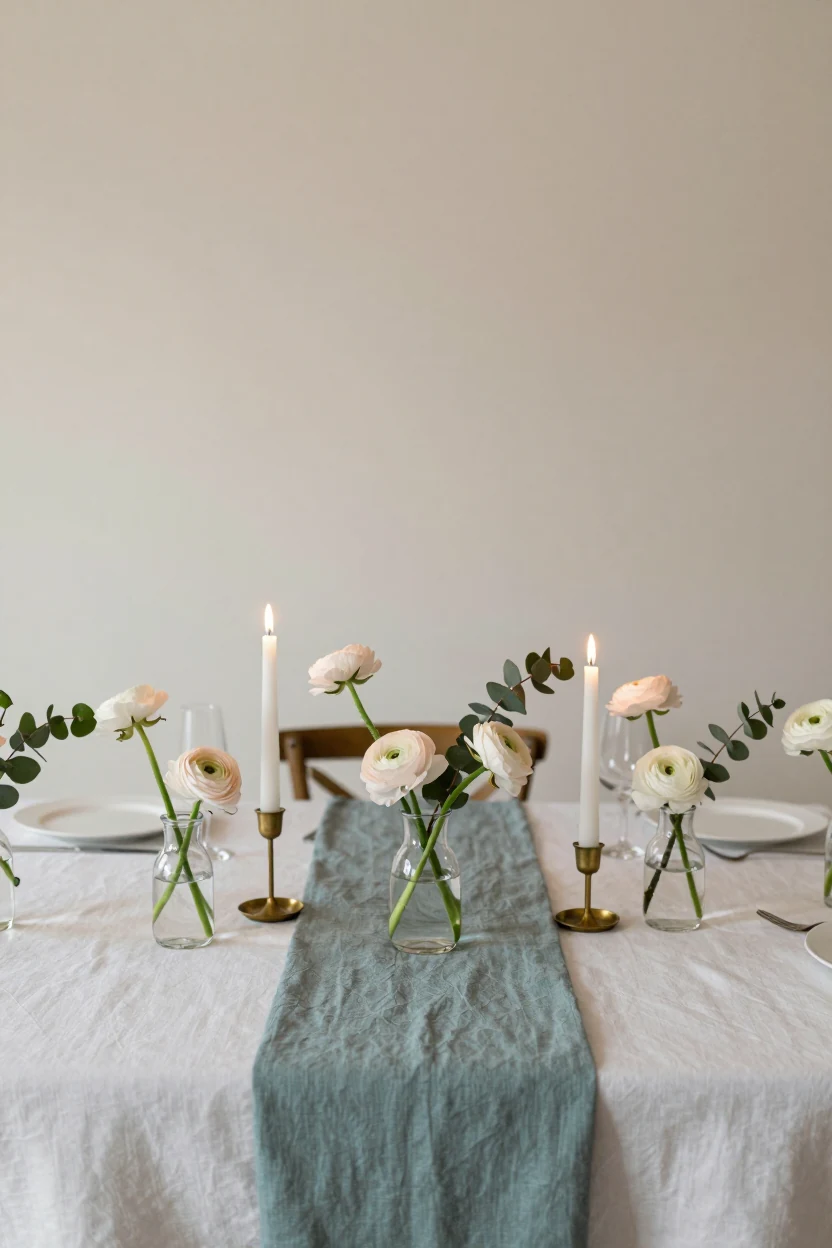
This reception setup trades saturated tropical hues for a desaturated, gallery-like aesthetic. Long rectangular tables are draped in crisp white linen, grounded by a narrow runner in deep dusty teal. Low glass vases hold clusters of soft blush ranunculus and minimal eucalyptus, keeping sightlines open between guests. The lighting is warm but controlled, provided by unlit taper candles in brass holders to maintain a calm atmosphere. Dinnerware features simple matte white ceramics, while flatware adds subtle metallic contrast. The overall effect is refined and modern, proving that tropical inspiration does not require neon colors. This palette works well for indoor venues or evening receptions where you want a sophisticated, muted vibe. To adapt this look, focus on texture rather than volume. Use smooth glass and soft petals to create visual interest without clutter. If ranunculus are out of season, consider using similar-shaped roses or lisianthus in comparable dusty tones to maintain the low-profile floral structure.
3. Sunset Mango and Deep Plum
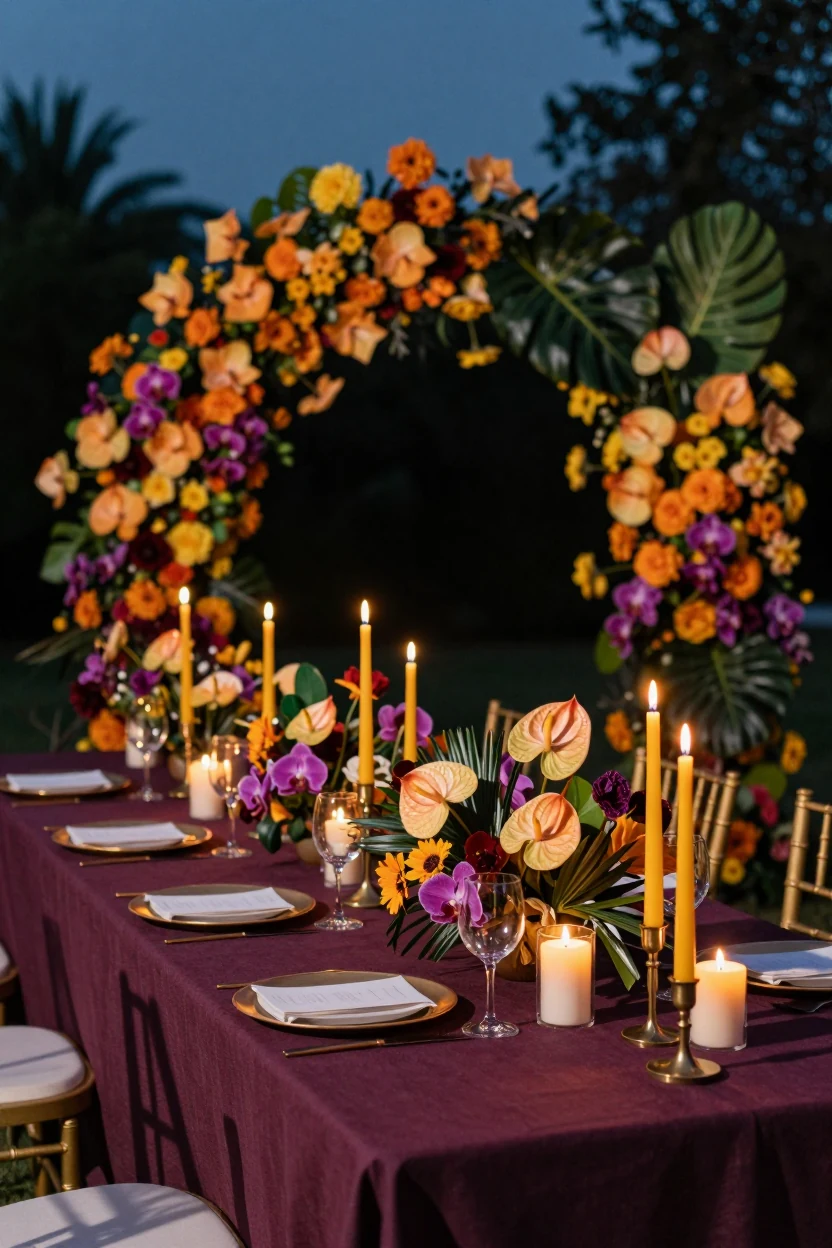
This evening backyard wedding uses a dramatic gradient of mango yellow fading into deep plum purple across the floral arch and tablescapes. The dark background allows candlelight to glow against the rich hues, creating an intimate, moody atmosphere distinct from bright daytime tropicals. Ideal for sunset receptions where lighting plays a major role in the visual impact, this palette relies on high contrast. Imagine long banquet tables draped in deep plum linen, accented with mango-colored taper candles and gold-rimmed chargers. A low arch features dense plum orchids transitioning to bright mango anthuriums, framed by dark tropical foliage. The lighting is warm and low, emphasizing the texture of the flowers and the glow of the flames. This setup works best in late summer or early autumn when natural light shifts toward amber tones before dusk. To recreate this, focus on layering depth with darker textiles to make the bright accents pop without overwhelming the guests.
4. Monochrome Banana Leaf Green
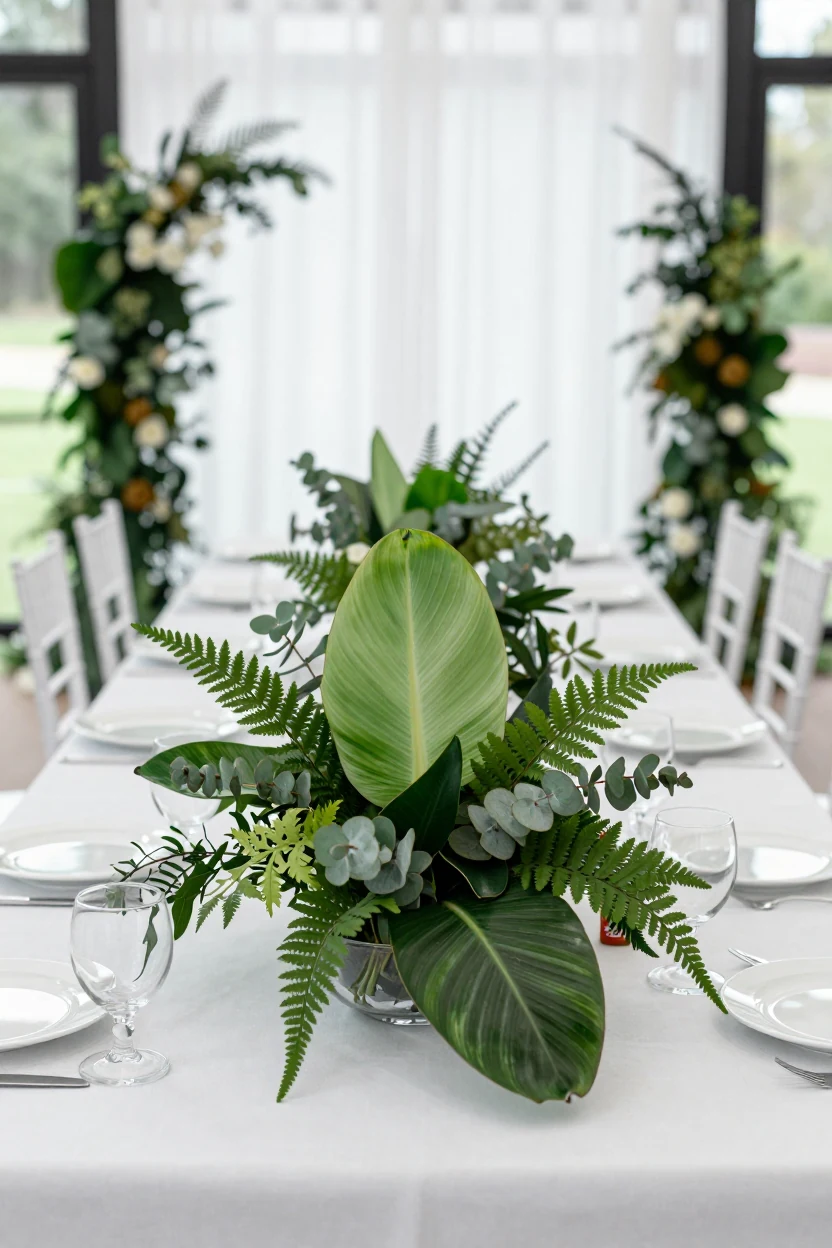
Skip the white blooms and let the foliage do the talking. This monochromatic look relies on varying shades of green—from pale sage to deep forest—to create a lush, jungle-like atmosphere without colorful distractions. Start with large banana leaves as the structural base for arrangements, layering in delicate ferns and trailing eucalyptus for texture contrast. Dress tables in crisp white linen to provide a neutral canvas that allows the greens to pop, or choose light sage napkins for a softer effect. Use simple glassware and minimal silverware to keep the focus on the organic shapes. For lighting, rely on natural daylight or soft uplighting rather than warm bulbs, which can muddy the green tones. This palette works well in garden venues or modern indoor spaces with high ceilings. It is a sophisticated alternative for couples who want a nature-inspired feel without the typical floral color mix.
5. Coral and Cream Coastal Casual
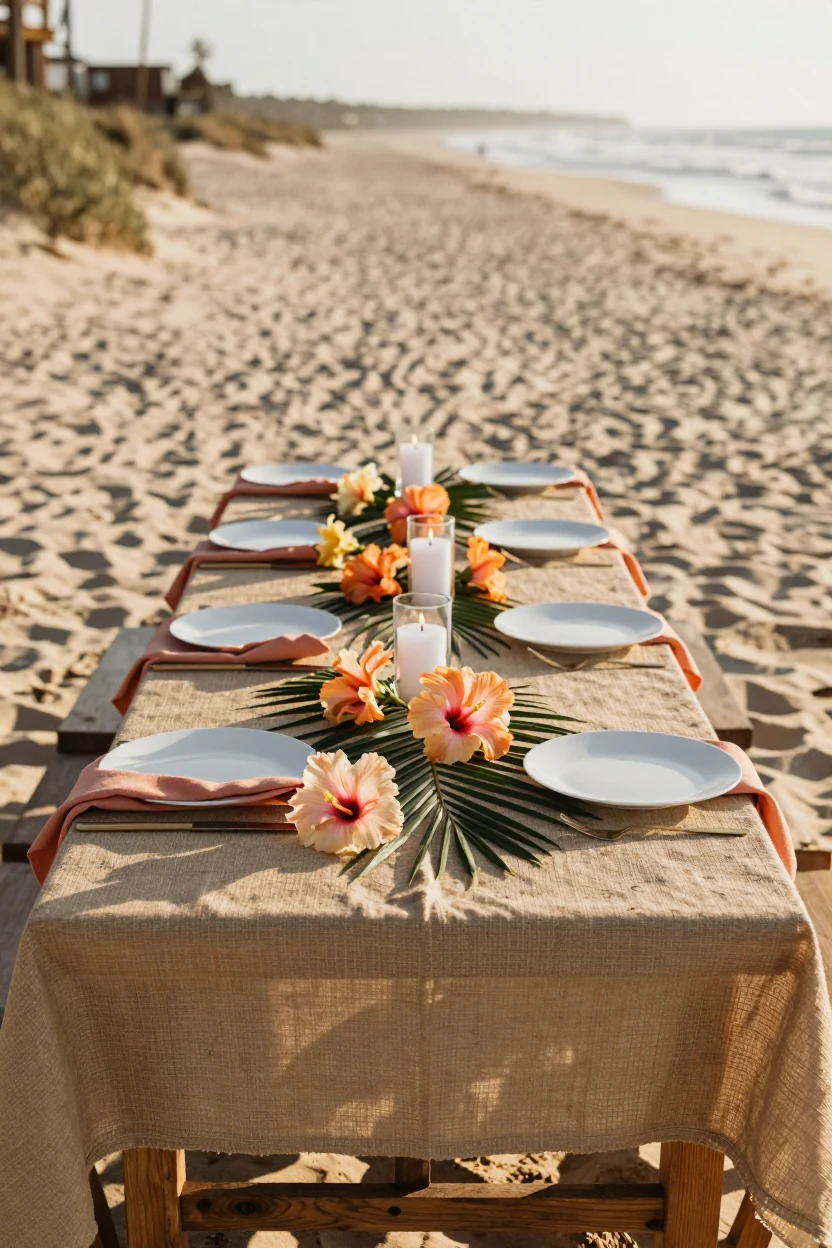
This setup leans into the natural dune environment rather than fighting it. Long rectangular tables are draped in unbleached burlap, creating a textured base that grounds the airy space. Soft coral fabric napkins provide the primary pop of color, resting on simple ceramic plates. Scattered hibiscus blooms in varying shades of peach and orange break up the monotony without requiring heavy floral arrangements. The greenery is minimal, using sparse sprigs of palm fronds to suggest the coastal setting without creating a dense jungle look. Lighting relies on the warm glow of late afternoon sun filtering through sheer white drapery, supplemented by unlit pillar candles in glass holders for safety. This palette works because the cream neutral reflects the light while the coral mimics the fading sunset. It is ideal for informal vows where guests are barefoot and the decor remains understated.
6. Electric Blue and Gold Accent
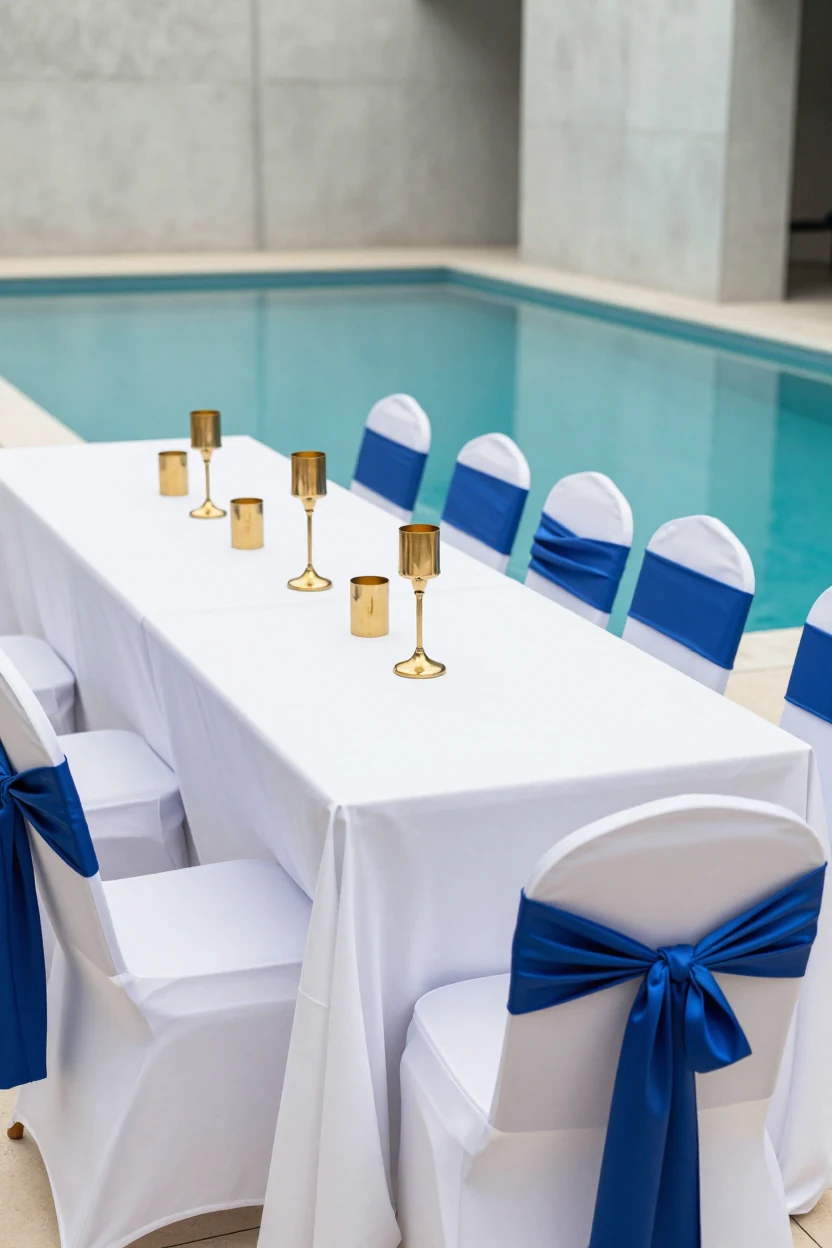
This modern poolside reception layout swaps traditional tropical greens for a high-contrast, urban aesthetic. The focal point is a long rectangular table dressed in crisp white linen, creating a neutral canvas for the bold accents. Each guest chair features a vivid electric blue satin sash tied in a simple knot at the back, adding a pop of saturated color without overwhelming the space. Centerpieces consist of minimal brass taper candle holders with gold-wrapped candles, offering a sleek metallic sheen that contrasts sharply with the glossy blue fabric. The setting leverages the natural pool water and surrounding concrete architecture to maintain a clean, contemporary vibe. This palette works best for fashion-forward couples who want a tropical theme that feels structured rather than rustic. To adapt this look, focus on texture contrast: pair the smooth satin sashes with matte ceramic dinnerware or brushed metal flatware. Avoid adding leafy greenery, which would dilute the modern color-blocking effect. Instead, let the architecture and water provide the necessary context for the tropical setting.
7. White Orchid and Sand Neutrals
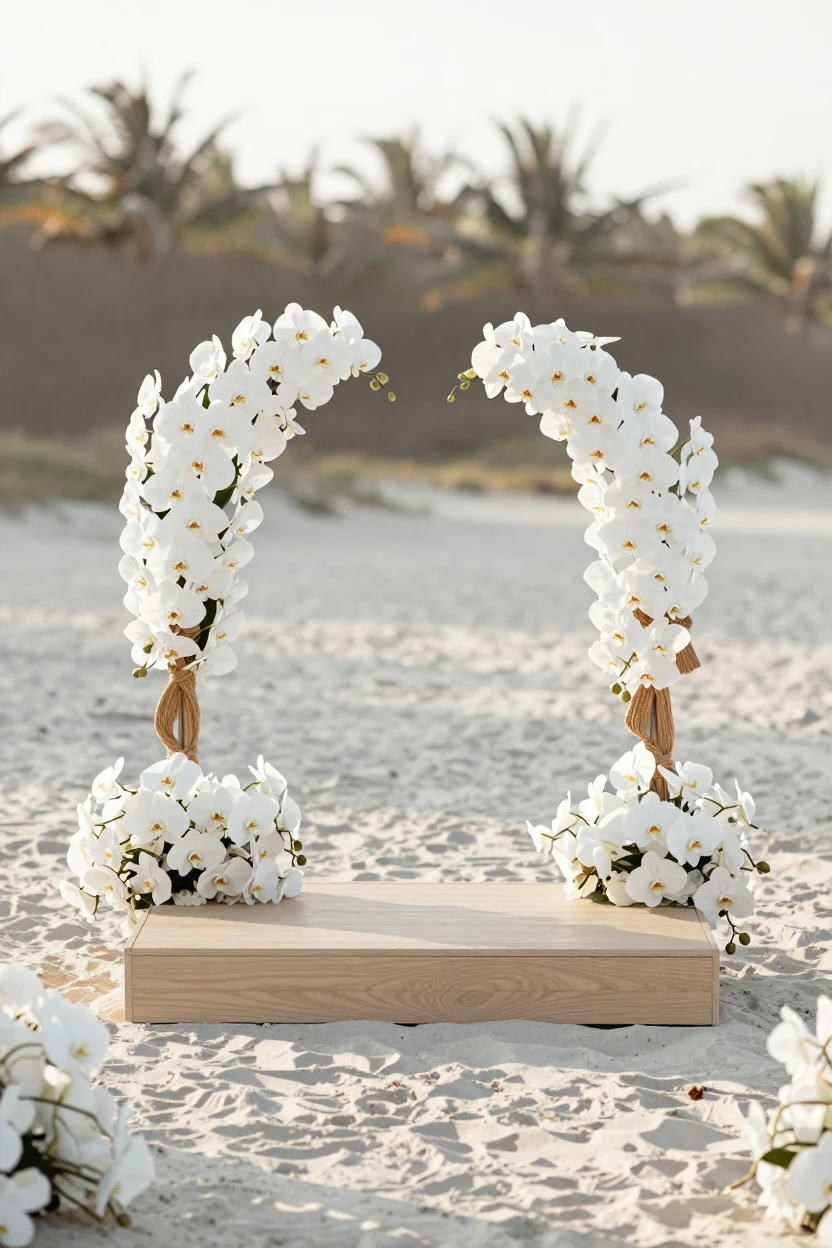
This palette proves that tropical weddings do not require bold hues to feel authentic. By stripping away saturated colors, you allow natural textures and organic forms to define the atmosphere. The setup features a clean, sandy floor with a low rectangular ceremony platform made of light oak planks. Large white phalaenopsis orchids serve as the primary floral element, arranged in loose, airy clusters rather than dense bunches. Natural jute rope accents tie the arrangement together, adding tactile warmth without introducing new colors. The visual focus remains on the couple, with the bright, monochromatic background ensuring clear sightlines for guests. This approach works best for small, intimate ceremonies or garden venues where natural light is abundant. To adapt this concept, select a single white bloom as your anchor and keep greenery minimal to maintain the airy, minimalist aesthetic.
8. Lavender and Lime Zesty Mix
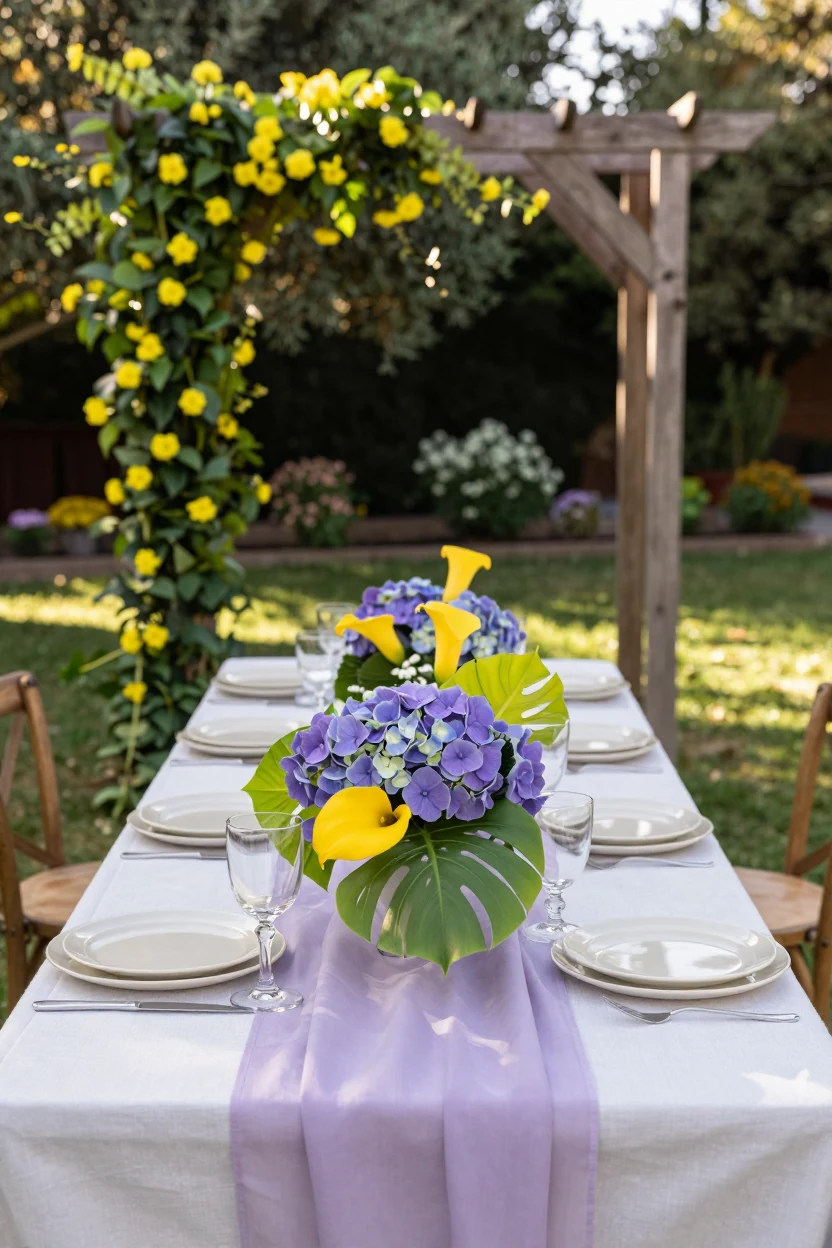
This late-spring garden setup balances cool lavender hydrangeas against vibrant lime green tropical foliage and bright yellow calla lilies. The composition features a long rectangular table dressed in crisp white linen, with low, organic centerpieces that allow clear eye contact across the table. Place settings include simple clear glassware and matte ceramic plates in a soft cream tone, grounding the vivid florals without competing for attention. A sheer lavender runner adds a subtle textural layer beneath the greenery. The arch behind the head table is wrapped in trailing pothos and scattered yellow blooms, framing the couple while keeping the focal point centered. Natural daylight filters through nearby trees, casting soft shadows that highlight the texture of the hydrangea petals and the glossy leaves. This palette feels zesty rather than traditional, using the cool tone to prevent the warm greens from feeling overwhelming. For adaptation, swap the callas for yellow ranunculus if preferred, and ensure the foliage remains loose and airy to maintain the fresh, unstructured look.
9. Terracotta and Olive Earth Tones
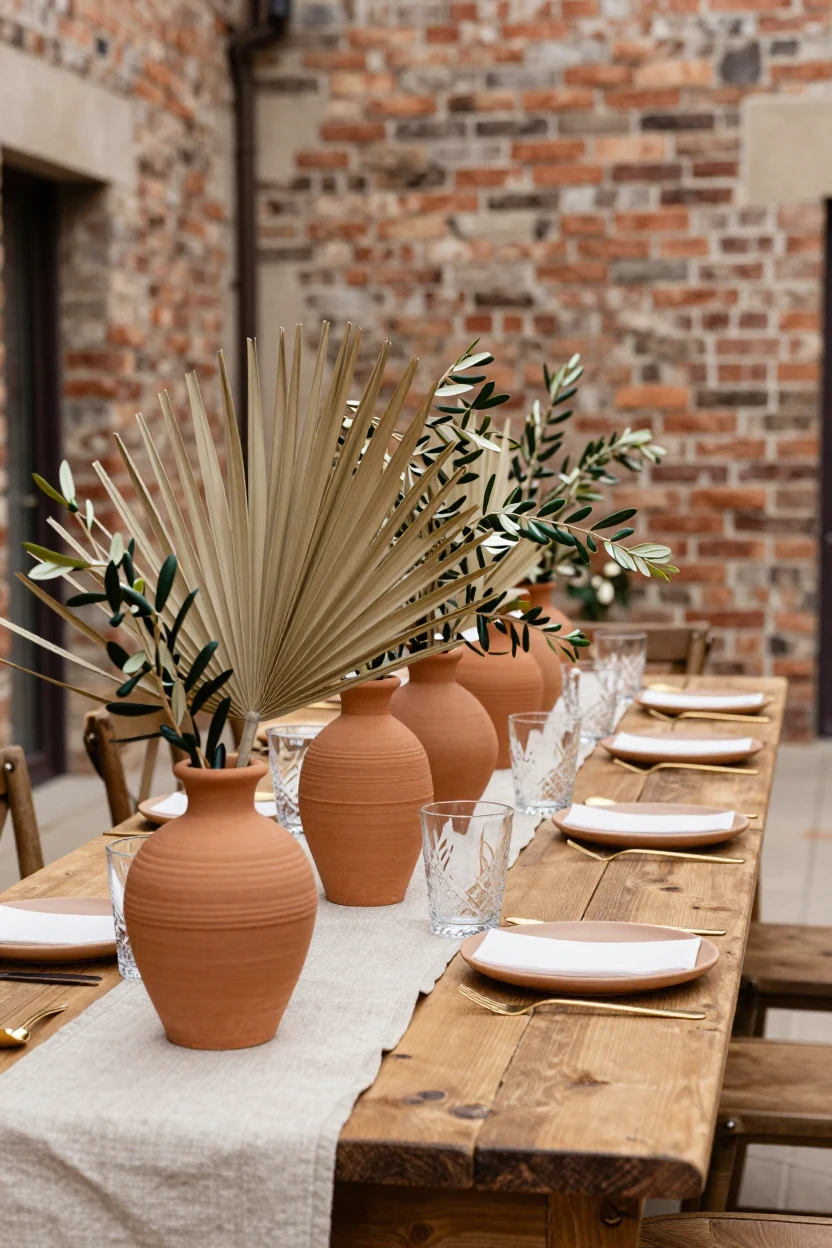
This palette swaps bright resort hues for grounded, organic warmth, creating a tropical aesthetic that feels rooted in the earth rather than the ocean. The visual anchor is the contrast between matte terracotta ceramics and the deep, muted green of olive foliage and dried palm fronds. Use unglazed clay pots as low centerpieces on long wooden tables dressed in natural linen runners. Pair these with matte gold flatware and textured glassware to catch the light without adding harsh shine. For the ceremony, arrange potted olive trees along the aisle instead of a traditional arch, allowing guests to see the exposed brick or stone walls of the venue. This setup works best for late-summer or fall weddings in arid landscapes, courtyards, or barns with natural materials. The look remains tropical through the silhouette of the palm fronds but feels sophisticated and calm. It is an excellent option for couples who want botanical elements without the saturated colors of a typical beach wedding.
10. Midnight Blue and Silver Moonlight
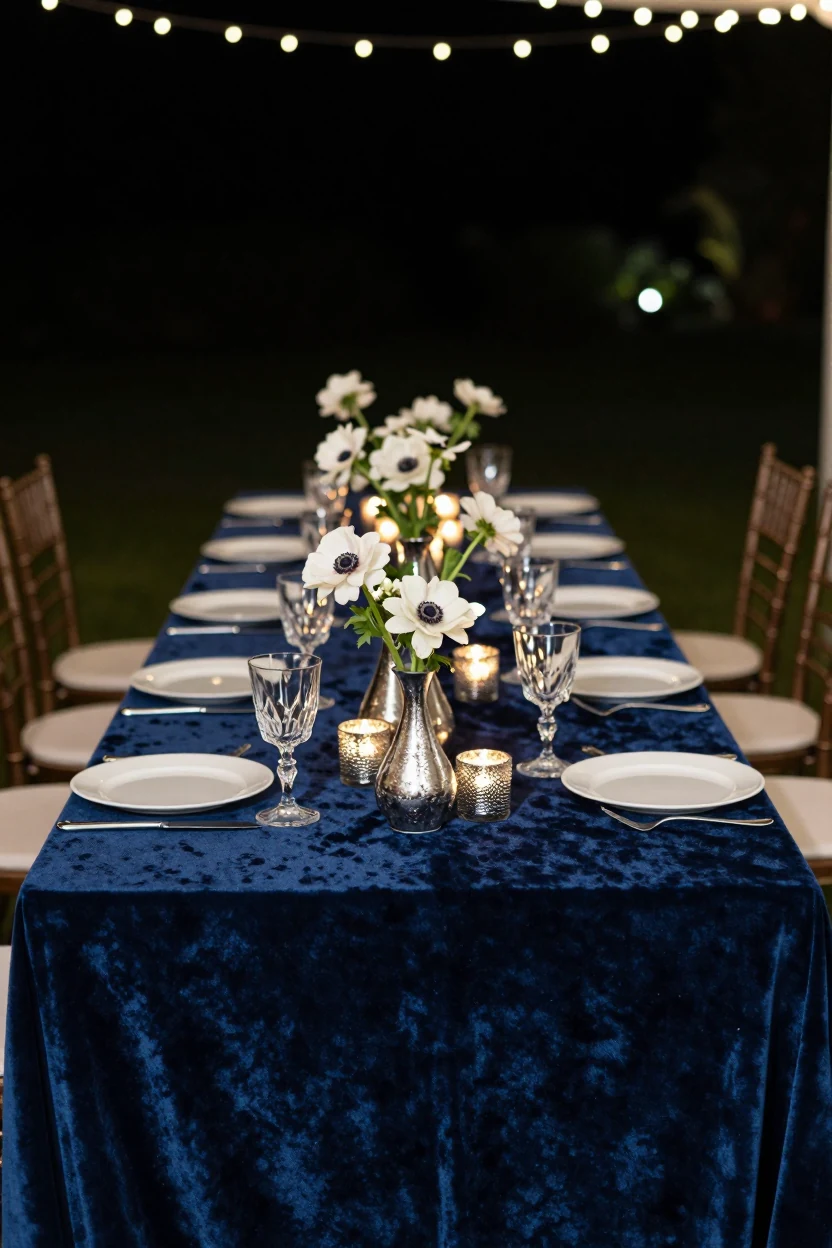
Swap bright island hues for a sophisticated nighttime aesthetic using deep midnight blue velvet tablecloths and reflective silver mercury glass centerpieces. The dark textiles absorb ambient light, allowing the shimmering glassware to catch the glow of overhead string lights and create a celestial, dreamy atmosphere. This palette works best in low-light settings, such as an evening garden reception or a dimmed ballroom. Pair the blue linens with polished silver flatware and clear crystal glasses to maintain visual clarity. For florals, use white anemones or pale hydrangeas arranged loosely within the mercury vessels to provide soft contrast without competing with the metallic sheen. Avoid heavy greenery; instead, focus on the interplay between the deep fabric texture and the liquid-like reflection of the glass. This setup feels modern and intimate, offering a distinct alternative to traditional tropical brightness while maintaining an elegant, evening-appropriate tone.
11. Pastel Pink and Mint Green
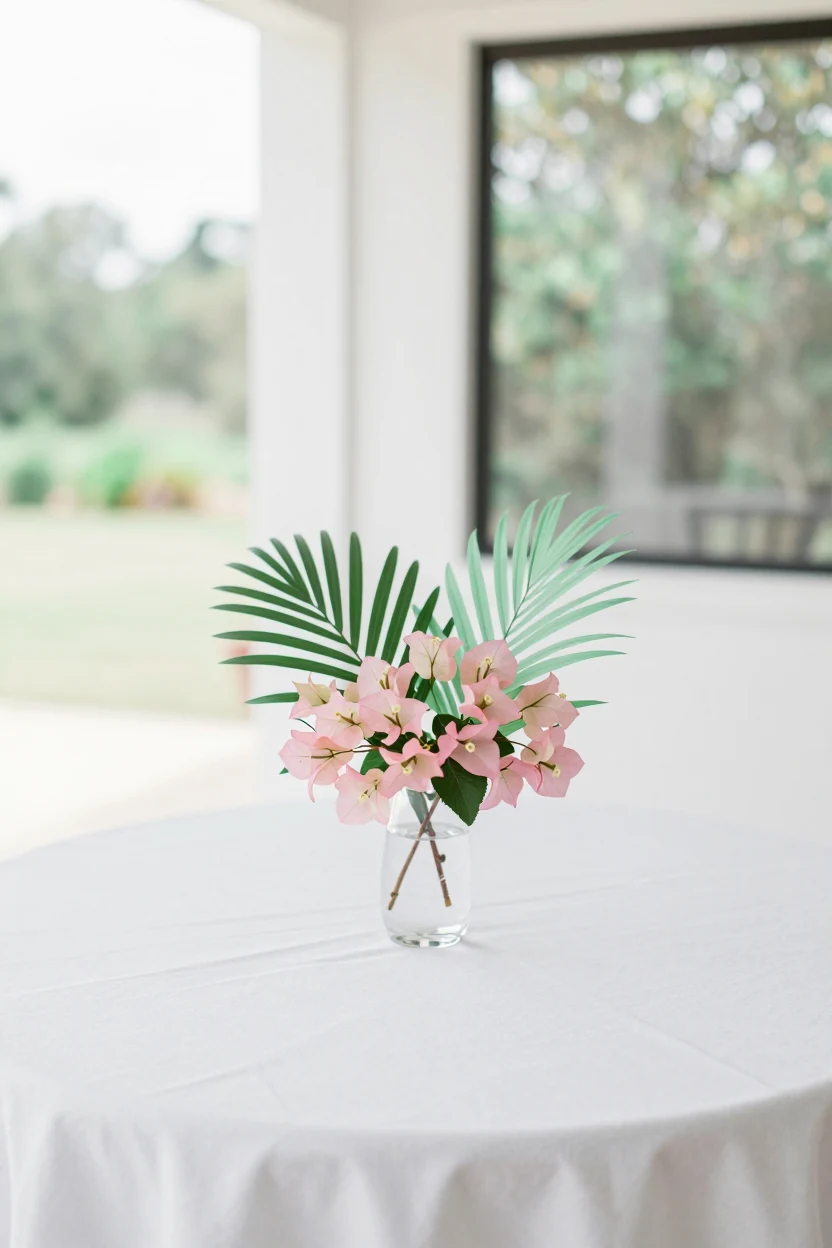
This pastel interpretation softens tropical intensity by pairing pale pink bougainvillea with muted mint green palm fronds in clear glass bud vases. The low-profile arrangement sits on crisp white linen, keeping sightlines open for daytime receptions in bright, open venues like garden pavilions or sunlit conservatories. The palette works because the desaturated tones prevent the colors from feeling juvenile, instead creating an airy, fresh aesthetic that complements natural light. To recreate this look, focus on texture contrast: the delicate, paper-thin petals of the pink flowers against the waxy, broad surface of the mint leaves. Keep dinnerware in neutral white or pale grey to let the florals stand out, and avoid heavy metallics that might clash with the softness. A single variation could involve swapping the glass vases for frosted ceramic cylinders to diffuse the light further, maintaining the translucent quality of the setup without requiring expensive crystal pieces.
12. Rustic Red and Charcoal Contrast
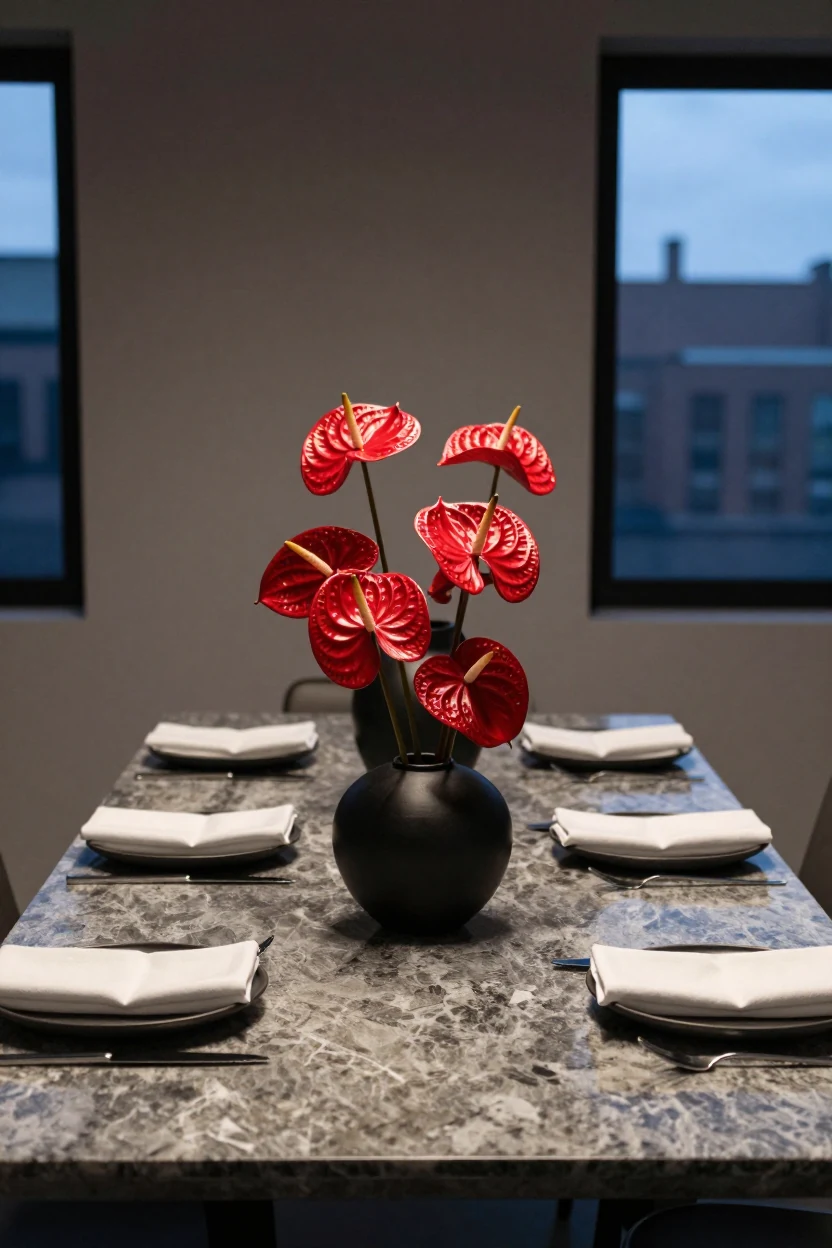
Swap the expected earth tones for a sharp, editorial statement using deep crimson and matte black. This palette relies on high contrast rather than soft blending, making it ideal for couples who prefer an urban, chic aesthetic over traditional romanticism. Anchor the look with large, sculptural flowers like red anthuriums or dark calla lilies, which hold their shape well against heavy textures. Pair these blooms with charcoal ceramic vases and slate table surfaces to ground the vibrant color. Avoid frilly fabrics; instead, use crisp white linen napkins to provide necessary breathing room between the dark elements. This setup works best in a modern venue with clean lines, such as a converted warehouse or a contemporary gallery space. The visual impact comes from the tension between the organic shape of the flowers and the rigid geometry of the dinnerware. Keep the greenery minimal, perhaps using a few sprigs of dusty eucalyptus, to prevent the table from feeling cluttered. This approach creates a sophisticated atmosphere that feels intentional and modern, moving away from the typical soft-focus tropical wedding style.
13. Sea Glass Blue and Driftwood
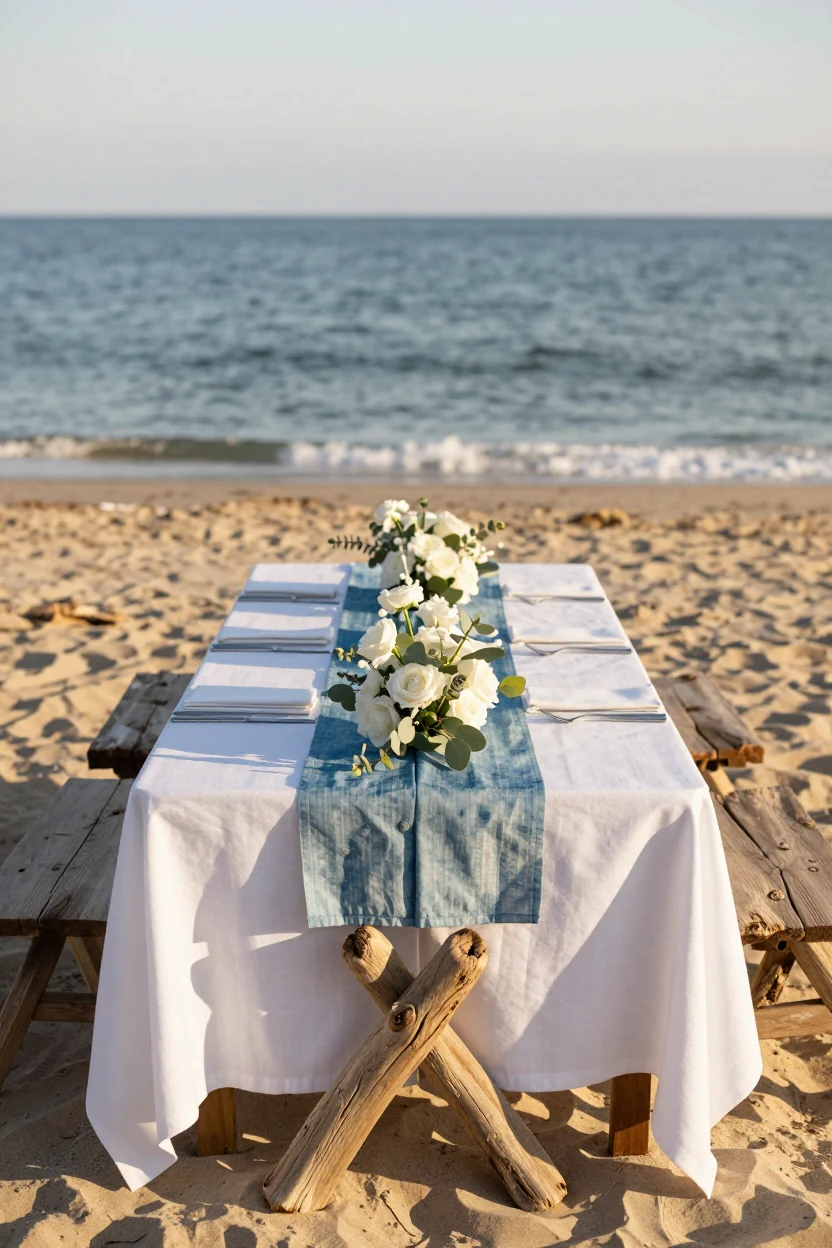
This coastal-tropical hybrid palette relies on muted sea glass blue and weathered driftwood to create a relaxed, collected aesthetic. The visual foundation is a long, rectangular table dressed in crisp white linen, grounded by a textured runner of faded blue fabric that mimics the color of shallow water. Instead of towering floral arrangements, low clusters of pale eucalyptus and small white blooms rest directly on the wood, keeping sightlines open. Weathered driftwood pieces serve as organic bases for these small groupings, adding natural texture without heavy ornamentation. The look is cohesive because the colors mirror the surrounding environment, making the setup feel integrated rather than imposed. To adapt this concept, source local driftwood and sand it smooth before applying a clear sealant to prevent splinters. Pair the blue textiles with simple glassware and unadorned candles in clear holders. This approach works best for beachfront venues where the natural light and horizon line enhance the serene, aquatic tones of the table setting.
14. Citrus Yellow and Slate Grey
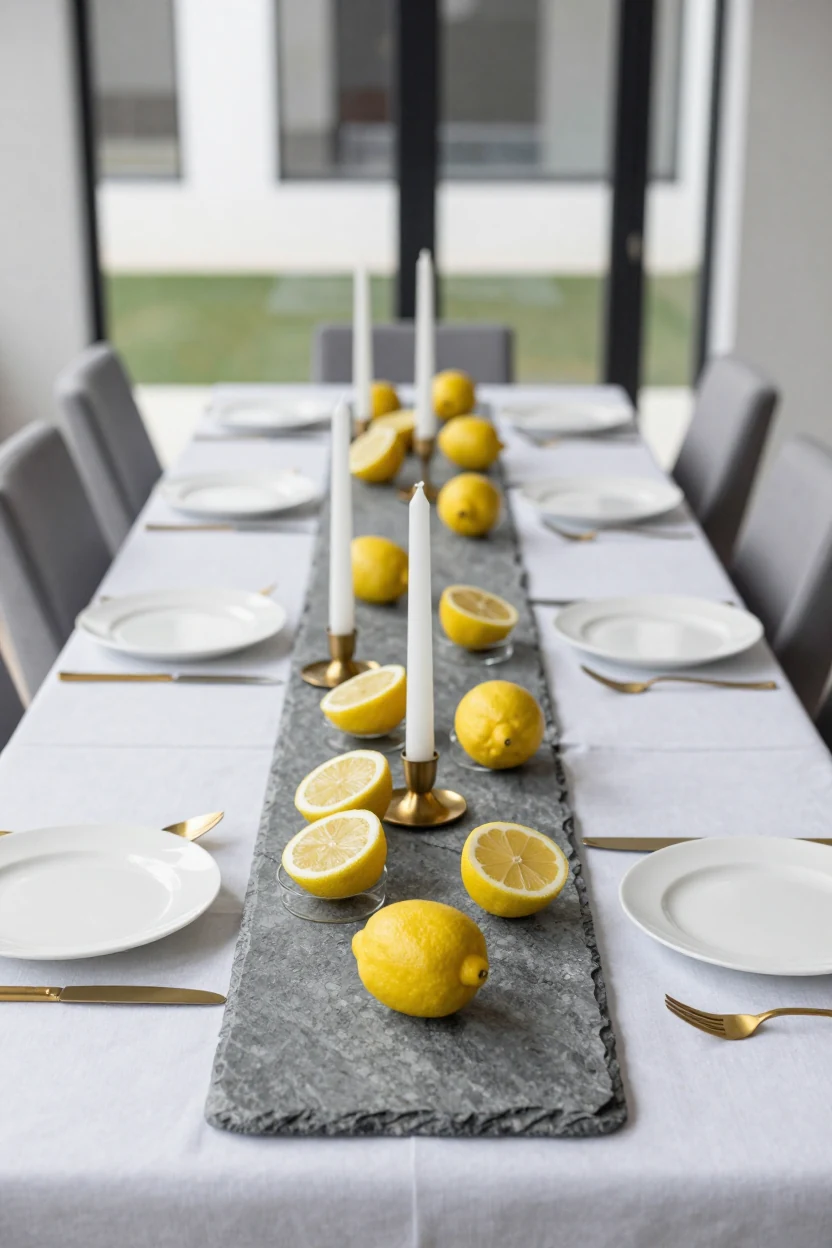
This modern reception design balances warm citrus tones against cool stone textures for a sophisticated look. Slate grey marble table tops provide a neutral, structured base that grounds bright yellow lemon and lime halves arranged in low glass bowls. The contrast creates visual interest without relying on dense floral arrangements. White taper candles in varying heights add verticality and soft light, while crisp white linen napkins and simple gold cutlery keep the place settings clean. The palette works well for formal venues where you want a contemporary feel rather than a traditional romantic one. Adapt this concept by using yellow dinner plates instead of fruit if you prefer a less perishable option, or swap the marble for grey concrete if your venue prohibits polished stone. This setup is ideal for spring or summer weddings that need a fresh, crisp aesthetic without appearing overly playful.
Selecting Your Palette Strategy
The right tropical palette depends on your venue’s natural light and your desired atmosphere. For daytime outdoor events, high-contrast colors like papaya orange and emerald green work well under direct sunlight. Evening receptions benefit from deeper tones, such as midnight blue or plum, which interact beautifully with candlelight and string lighting. Consider the season when choosing florals; while tropical blooms are iconic, many palettes here rely on foliage, fruit, or neutral blooms that are widely available year-round. Adapt these ideas by swapping materials to match your budget, ensuring the final look feels cohesive and authentic to your celebration.
