13 Backyard Wedding Mood Board Ideas for Every Style
Planning a backyard wedding requires balancing aesthetic vision with practical constraints like lawn space, lighting, and local weather. A well-defined mood board helps bridge the gap between abstract inspiration and actionable design choices. These thirteen concepts move beyond generic “outdoor” themes to offer specific directions for your ceremony and reception. Each idea highlights distinct textures, color palettes, and material combinations that translate easily into real-world setups. Whether you prefer a low-profile picnic vibe or a structured architectural focal point, these visual references provide the concrete details needed to build a cohesive look. Use these examples as a starting point to adapt styles that align with your specific season, budget, and venue layout.
1. The Rustic Picnic Table Spread
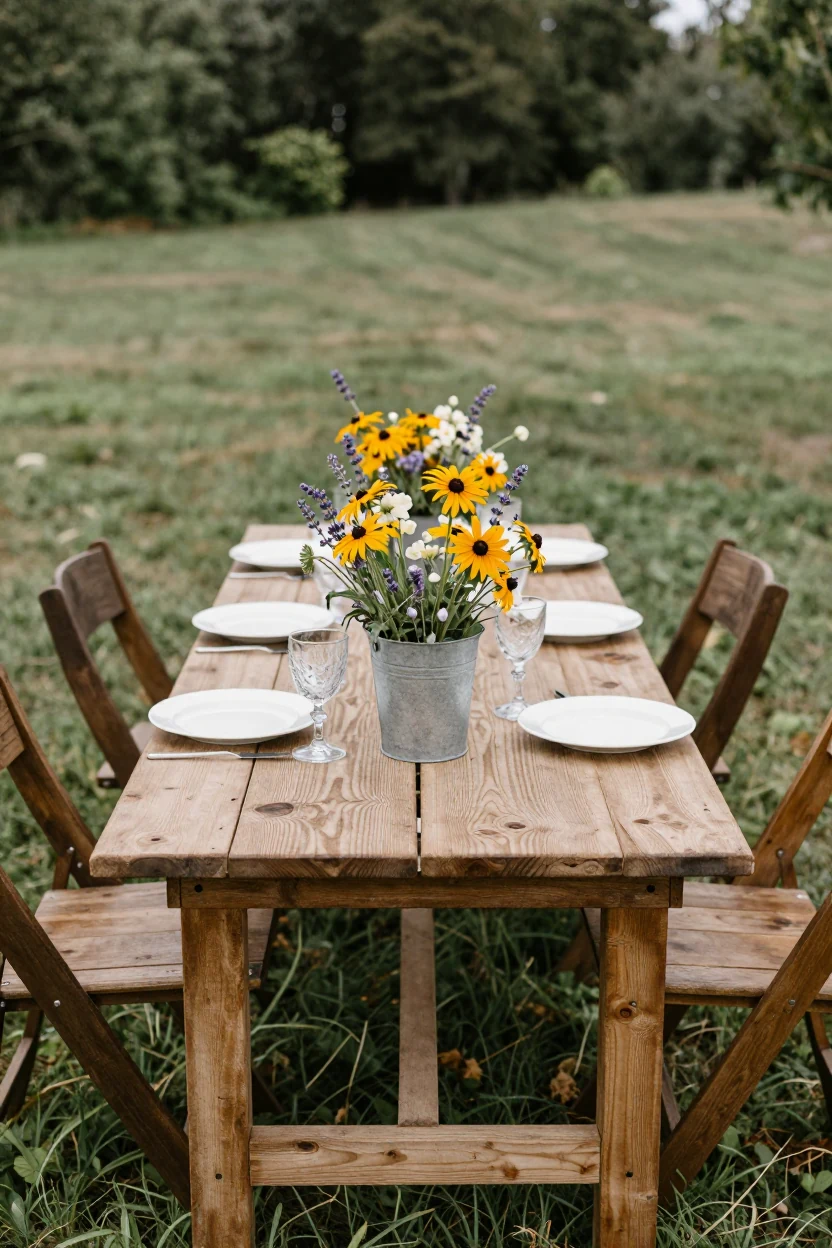
Skip the heavy linens and let the weathered grain of the farm table speak for itself. This setup thrives on texture, using raw wood surfaces to anchor a relaxed, grounded aesthetic that feels deeply connected to the outdoor environment. Low-profile centerpieces in vintage galvanized buckets hold loose bunches of black-eyed Susans and lavender, keeping sightlines open for conversation. The color palette relies on dusty greens, soft whites, and natural timber tones, creating an approachable atmosphere that prioritizes comfort over rigid formality. Pair the tables with simple mismatched chairs or wooden benches to enhance the casual vibe. This concept works best in late spring through early fall when the lawn is green but not overly lush. It is a realistic choice for couples who want a beautiful wedding without the visual weight of heavy draping or formal place settings.
2. Bohemian Tassel Chuppah Frame
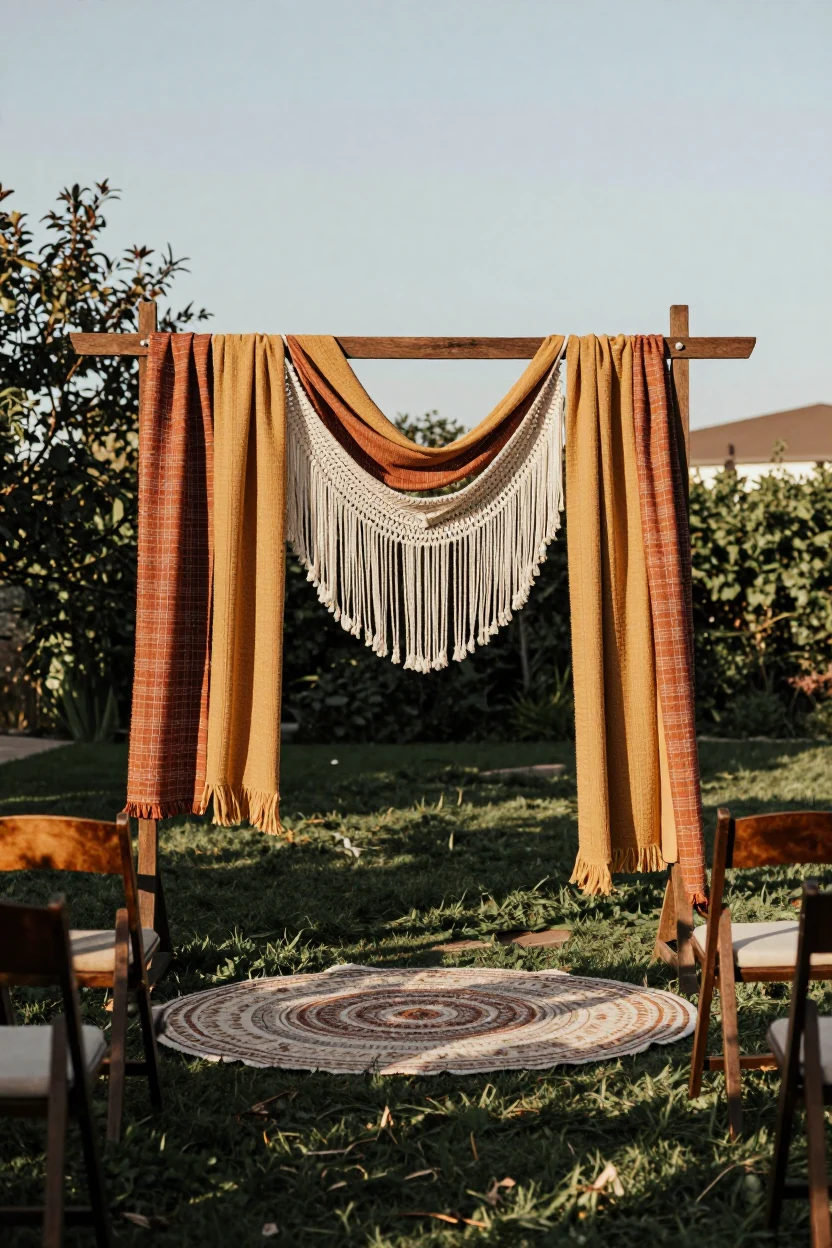
This ceremony setup prioritizes texture over blooms, using a simple wooden arch as a frame for layered macramé tassels in terracotta, mustard, and cream. The heavy fabric creates visual movement and softens the hard lines of the wood, offering a spiritual focal point without the cost of dense floral arrangements. Beneath the arch, a large circular rug anchors the space, replacing traditional pews with mismatched vintage chairs arranged on either side. This layout keeps the ground level clear for circulation while maintaining an intimate, artistic vibe. The earthy palette works well in late summer or fall backyards where natural light highlights the weave of the textiles. For couples seeking a similar aesthetic, consider draping the arch with sheer linen first to add depth before layering the tassels. Keep the aisle open and uncluttered to ensure safe access for guests. This approach relies on fabric weight and pattern rather than fresh flowers, making it a durable option for outdoor events where wind might compromise delicate petals.
3. Minimalist Concrete Archway
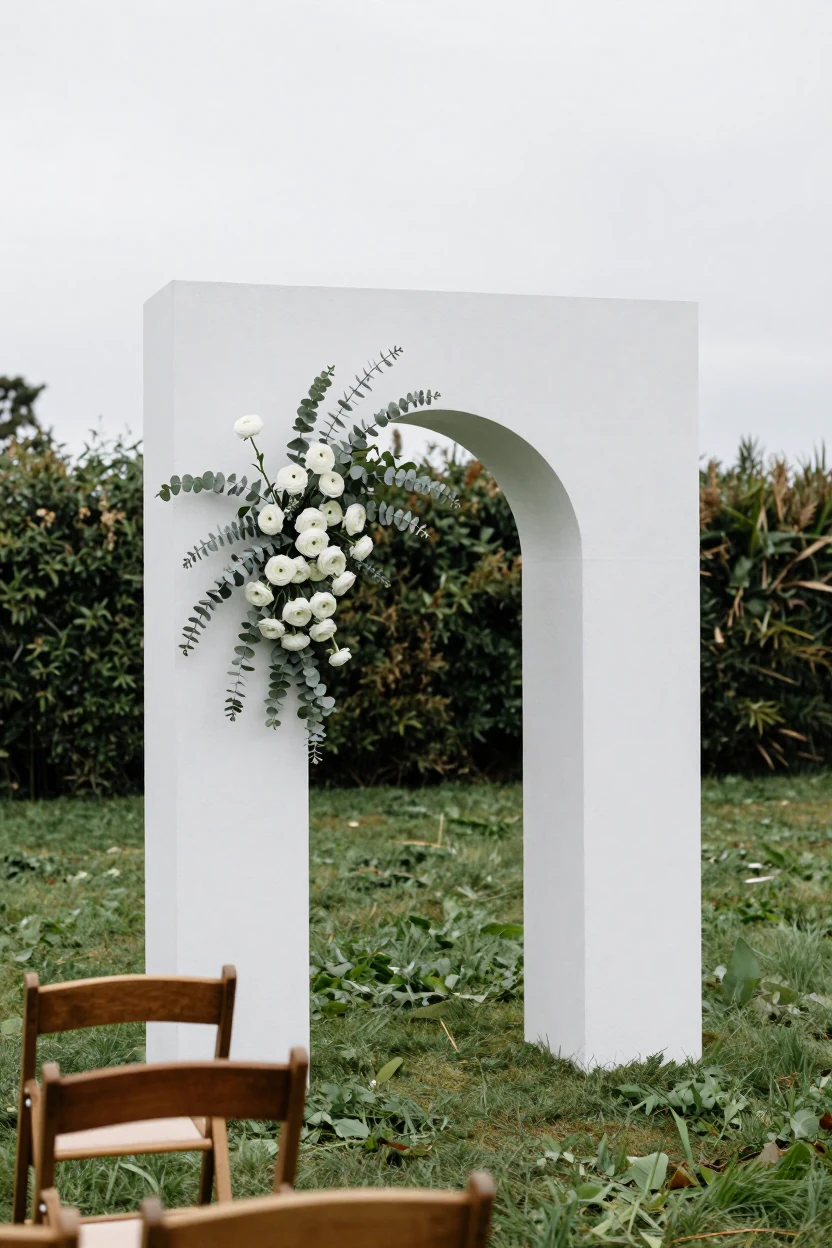
This setup strips the ceremony space down to its essential architectural form, using a stark white concrete arch as the sole focal point against a manicured lawn. The structure’s clean, geometric lines contrast sharply with the organic, cascading spray of eucalyptus and white ranunculus attached to one side. No drapery, aisle markers, or additional floral arrangements distract from the minimalist composition, creating a gallery-like backdrop that emphasizes negative space. This approach works best for modern couples who prefer a high-contrast, understated aesthetic where the venue’s natural light and landscape do the heavy lifting. To adapt this concept, select a flat, unobstructed corner of your backyard that offers a clear view of the sky or surrounding foliage. Keep the concrete surface smooth and matte to avoid glare, ensuring the texture remains subtle. The floral arrangement should be asymmetric and airy, allowing the greenery to extend slightly beyond the arch’s edge for movement. This setup pairs well with simple, unadorned seating and a neutral color palette, letting the interplay of hard architectural lines and soft botanical textures define the visual narrative without relying on elaborate decor.
4. Twilight String Light Canopy
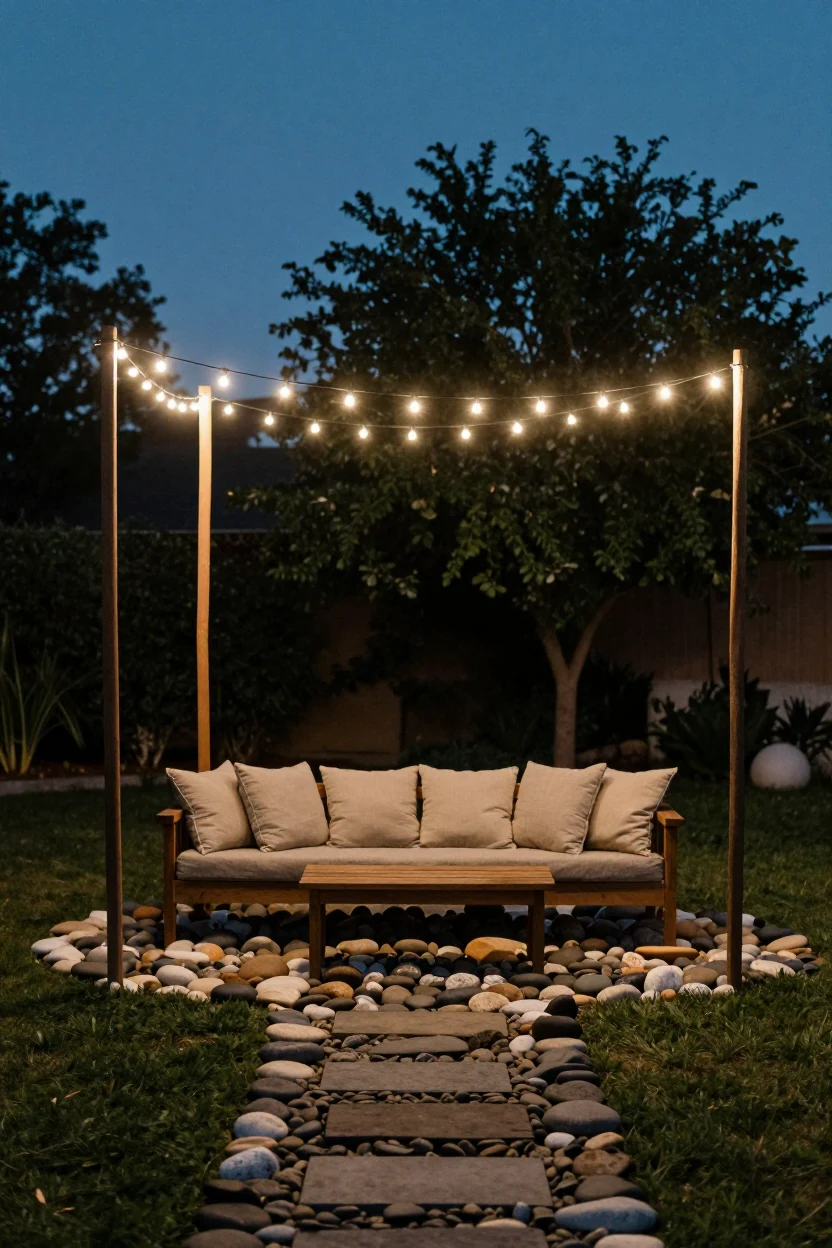
This twilight setup transforms an ordinary lawn into an intimate ceremony space using two tall cedar poles and a grid of warm-white string lights. Suspended between the posts, the lighting creates a starry canopy that defines the seating area without requiring heavy structural support. The ground features a path of smooth river stones leading to a low, cushioned bench arrangement, encouraging guests to sit close together rather than facing a raised platform. The palette relies on the natural amber glow of the bulbs against deepening blue dusk, with neutral linen cushions providing soft texture. This design prioritizes ambient enclosure over floral abundance, making it ideal for smaller gatherings where conversation is key. To adapt this concept, ensure your venue allows for temporary ground stakes and verify that electrical connections are safely grounded and away from foot traffic. The low profile of the bench seating keeps sightlines open while maintaining a cozy, cinematic atmosphere as the sun sets behind the trees.
5. Monochromatic Blue Garden Bed
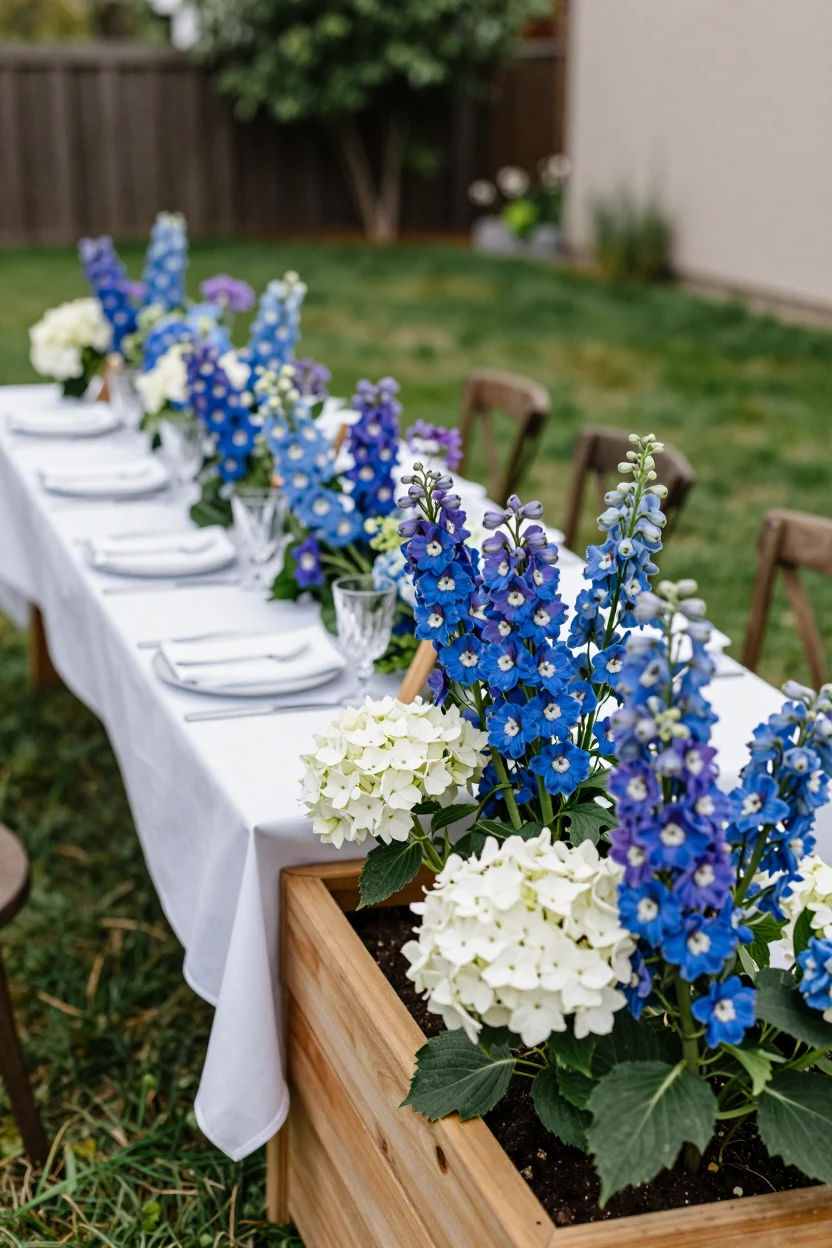
This monochromatic concept uses a raised garden bed as a permanent floral border, eliminating the need for individual table centerpieces. Fill the wood or stone planter with dense blue delphiniums and white hydrangeas to create a continuous wall of color that anchors the reception tables. Set the adjacent rectangular tables with crisp white linen and silver flatware, keeping the tabletops clear to let the intense blue tones dominate the visual field. This layout works well for backyard venues where existing landscape features can be enhanced rather than replaced. The contrast between the cool blue blooms and the neutral table setting creates a cohesive, intentional look without requiring massive floral quantities on every surface. If blue delphiniums are out of season or unavailable, substitute with blue lisianthus or dyed hydrangea to maintain the color story. Keep the arrangement low enough to preserve sightlines between guests, ensuring the garden bed acts as a decorative barrier rather than an obstruction. This approach leverages vertical space and existing infrastructure to achieve a lush, editorial aesthetic.
6. Industrial Pallet Bar Station
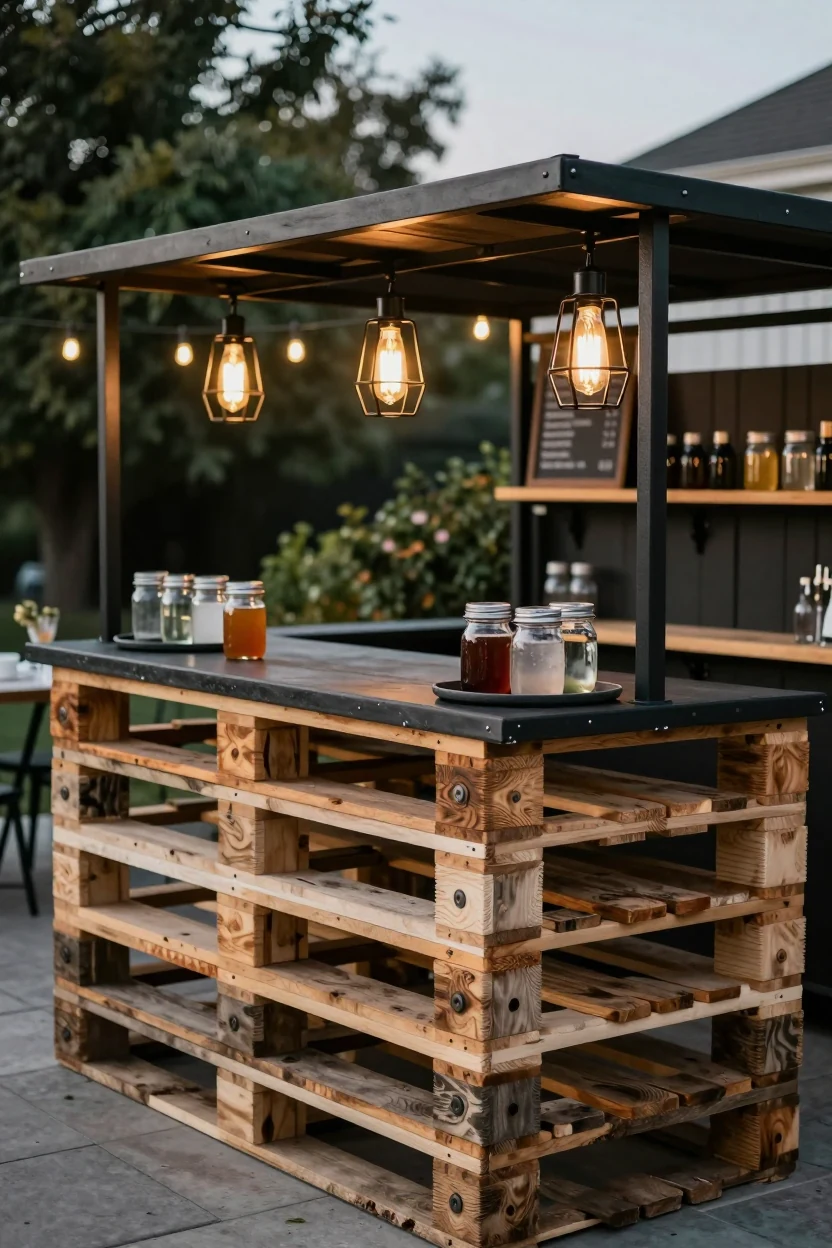
Anchor your reception with a sturdy, open-front bar constructed from stacked reclaimed wood pallets. The raw lumber texture contrasts sharply with dark slate serving trays and clear mason jar glassware, creating an urban-chic focal point that feels relaxed yet structured. Hang exposed filament bulbs in metal cages above the counter to provide warm, localized lighting without overwhelming the surrounding garden. A simple chalkboard menu rests on the back shelf, framed by the natural grain of the wood. This setup works best when positioned near the main seating area but clear of foot traffic, allowing guests to gather comfortably. For a softer look, drape a length of burlap or linen over one side to break up the industrial lines. Keep the palette neutral with black, brown, and glass to ensure the bar complements rather than competes with your floral arrangements. This functional piece serves as both a service station and a visual anchor, grounding the backyard setting with modern, edgy materials.
7. Vintage Glass Terrarium Centerpieces
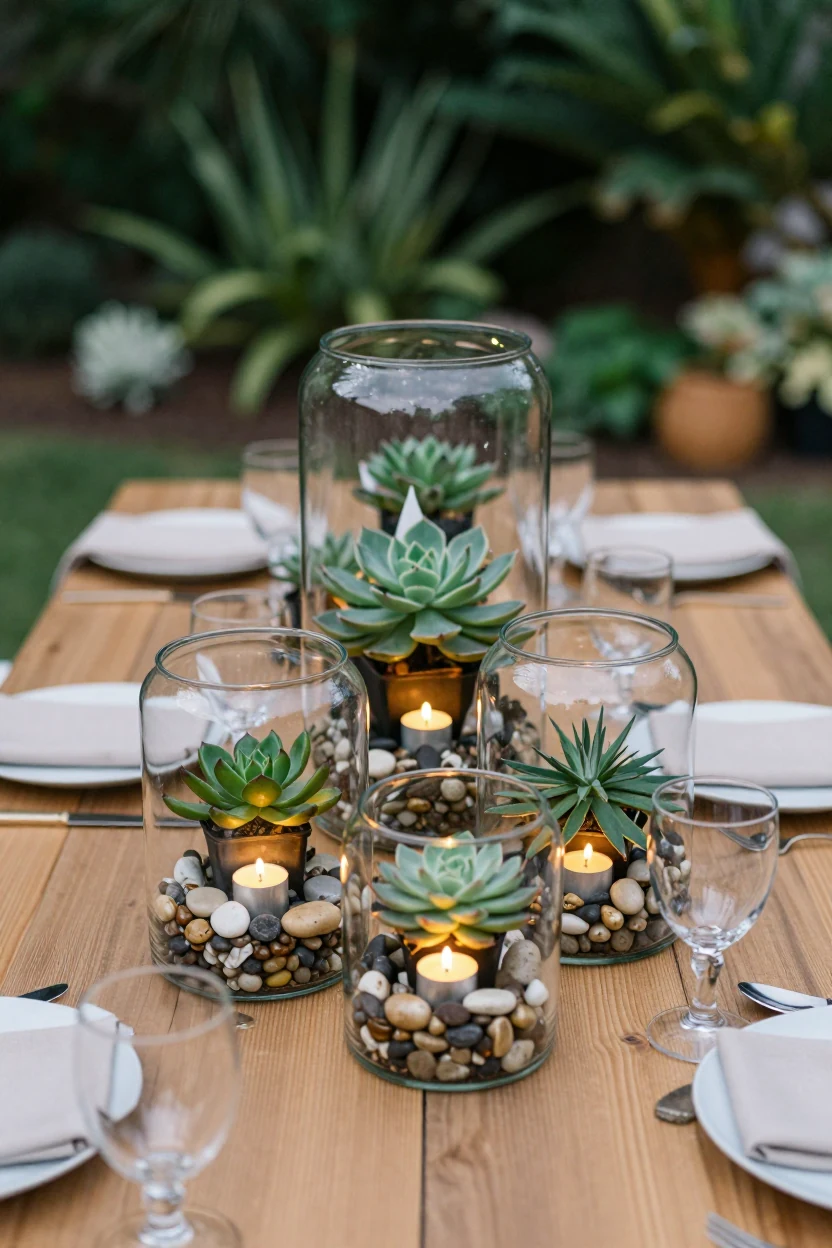
Replace traditional floral arrangements with large, clear glass terrariums to create a glowing, forest-floor effect that remains safe and cool during long dinners. Select vessels of varying heights, ranging from eight to fourteen inches, to add visual rhythm without obstructing guest eye contact across the table. Fill the base with smooth river pebbles or small river stones, then arrange low-growing succulents like echeveria or sedum in clusters. Place battery-operated LED tea lights among the greenery to provide a soft, flickering glow that mimics candlelight without the heat or fire risk. This lighting is crucial for evening backyard receptions, as it casts warm reflections on the glass and surrounding surfaces. Keep the rest of the table setting neutral using beige linen napkins and simple white ceramic plates to ensure the greenery and light remain the focal point. The contrast between the cool glass, organic textures, and warm artificial light creates a sophisticated, low-maintenance aesthetic that works well for autumn or winter backyard weddings.
8. The Lawn Game Lounge
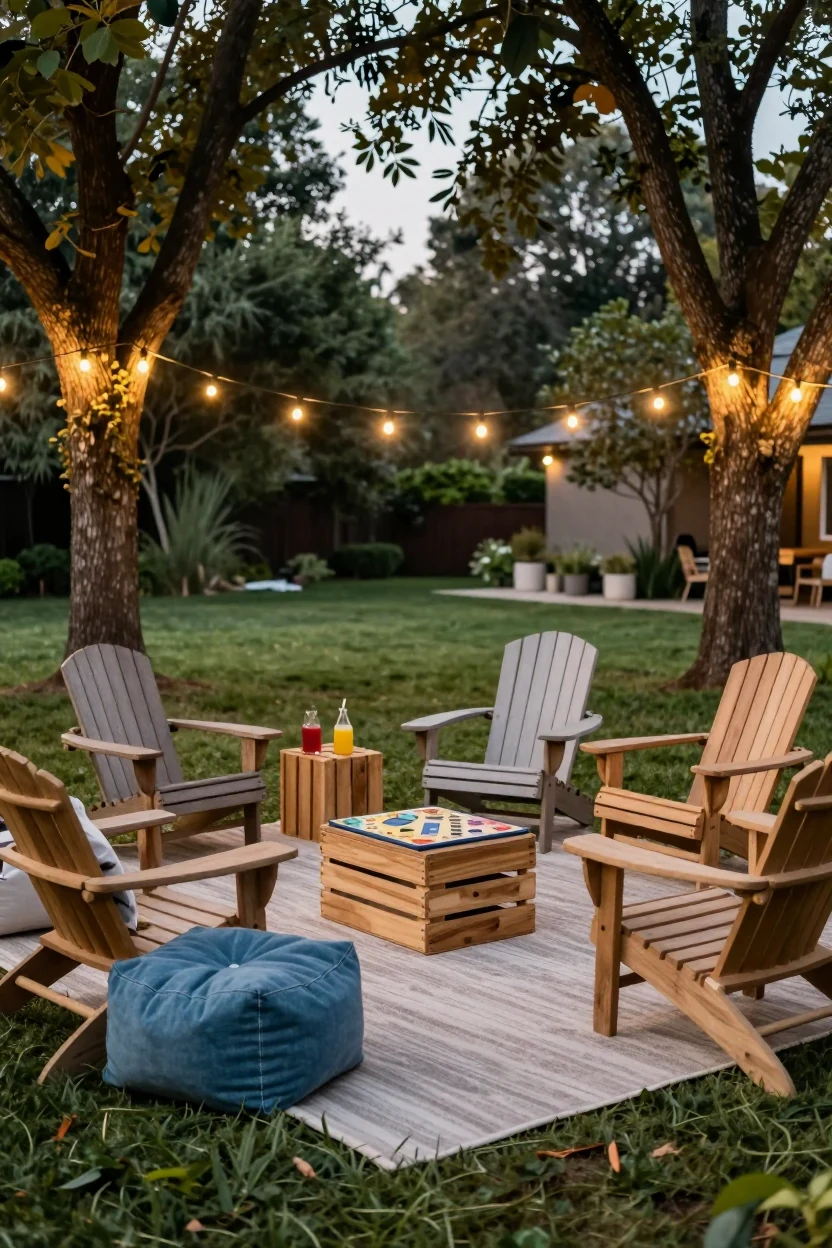
Swap the traditional dance floor for a relaxed social zone centered around a large, textured outdoor rug in neutral tones. Arrange mismatched Adirondack chairs, soft floor cushions, and low poufs in circular clusters to encourage intimate conversation rather than facing a stage. Use weathered wood, faded denim blues, and warm greys to maintain a cohesive yet casual aesthetic. Hang bistro string lights between two sturdy trees to define the perimeter without blocking sightlines, ensuring adequate clearance for guest movement. Place a few large wooden crates as makeshift tables for board games, drinks, or snacks. This layout transforms the reception into an extended living room, prioritizing comfort and connection over formal structure. It works best in late summer or early fall evenings when temperatures drop slightly, allowing guests to linger comfortably. Keep the area uncluttered with minimal decor, letting the natural lawn and surrounding garden beds provide the visual backdrop.
9. Terracotta and Sage Wedding Arch
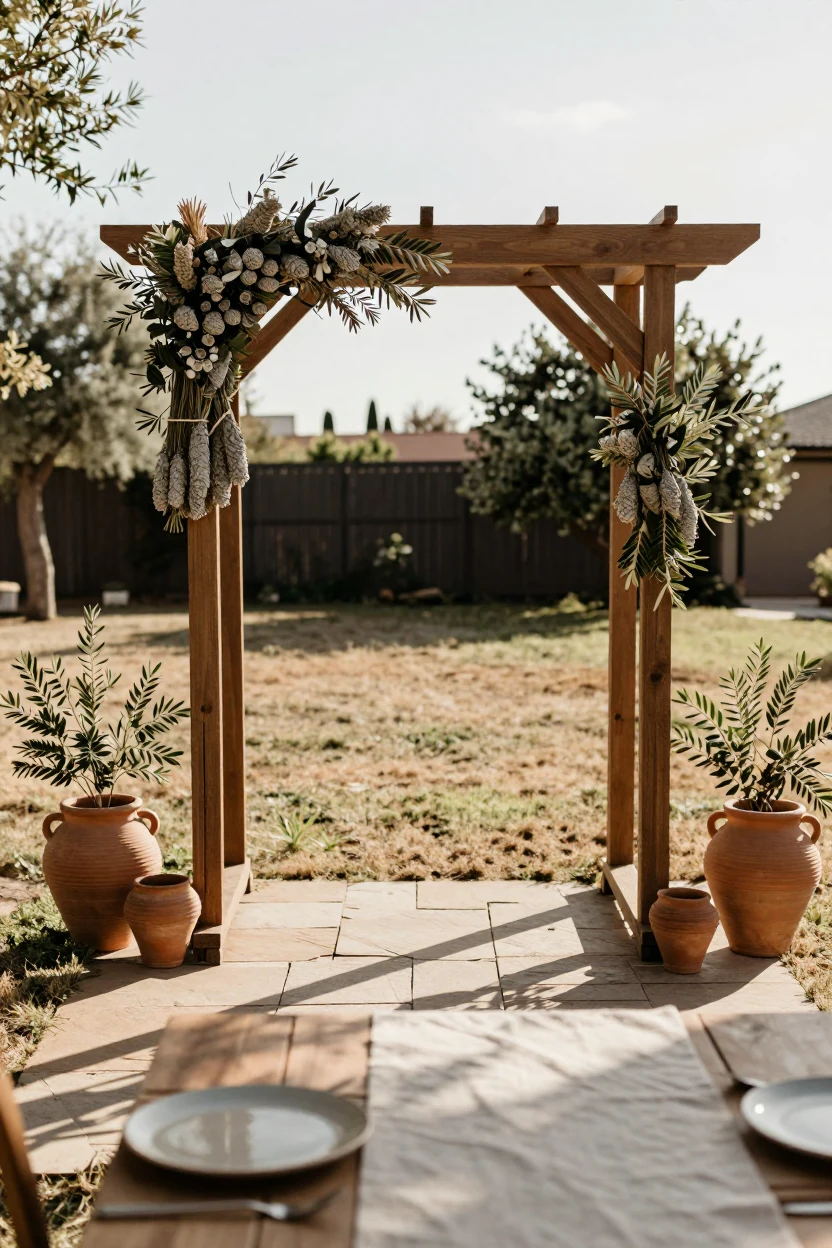
This earthy setup centers on a simple wooden arch wrapped in dried sage bundles and terracotta pots filled with olive branches. The color palette remains strictly limited to warm browns, muted greens, and sandy neutrals, creating a timeless Mediterranean vibe. It works particularly well for late-summer or autumn weddings where dried florals can be preserved as keepsakes after the event. To recreate this look, select a sturdy wooden arch that complements your venue’s natural surroundings. Wrap the structure with bundles of dried sage secured with twine at regular intervals. Place small terracotta pots containing olive branches at the base of the arch and along the aisle edges. Keep the aisle clear for guest circulation by positioning decor on the outer margins rather than directly in the walking path. Pair the arch with linen table runners and unglazed ceramic dinnerware to maintain the textural consistency. This approach avoids heavy floral arrangements, relying instead on natural textures and organic shapes. The dried elements ensure the design remains stable in outdoor conditions without requiring water sources or complex maintenance during the ceremony.
10. Floating Lantern Water Feature
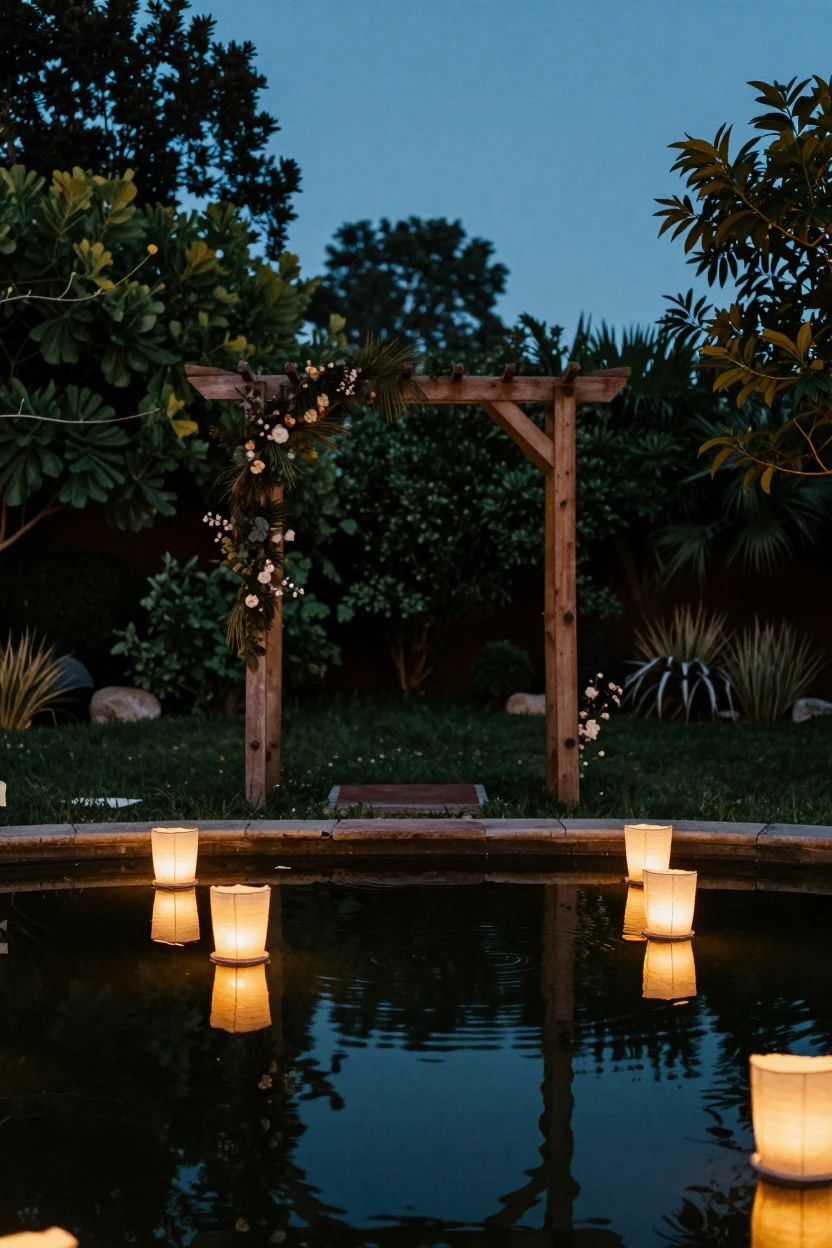
This setup transforms a backyard pond into a serene, glowing backdrop for the ceremony arch. Biodegradable paper lanterns float gently on the water’s surface, their warm amber light reflecting across the ripples to create a soft, diffused glow that replaces harsh artificial lighting. The arch itself remains understated, perhaps a simple wooden frame draped with trailing eucalyptus, ensuring the focus stays on the interplay of light and water. This approach works best for evening weddings in late spring or summer when the sky retains a deep blue hue, enhancing the contrast between the darkening environment and the floating lights. For properties without a pond, a shallow, decorative basin filled with water can serve as a substitute, provided it is stable and placed away from foot traffic to prevent tipping. The effect is quiet and atmospheric, offering guests a unique visual anchor that feels organic rather than manufactured. It requires minimal structural intervention, relying on the existing landscape to provide the reflective surface necessary for the full visual impact.
11. Monogrammed Wine Bottle Favors
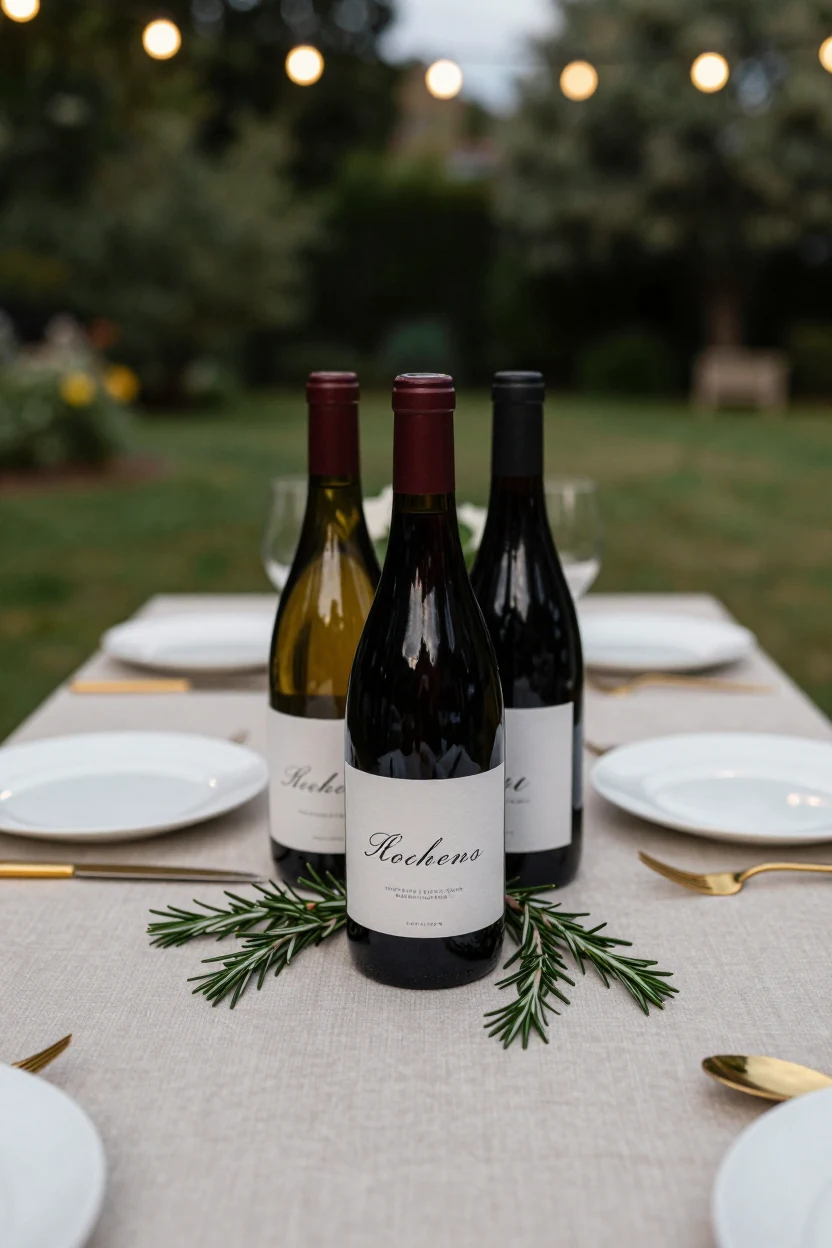
This reception table setting uses wine as both a functional guest favor and a visual anchor for the tablescape. Three bottles per cluster, featuring custom labels with the couple’s names and date, sit alongside small sprigs of fresh rosemary. The arrangement keeps the center of the table open, preventing clutter while offering a sophisticated alternative to traditional floral centerpieces. The dark glass of the bottles contrasts nicely with light linen napkins and simple ceramic dinnerware. Guests can take a bottle home, turning a standard favor into a memorable keepsake that fits within the overall aesthetic. This setup works well for intimate backyard receptions where table space is limited or where a low-profile look is desired. It allows the focus to remain on conversation and dining rather than elaborate decor. The rosemary adds a subtle herbal scent and textural contrast without requiring heavy floral maintenance. For readers, this concept is adaptable by swapping wine for local cider or sparkling water, adjusting label colors to match the wedding palette, or using different greenery like eucalyptus. It is a practical way to integrate branding into the dining experience without adding extra tables or racks. The simplicity of the three-bottle cluster ensures it remains elegant rather than overwhelming, making it suitable for both casual and semi-formal backyard weddings.
12. The Mismatched Chair Mix
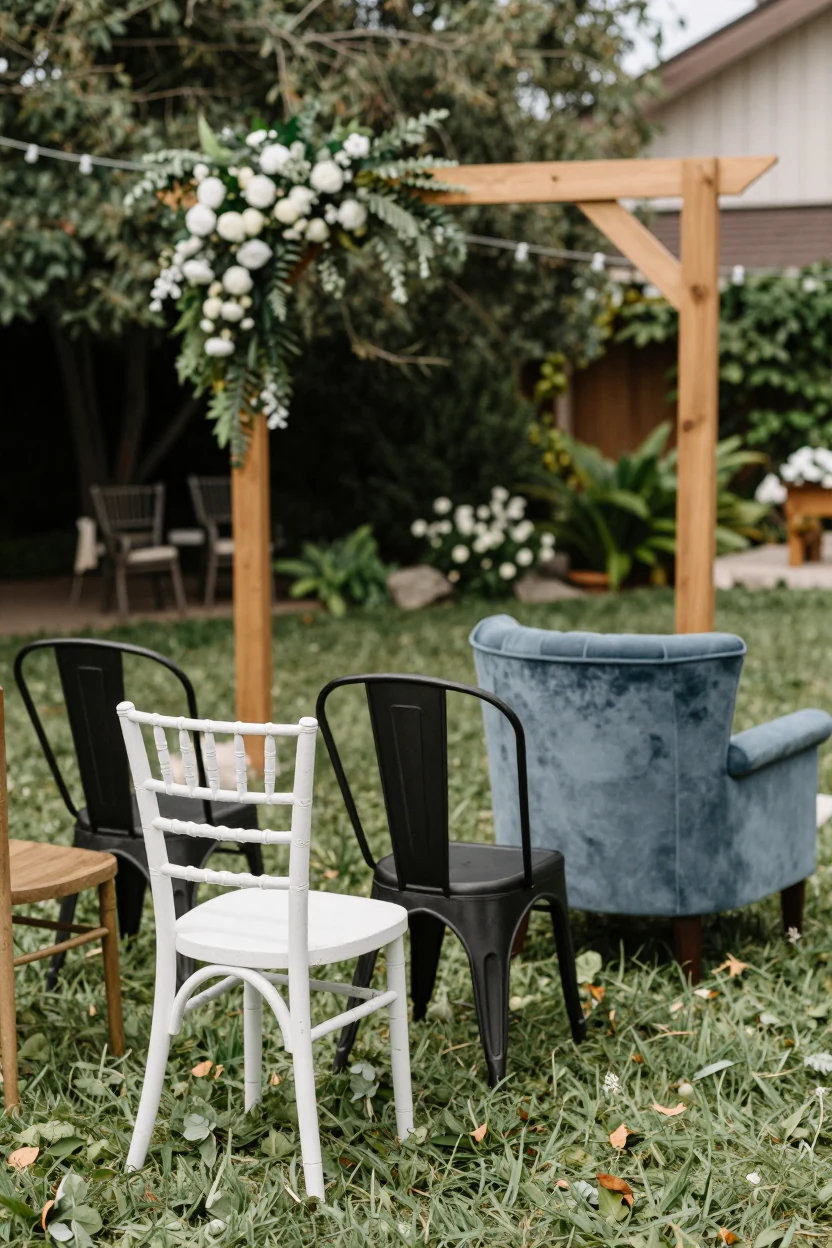
This setup trades uniformity for personality by mixing vintage wooden dining chairs, slender metal bistro seats, and a few plush velvet armchairs throughout the ceremony and reception areas. The eclectic arrangement creates a relaxed, collected-over-time aesthetic that feels authentic rather than staged. To recreate this look, source chairs from estate sales or thrift stores, ensuring they share a common neutral finish like distressed white or weathered oak to maintain visual cohesion. Pair the seating with simple linen table runners in soft sage or cream to ground the variety of textures. Keep floral arrangements low and organic, using loose bunches of seasonal wildflowers and trailing greenery on the tables rather than tall centerpieces that might block sightlines between different chair styles. This approach works well for backyard weddings where a more casual, intimate atmosphere is desired, allowing guests to feel at home in a space that reflects personal style over rigid formality.
13. Sunset Silhouette Photo Spot
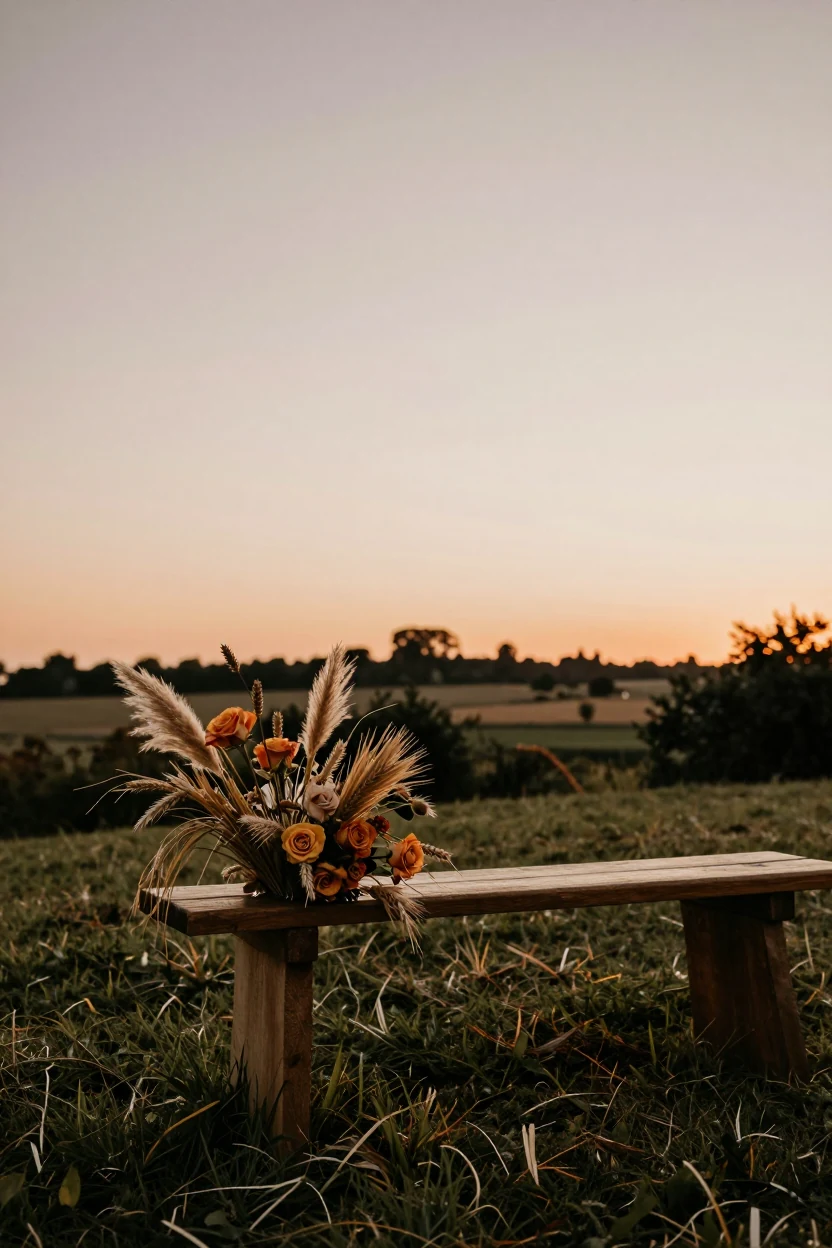
Position a simple wooden bench at the far edge of the backyard where the lawn opens to the horizon. Place a low, asymmetrical floral arrangement on one side of the bench using dried grasses and seasonal blooms in warm earth tones. This setup frames portraits against the fading light without blocking the view. The composition relies on negative space and natural shadows rather than heavy decor. Guests can sit on the bench or stand beside it for candid shots as the sun drops below the tree line. Choose materials that blend into the landscape, such as weathered wood and organic textures, to keep the focus on the sky. This area serves as a dedicated transition point where the party moves from structured celebration to relaxed evening viewing. Keep the path leading to this spot clear for safe guest circulation.
Choosing Your Visual Direction
Selecting the right mood board depends on how much structure you want in your backyard setting. If you prefer a relaxed atmosphere, focus on low-profile seating and natural textures like wood and linen. For a more dramatic effect, consider architectural elements or lighting installations that define the space. Always verify that your chosen setup allows for safe guest circulation and stable placement of any standing decor. Adapt these concepts by swapping flowers based on seasonal availability or adjusting materials to match your existing venue features. The goal is a cohesive look that feels intentional yet achievable within your practical constraints.
