13 Distinctive Dusty Blue Wedding Color Palette Ideas
Dusty blue offers a versatile middle ground between the boldness of navy and the softness of powder blue. This muted tone works across diverse aesthetics, from minimalist modern tablescapes to textured backyard celebrations. The following ideas focus on specific material pairings, floral textures, and lighting techniques to help you adapt this palette to your venue’s natural light and architectural features. Each concept provides a clear framework for execution, allowing you to balance cool tones with warm metals, organic wood, or crisp white linens. Use these setups as a starting point to refine your color story based on your specific season, guest count, and desired level of formality.
1. Monochromatic Blue-Green Garden Ceremony
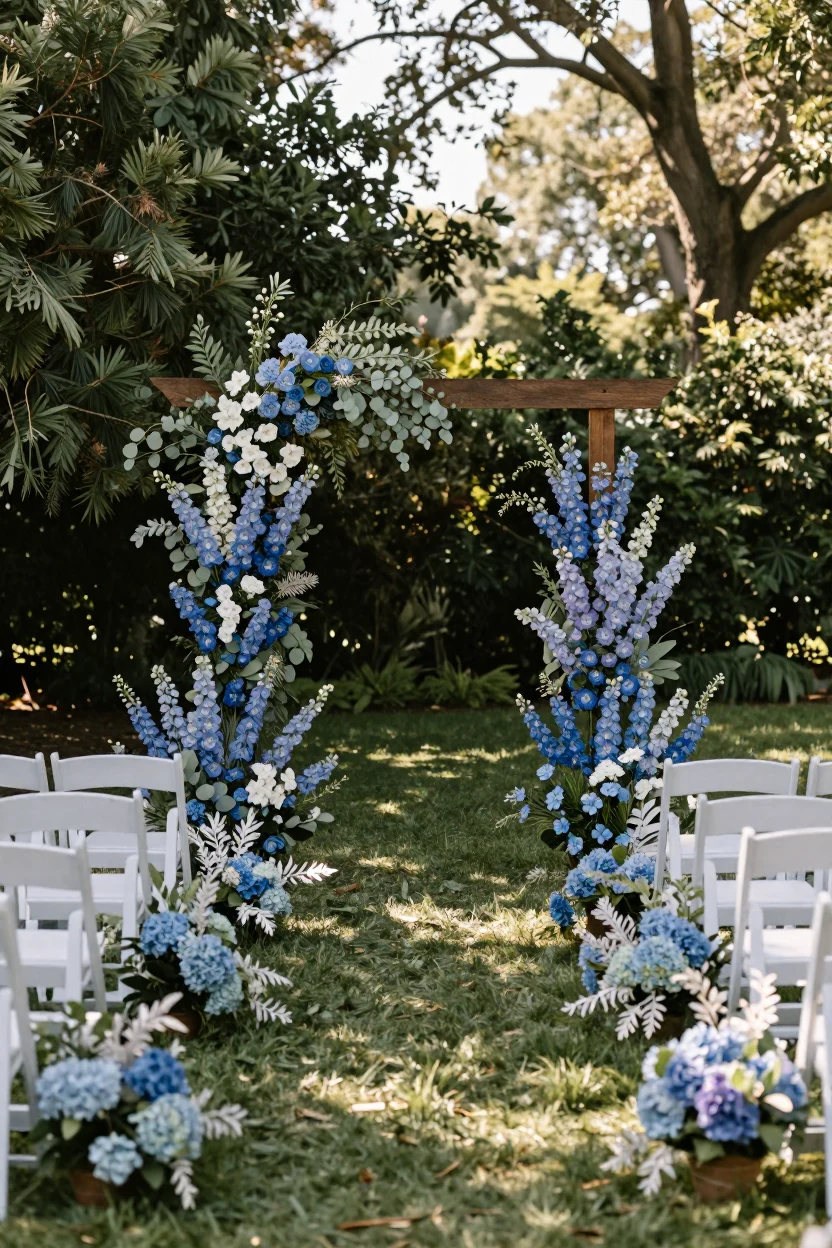
This monochromatic approach skips traditional accent colors in favor of a layered gradient of cool tones. The focal point is a wooden arch densely wrapped in eucalyptus and dusty blue delphiniums, creating a textured backdrop that shifts from deep slate at the base to soft periwinkle near the top. White wooden chairs line the aisle, providing a neutral frame that keeps the eye on the floral depth. The ground is covered in a mix of blue hydrangeas and silvery foliage, maintaining the blue-green spectrum without introducing warm hues. This setup works best for late summer or early fall venues where natural greenery remains lush. For adaptation, use varying shades of blue in the bouquet and aisle markers to keep the theme cohesive. If delphiniums are difficult to source, tall blue lisianthus offers a similar vertical shape with softer petals.
2. Minimalist Slate and White Tablescapes
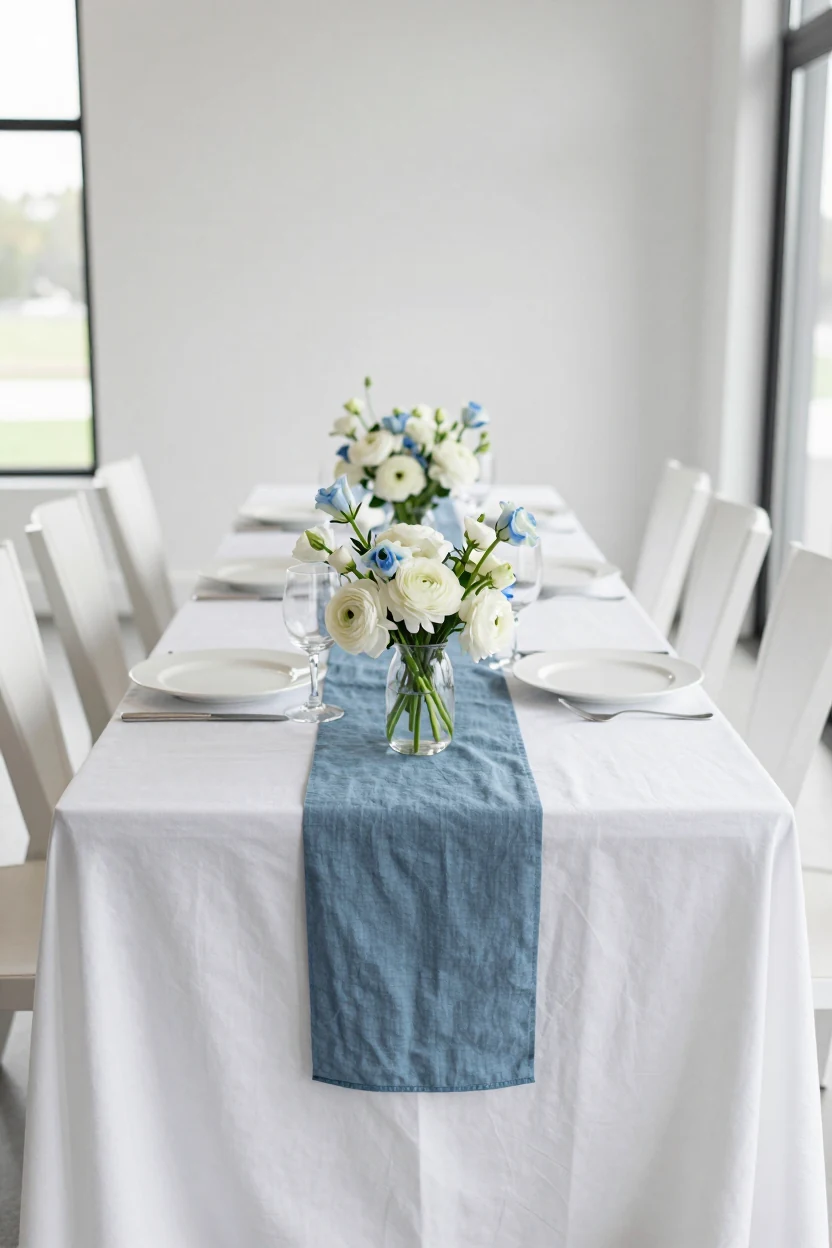
This minimalist reception setup relies on negative space to create a serene, modern atmosphere. Long rectangular tables are dressed in crisp white linen, broken only by a single, narrow runner of dusty blue fabric down the center. The restraint prevents visual clutter, allowing the subtle hues of the florals to stand out. Low-slung centerpieces feature white ranunculus and pale blue lisianthus arranged in simple clear glass vases. These arrangements sit low enough for guests to maintain eye contact across the table, emphasizing conversation over spectacle. The color palette remains strictly limited to white, slate, and soft blue, creating a cohesive look that feels fresh rather than cold. This style works well in bright venues with natural light, though it can be adapted for evening events by adding subtle warm lighting. The simplicity of the design makes it easy to execute, focusing on quality linens and well-structured floral arrangements rather than excessive decor. It is an ideal choice for couples who prefer a clean, contemporary aesthetic over traditional ornate styling.
3. Vintage Denim and Linen Backyard Setup
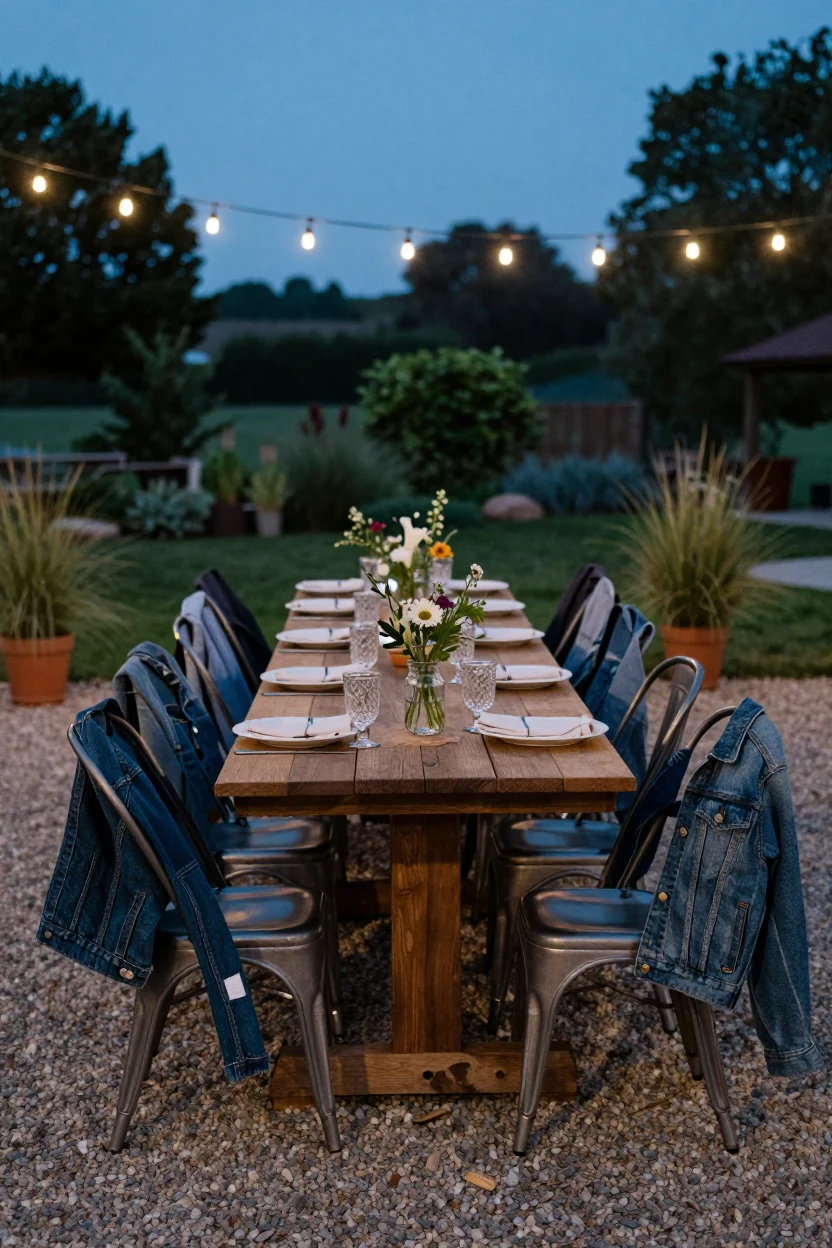
This backyard setup leans into casual texture by tying repurposed denim jackets and shirts as chair sashes in varying washes of blue. The long wooden tables feature simple white paper plates and linen napkins, keeping the table setting unpretentious. Centerpieces consist of mason jars filled with loose wildflowers like chamomile and baby’s breath, allowing natural greenery to spill over the rims. String lights hang low above the dining area, providing warm ambient lighting that contrasts with the cool denim tones. The aisle is marked by potted grasses rather than formal runners, maintaining a relaxed flow for guests. This approach works best for late spring or early autumn weddings where the weather supports open-air dining. To adapt this concept, source gently worn denim from thrift stores or personal closets to create unique color variations. Ensure all candles are contained in glass jars and placed away from fabric sashes. For a stricter budget, replace paper plates with reusable ceramic dishes if available, keeping the focus on the tactile denim accents.
4. Powdery Blue and Brass Reception
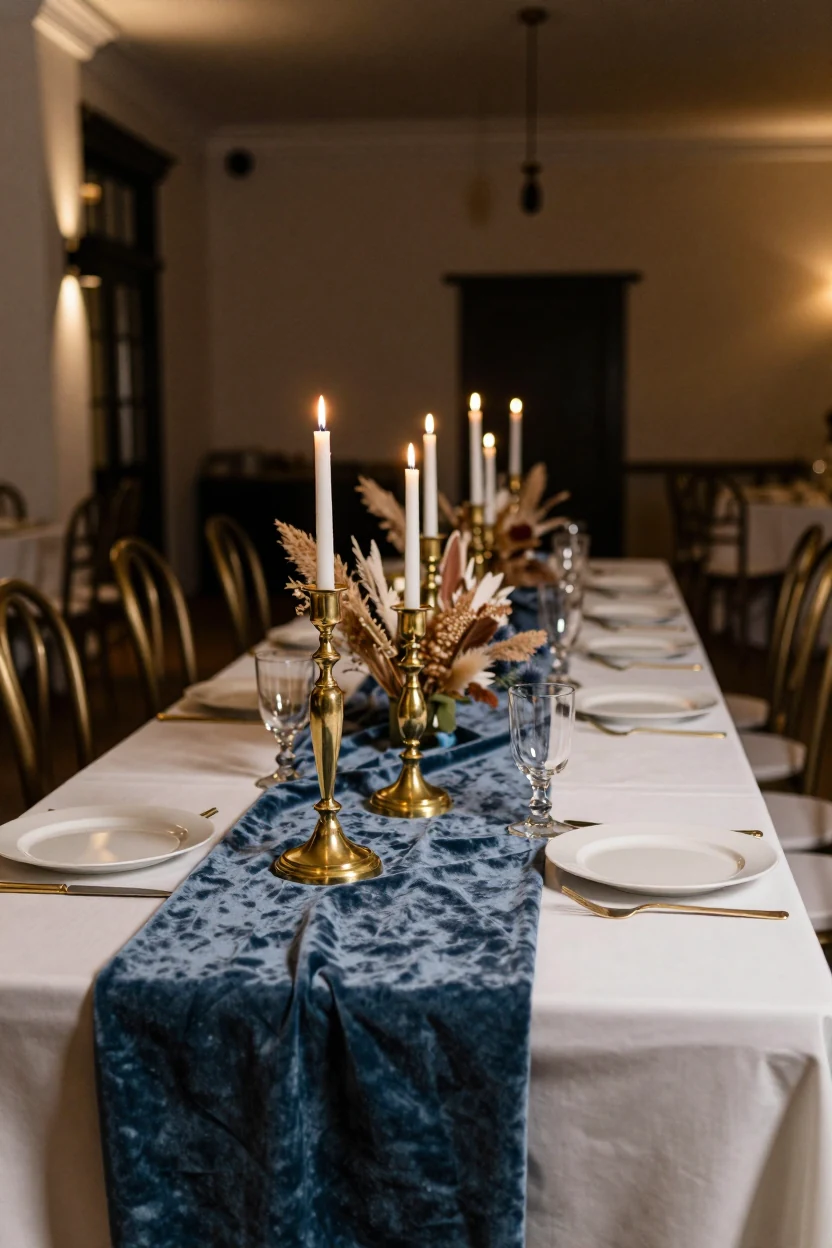
This formal reception setup balances the cool depth of dusty blue velvet with the warm reflectivity of polished brass. Long, narrow runners anchor the table setting, leading the eye toward low-profile floral arrangements featuring dried pampas grass and blue thistle. The sparse botanicals emphasize texture over volume, preventing the table from feeling cluttered while maintaining visual interest. Brass candlesticks of varying heights provide a rhythmic metallic accent that contrasts with the matte finish of the velvet. This color combination works because the warm metal tones neutralize the potentially icy quality of cool blues, creating a grounded, sophisticated atmosphere ideal for evening events. To recreate this look, focus on material contrast rather than quantity. Use flat brass flatware to extend the metallic theme across the place setting. If fresh blue thistle is unavailable or too seasonal, dried options offer a durable alternative that maintains the textural quality. Keep the overall arrangement low enough to allow guests to see one another, preserving the social flow of the dinner while keeping the focal point on the interplay between soft fabric and hard metal.
5. Layered Blue Tulle Aisle Draping
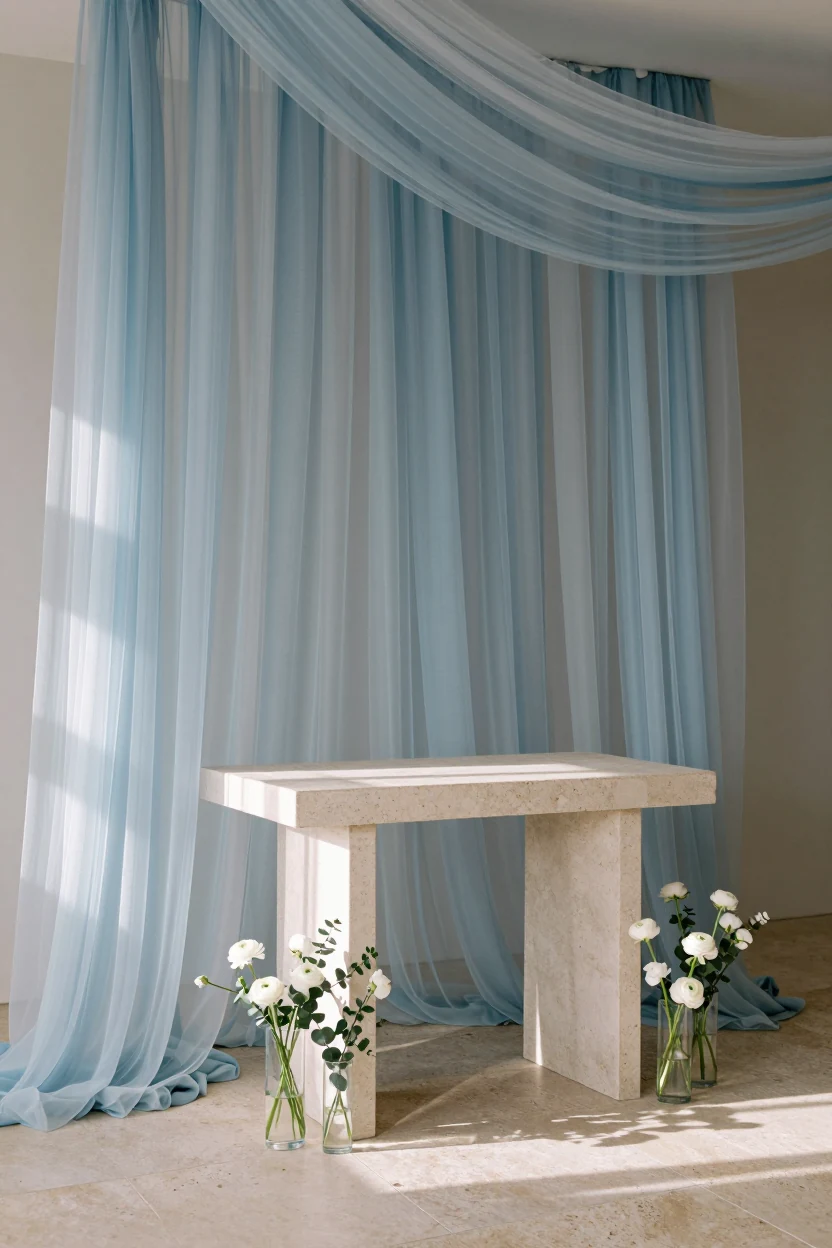
This ceremony setup relies on texture and light rather than heavy floral arrangements to create depth. Suspended from ceiling rigging points, layers of sheer dusty blue tulle cascade down at varying lengths, forming a soft, translucent curtain behind the altar. The fabric is lightweight enough to catch the air, preventing it from appearing stiff or synthetic. Beneath the draping, a simple stone floor anchors the scene, while a low, circular altar space features a few clusters of white ranunculus and eucalyptus in clear glass vases to keep the focus on the textiles. Natural light filters through the tulle, casting dappled shadows that enhance the ethereal quality of the space. This approach works well for indoor venues with high ceilings or exposed beams, as it utilizes vertical space without obstructing guest sightlines. For adaptation, ensure the tulle is secured to rated anchors and kept clear of emergency exits and aisle paths. A single variation involves adding a few battery-operated fairy lights within the fabric folds for evening ceremonies, provided local fire codes permit open-flame alternatives in close proximity to flammable materials.
6. Desert Twilight Outdoor Dinner
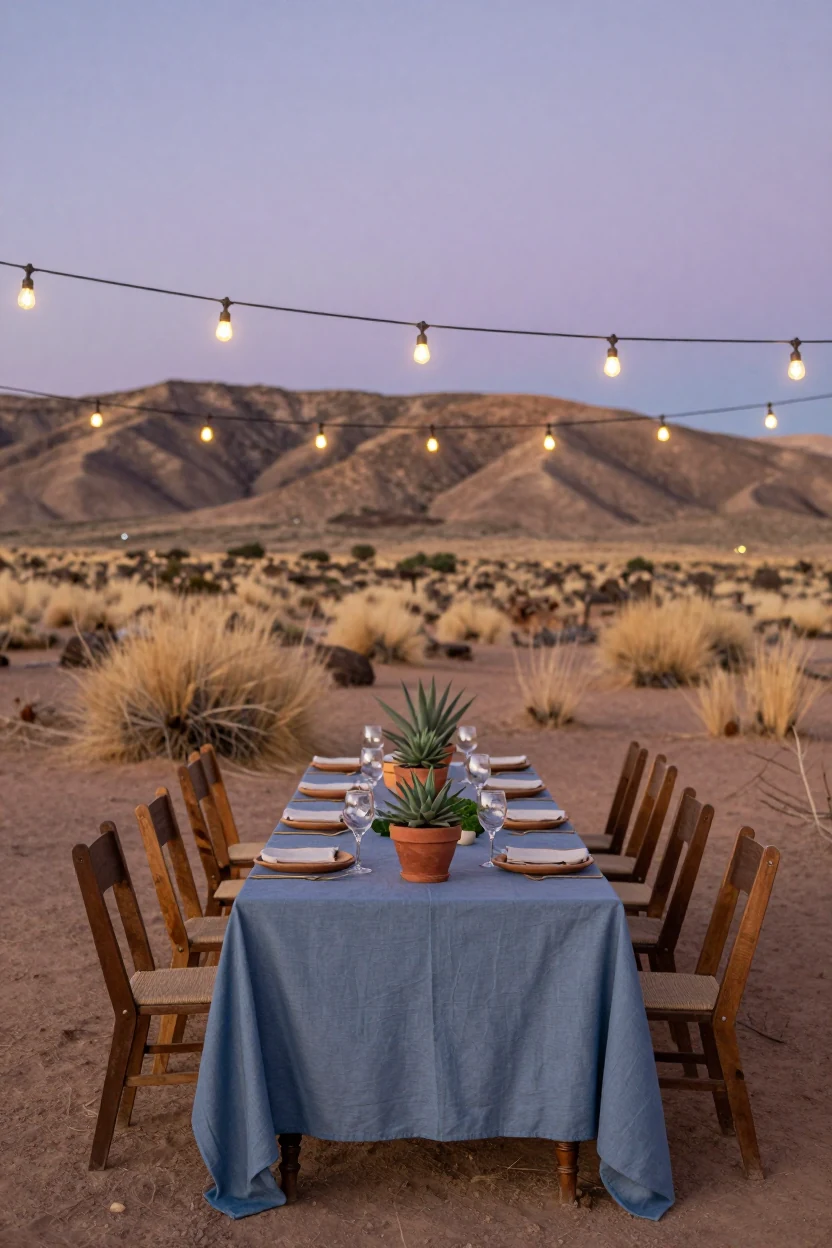
Set against a backdrop of rolling desert hills, this long banquet table demonstrates how dusty blue thrives in warm, arid environments. The cool tone provides a striking visual contrast to the surrounding ochre earth and dry vegetation, preventing the palette from feeling washed out. Use simple wooden chairs or wrought-iron frames to maintain an open, airy feel. For centerpieces, cluster small terracotta pots containing succulents and agave plants directly on the tablecloth. This low-profile arrangement allows guests to see each other while grounding the blue linens with organic texture. Drape warm string lights overhead to soften the harsh desert sun and create a cozy atmosphere as evening falls. Pair the blue napkins with silver or matte black cutlery to keep the look modern rather than overly rustic. This setup works best for late summer or early fall weddings when temperatures are manageable for outdoor dining.
7. Monochrome Blue Floral Wall
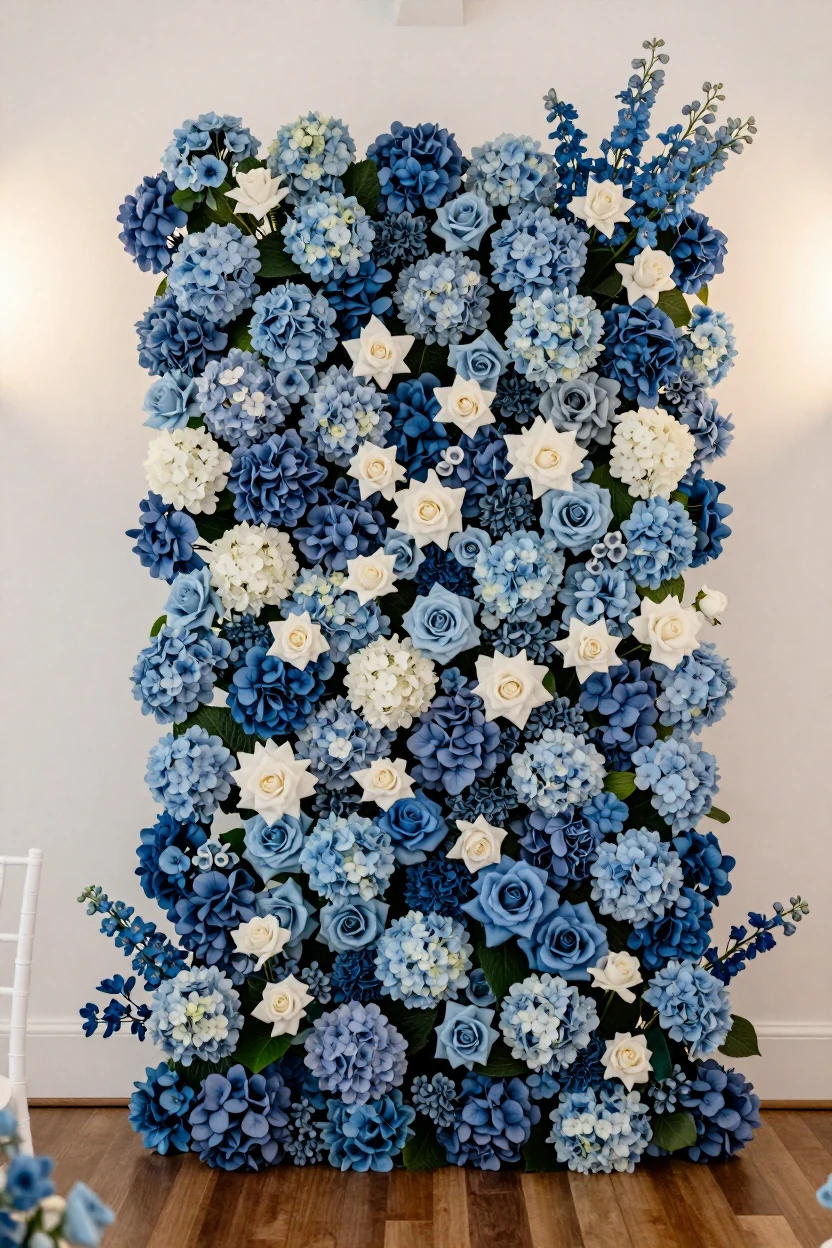
This dramatic reception entrance transforms a standard doorway into an immersive floral installation using strictly blue-toned blooms. By layering deep navy delphiniums, mid-tone dusty blue hydrangeas, and pale powder-blue garden roses, the arrangement creates a rich, monochromatic tapestry. The visual depth relies on texture contrast rather than color variety, with velvety petals set against crisp eucalyptus or silver dollar eucalyptus for structural support. This setup serves as a high-impact photo backdrop that anchors the reception space without overwhelming the room. For practical application, this concept works best in venues with solid, neutral walls where the florals can stand out. It is adaptable to various seasons by substituting blue-toned lisianthus or anemones if peonies are unavailable. Keep the surrounding architecture clean and uncluttered to maintain focus on the floral density.
8. Chalky Blue and Concrete Modern Wedding
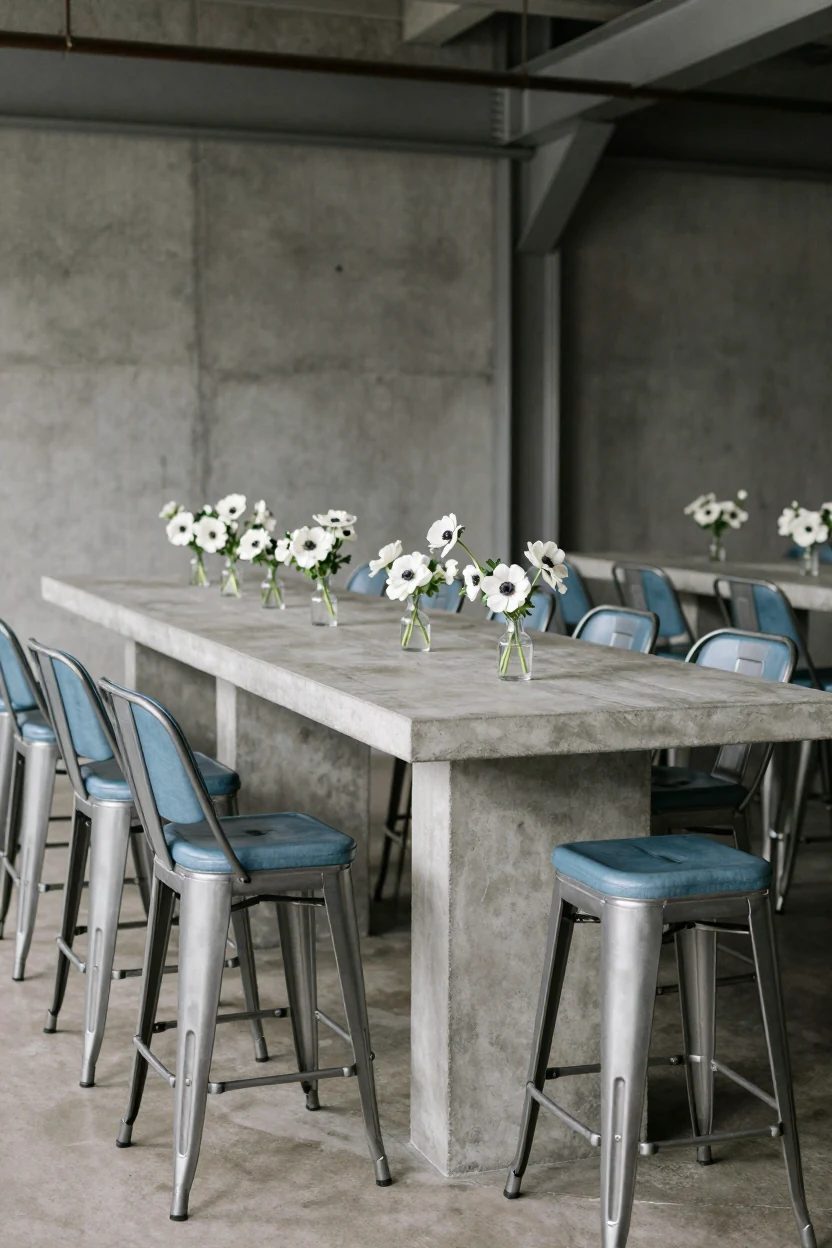
This industrial-chic setup leverages raw concrete and metal to create a grounded, urban atmosphere where dusty blue acts as a refined accent rather than a dominant feature. The scene centers on long, unpolished concrete banquet tables paired with sleek metal stools, establishing a minimalist baseline. Dusty blue leather bar stools are interspersed among the metal seating to introduce warmth and texture without overwhelming the neutral gray palette. Low centerpieces of white anemones in clear glass vessels maintain sightlines across the table, keeping the focus on the architectural details of the venue. The lighting is soft and diffused, highlighting the smooth leather against the rough concrete surface. This approach works best in venues with exposed brick, steel beams, or polished concrete floors. For adaptation, keep floral arrangements low and sparse to avoid competing with the structural elements. If the venue lacks industrial features, consider using concrete-look table runners or metal-framed chairs to mimic the aesthetic. The restrained use of color ensures the space feels sophisticated and modern rather than cluttered.
9. Pastel Blue and Pink Spring Garden
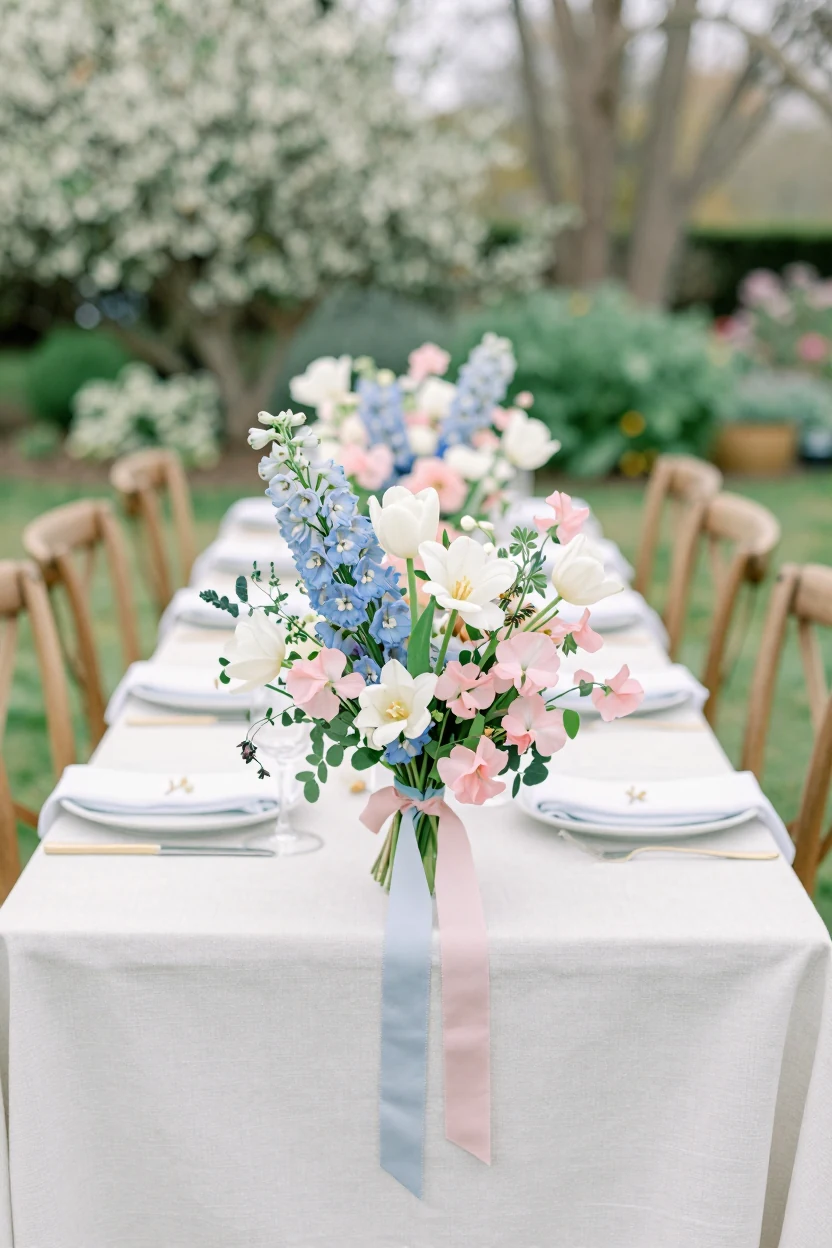
This spring garden setup pairs dusty blue with blush pink to create a soft, romantic atmosphere. The visual focus remains on low-centerpiece floral arrangements featuring tulips and sweet peas, which sit atop simple white linen tablecloths. Light wood chairs with rounded backs provide a natural texture that complements the delicate florals without competing for attention. The color palette relies on the gentle contrast between cool blue tones and warm pink hues, creating a classic feminine aesthetic. Dusty blue ribbons tie back the bouquet handles, echoing the floral stems in the centerpieces. For adaptation, select a venue with ample natural light to enhance the pastel tones. If tulips are out of season, substitute with ranunculus or peonies for similar volume and shape. Keep table settings minimal with clear glassware and simple flatware to maintain the airy feel. This approach works best in late spring or early summer when natural greenery is lush.
10. Dusty Blue Candlelight Reception
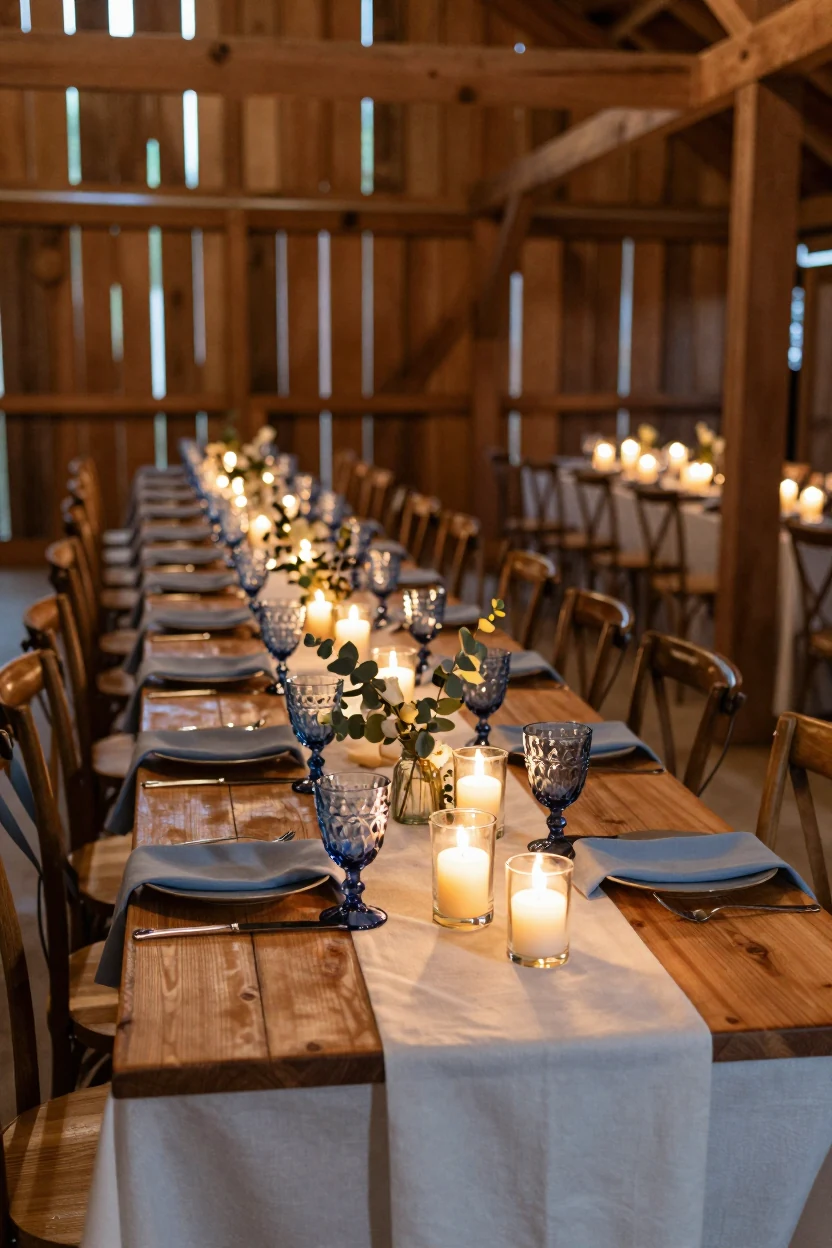
This intimate reception setup relies on layered warm light to create a cozy, glowing atmosphere. Hundreds of pillar candles in clear glass votives serve as the primary illumination, casting a soft amber glow across the room. Long rectangular tables are draped in crisp white linens that contrast with dusty blue linen napkins and matching blue-tinted glassware. The glassware catches the flame light, adding subtle color reflections to the tablescapes. Minimal floral arrangements of eucalyptus and small white roses keep the focus on texture and light rather than complex floral displays. Wooden chairs with fabric sashes in a complementary slate tone anchor the seating. The overall effect is rustic yet refined, emphasizing the interplay between cool blue textiles and warm candlelight. This concept works well for evening ceremonies where natural light fades, allowing the artificial lighting to become a key design element. It creates a private, inviting space that feels less like a formal event and more like an extended family gathering under starry skies or within a barn structure.
11. Slate Blue and Silver Metallic Accents
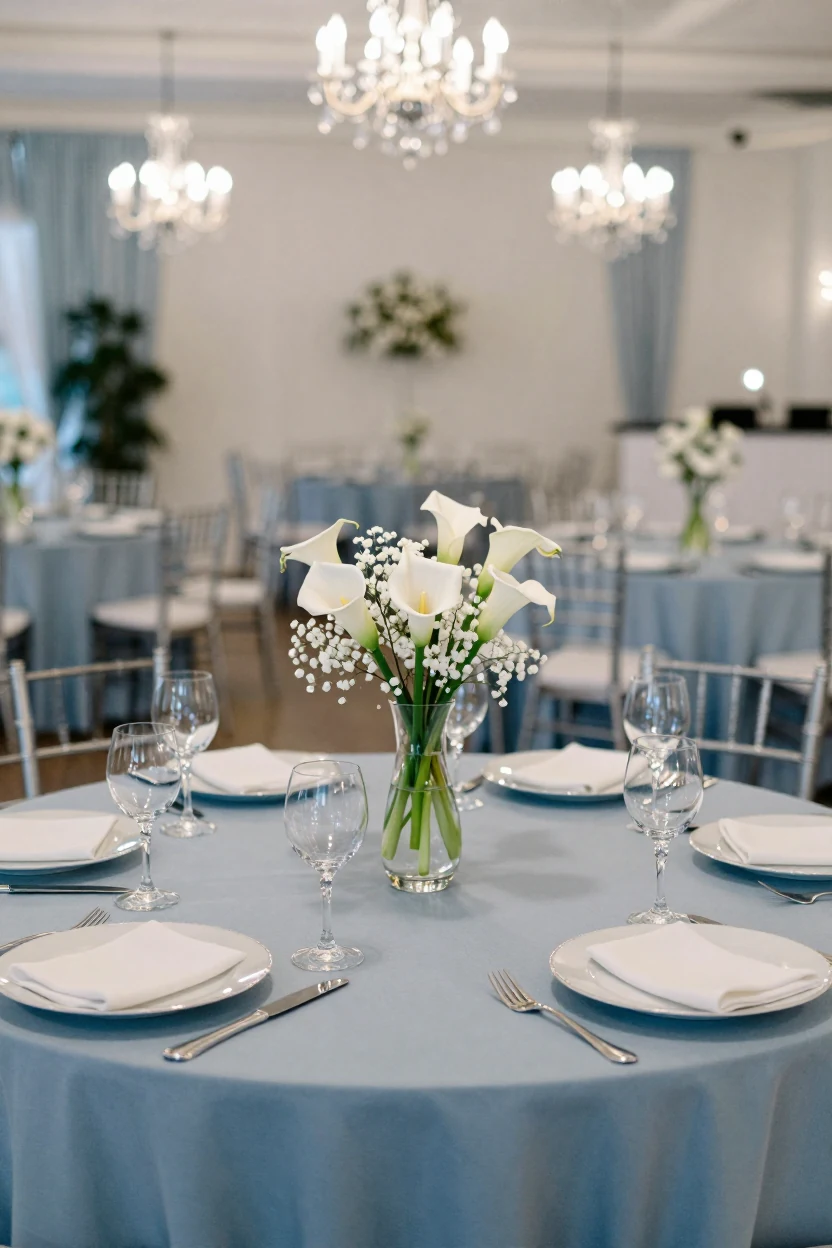
Slate blue anchors this formal winter wedding, creating a cool, polished atmosphere within a ballroom setting. The design relies on a monochromatic palette, pairing deep slate linens with crisp white dinnerware and silver flatware to maintain visual continuity. Mercury glass centerpieces serve as the primary focal point, their reflective surfaces catching ambient light to add depth without introducing warm tones. Minimal floral arrangements feature white calla lilies and delicate sprigs of baby’s breath, keeping the tablescape sleek and uncluttered. The low profile of the flowers ensures clear sightlines across the room, while the silver accents provide a subtle shimmer that contrasts with the matte fabric textures. This approach works best in venues with controlled lighting, where the interplay between glass, metal, and fabric can be highlighted. To adapt this look, focus on consistent material finishes; if mercury glass is unavailable, high-quality clear crystal or frosted glass vessels offer a similar reflective quality. The restraint in decoration allows the venue architecture and lighting to remain central elements of the overall design.
12. Blue-Hue Gradient Cocktail Table
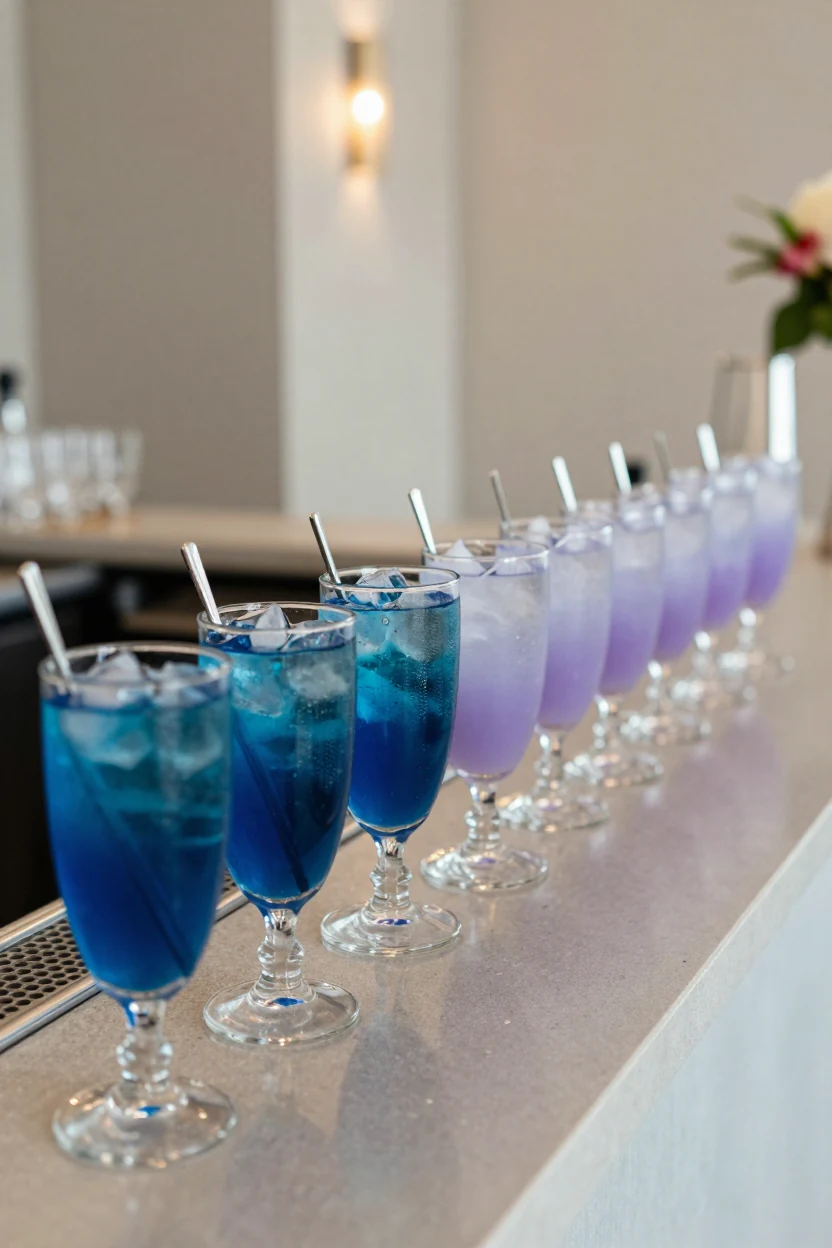
Turn your beverage station into a visual focal point by arranging glasses and garnishes in a deliberate color gradient. Start with deep navy blue cocktails on one end of the bar counter, gradually transitioning through medium dusty blue tones, and finishing with pale periwinkle or ice-blue drinks at the other end. Use clear glassware to highlight the liquid colors, and incorporate blue-tinted ice blocks or blueberry garnishes to maintain the hue consistency without overwhelming the palette. Pair the colorful drinks with neutral silver stirrers and polished metal bar tools to keep the setup sophisticated rather than playful. This interactive element encourages guests to linger at the bar, making the drink service a central part of the reception decor. The gradient effect works best with a long, unobstructed counter space, allowing the color shift to be viewed clearly from multiple angles. This approach transforms standard drink service into a cohesive design feature that complements the overall blue-themed wedding aesthetic.
13. Dusty Blue and Rustic Wood Farmhouse
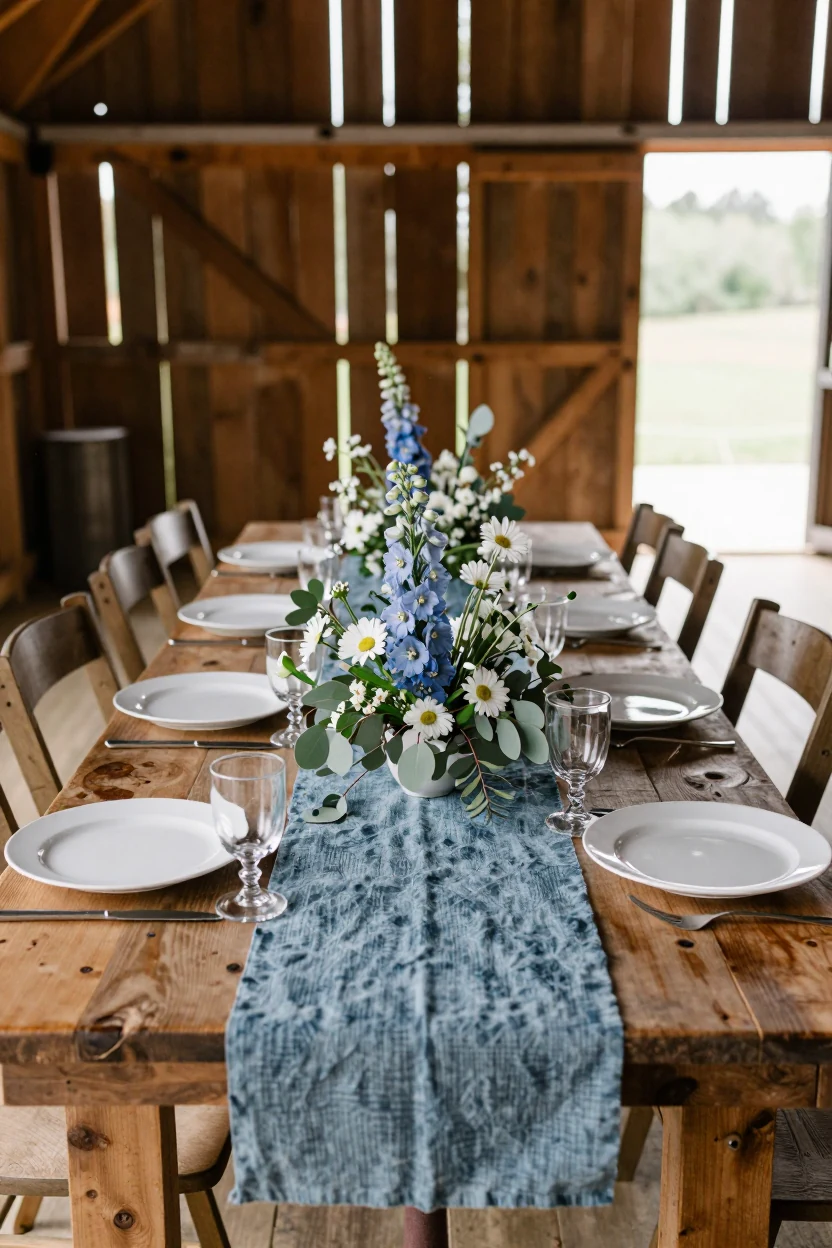
This farmhouse aesthetic grounds dusty blue in warm, tactile textures rather than formal linens. Long reclaimed wood tables anchor the space, their grainy surfaces contrasting with soft, washed-out blue burlap runners that stretch down the center of each table. Wildflower bouquets serve as centerpieces, featuring loose clusters of dusty blue delphiniums, white daisies, and abundant greenery like eucalyptus or fern. The arrangement remains low and organic, allowing guests to see across the table without obstruction. White ceramic dinnerware and simple glassware keep the place settings clean, preventing visual clutter against the rustic backdrop. String lights or lanterns can provide soft illumination for evening events, casting a warm glow that highlights the wood grain and fabric texture. This setup works well for larger gatherings in barns, covered pavilions, or open-air venues where natural light is abundant. It emphasizes a relaxed, grounded atmosphere while using the cool blue tone to balance the inherent warmth of the timber.
Matching the Palette to Your Venue
The right dusty blue setup depends heavily on your venue’s natural light and existing textures. Industrial spaces benefit from sleek metallic accents, while garden venues shine with layered florals and organic greens. Consider how the cool tone interacts with your chosen materials; brass warms up slate, while raw concrete provides a modern contrast. Start by selecting one focal point, such as a floral wall or table runner, and build the rest of the design around that anchor. This focused approach ensures a cohesive look that feels intentional rather than cluttered.
