13 Modern Classic Wedding Ideas That Balance Timeless Elegance With Contemporary Edge
Modern classic weddings strike a delicate balance between enduring sophistication and current design trends. This style moves away from excessive ornamentation, focusing instead on texture, form, and material quality. Whether you are planning an intimate backyard gathering or a large venue reception, these ideas prioritize visual coherence without sacrificing comfort. By integrating elements like polished stone, architectural glass, and neutral floral lanes, you can create a setting that feels both grounded and fresh. These concepts are adaptable to various budgets and venues, offering practical solutions for couples who want their decor to feel intentional rather than cluttered.
1. Monolithic Stone Centerpieces
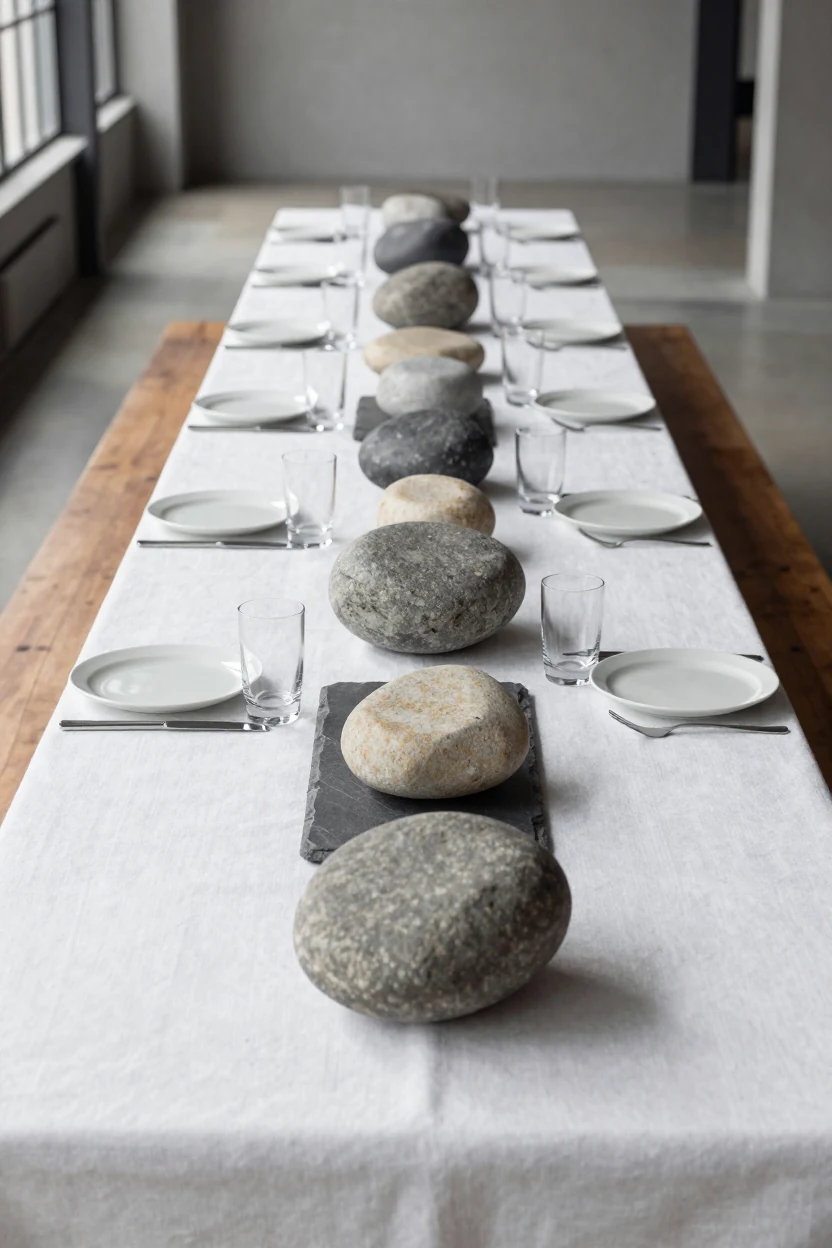
Swap out traditional floral arrangements for solid, polished stone slabs or smooth river boulders to anchor your reception tables. This monolithic approach creates a grounded, architectural contrast against crisp white linens and simple flatware, emphasizing texture over volume. The heavy, matte surfaces of natural stone provide a visual weight that keeps the eye focused on the table setting rather than towering blooms. This style suits neutral-toned venues like modern lofts, converted warehouses, or rustic barns where the raw materials complement the decor. To recreate this look, source stones with varied shapes and sizes to create an organic rhythm down the center of long banquet tables. Keep the surrounding tableware minimal, using matte ceramic plates and unadorned glassware to prevent visual clutter. This setup works well for outdoor or semi-outdoor receptions where natural light highlights the subtle grain and color variations in the rock. It offers a realistic, low-maintenance alternative to large floral installations, allowing guests to focus on conversation and connection while appreciating the tactile, earthy aesthetic of the environment.
2. Architectural Glass Table Runners
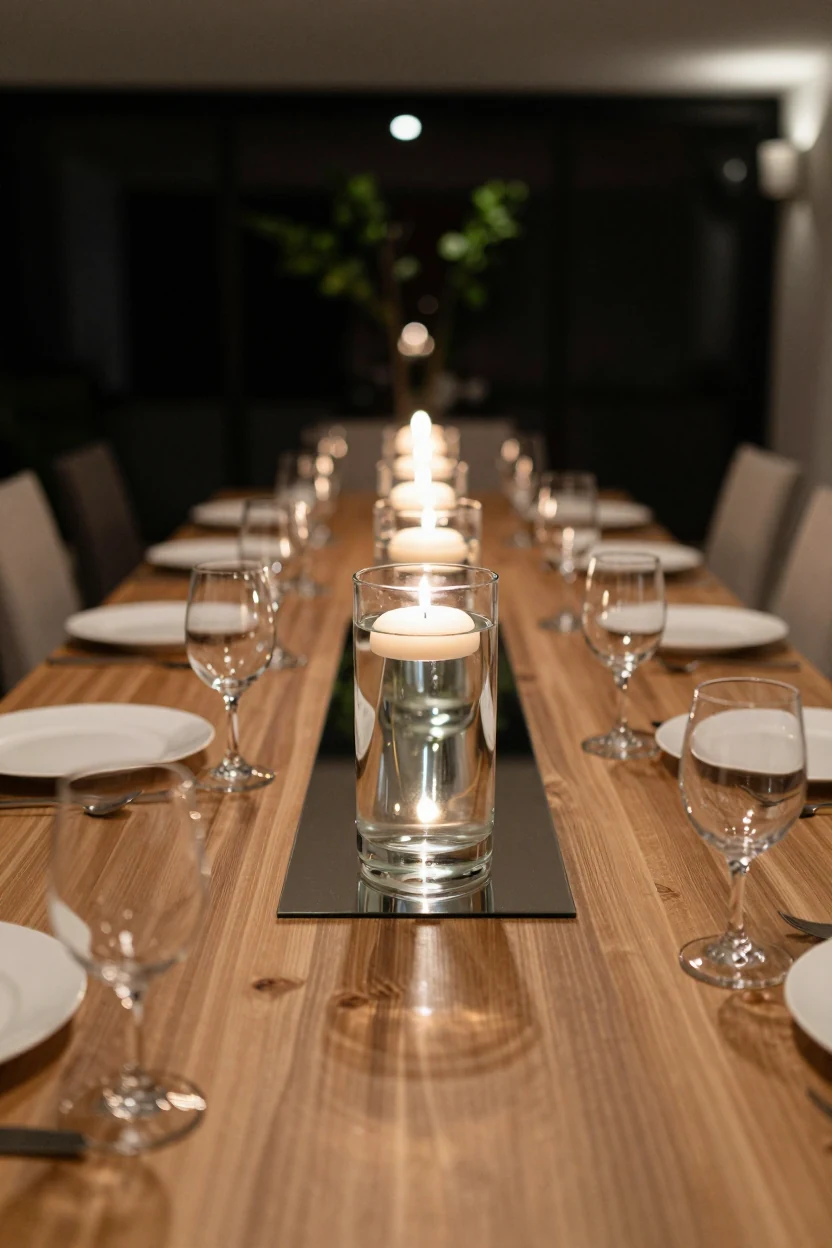
Long, rectangular glass vessels filled with water and submerged floating candles create a continuous line of light across the table. This low-profile runner keeps visual weight minimal, ensuring the table does not feel cluttered while adding a sophisticated glow for evening receptions. The transparency of the glass pairs well with monochromatic palettes and modern furniture, creating a sleek, reflective surface that mirrors the venue’s ambient lighting. To recreate this look, select clear acrylic or thick glass troughs that fit your table length without obstructing sightlines between guests. Use LED tea lights rather than open flames to eliminate fire hazards and adhere to stricter venue safety regulations. Pair the runner with crisp white linen napkins and simple gold flatware to maintain a clean, contemporary aesthetic. This setup works best in dimly lit environments where the water refraction enhances the warmth of the light without competing with overhead fixtures.
3. Neutral Floral Lanes
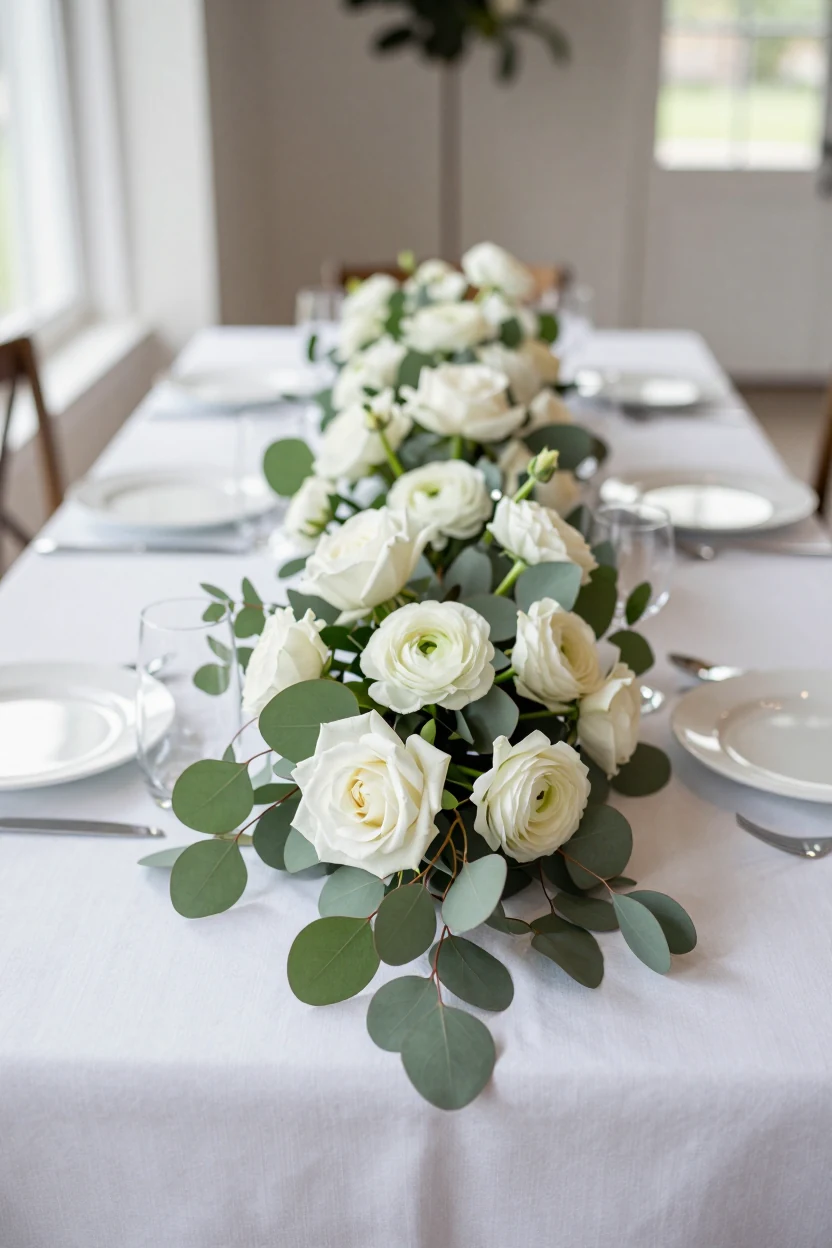
Transform your reception tables into serene landscapes by replacing traditional centerpieces with low, continuous floral lanes. This modern classic approach uses a long runner of white and cream blooms, such as garden roses, ranunculus, or anemones, interspersed with abundant eucalyptus, ruscus, or olive branches. Keep the overall height under eight inches to ensure guests can maintain eye contact across round or rectangular tables while still enjoying lush texture. The design thrives in natural light, where subtle variations in petal tones and leaf shapes become visible against crisp white linen or textured ivory tablecloths. This layout works particularly well for daytime weddings, offering a sophisticated alternative to tall arrangements that often block sightlines. By focusing on horizontal movement rather than vertical height, the setup feels contemporary yet rooted in classic romance. It is an adaptable concept for various venues, from garden pavilions to modern ballrooms, provided you coordinate with your florist to ensure the lane remains stable and easy for servers to navigate during service.
4. Structured Leather Seating
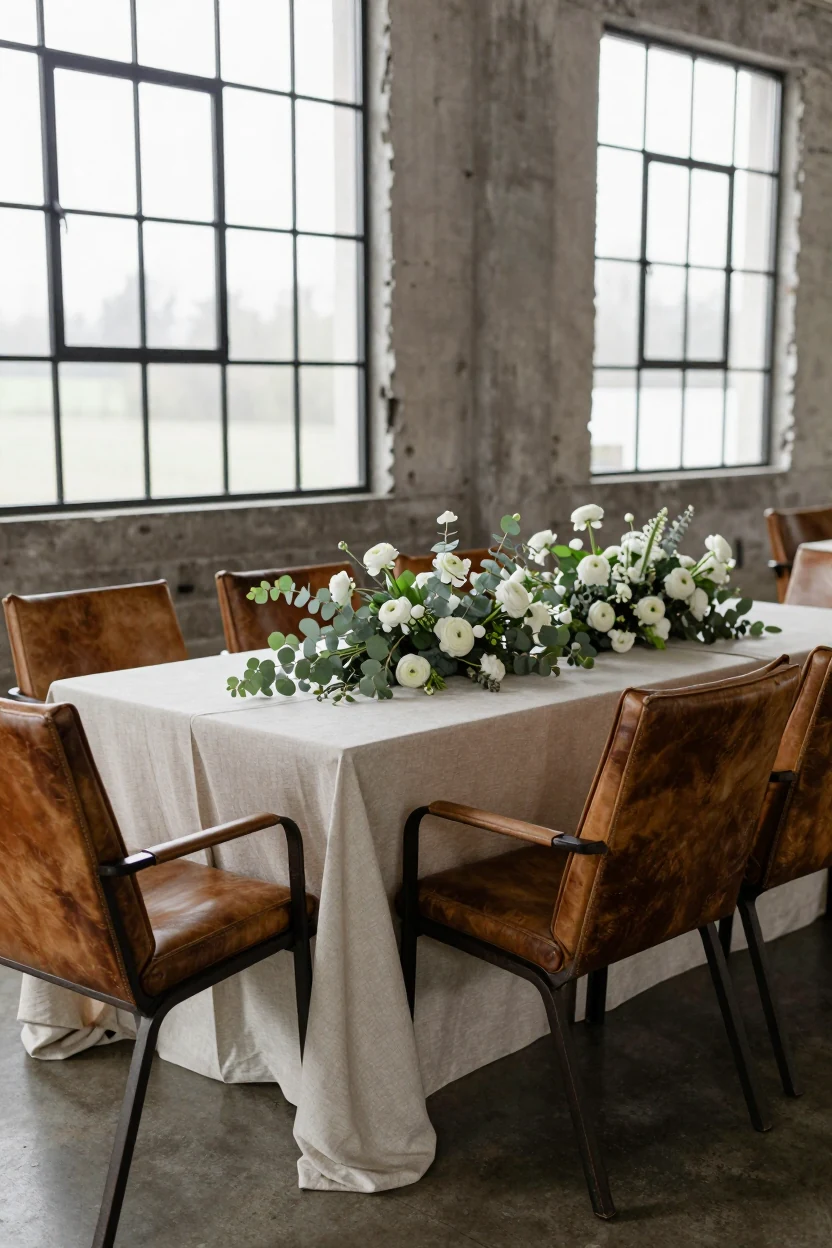
Swap standard banquet chairs for vintage leather sling chairs and tufted benches to introduce tactile depth and industrial warmth. This approach works best in venues with exposed brick, concrete floors, or warehouse-style architecture, where the rich texture of aged leather complements raw structural elements. The dark, supple material creates a striking contrast against soft ivory drapery and delicate floral arrangements, turning the guest seating into a design feature rather than a utility. For a cohesive look, pair the leather with neutral linen runners and low-profile greenery centerpieces that keep sightlines open. This setup is particularly effective for receptions in converted lofts or barns with modern updates. If vintage chairs are unavailable, modern tufted leather benches offer a clean alternative that maintains the textural contrast. Ensure the seating provides adequate cushioning for guests, as leather can be firm and less forgiving than upholstered options during long events.
5. Minimalist Paper Goods Suite
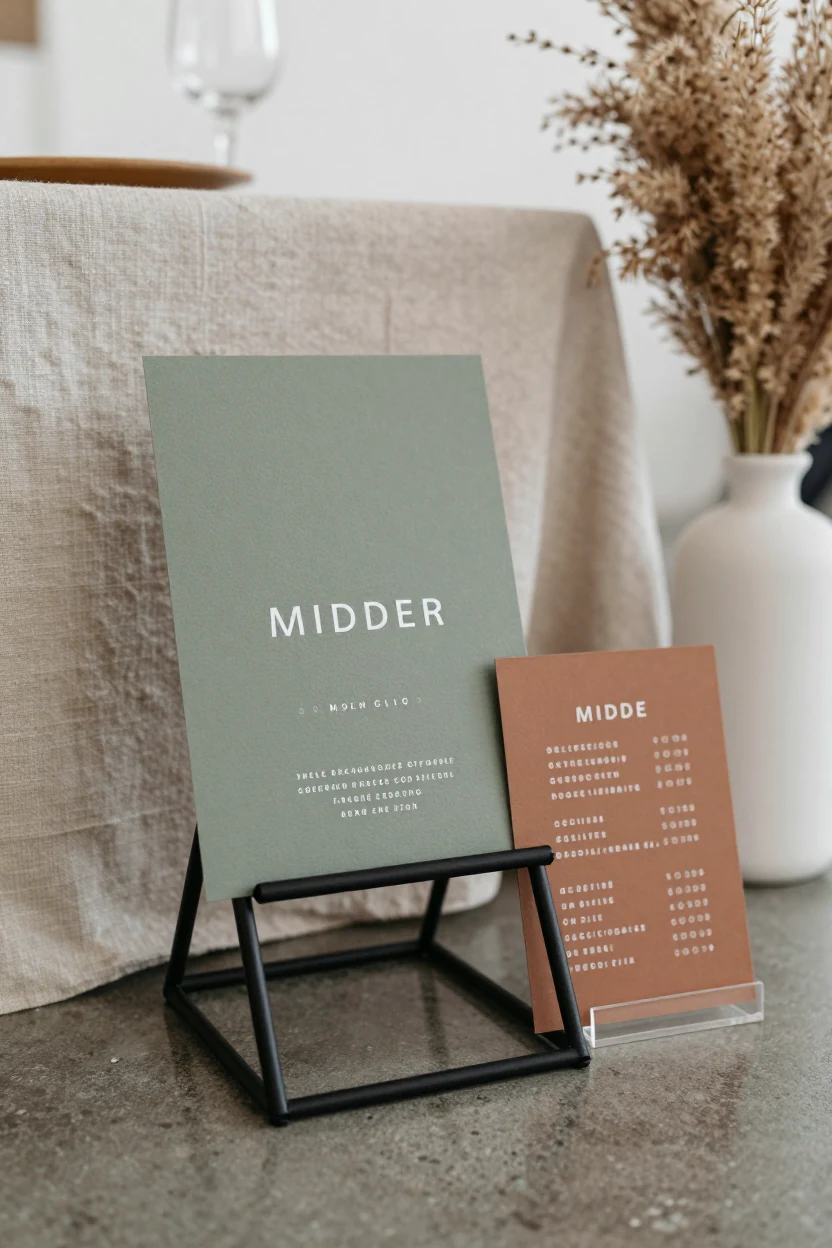
This stationery concept strips away ornate foil stamping in favor of tactile paper weight and modern typography. Choose a high-quality uncoated stock in muted tones like sage, terracotta, or charcoal to establish a grounded visual language. Pair the invitations with sleek metal easels or clear acrylic stands at the reception entrance, replacing traditional wooden frames with industrial minimalism. The design relies on clean sans-serif fonts and color blocking rather than embellishments, creating a cohesive thread from the save-the-date to the seating chart. This approach works well for weddings where you want guests to notice the texture of the materials and the clarity of the information. It keeps the focus on the content while maintaining a contemporary edge that feels intentional and uncluttered. The result is a refined, understated presentation that complements other modern elements without competing for attention.
6. Geometric Lighting Grids
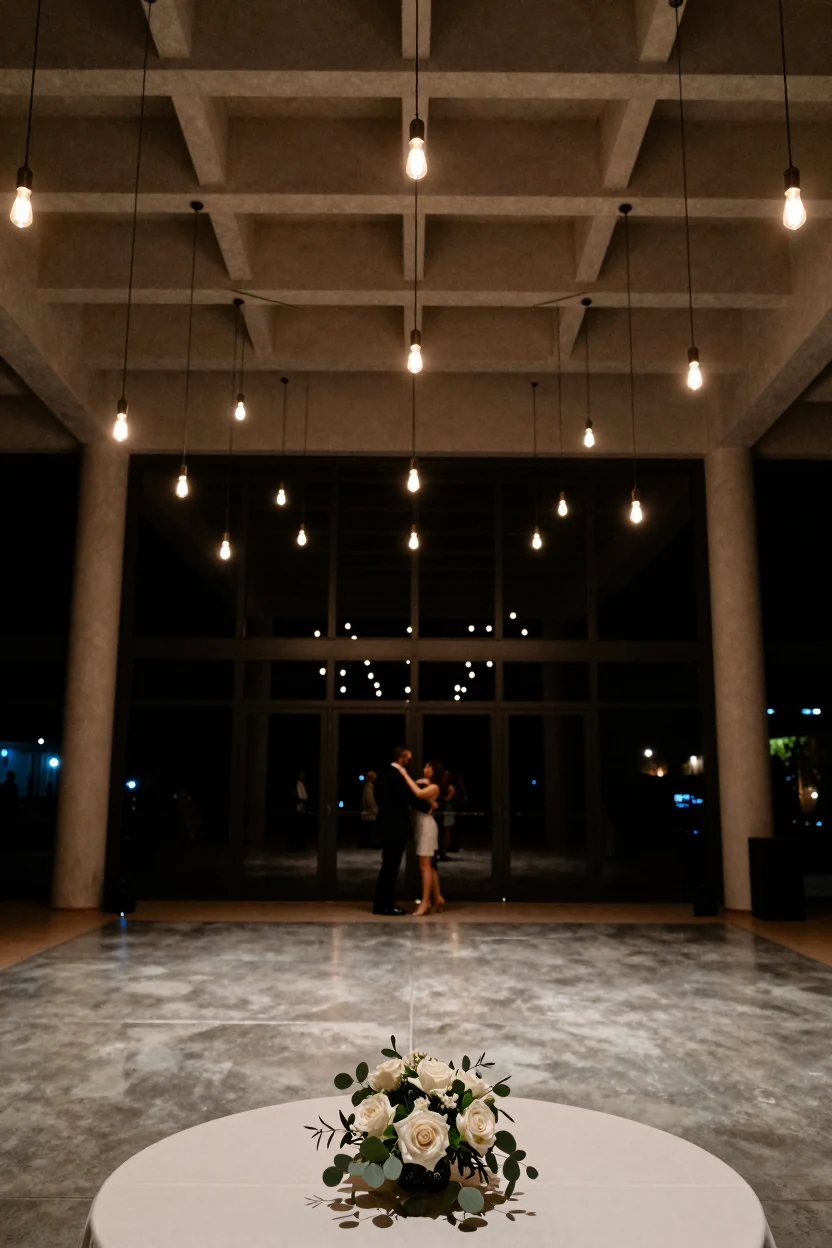
A grid of small pendant lights suspended at varying heights creates a dynamic focal point over the dance floor. The geometric precision of the fixture contrasts with the organic movement of guests, making it ideal for venues with high ceilings like atriums or ballrooms. This setup works best when paired with simple, neutral tablescapes that do not compete for attention. Use warm-toned Edison bulbs to soften the industrial look and ensure the lighting does not overwhelm the room's natural architecture. Keep the surrounding decor minimal, perhaps using low-profile floral arrangements or textured linens, to let the overhead structure remain the visual anchor. This approach is adaptable to various budgets by adjusting the density of the grid or the type of bulb used. It is particularly striking when viewed from multiple angles, offering a unique perspective for both guests and photographers during the reception.
7. Sculptural Vase Collections
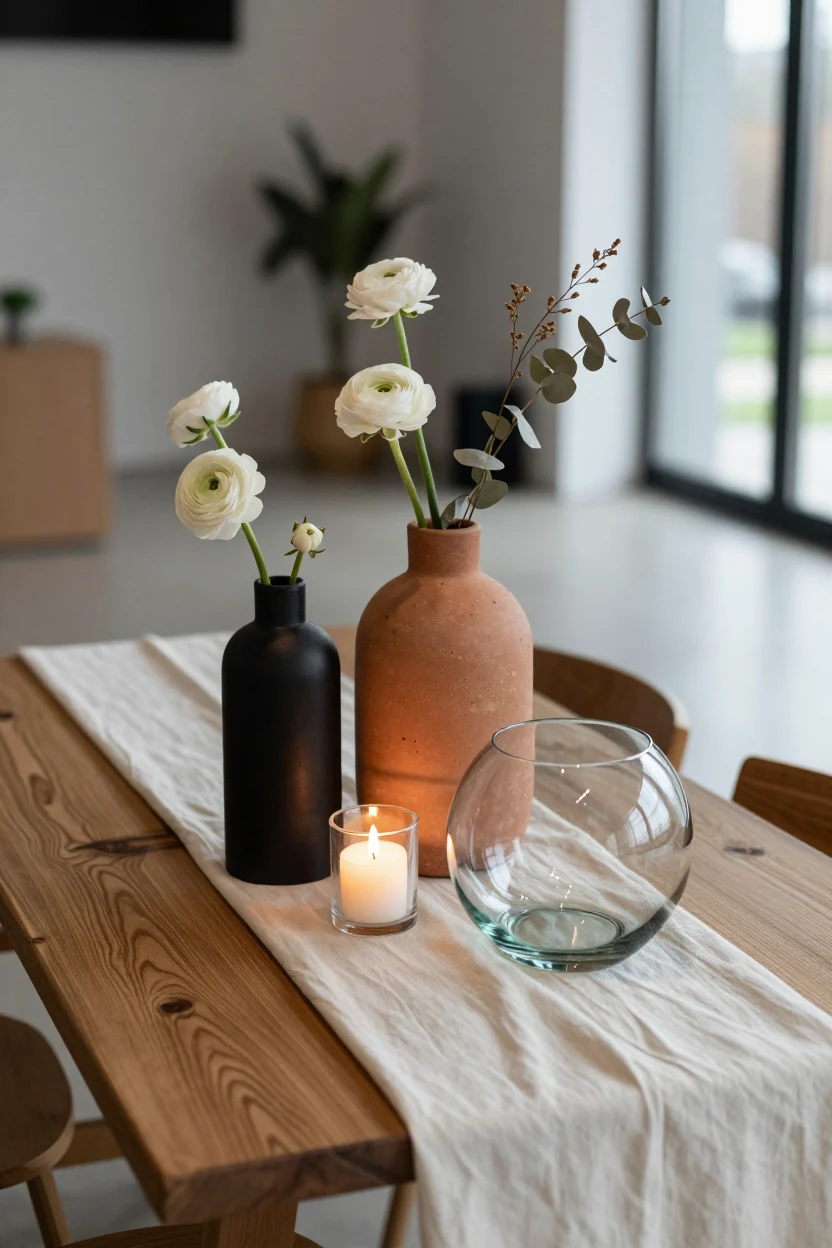
Replace uniform floral arrangements with a curated cluster of three to five distinct ceramic or glass vessels to create an asymmetric, gallery-like focal point. Vary the height and silhouette of each piece—pairing a tall, narrow cylinder with a wide, low bowl and a mid-height organic form—to introduce visual rhythm without clutter. Keep the interior styling minimal by using simple sprays of seasonal blooms or dried botanicals that do not obscure the unique shapes of the containers. This approach highlights texture and form over volume, creating a sophisticated display that feels collected rather than purchased as a single set. The arrangement works best on a neutral linen backdrop, allowing the earthy tones of terracotta, matte black, or clear glass to stand out. It offers a flexible alternative to traditional centerpieces, ensuring every table has a distinct personality while maintaining a cohesive aesthetic across the room.
8. Textured Linen Layering
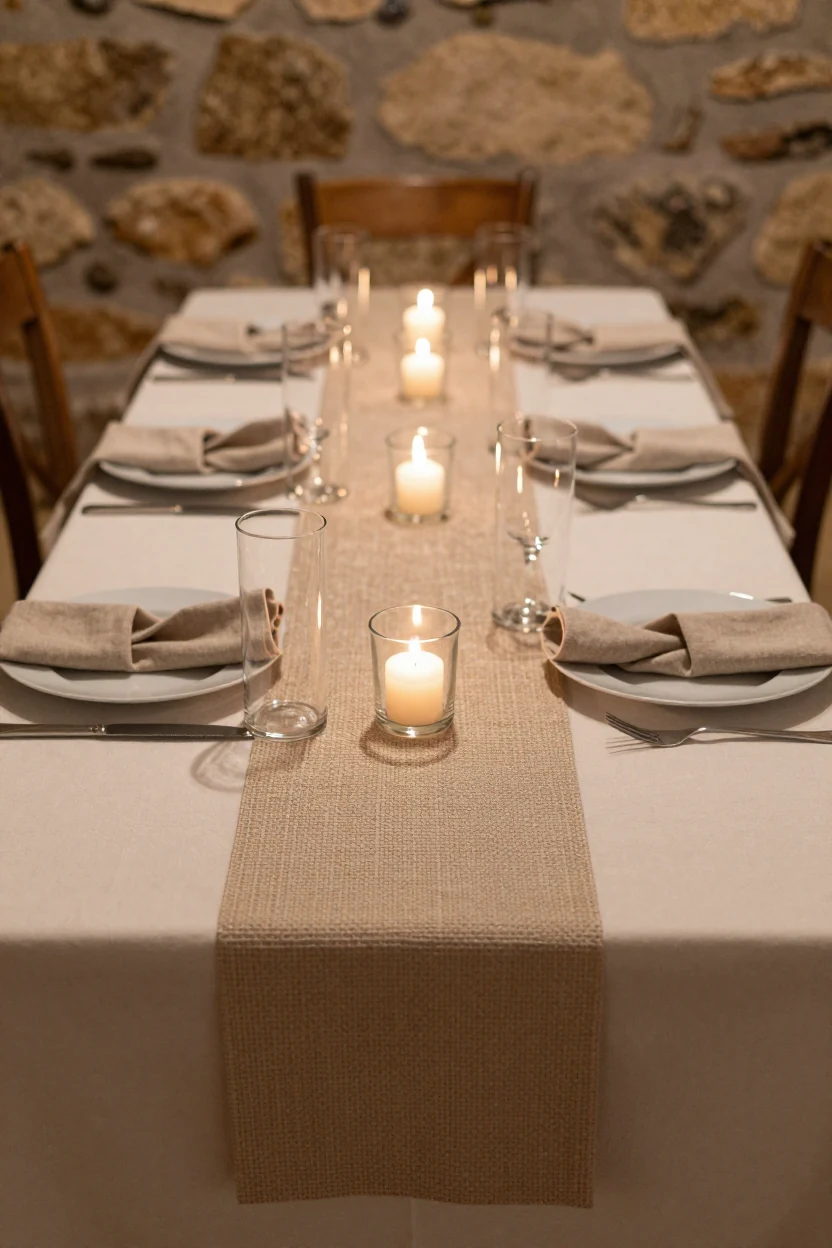
Smooth cotton tablecloths provide a neutral base, but layered textures create visual depth without relying on color. Place chunky linen napkins over smooth dinnerware and run a narrow, woven jute or wool runner down the center of rectangular tables to guide the eye. In cooler seasons, this tactile richness feels appropriate against lower ambient light. The contrast between flat cotton and raised fibers catches candlelight differently as the evening progresses, preventing monochromatic settings from appearing flat. Use this technique for fall and winter weddings where warmth is desired. Keep the palette tight, such as ivory, oatmeal, and charcoal, to let the fabric weights speak. This approach works well in venues with hard surfaces, like stone or wood, where soft textiles soften the room. It is a practical way to add dimension to tables without bulky centerpieces, maintaining clear sightlines for guests.
9. Open-Air Ceremony Arch
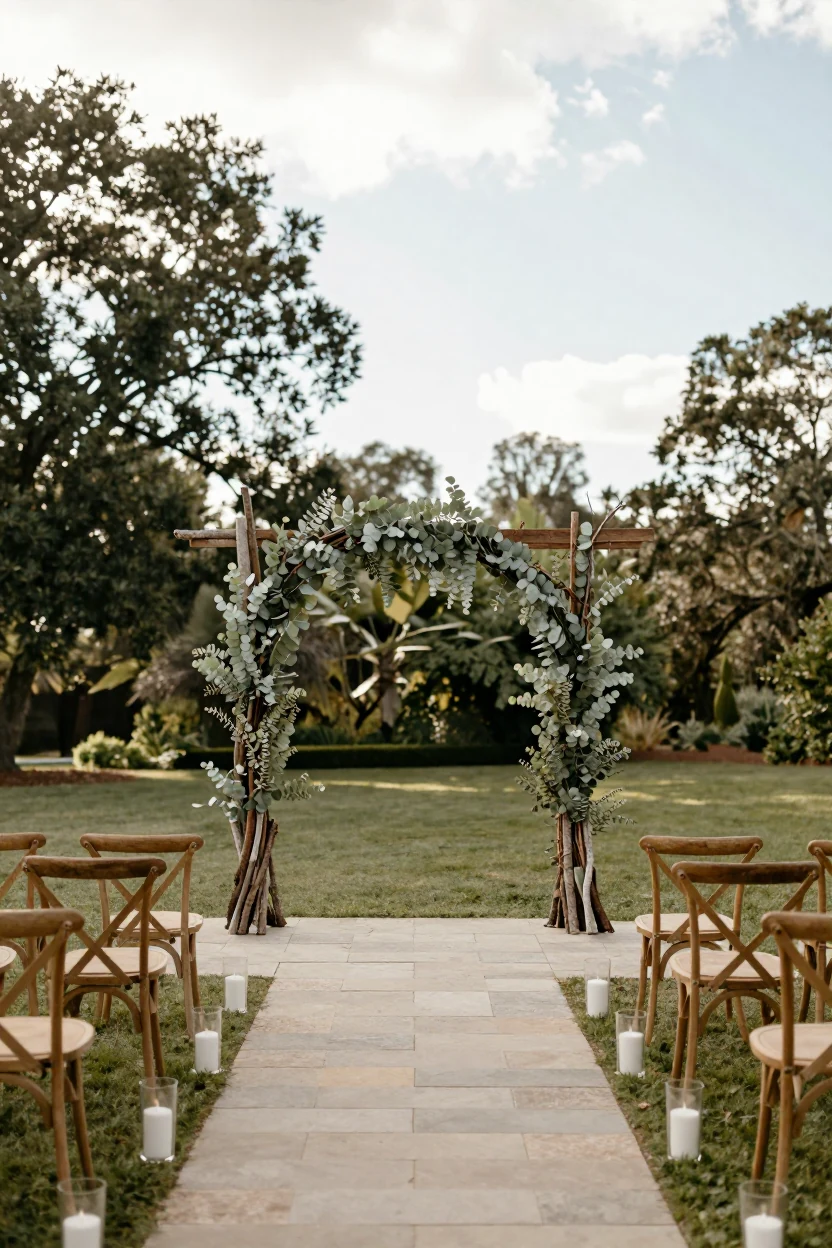
Skip dense floral walls in favor of an airy ceremony structure that frames the landscape rather than obscuring it. This concept relies on a skeleton of raw, unpolished branches or a sleek matte black metal frame, wrapped sparingly with trailing eucalyptus or sweet pea vines. The open design allows guests seated in the front rows to see through the arch to the trees or hills behind it, integrating the venue’s natural backdrop into the composition. Keep the aisle clear of heavy stanchions; instead, use small, weighted glass hurricane vases with single white candles placed every few feet. For the chairs, opt for simple wooden cross-backs or modern resin chairs in a neutral tone to maintain the clean lines. This setup works best in late spring through early fall when the surrounding greenery is lush but not overgrown. If the venue has uneven ground, ensure the arch base is anchored securely without obstructing emergency exits.
10. Monochromatic Tablescapes
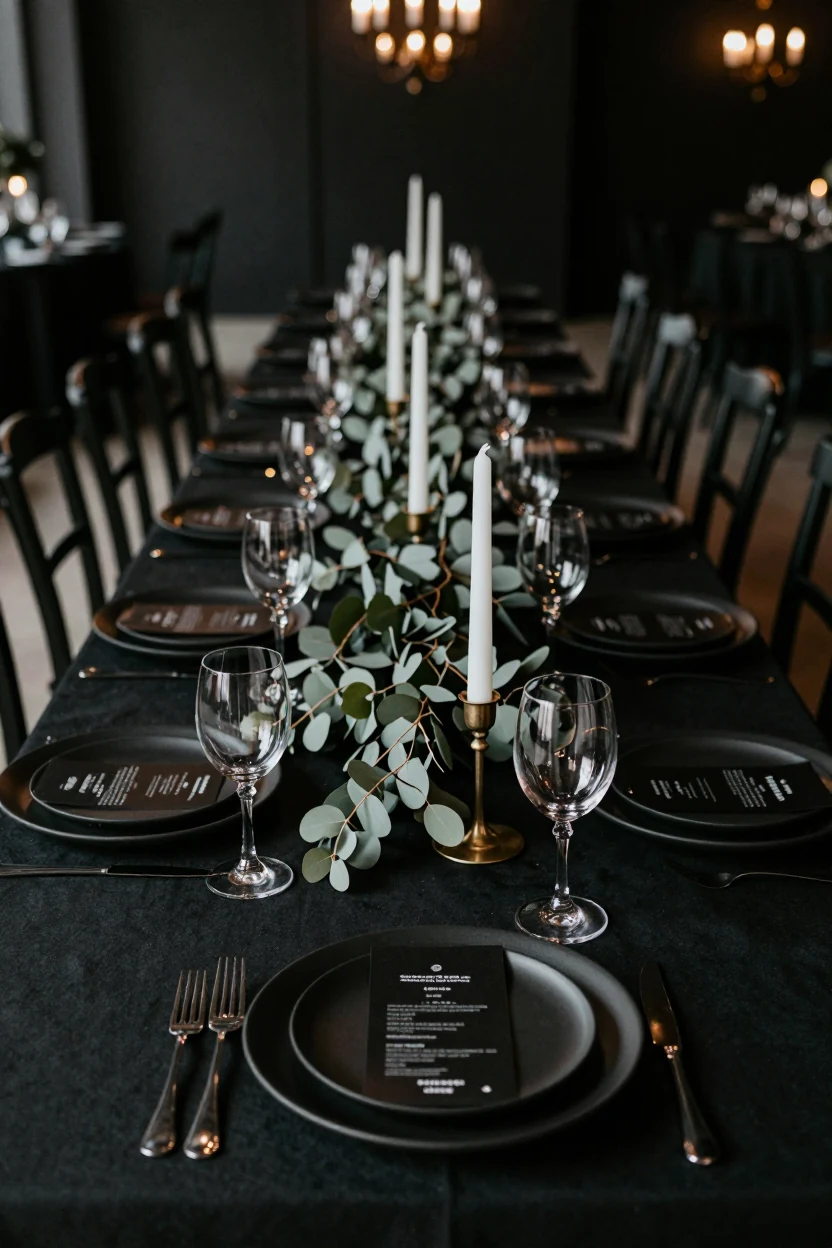
A monochromatic tablescape unifies every element within a single color family to create a striking, contemporary visual impact. For an evening reception, select a deep charcoal or matte black palette. Use matte ceramic dinner plates, clear crystal glassware with dark stems, and textured black linen runners to anchor the setting. Centerpieces should feature low-profile arrangements of dark foliage, such as eucalyptus or olive branches, interspersed with white taper candles in varying heights. The lack of competing colors allows ambient lighting to interact dramatically with the surfaces, producing a sophisticated, editorial atmosphere. This approach works best on long rectangular tables where the uniformity can be extended across multiple place settings. To adapt this concept, ensure that place cards and menu inserts use matching typography and paper stock to maintain the cohesive look without introducing clashing hues.
11. Integrated Bar Design
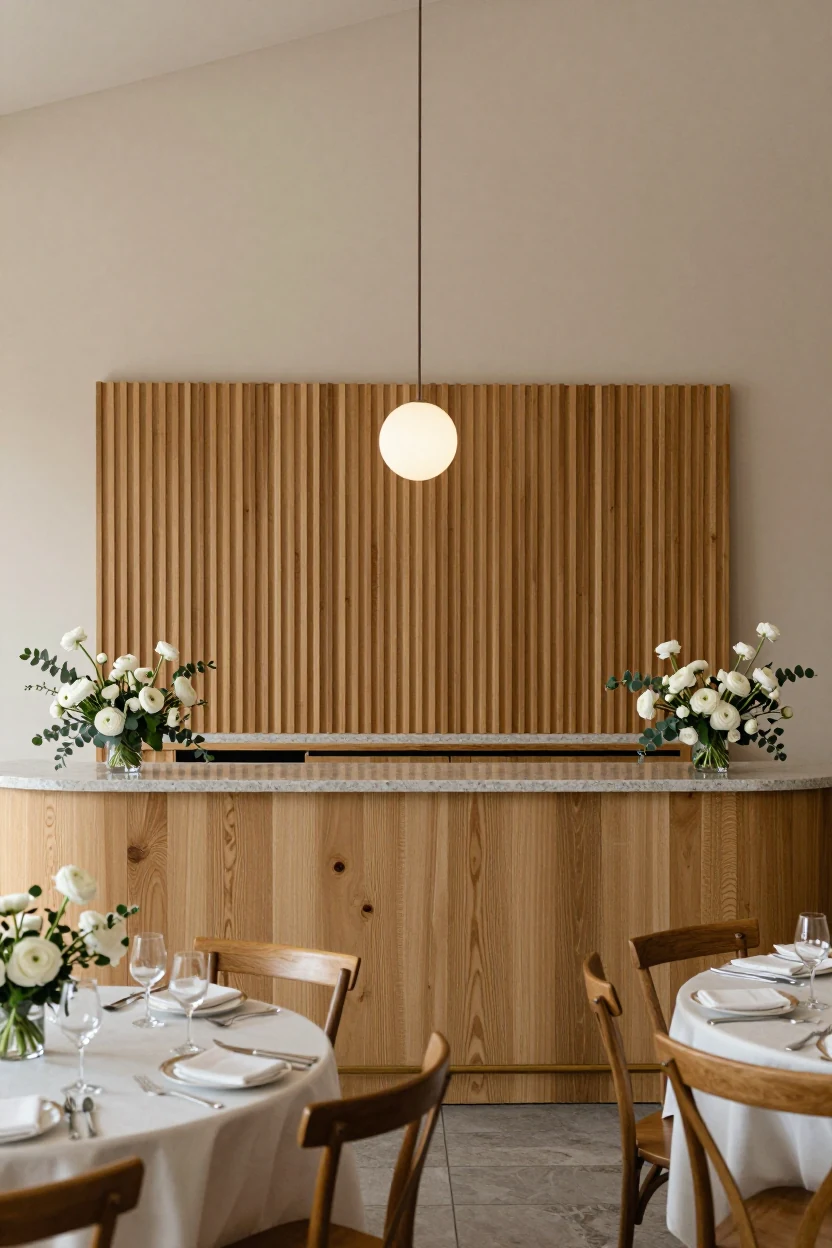
Treat the bar as an extension of your reception styling rather than a separate service station. If your tables feature low stone centerpieces and textured linen, mirror those materials at the serving area. A polished concrete or travertine-topped counter creates a consistent visual anchor, while a backdrop of matching architectural frames or subtle fabric drapery ties the space to the room’s overall aesthetic. Use the same floral accents, such as trailing eucalyptus or simple white ranunculus, to maintain continuity without overwhelming the functional surface. Lighting should be warm and directional, focusing on the bar top rather than casting harsh shadows. This approach ensures that when guests move from dining to socializing, the design language remains coherent. It transforms a utilitarian area into a deliberate part of the venue’s narrative, reinforcing the modern classic vibe through repetition of key textures and tones.
12. Natural Light Daytime Reception
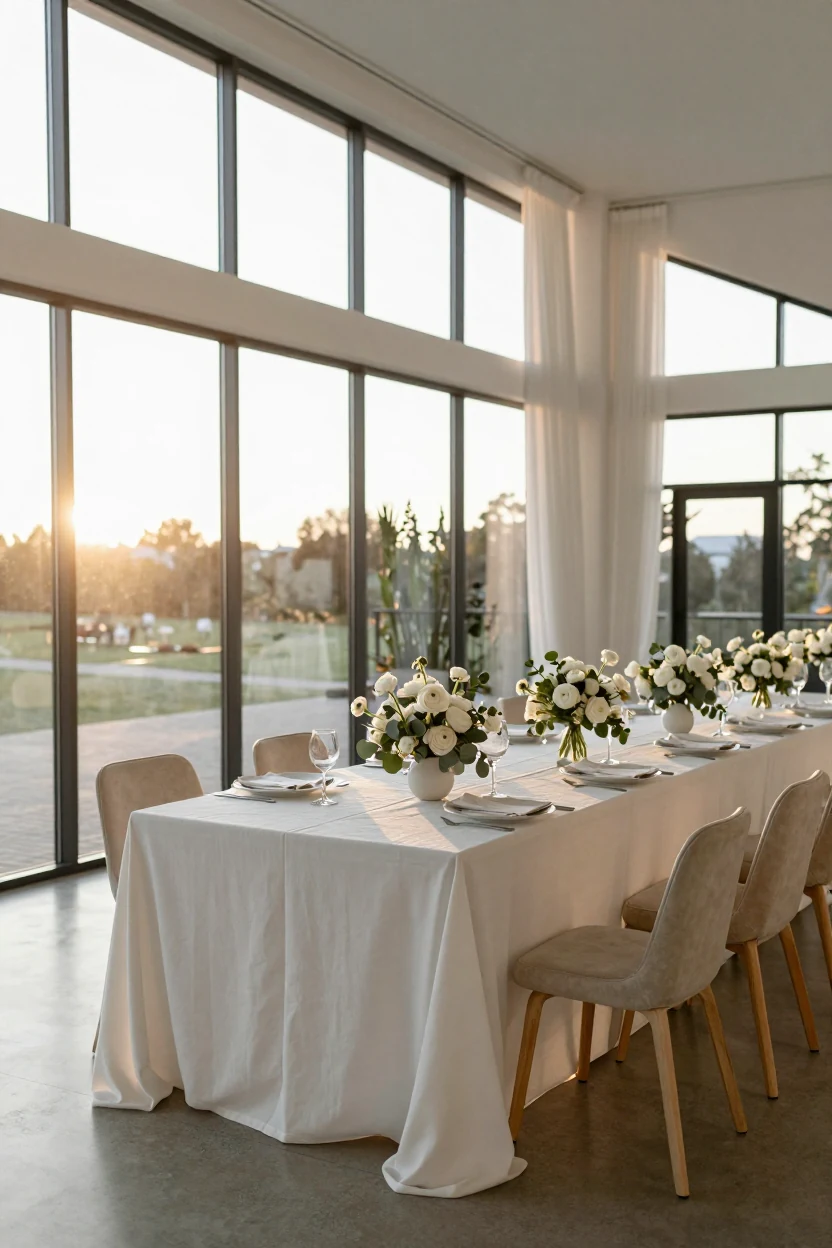
Shift the reception to late afternoon to harness natural illumination, eliminating the need for heavy artificial lighting. This timing allows fresh blooms and raw materials to retain their true color saturation under direct or diffused sunlight. Set the event in a venue with expansive glass walls or an open-air layout, using sheer linen drapery to soften harsh midday glare while preserving brightness. The decor should remain uncluttered, relying on low-profile centerpieces of seasonal greenery and white flowers that stand out against neutral linens. Chairs should be simple and functional, ensuring clear sightlines across the room. This approach creates a relaxed, polished atmosphere where the focus remains on the gathering rather than elaborate installations. It is ideal for spring or summer weddings, offering a fresh alternative to traditional evening receptions while maintaining a sophisticated, airy aesthetic.
13. Mixed Material Place Settings
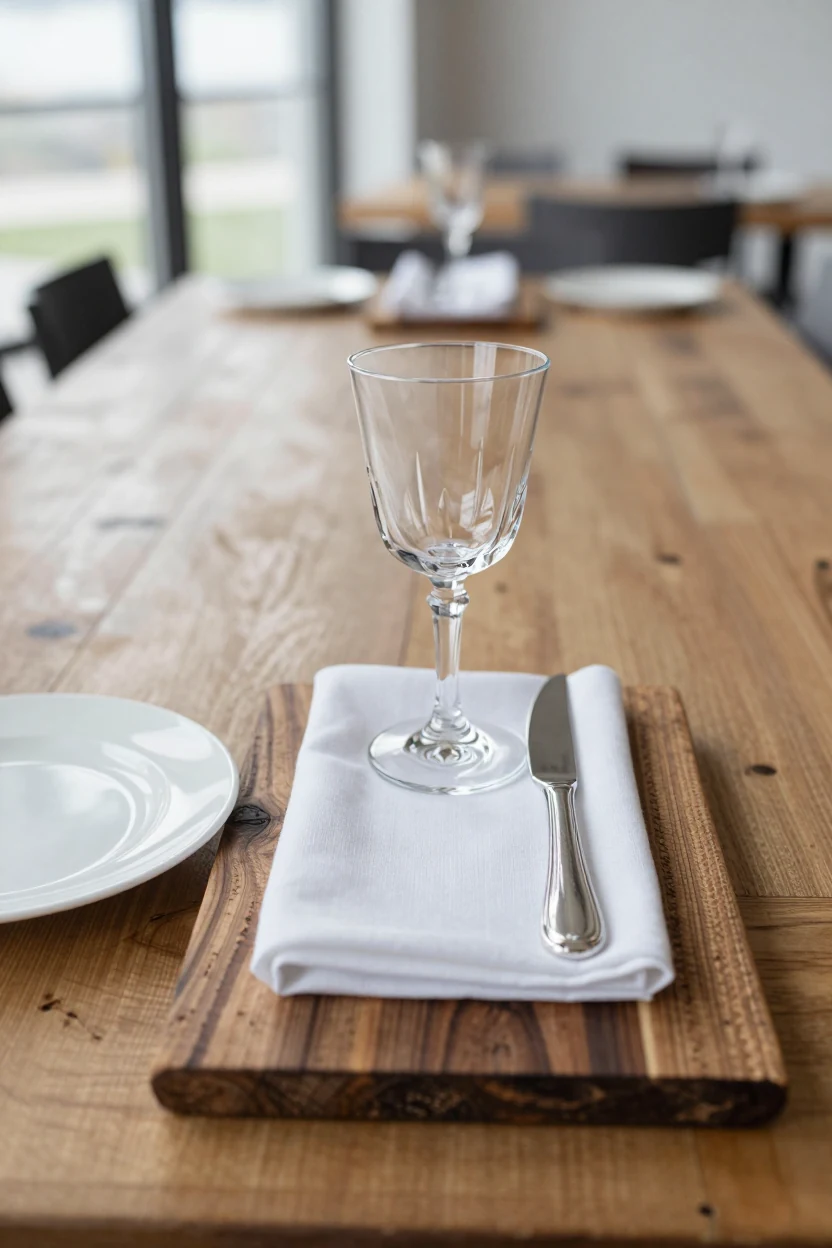
This place setting technique uses contrast to create visual depth at the individual seat level. A rough-hewn walnut board serves as the base, grounding the setup in organic warmth. On top, a crisp white linen napkin is folded neatly, providing a clean canvas for delicate crystal stemware and polished silver flatware. The juxtaposition of the rugged wood grain against the smooth, reflective surfaces of the glass and metal creates a tactile richness that invites guests to look closer. This approach works well in venues with mixed architectural elements, such as barns or industrial lofts, where it helps unify disparate aesthetic zones. To adapt this concept, source reclaimed wood boards of uniform size for consistency. Pair the crystal with a simple white porcelain plate to keep the focus on the material contrast rather than patterned dishware. This method adds a contemporary edge to traditional formal elements without requiring complex floral arrangements or elaborate tablescapes at every seat.
Choosing Your Modern Classic Elements
Selecting the right combination of these ideas depends heavily on your specific venue architecture and seasonal lighting conditions. Consider how natural stone or textured linens will interact with your chosen location, whether it is a raw warehouse or a garden pavilion. Prioritize safety and functionality by ensuring clear sightlines and stable setups. By mixing one or two of these concepts, such as a geometric lighting grid with neutral floral lanes, you can create a cohesive aesthetic that feels both personal and professionally styled.
