11 Wedding Mood Board Ideas to Define Your Style
A wedding mood board is more than a collage of favorite images; it is a visual blueprint that translates abstract style preferences into concrete design decisions. Without a clear reference point, coordinating florals, linens, and stationery often leads to a disjointed aesthetic that struggles to cohere in a real space. These eleven concepts provide specific anchors for your planning process, focusing on tangible textures, realistic color combinations, and practical setup layouts. Whether you are drawn to the tactile warmth of earth tones or the sharp contrast of noir styling, these ideas help you visualize how elements interact under different lighting conditions and spatial constraints. Use them as a starting framework to refine your choices, ensuring every detail supports a unified narrative rather than competing for attention.
1. Muted Earth Tones with Linen Texture
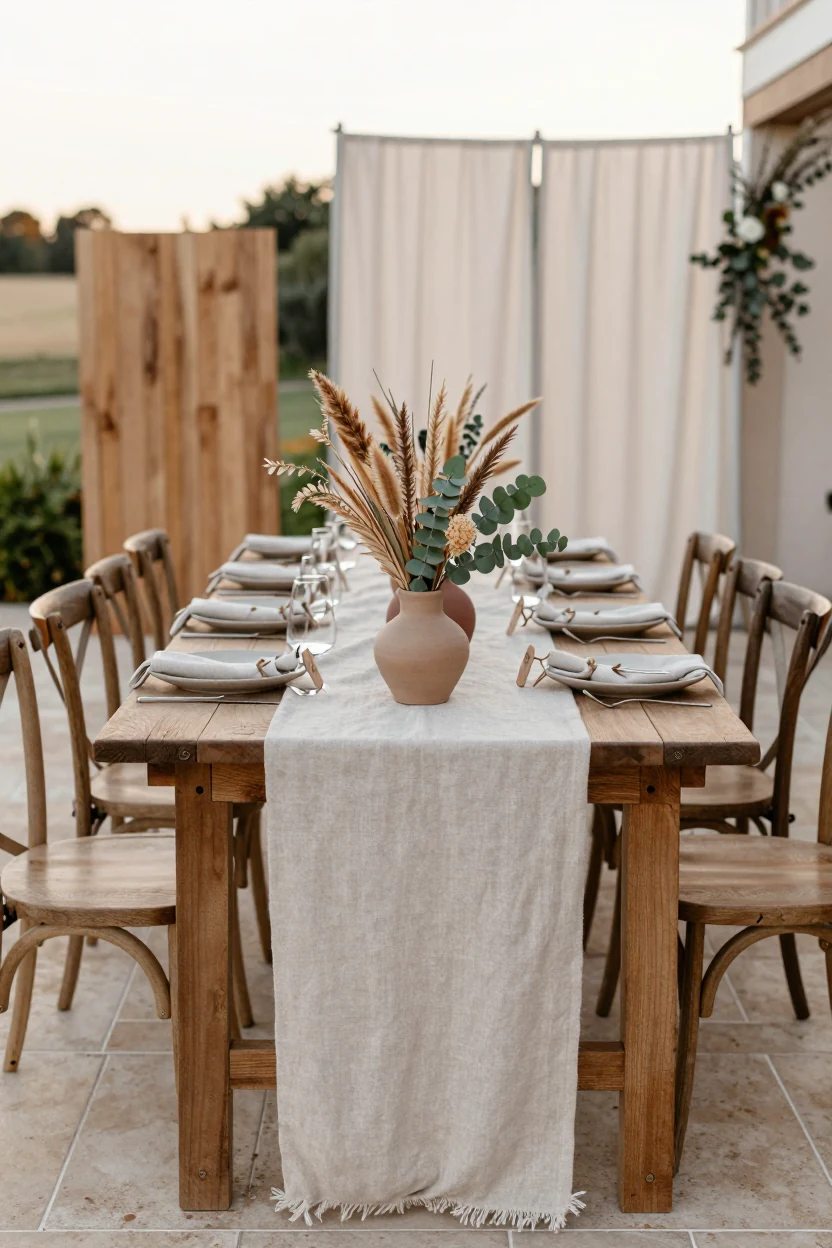
Ground your wedding aesthetic in tactile natural fibers and warm, desaturated hues. This setup centers on a palette of terracotta, sage green, and oat milk, creating a grounded atmosphere that feels organic rather than overly styled. The visual anchor is texture: high-waisted linen drapes hang loosely to soften hard architectural lines, while raw-edged wooden signage provides a rustic counterpoint to the smooth stone or concrete floor. Avoid heavy floral arrangements; instead, use loose, unstructured bunches of dried grasses or eucalyptus to maintain an airy feel. Tablescapes feature unbleached cotton napkins and simple stoneware plates in earthy glazes. Jute rope or thin leather ties can replace ribbon on place cards. The lighting should be warm and diffused, mimicking late-afternoon sun, to enhance the warmth of the terracotta tones. This style works best for late-summer outdoor venues where natural light is soft. It emphasizes material honesty, letting the weight and weave of fabrics speak louder than decorative accents.
2. High-Contrast Noir with Velvet
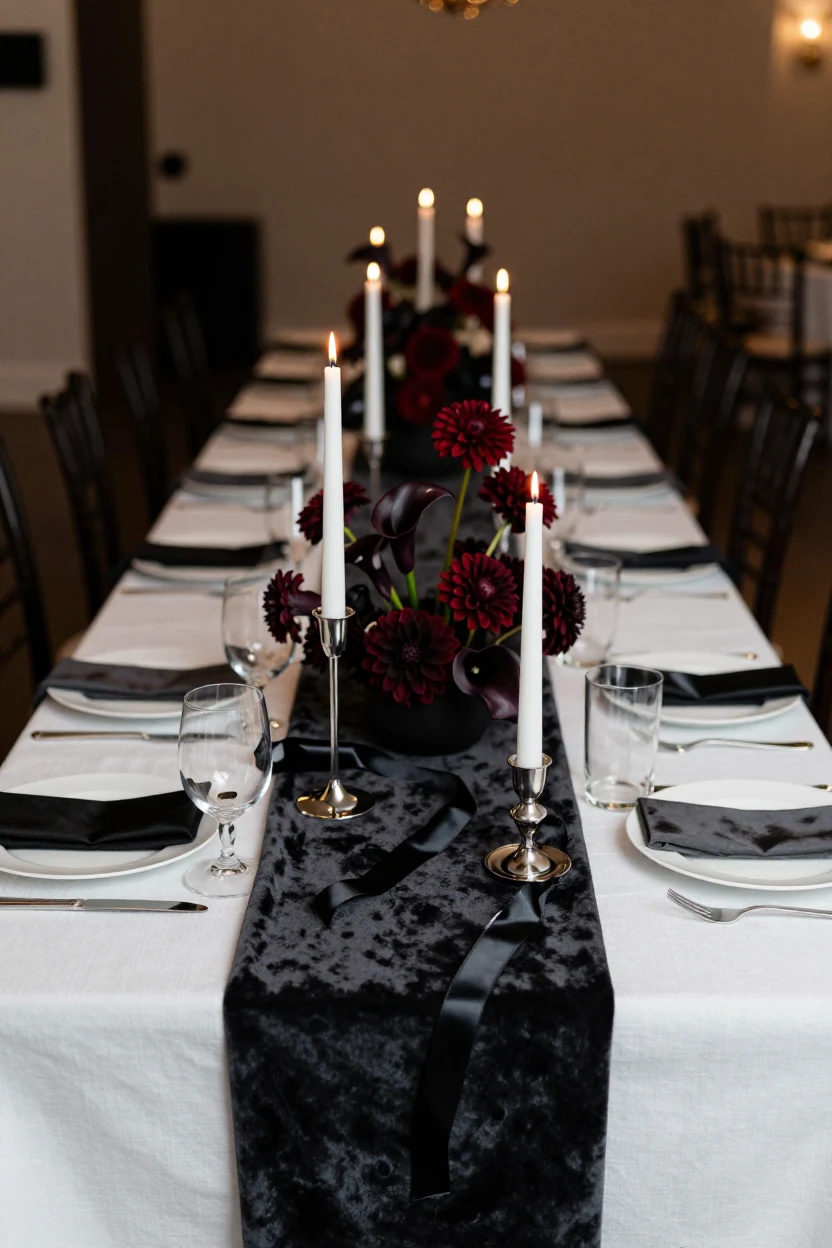
This high-contrast noir aesthetic relies on monochromatic layering rather than bright color to create visual depth. The setup features long black velvet table runners laid over crisp white linen, establishing a stark foundation. Tall, slender white taper candles in silver holders provide the primary light source, casting soft shadows that highlight the sheen of glossy satin ribbons wrapped around floral stems. The centerpiece uses deep, moody blooms like dark dahlias and calla lilies, arranged low to keep sightlines open for conversation. Charcoal napkins folded into triangles sit atop white ceramic plates, reinforcing the two-tone palette. This style works best in formal indoor venues or dimly lit evening receptions where ambient lighting can be controlled. To adapt this look, focus on texture: mix matte velvet with high-shine satin and smooth glass. If full black feels too heavy for your space, substitute charcoal grey linens with white accents to maintain contrast while softening the overall intensity of the room.
3. Vintage Botanical Illustrations
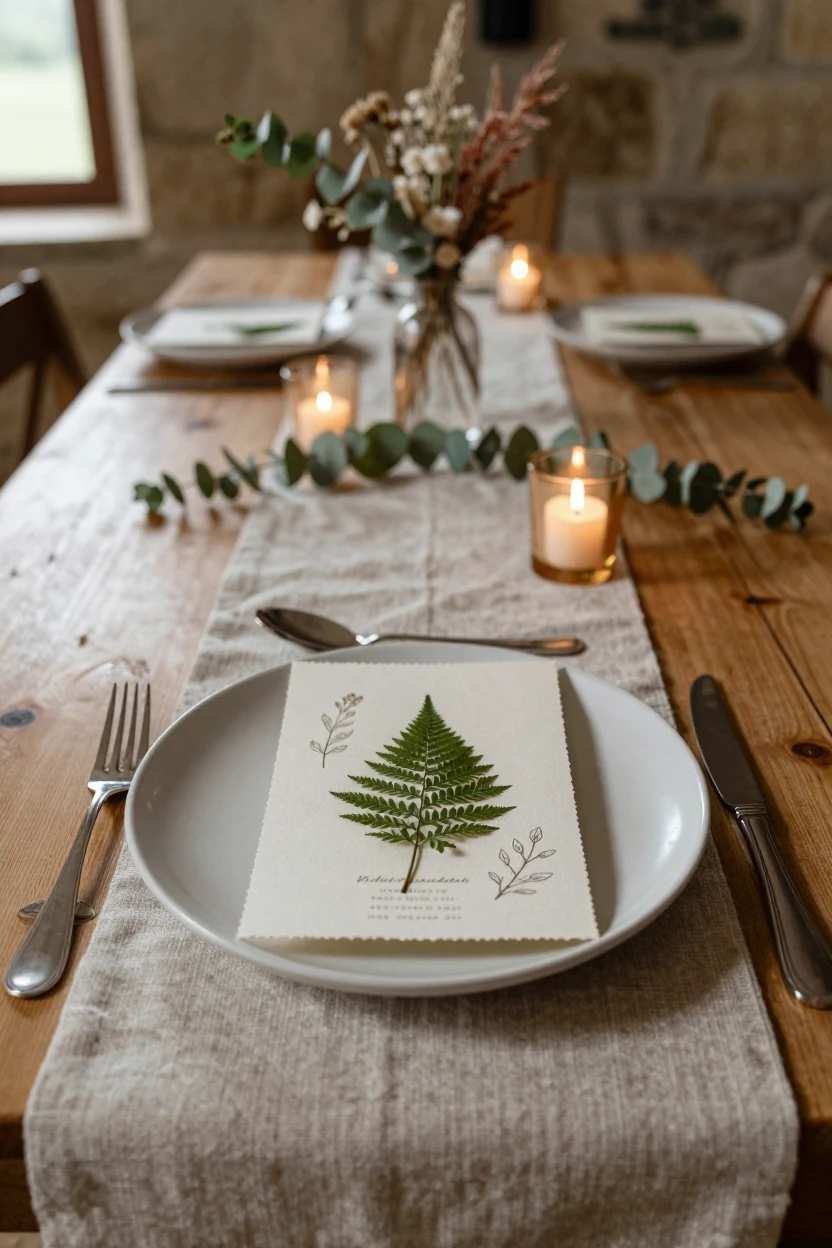
This stationery-led concept prioritizes archival paper textures and muted botanical inks over fresh floral displays. The visual identity centers on cream cotton stock, sage green line drawings, and hand-pressed wildflowers embedded directly into invitation suites. Table settings feature simple white ceramic plates topped with place cards displaying dried ferns and inked stems. A long oak table is dressed with unbleached linen runners and low-profile amber glass votives. The color palette relies on oatmeal, moss, and faded olive tones. This style suits scholarly or garden-party weddings where the narrative is told through tactile paper goods rather than large floral installations. It works best in venues with natural wood floors or stone walls that complement the organic aesthetic without competing for attention.
4. Minimalist Monochrome White
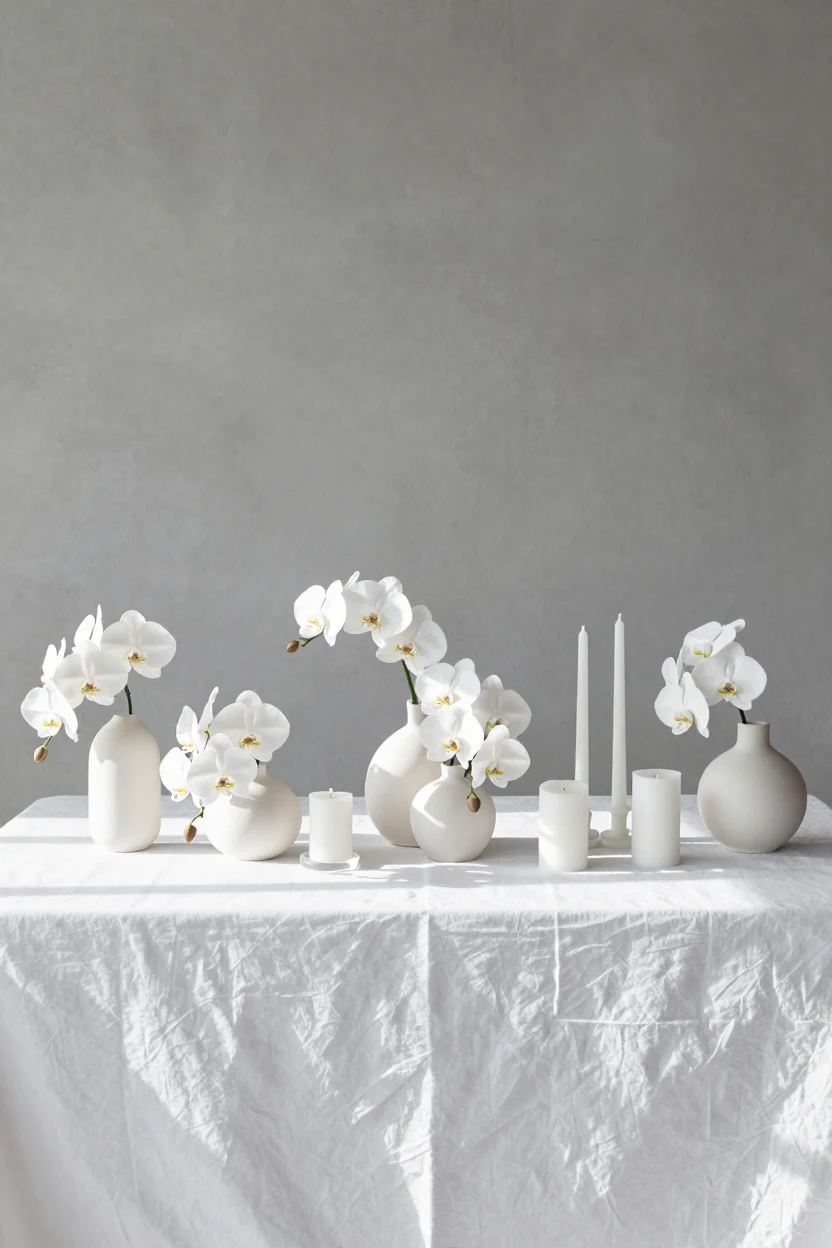
This aesthetic strips away color to emphasize form, texture, and light. The setup relies on a strict monochrome palette of stark white, soft cream, and neutral gray. Choose architectural white orchids or calla lilies for their sculptural shapes rather than dense blooms. Pair these with smooth alabaster or matte ceramic candle holders in varying heights to create vertical interest without width. Set the table with crisp white linen and simple bone china to maintain the clean lines. The backdrop should be raw concrete, polished stone, or a plain white wall to provide negative space. Lighting is critical; use natural daylight or warm, low-level ambient lighting to cast soft shadows that define the contours of the flowers and glassware. This style works best in modern urban venues or converted industrial spaces where the architecture itself is a feature. It is not about emptiness but about precise placement and the interplay of light against smooth surfaces.
5. Rustic Farmhouse with Galvanized Steel
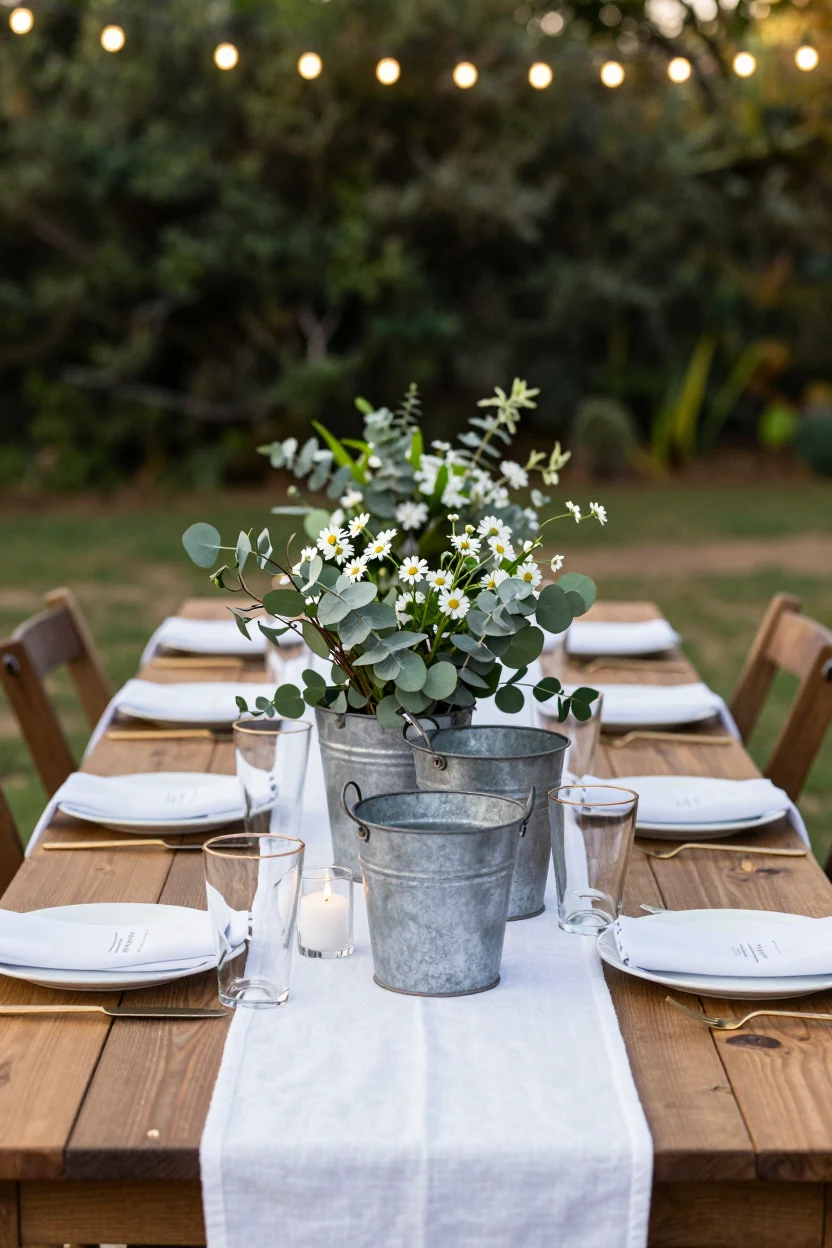
This look balances industrial grit with organic softness, creating a relaxed yet polished atmosphere ideal for backyard or barn venues. The visual anchor is the juxtaposition of cool, reflective galvanized steel against the muted, matte textures of burlap and fresh greenery. For a realistic setup, use standard galvanized metal buckets as centerpieces on long, rectangular tables draped in natural linen or jute runners. Fill the buckets with loose, unstructured arrangements of eucalyptus, ruscus, and seasonal blooms like garden roses or daisies to maintain an effortless, wild aesthetic. Pair these elements with simple white dinnerware and tapered candles in clear glass holders to soften the metallic tones. This style works best when the metal remains the star; avoid excessive floral volume that obscures the vessel’s texture. The result is a grounded, casual elegance that feels lived-in rather than overly curated, perfect for couples who want a sophisticated but approachable vibe without rigid formal constraints.
6. Pastel Watercolor Washes
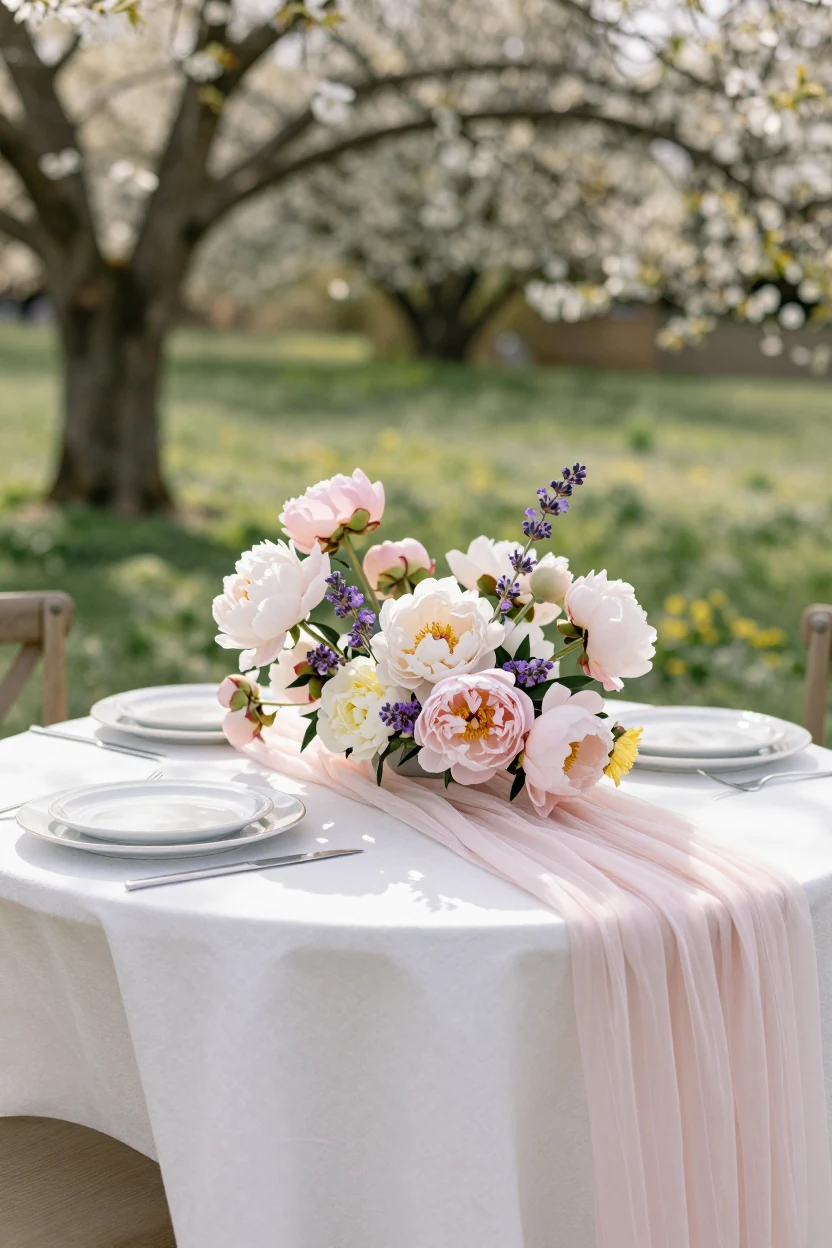
This aesthetic relies on soft gradients and fluid color transitions rather than rigid lines. The palette pairs pale blush pink with muted lavender and touches of lemon yellow, mimicking the look of wet watercolor paper. Visually, the style prioritizes lightness and airiness. For the reception, layer sheer chiffon or tulle runners over crisp white tablecloths to create depth without heavy draping. Centerpieces should be low and organic, using loosely arranged roses or peonies that appear slightly damp or fresh-cut. Stationery is key here; choose invitation suites with hand-painted ink edges or soft acrylic washes instead of bold typography. Lighting should remain natural and bright, avoiding warm bulbs that might clash with the cool pastel tones. This approach works best in venues with large windows or open-air gardens where diffused daylight enhances the delicate hues.
7. Industrial Chic with Exposed Brick
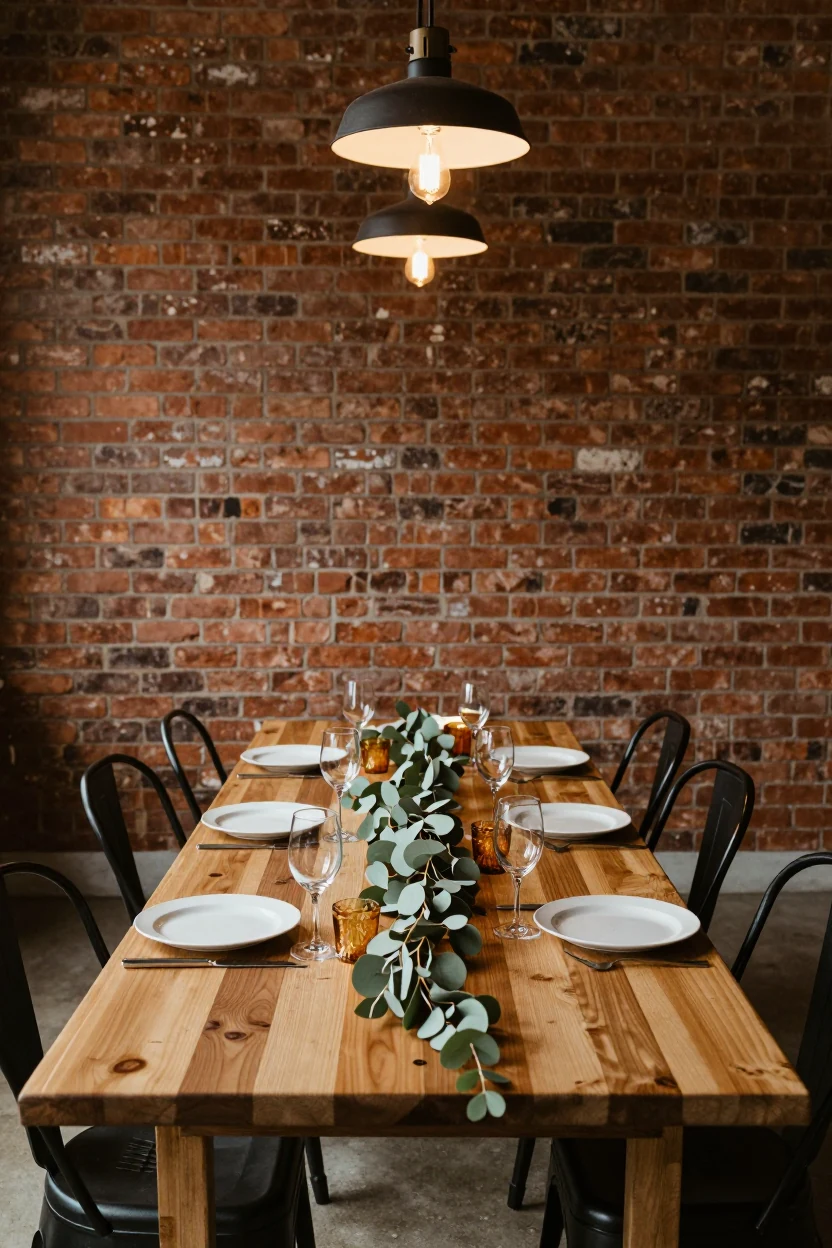
This mood board leans into raw urban texture rather than covering it up. The visual anchor is a long, raw oak table set against a backdrop of weathered red brick, emphasizing vertical lines and structural honesty. Black iron chairs flank the table, creating a stark contrast with the warm, irregular masonry behind them. A single, loose garland of eucalyptus and ivy drapes down the center of the table, keeping the surface open for simple white stoneware plates and amber glassware. The palette is restricted to brick red, charcoal black, natural wood grain, and deep sage green. Lighting comes from a mix of exposed filament bulbs in industrial cages and low-profile votives in metal tins, casting a warm glow that highlights the roughness of the brick. This setup works best for lofts or converted warehouses where the architecture is already a feature. It avoids heavy floral arrangements in favor of linear greenery that follows the table’s length.
8. Bohemian Sunset Warmths
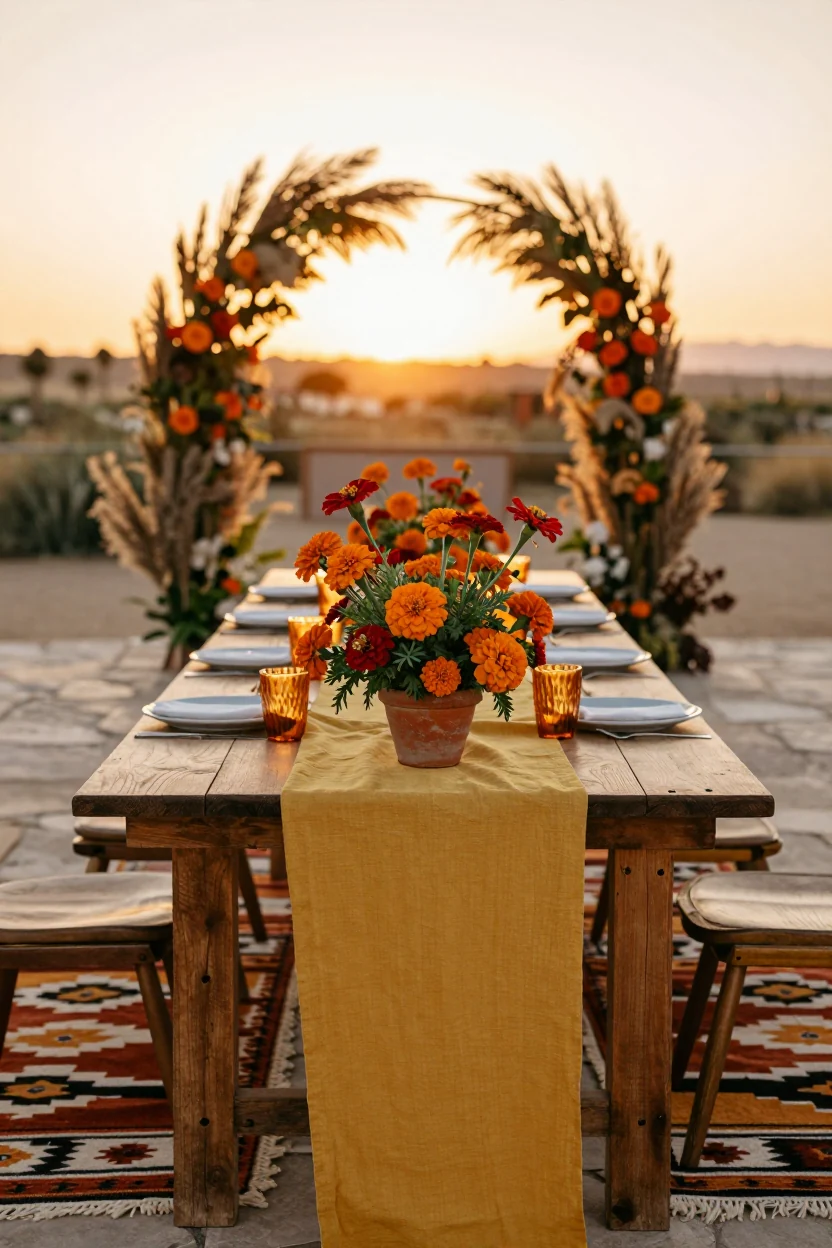
Bohemian sunset warmths capture the vibrant energy of a late afternoon celebration. The visual identity relies on a saturated palette of burnt orange, deep crimson, and golden yellow, mimicking the glow of a fading sun. Floral arrangements feature abundant marigolds and zinnias, chosen for their bold, layered petals rather than delicate structure. These blooms sit in unglazed terracotta vessels, adding a raw, earthen texture that contrasts with the softness of the petals. Underneath, patterned kilim rugs layer over outdoor flooring, introducing intricate geometric designs in red and rust hues. Linens in solid mustard or saffron tones keep the table setting grounded, allowing the floral colors to pop without visual clutter. Candlelight from amber glass holders casts a warm, flickering glow across the scene, enhancing the rich color saturation. This setup works best for outdoor festivals or destination venues where guests can move freely and the atmosphere feels lively. The combination of textured textiles and intense floral color creates a sense of movement and joy, distinct from more static, formal wedding styles.
9. Classic Ivory and Gold
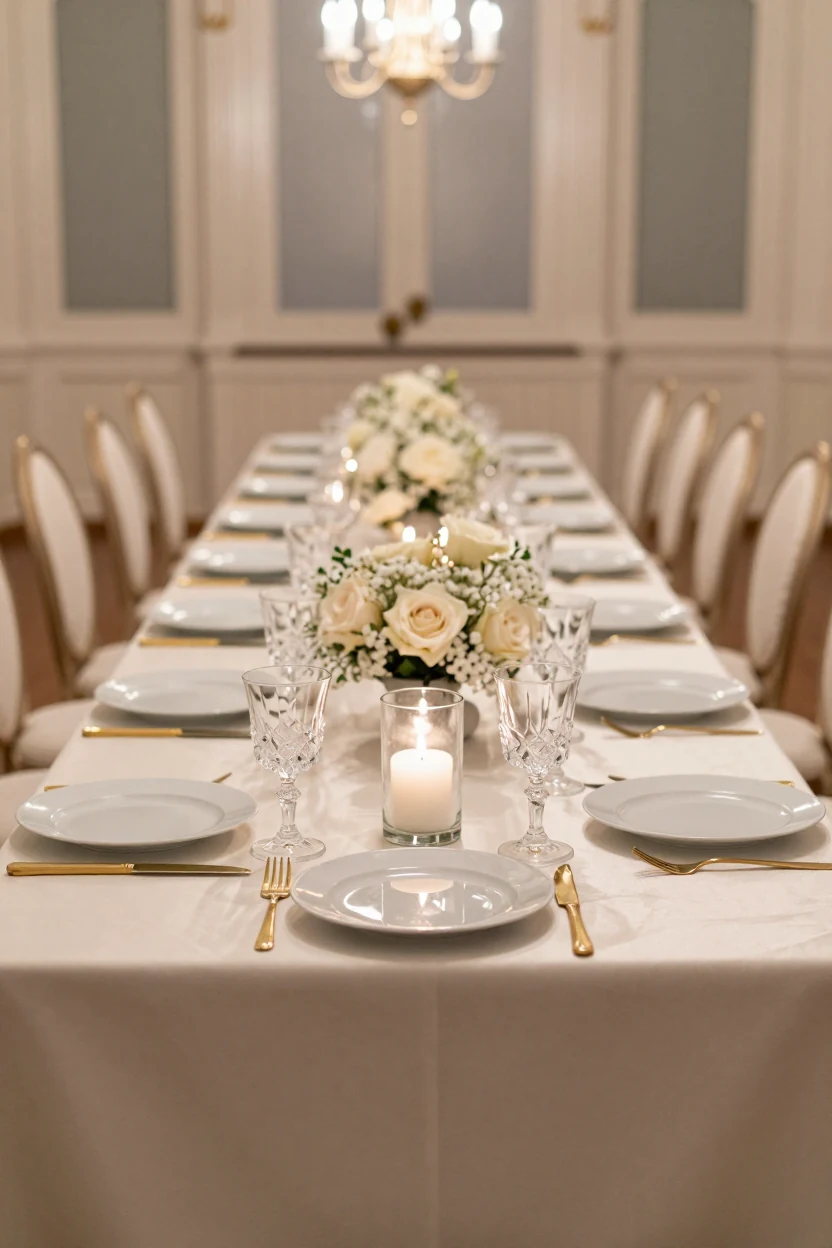
This aesthetic anchors itself in polished symmetry and traditional refinement, ideal for grand ballrooms hosting black-tie events. Visualize long rectangular tables draped in smooth ivory satin that catches the ambient light without excessive sheen. Gold flatware and crystal stemware create a linear rhythm along the table’s center, while low, wide arrangements of ivory roses and baby’s breath maintain clear sightlines between guests. The color palette remains strictly monochromatic with metallic accents, relying on texture rather than hue to create depth. Typography in invitations and signage should feature high-contrast serif fonts with generous negative space, reinforcing a sense of order and formality. Candles in clear glass hurricanes provide warm, flickering illumination that softens the polished surfaces. This look prioritizes clean lines and classic proportions, ensuring every element feels intentional and balanced. It suits couples who value tradition, where the venue’s architecture is a key design partner.
10. Coastal Blue and White Stripes
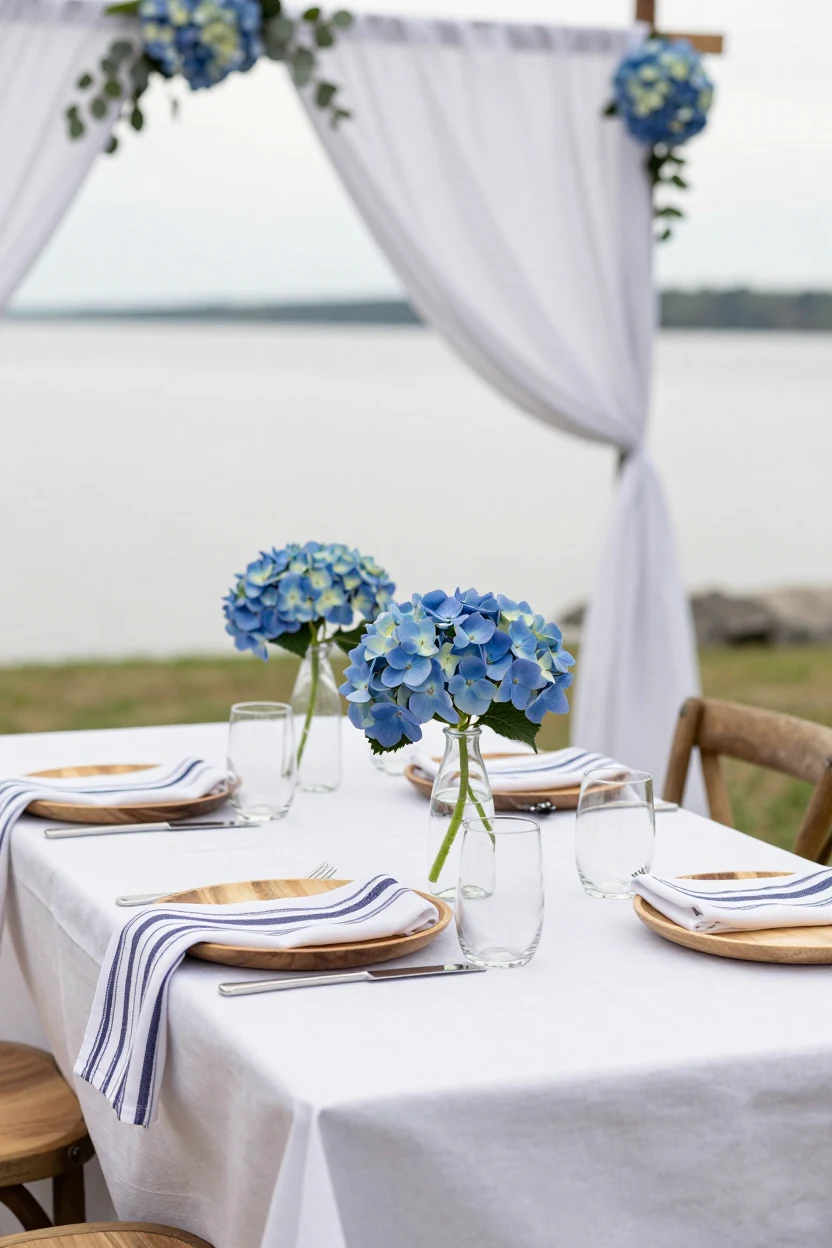
Nautical stripes offer a crisp, graphic alternative to heavy anchor motifs for coastal weddings. The visual focus here is the pattern itself: fine navy blue pinstripes on crisp white linen napkins, paired with a single stem of blue hydrangea and a sprig of eucalyptus in a clear glass bud vase. This restrained approach keeps the table setting airy and sophisticated rather than cluttered. Use this stripe motif across your stationery suite and signage for cohesion. For the ceremony, hang sheer white fabric from a simple wood arch to catch the breeze, avoiding bulky floral installations that might wilt in summer heat. Choose lightweight, breathable fabrics like cotton or linen for guest seating if possible. This palette of navy, crisp white, and soft blue works well for lakeside or beachfront venues where natural light is abundant. The geometric precision of the stripes contrasts nicely with the organic shapes of the flowers and the texture of the natural wood tableware.
11. Moody Greenery and Amber Glass
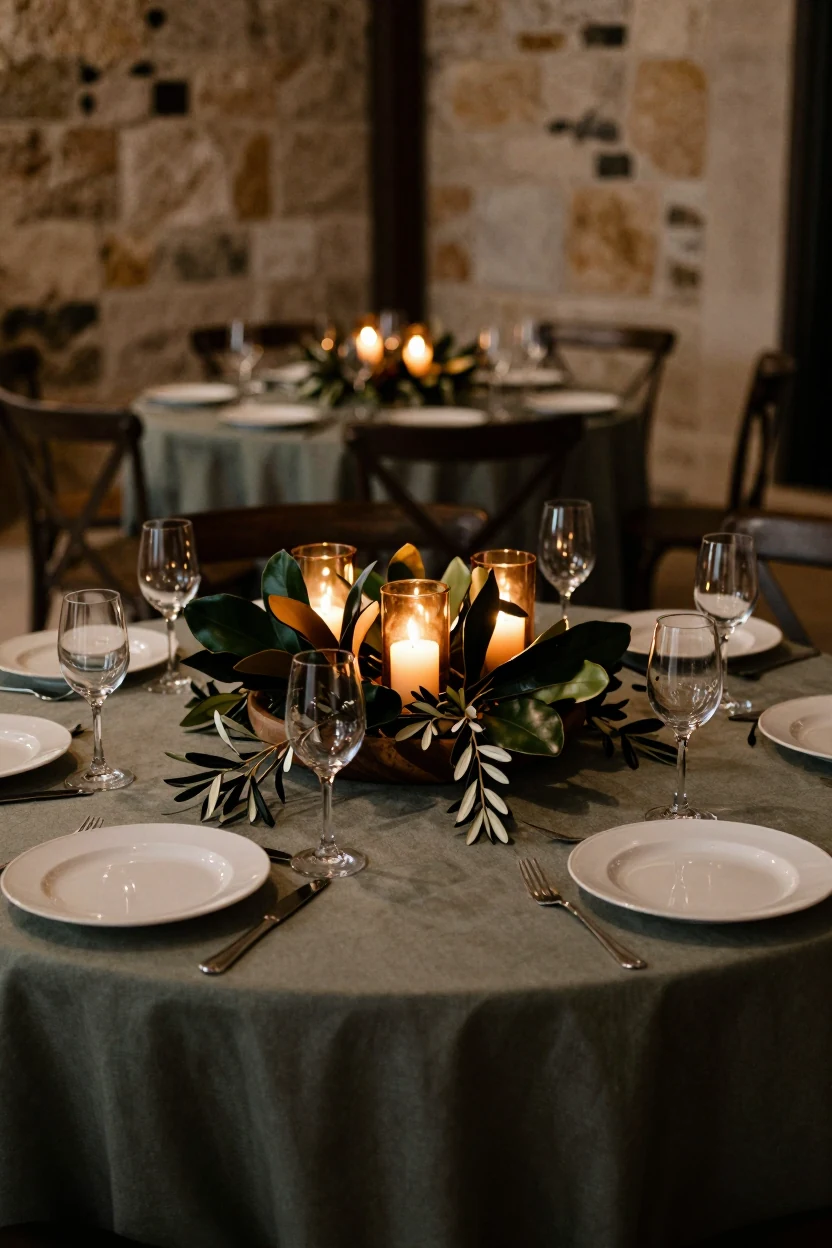
This aesthetic relies on deep, organic textures to create an intimate, enclosed feeling ideal for winter evenings or dimly lit receptions. The palette centers on dark forest green and warm amber, avoiding bright florals in favor of structural botanical elements like oversized magnolia leaves, olive branches, and eucalyptus. Amber glass votives and hurricane candle holders provide the primary light source, casting a golden glow against the deep greens. For a realistic setup, place these holders on round tables draped in matte brown or dark sage linen. Keep centerpiece heights low to maintain eye contact across the table, using shallow wooden bowls as bases for the greenery. Pair this look with textured leather seating or simple wooden chairs. The overall effect is cozy and grounded, prioritizing tactile warmth over traditional floral abundance. This style works well in barns, lofts, or stone-walled venues where natural light fades quickly.
Choosing Your Visual Anchor
Selecting the right mood board concept requires balancing your aesthetic preferences with the physical realities of your venue and season. Consider how natural light interacts with your chosen palette, whether your space allows for the specific textures highlighted here, and how much setup complexity your team can manage. Adapt these ideas by swapping materials or adjusting scale to fit your budget while maintaining the core visual logic. The goal is not to replicate a single image but to use these structured concepts as a guide for making consistent, intentional design choices that reflect your personal style.
