11 Black Wedding Color Palette Ideas That Feel Modern and Moody
A black wedding color palette is less about darkness and more about texture, contrast, and architectural interest. When applied thoughtfully, black creates a sophisticated frame that highlights lighting, fabric weight, and material detail. These setups work across different venue types, from open gardens to industrial lofts, provided the structure is secure and the lighting is calibrated. Whether you are planning a formal ballroom dinner or an intimate backyard ceremony, these ideas focus on realistic applications of black. They prioritize stability, visual flow, and tactile richness over temporary trends, ensuring the design feels grounded rather than theatrical.
1. Matte Black Arch with Textural Greenery
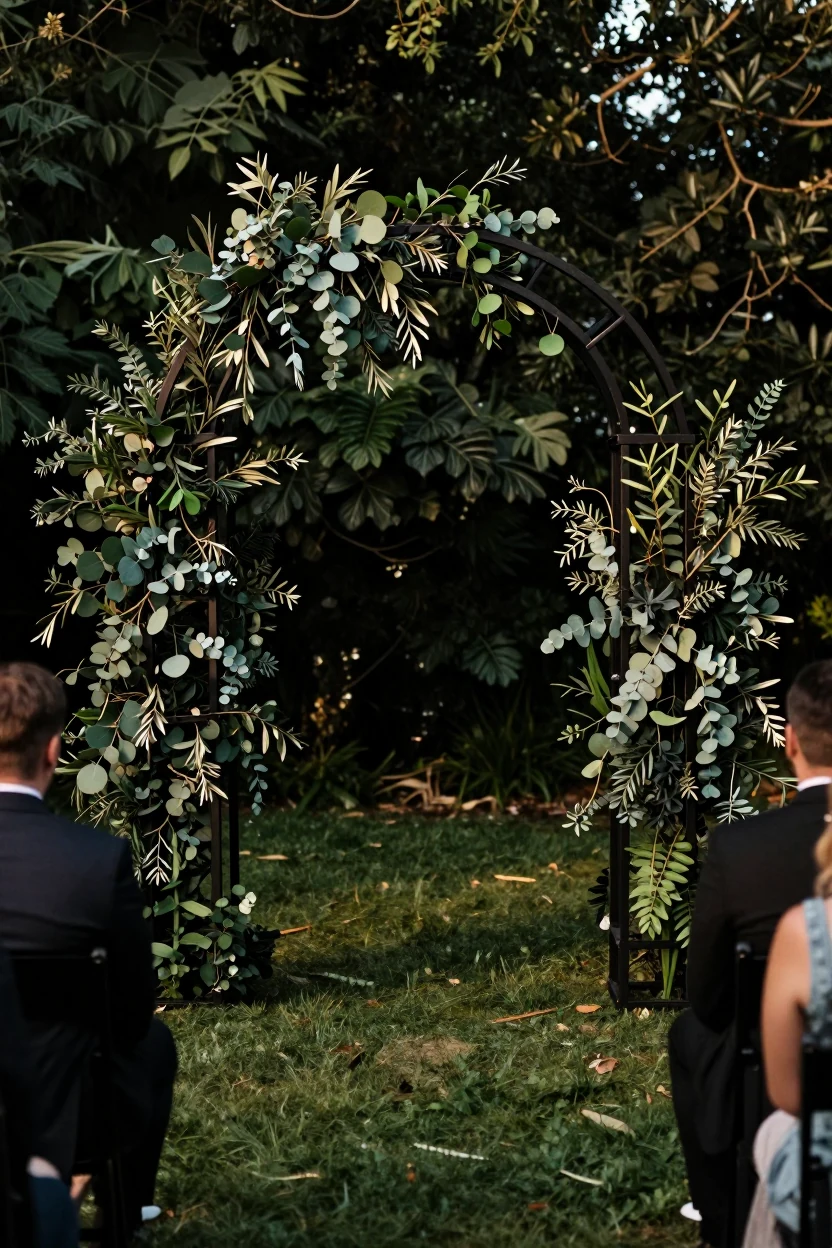
Replace traditional white floral walls with a monochromatic scheme featuring a matte black metal arch wrapped in dense, dark foliage. This outdoor garden setup anchors the ceremony space against a manicured lawn, creating a high-contrast frame that feels grounded and contemporary. The structure relies on texture rather than bright blooms, using layers of eucalyptus, olive branches, and trailing ivy to create volume. The black metal provides a modern, architectural skeleton, while the deep greenery softens the lines without introducing competing colors. Evening light enhances the shadows within the foliage, adding depth to the backdrop. For adaptation, ensure the arch is securely weighted or anchored according to venue rules, especially in windy conditions. Keep aisle markers minimal, such as simple black velvet ribbons on standard chairs, to maintain the clean visual line. This approach works well for late summer or fall weddings when darker, more robust greenery is naturally vibrant and less prone to wilting under heat.
2. Midnight Blue and Black Velvet Tablescapes
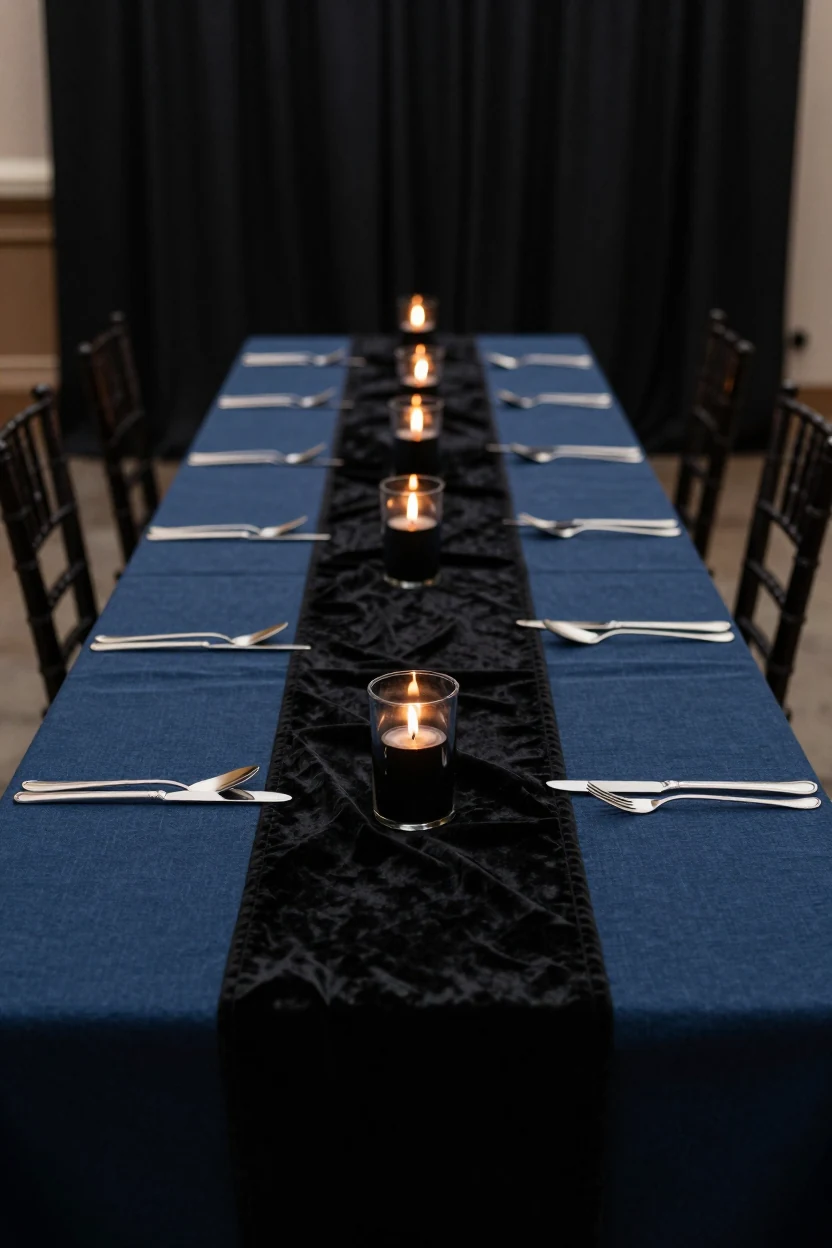
This formal ballroom setup layers textures to create depth without relying on bright colors. Long rectangular tables are covered in midnight blue linen, topped with narrower black velvet runners that absorb light and add tactile richness. Black glass hurricane candles sit along the centerline, their enclosed flames preventing flicker from washing out the dark fabric. Silver flatware provides a subtle metallic contrast against the deep tones, while heavy draping softens the room's acoustics. The arrangement creates an intimate, enveloping dining experience distinct from crisp white settings. To adapt this look, layer different fabric weights to create visual interest without needing expensive floral centerpieces. The dark palette allows for flexible lighting adjustments, as the velvet reflects ambient light softly rather than glare. This approach works well in venues with high ceilings or hard surfaces, where textile mass helps reduce echo and enhances the moody atmosphere.
3. Black-and-White Abstract Art Wall
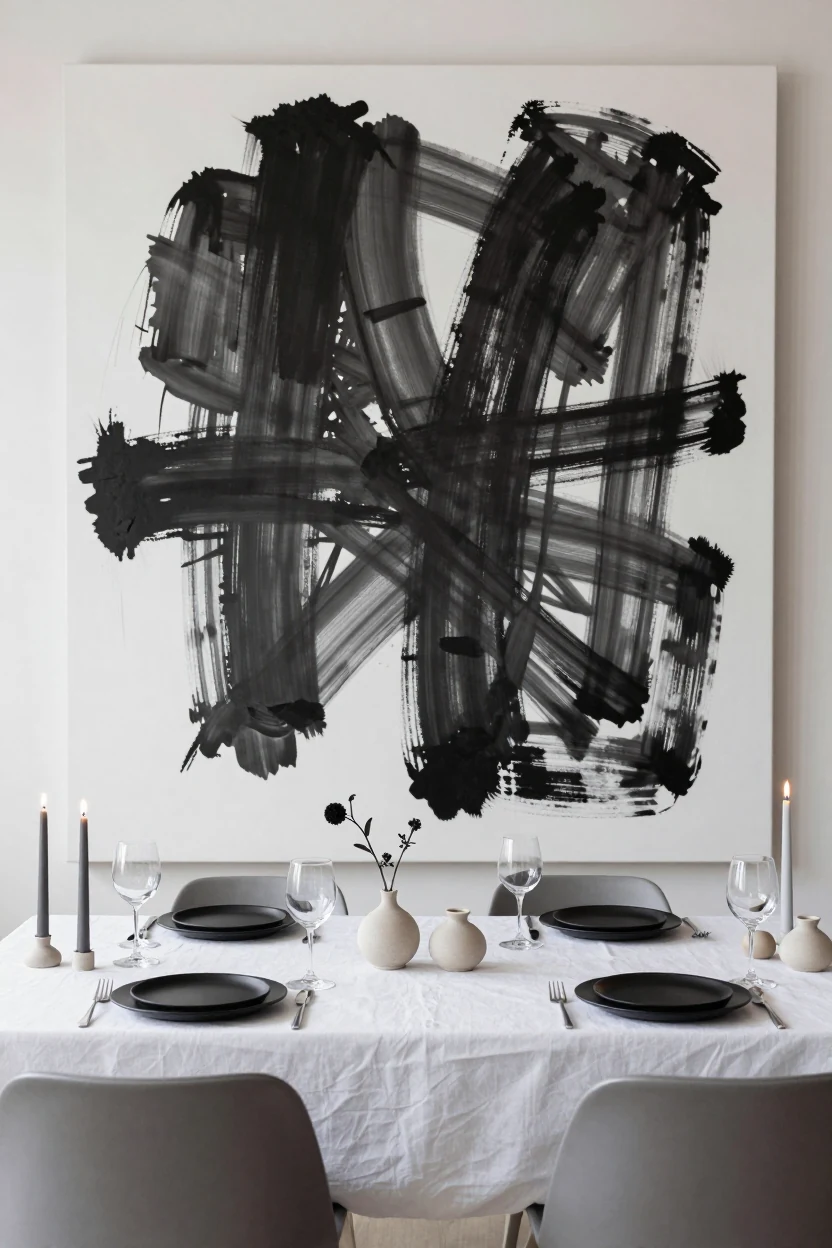
Replace traditional floral backdrops with a large-scale black-and-white abstract print to create a striking gallery-style focal point. This minimalist approach positions the artwork as the primary visual element behind the sweetheart table, eliminating the need for bulky floral arrangements. The piece features bold charcoal strokes on a stark white canvas, providing high contrast that anchors the room without overwhelming it. Pair this with a simple rectangular table dressed in crisp white linen and matte black dinnerware to maintain the monochrome theme. Use low-profile centerpieces, such as small ceramic vases with single stems or unlit taper candles, to keep sightlines open. The clean lines of modern dining chairs frame the composition, while soft ambient lighting highlights the texture of the paper. This setup appeals to couples who prefer curated art over biological elements, turning the reception space into an extension of their personal aesthetic. It is a realistic option for indoor venues with flat walls or freestanding panels.
4. Charcoal Slate and Raw Stone Ceremony
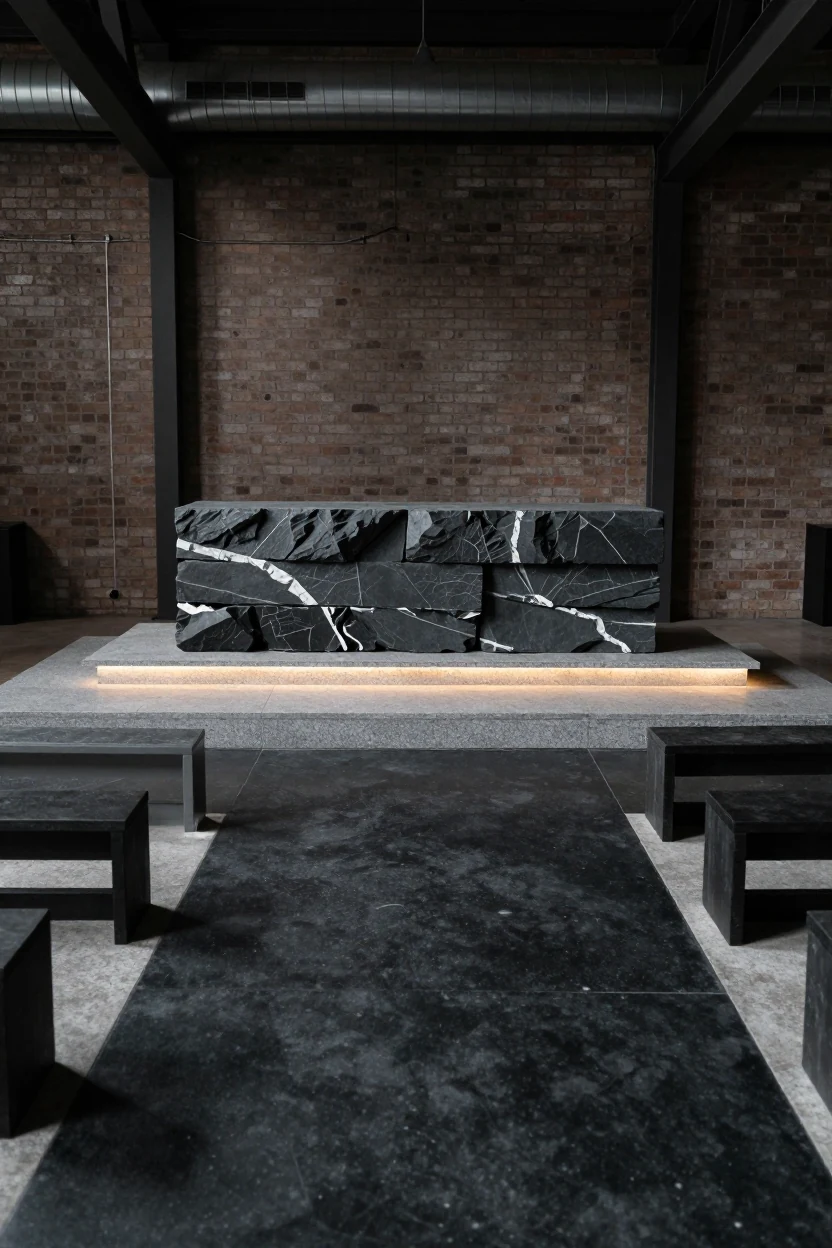
This industrial ceremony setup replaces traditional floral arches with raw architectural elements, creating a monochromatic focal point that feels grounded and modern. The altar consists of stacked charcoal slate slabs, using the natural veining in the stone to provide visual interest without introducing new colors. Steps leading up to the platform are constructed from varying shades of gray granite, establishing a rugged texture that contrasts with smooth matte black concrete floor sections. Seating markers along the aisle use smaller slate tiles, maintaining the strict gray-scale palette while adding tactile variety. The lighting is dim and warm, using low-wattage LED uplights to highlight the stone textures without washing out the dark tones. This design works best in venues with existing industrial character, such as brick warehouses or loft spaces, where the architecture complements the stonework. For adaptation, you can swap the slate for local limestone or concrete blocks if slate is unavailable, ensuring the material remains unpolished to preserve the raw aesthetic.
5. Black Lace and Candlelight Intimacy
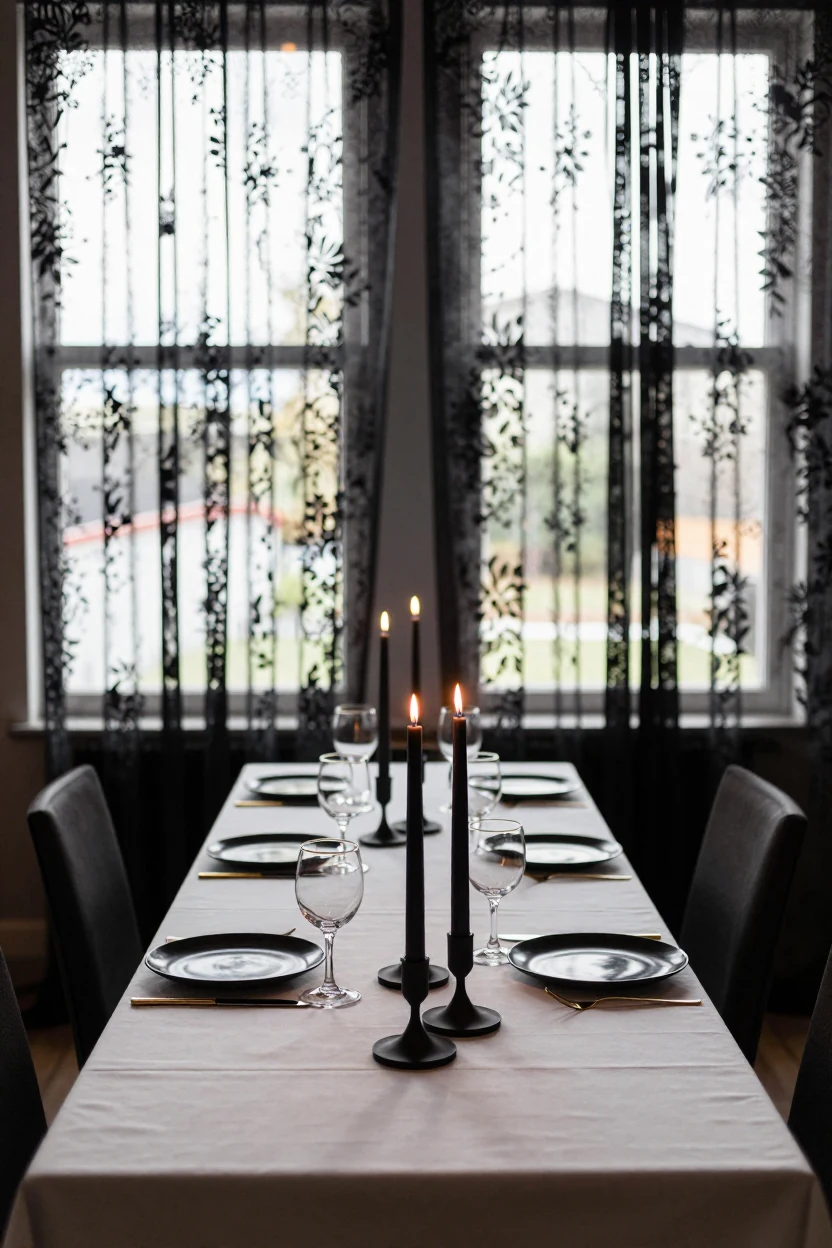
This intimate setup relies on texture and light rather than bold color blocking. Sheer black lace panels are draped over large window frames, diffusing natural daylight or filtering evening illumination to create a soft, cinematic glow inside the room. The fabric adds visual depth without obstructing sightlines, allowing guests to see outside while staying focused on the interior details. Clusters of taper candles in matte black glass holders sit on varying heights across the tables, providing warm, flickering light that contrasts with the cool shadows cast by the lace. The table linens are crisp white cotton, offering a clean canvas that makes the black accents pop without feeling heavy. Place settings use simple black ceramic plates with gold-rimmed glasses, keeping the profile low and uncluttered. The overall effect is moody and exclusive, ideal for small ceremonies or cocktail-hour receptions where close conversation matters more than grand displays.
6. Black Topiary and Concrete Planters
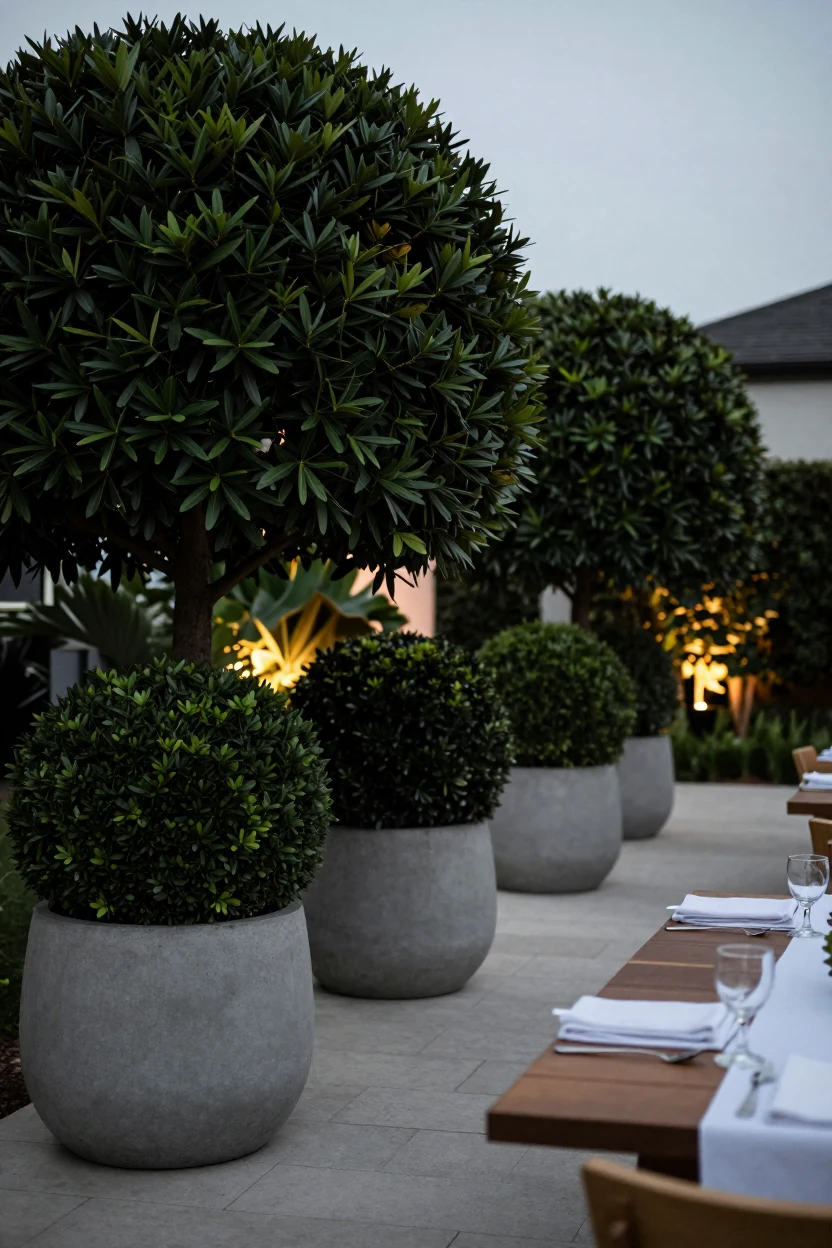
This setup relies on structural greenery rather than floral arrangements to define the space. Large, spherical black boxwood topiaries sit in heavy, matte concrete planters, creating a uniform rhythm along the aisle or flanking dining tables. The dark, dense foliage contrasts sharply with light gray pavers or manicured grass, offering a sophisticated, architectural look that feels permanent and grounded. Because the planters are solid and weighted, they provide stability without needing risky attachments to venue infrastructure. This aesthetic works best in open courtyards, modern barns, or backyard venues where neutral ground cover allows the black tones to pop. For lighting, use uplighting behind the topiaries to create a halo effect against a darkening sky, or place low-profile LED candles in the foreground for warmth. If live boxwood is unavailable, high-quality silk alternatives offer similar visual weight without maintenance concerns. This approach creates a clean, modern frame that guides guests’ eyes through the ceremony or reception area.
7. Monochrome Black Bouquet and Veil
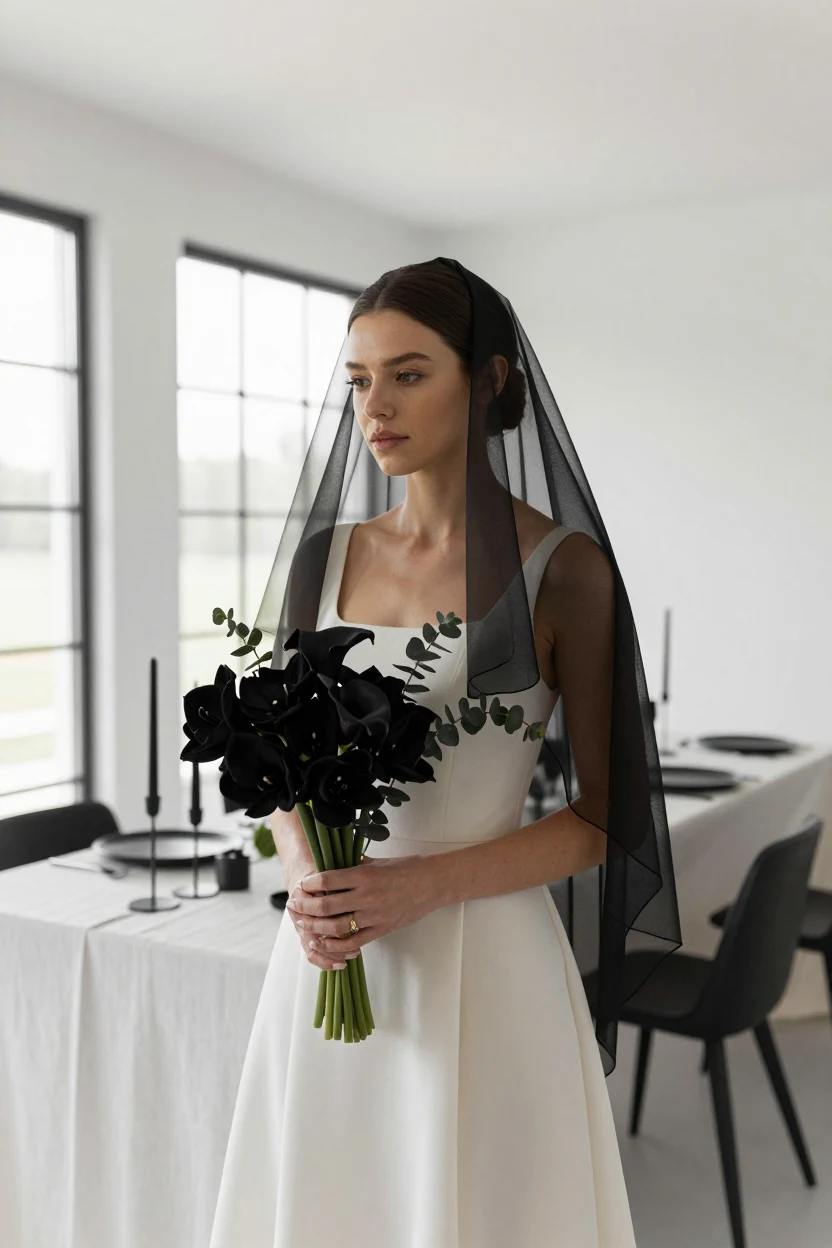
This bridal-focused concept shifts the visual weight to the couple, keeping the surrounding venue minimal to let the attire command attention. The centerpiece is a hand-tied bouquet featuring deep black amaryllis blooms, sculptural black calla lilies, and dense eucalyptus or olive branches for textural contrast. A sheer black organza veil adds movement without obscuring the face, creating a cohesive silhouette that matches the monochrome theme. To make this work in a real setting, keep the reception decor strictly neutral. Use simple white or cream linen runners on long rectangular tables, paired with matte black flatware and clear glassware. Avoid competing floral arrangements at the head table; instead, rely on tall, thin taper candles in black candlesticks to provide vertical interest without bulk. The bride’s gown should be a clean A-line or sheath style in ivory or white to provide the necessary contrast against the dark florals. This approach ensures the bridal party acts as the primary color carrier, allowing guests to focus on the couple rather than complex installations. It is an elegant solution for venues with strong architectural features that require minimal additional styling.
8. Blackboard Signage and Chalk Art
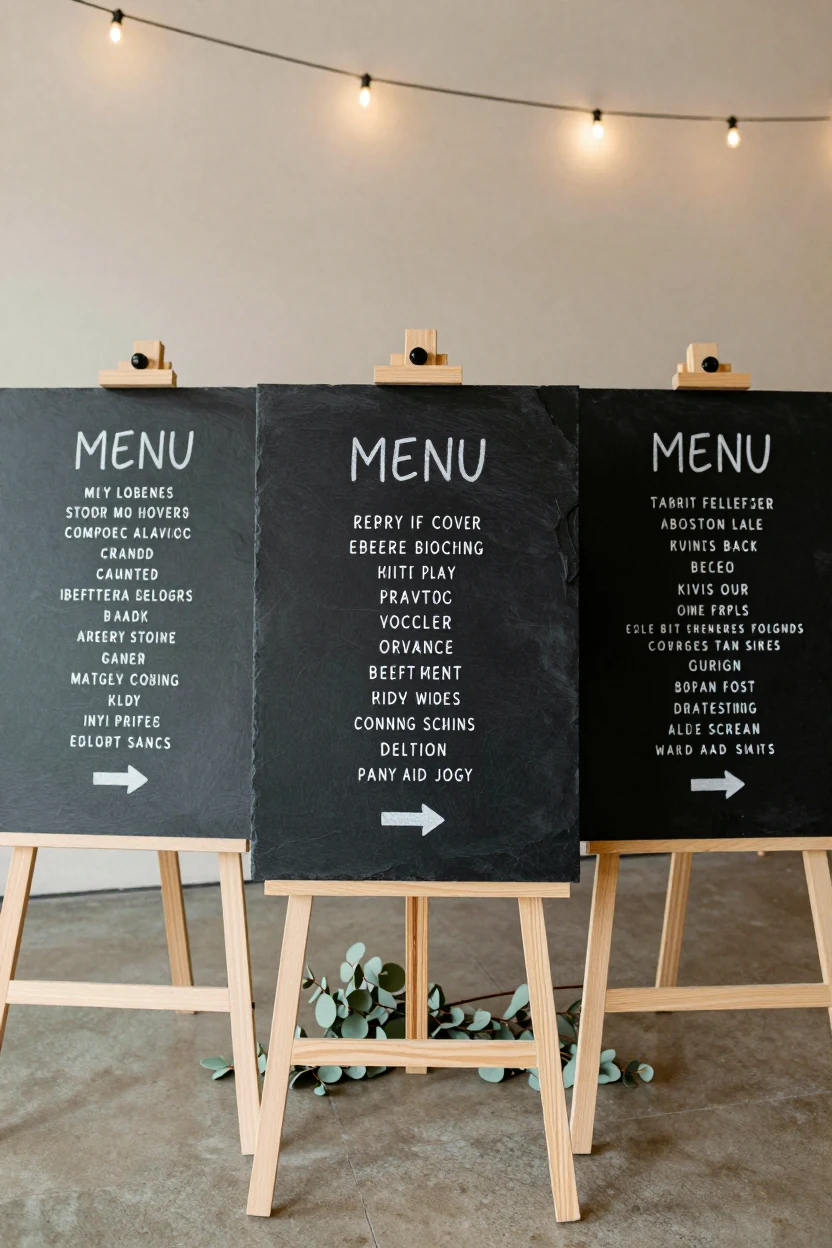
This casual setup uses black slate chalkboards as the primary visual anchor for reception signage and menu displays. Instead of printed vinyl, the venue features a series of rectangular slabs leaning against walls or mounted on wooden easels. White chalk script provides high contrast against the dark stone, creating a cohesive typographic theme that feels artisanal rather than mass-produced. The hand-drawn texture adds warmth to spaces that might otherwise feel cold due to the monochrome palette. Readers can adapt this by sourcing varying sizes of slate panels to create visual rhythm along entryways or near the bar. Pair the black surfaces with simple wooden furniture or neutral linens to prevent the space from feeling too heavy. This approach relies on negative space and clean lines, allowing the typography to serve as the decorative element. It works well for rehearsal dinners or intimate receptions where a personal, touchable aesthetic is preferred over polished acrylic or glass signage.
9. Black Leather and Brass Cocktail Lounge
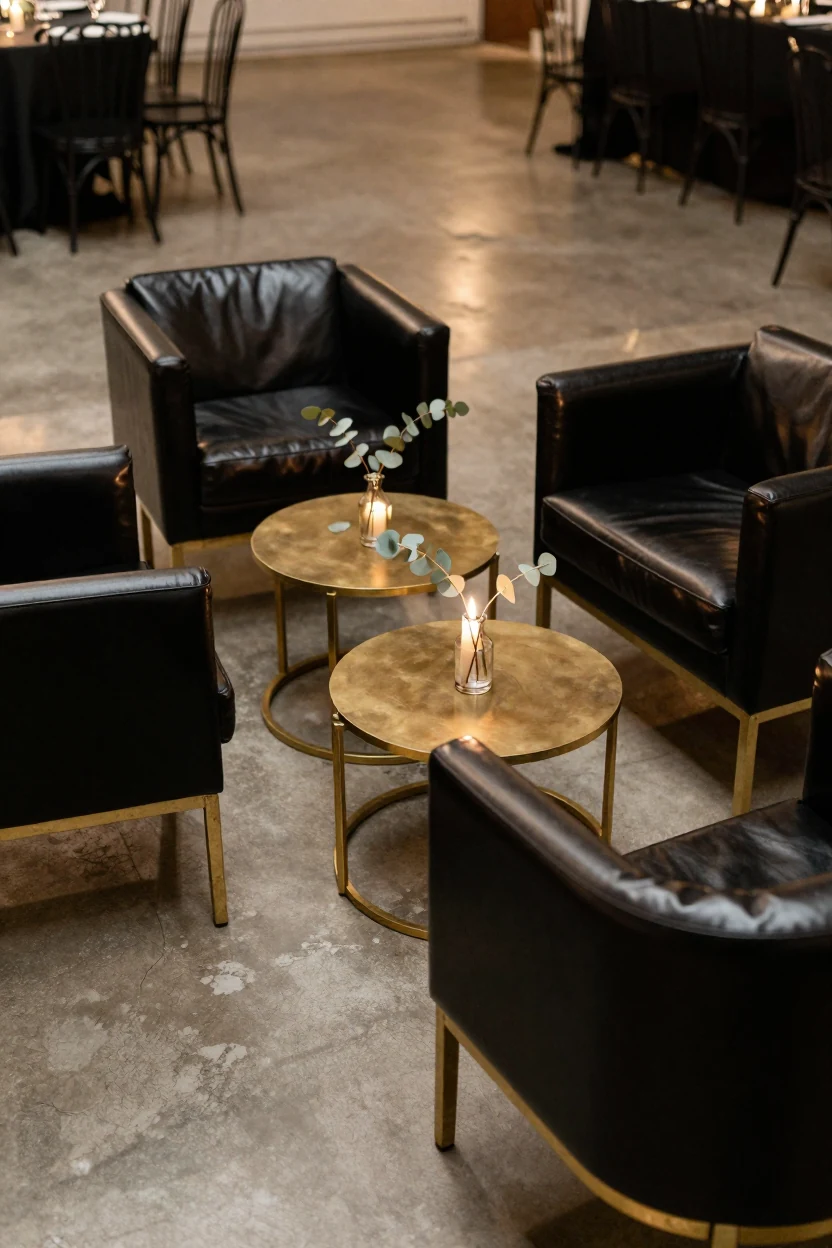
Transform a corner of your venue into a sophisticated pre-wedding lounge by mixing black leather club chairs with brass-legged cocktail tables. This setup creates a tactile, adult-oriented space that encourages intimate conversation away from the main dance floor. The rigid texture of the leather contrasts beautifully with the warm glow of polished brass, offering a sleek alternative to traditional fabric-heavy seating arrangements. Keep the area minimal to maintain flow; place a few low tables between the chairs and add tall candlesticks for ambient lighting without cluttering the sightlines. This furniture styling acts as decor, defining a specific mood through material contrast rather than floral volume. It works well in industrial lofts, modern barns, or any venue with hard surfaces where you want to introduce softness and warmth. Guests can easily move through this zone, making it ideal for a welcome hour or cocktail reception before dinner is served.
10. Blackened Wood and Rustic Timber
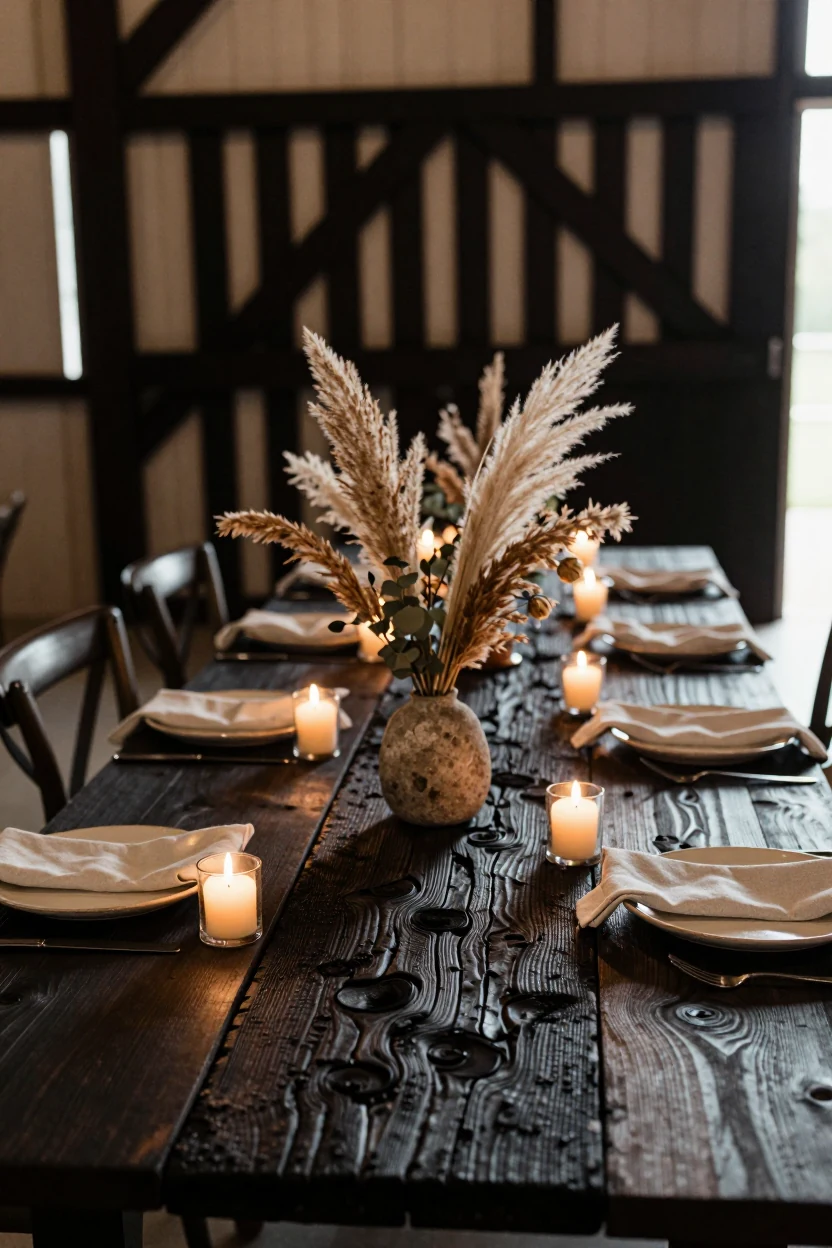
This aesthetic relies on the organic texture of charred wood rather than painted surfaces to create a moody, rustic atmosphere. In a barn or timber-frame venue, the natural grain of reclaimed beams remains visible beneath a soot-black finish, adding depth that smooth paint cannot replicate. The visual contrast is sharp when paired with light-colored linen napkins and raw stone dinnerware, which reflect ambient light against the dark wood. For florals, use loose, unstructured arrangements of dried grasses or preserved eucalyptus to maintain the organic feel without competing with the wood’s texture. Lighting should be warm and low; place beeswax taper candles in aged brass holders on the tables to create flickering shadows that highlight the timber’s ridges. If the venue lacks charred features, you can achieve a similar look by placing reclaimed blackened lumber boards as table runners or using them as bases for low centerpieces. This approach works best for fall or winter weddings where the natural light is softer and the textures feel grounded. It avoids the sterile look of modern industrial spaces by retaining the history and imperfection of the material.
11. Black and Gold Geometric Centerpieces
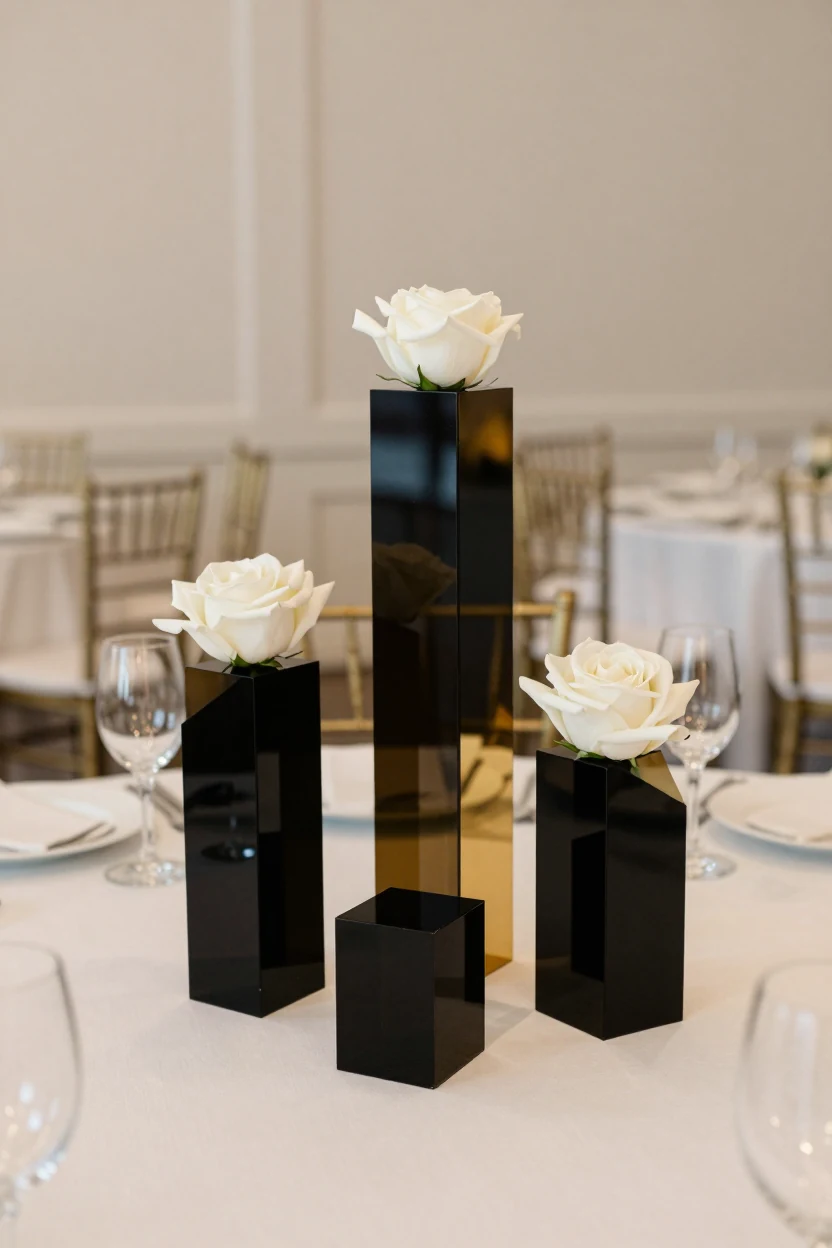
This sleek reception setup relies on architectural precision rather than floral volume. Low-profile centerpieces made of black acrylic or glass sit on crisp white linens, featuring angular geometric forms that reflect ambient light. Gold metallic accents trace the edges of the vessels, adding warmth without overwhelming the monochrome base. A single white rose in each piece provides a soft organic contrast to the hard lines. The table setting uses minimal dinnerware and clear glassware to maintain sightlines across the room. This style thrives in venues with clean lines, such as modern lofts or gallery spaces, where negative space is as important as the decor. The low height ensures guests can see one another, fostering connection while the reflective surfaces catch candlelight or overhead fixtures. For a variation, swap the single rose for a small cluster of white lisianthus to add subtle texture while keeping the profile tight and modern.
Choosing Your Black Palette Approach
Selecting the right black wedding aesthetic depends on your venue’s architecture and lighting capabilities. If your space has strong natural light or high ceilings, look to velvet linens or abstract art to anchor the room without overwhelming it. For outdoor settings, prioritize weighted structures like concrete planters or securely anchored metal arches to ensure safety in variable weather. Consider the season, as darker greenery thrives in cooler months while indoor setups allow for year-round flexibility. Ultimately, use black as a structural element that supports your specific style, whether that is industrial rawness or modern minimalism.
