11 Low Key Wedding Ideas for a Relaxed, Intimate Celebration
A low-key wedding prioritizes comfort, conversation, and authentic connection over large-scale production. Whether you are planning a small backyard gathering or a minimalist reception in a historic venue, the goal is to create a space that feels effortless and personal. This collection of ideas focuses on practical setups that reduce visual clutter while enhancing natural beauty. You will find specific styling advice for rustic tables, café-style cocktail hours, and textile-only centerpieces. Each concept accounts for realistic constraints like budget, season, and venue architecture, ensuring the design remains achievable. By focusing on texture, warm lighting, and open sightlines, these celebrations create a relaxed atmosphere where guests can engage freely without the pressure of formal banquet seating or heavy floral installations.
1. The Rustic Backyard Table Spread
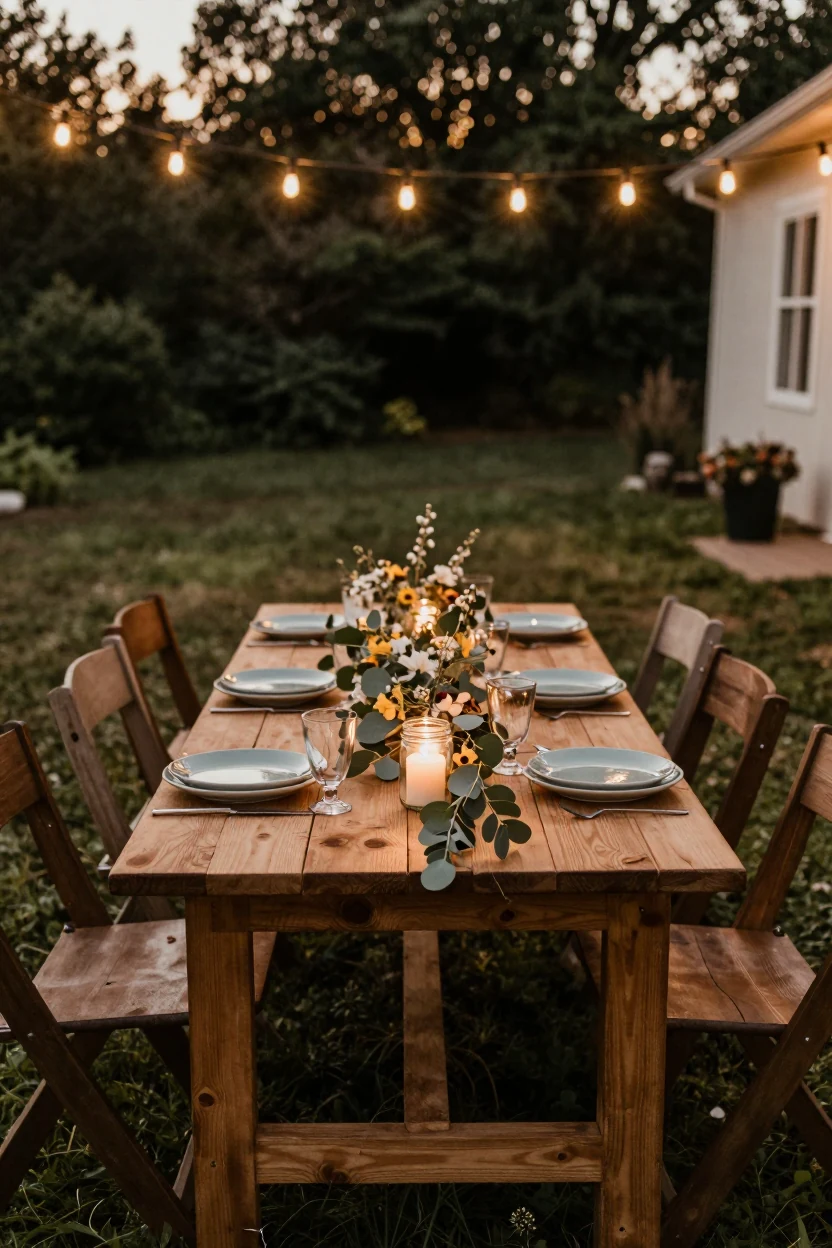
Swap formal banquet seating for a long, reclaimed wood farm table to establish an immediate sense of casual comfort in your backyard venue. The visual anchor is a low-profile runner of eucalyptus and small wildflowers that keeps sightlines open while adding organic texture. Intersperse the greenery with vintage mason jars holding tea lights rather than tall stems, ensuring conversation flows easily across the length of the table. Pair this lighting setup with mismatched ceramic plates and simple glassware to avoid a overly polished look. The aesthetic relies on natural materials: the rough grain of the wood contrasts with the smooth glass and soft floral forms. As evening approaches, the string lights overhead cast a warm, golden-hour glow that enhances the rustic tones without requiring expensive uplighting. This layout works best for smaller guest lists where intimacy is the priority. If your space lacks mature trees, the string lights create the necessary canopy effect to define the dining area.
2. Minimalist Monochrome Banquet
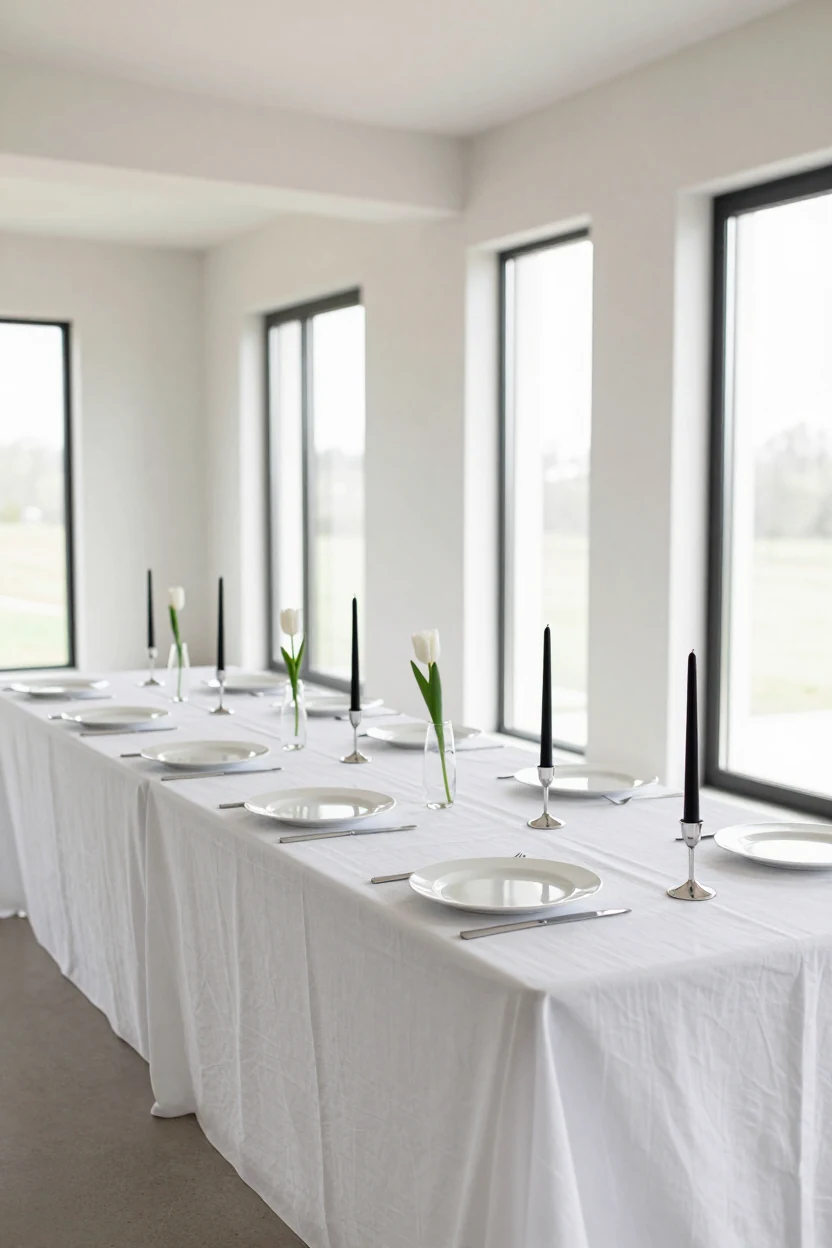
This reception design treats the room as a gallery, relying on strict negative space and clean lines rather than dense floral arrangements. The palette is limited to crisp white, deep black, and metallic silver. Tables are dressed in smooth white linen that pools slightly at the floor, grounding the sleek aesthetic. Instead of towering centerpieces, each place setting features a single white tulip in a small, clear glass vase. This low-profile floral choice keeps sightlines open, allowing guests to see one another across the room. Thin black taper candles in silver holders provide subtle, flickering light without overwhelming the minimal look. The flatware is simple silver, and the dinnerware consists of plain white plates that blend into the linen. The room’s architecture—high ceilings, exposed beams, or large windows—becomes the primary decorative element. This setup works best in venues with inherent character, where the lack of clutter highlights the structure. It creates a modern, sophisticated atmosphere that feels calm and intentional, focusing on the quality of materials rather than quantity.
3. The Garden Path Ceremony
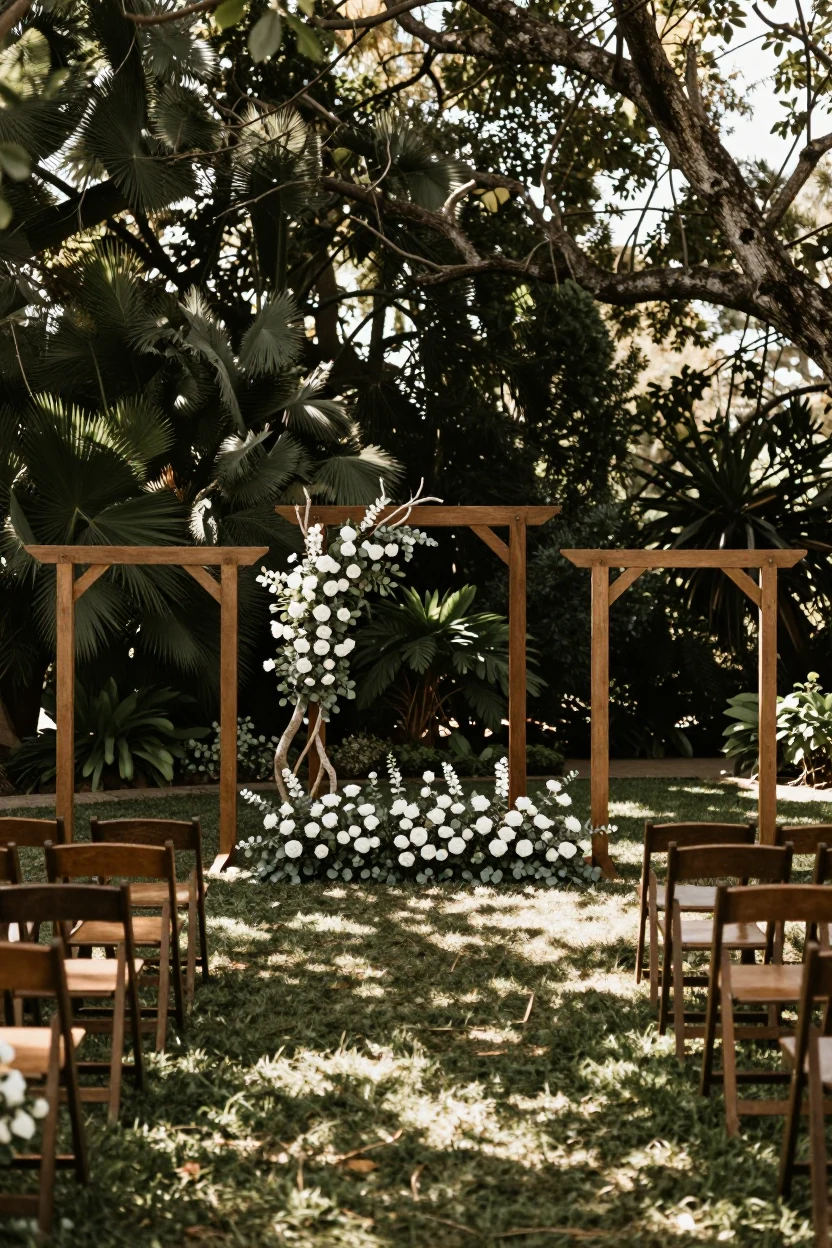
Skip heavy structural arches for a grounded, organic ceremony space that feels connected to the ground. This low-key setup uses three simple, evenly spaced wooden arches or leaning branches along the aisle rather than a single focal point, creating a rhythmic path through the garden. Keep the altar minimal: a low, sprawling arrangement of eucalyptus, ferns, and white roses sits directly on the grass or a low platform, ensuring eye contact remains easy between partners and guests. Use mismatched wooden chairs for a relaxed vibe, and keep aisle markers subtle with simple wildflowers tied to stakes or small potted plants. The look relies on existing landscape features like mature trees or hedges, requiring minimal heavy decoration. For lighting, rely on natural daylight or discreet string lights draped high in the trees, avoiding large chandeliers that clash with the casual atmosphere. This approach works best for spring or early fall when greenery is abundant. If the venue lacks a formal path, define the aisle with a narrow strip of grass or gravel. Swap white blooms for soft peonies or ranunculus depending on your season. Keep the overall palette to neutral woods, varied greens, and one primary flower color to maintain visual calm.
4. Café-Style Cocktail Hour
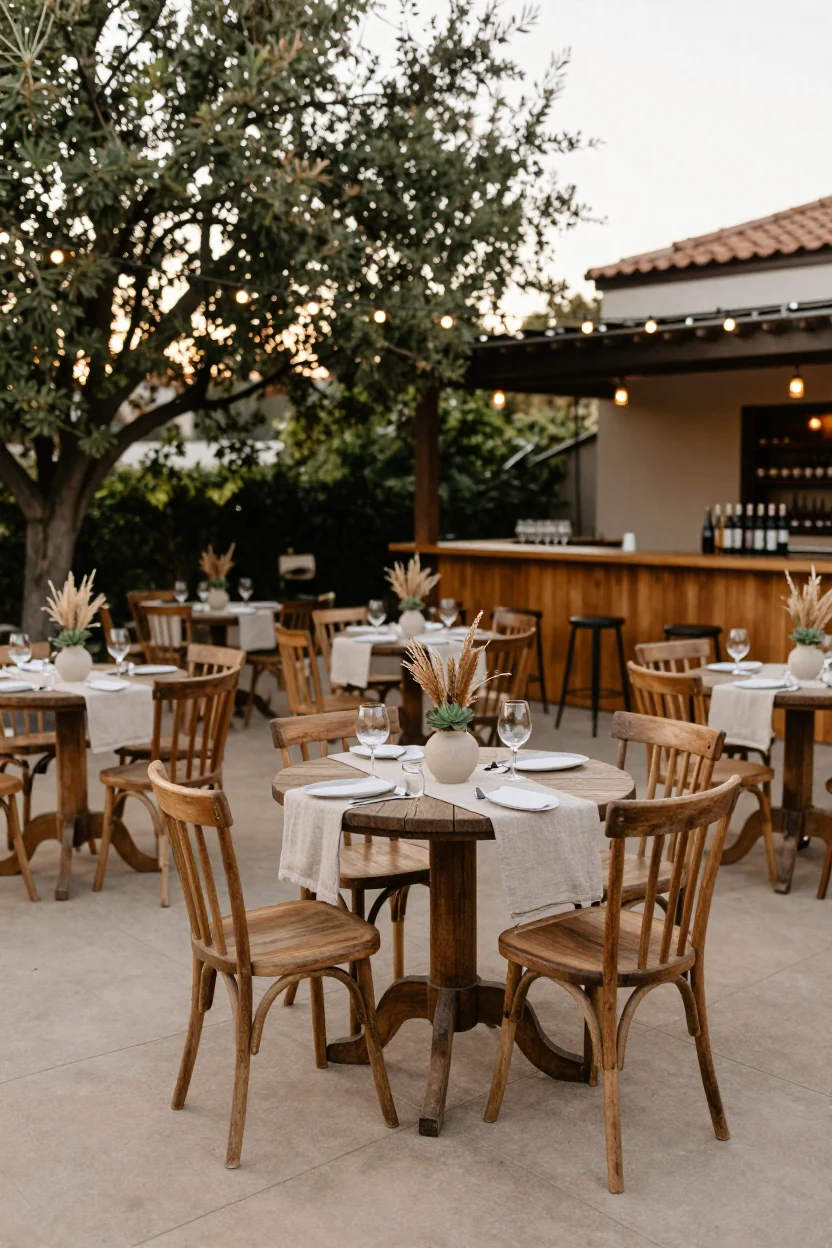
Skip the rigid banquet rows for a loose, conversational layout that feels like a long afternoon out. Arrange small round bistro tables and mismatched vintage wooden chairs in clusters across an open floor or garden patio. This mobile furniture setup allows guests to move freely, sit with different groups, and engage in easier conversation than a formal seated dinner permits. Style the tables with simple linen runners rather than full cloths, leaving the wood grain visible for texture. Use low, wide ceramic vases for succulents, dried grasses, or seasonal sprigs to keep sightlines open across the room. Serve wine or sparkling mocktails from a central bar station, encouraging guests to wander. The lighting should be warm and ambient, relying on string lights overhead or lanterns on tables rather than harsh spotlights. This approach works well for spring or summer weddings where the venue allows for flexible furniture placement.
5. The Single-Color Floral Statement
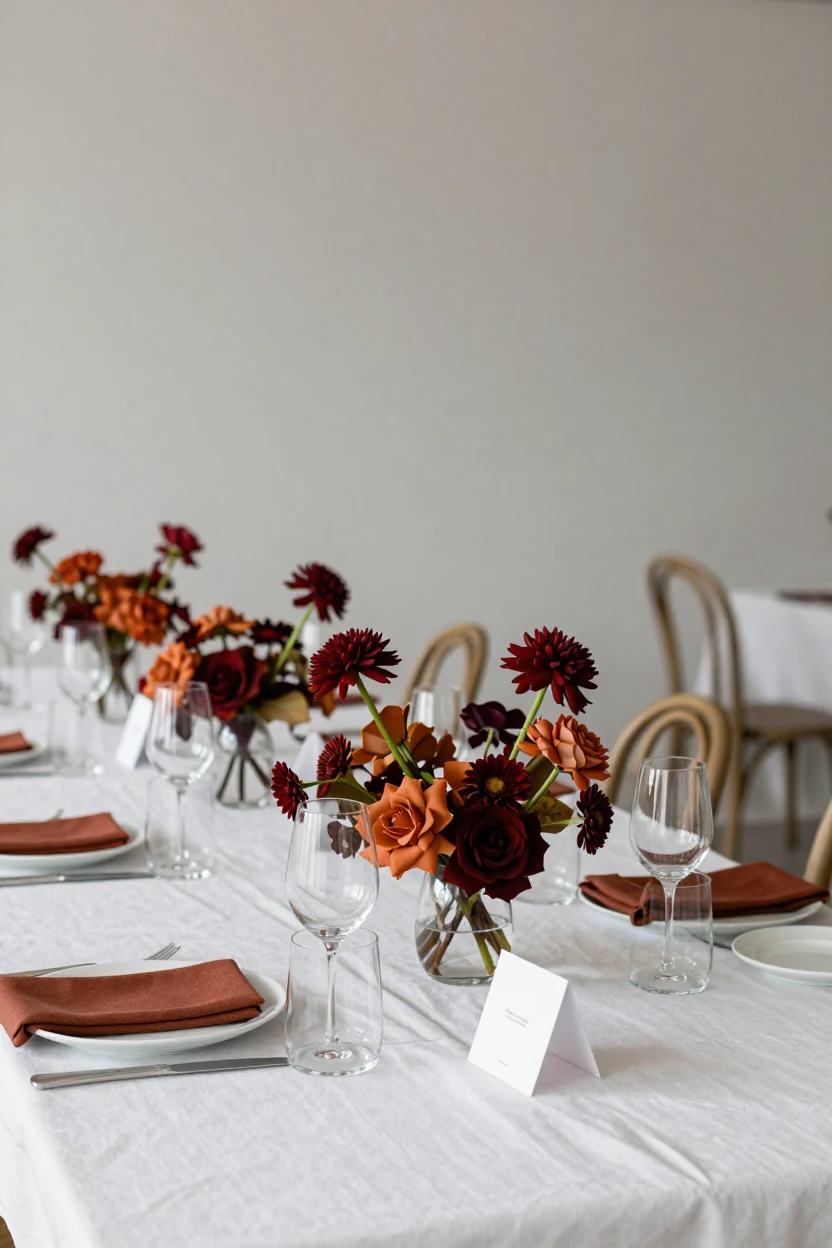
This reception design relies on a single bold hue to create a cohesive, modern aesthetic without visual clutter. Choose one dominant color, such as deep terracotta or muted sage green, and apply it exclusively to florals, napkins, and signage. The remaining decor stays strictly neutral using crisp white tablecloths, clear glassware, and simple ceramic dinnerware to allow the single color family to dominate the space. Low-profile centerpieces featuring seasonal blooms in that specific shade sit on the tables, keeping sightlines open for guests. Linens in the same tone rest folded at place settings, while a large floral arrangement in the matching hue anchors the head table. This approach simplifies decision-making and ensures a unified look. You can adapt this concept by selecting a color that reflects your personal style or venue palette, ensuring all elements from the bouquet to the menu card share the same tonal family for a polished finish.
6. Cozy Fire Pit Reception
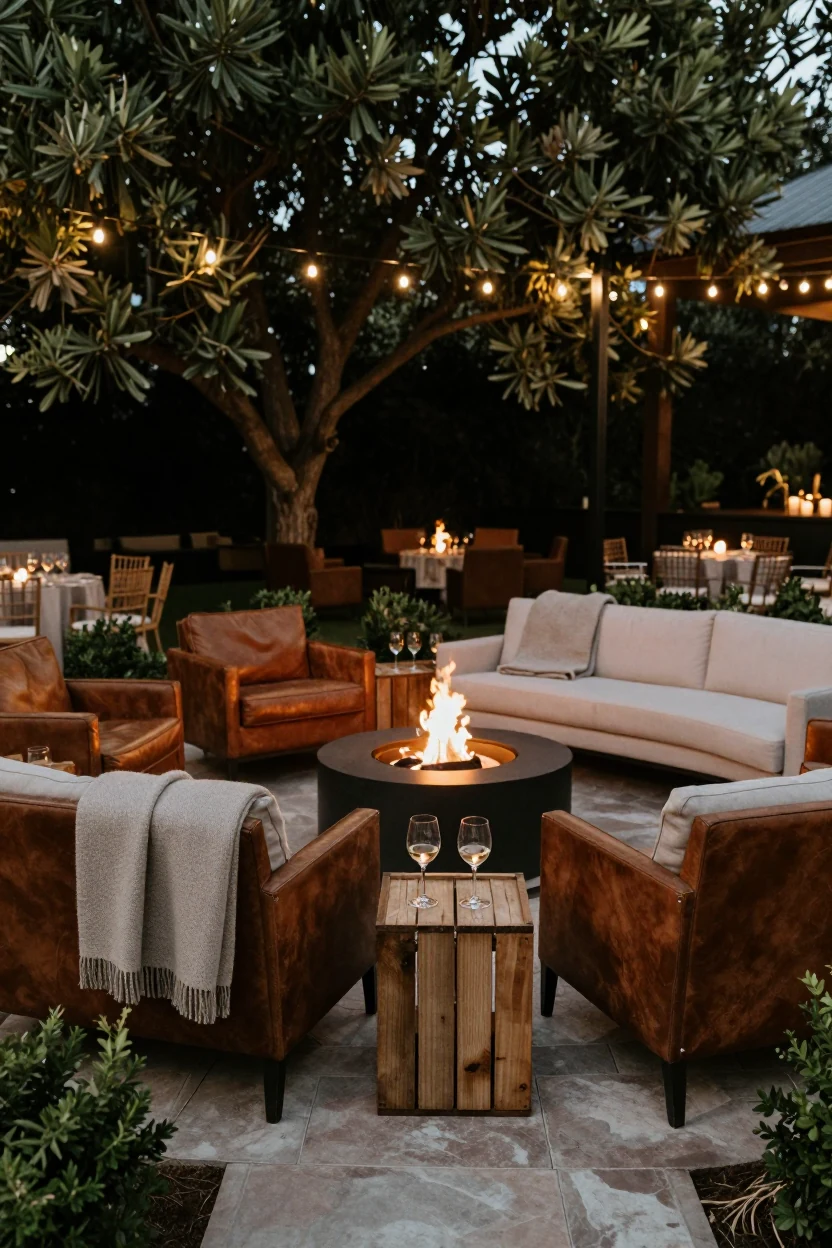
Skip the head table entirely in favor of a communal lounge layout centered on a safe, contained fire feature. Arrange low-profile seating, such as leather armchairs or tufted velvet sofas, in loose semi-circles around the heat source to encourage face-to-face conversation rather than audience-style viewing. Layer oversized wool throws and textured cushions in neutral tones like charcoal, oatmeal, and rust to add warmth and visual depth. Since there is no traditional table, use sturdy wooden crates or low stone plinths as informal side tables for drinks and small plates. Keep the lighting dim and warm, relying on the fire’s glow supplemented by string lights or battery-operated lanterns placed safely on the ground to avoid fire hazards. This setup transforms the reception into a relaxed gathering where guests mingle naturally, making the space feel intimate regardless of guest count.
7. The Paper Goods Feature Wall
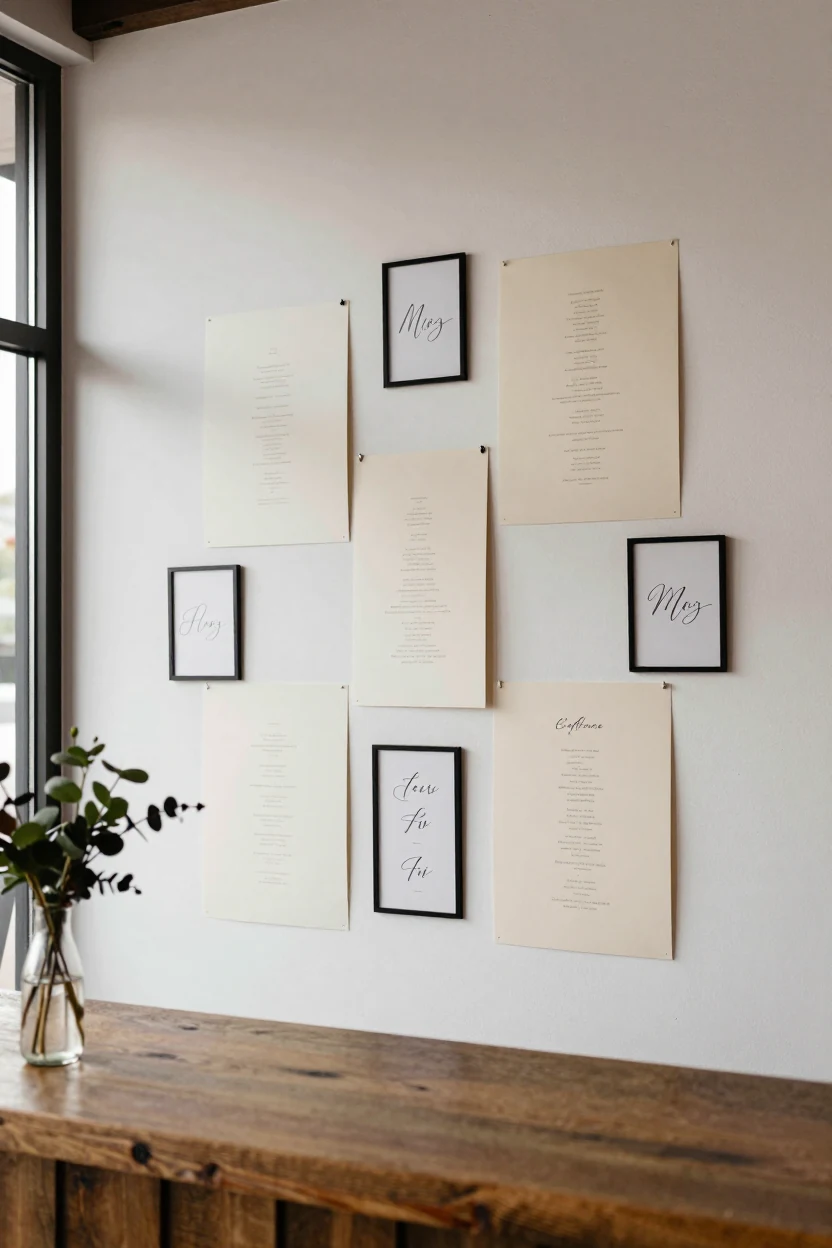
Transform standard wedding stationery into a curated gallery at your reception entrance or behind the bar. Instead of hiding menus and calligraphy signage in corners, mount them as intentional art pieces on a single accent wall. Mix formats to create visual rhythm: pair large, unframed menu boards with smaller, thin black metal frames containing invitation suites or seating charts. Stick to a neutral palette of cream, charcoal, and matte black to let the typography shine without competing with the room’s decor. This setup turns functional planning elements into a conversation starter that guests can photograph, while keeping the surrounding space clear for circulation. It is a low-maintenance way to add texture and personality without requiring floral installations or heavy fabric draping.
8. Daylight Glasshouse Gathering
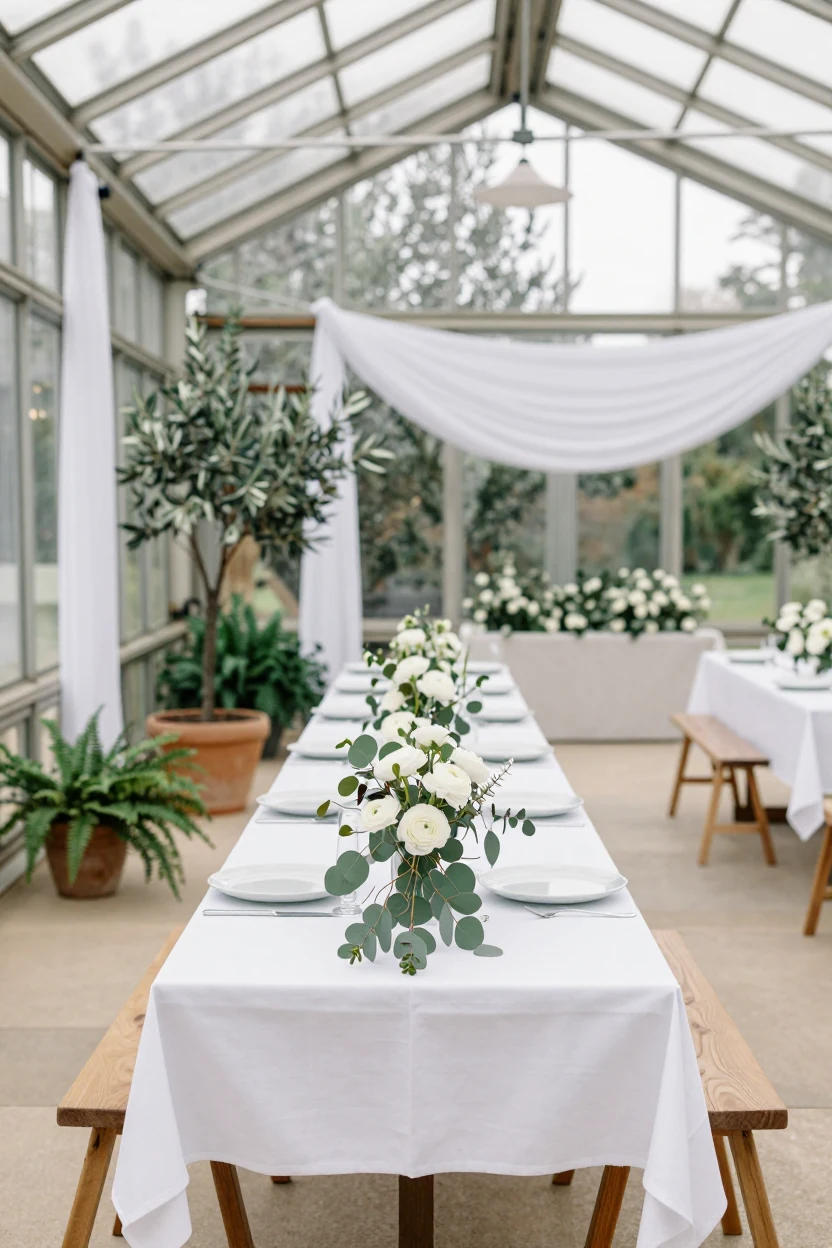
A daytime wedding inside a glass conservatory creates a bright, airy atmosphere without requiring heavy decorative builds. The structure’s steel frame and glass panes provide natural elegance, allowing sunlight to filter through and highlight simple floral arrangements. White linen drapes loosely over the glass railings, adding softness to the hard edges while keeping sightlines open. Potted olive trees and ferns sit directly on the polished concrete floor, grounding the space with organic texture. The tables feature neutral ceramic dinnerware and low-profile centerpieces made of eucalyptus and white ranunculus, ensuring guests can see each other across the room. This setup leverages the venue’s existing architecture to create a refined look that feels relaxed rather than formal. For adaptation, focus on using the building’s natural light and structural lines as the primary decor, adding only minimal textiles and greenery to soften the space.
9. The Breakfast Brunch Wedding
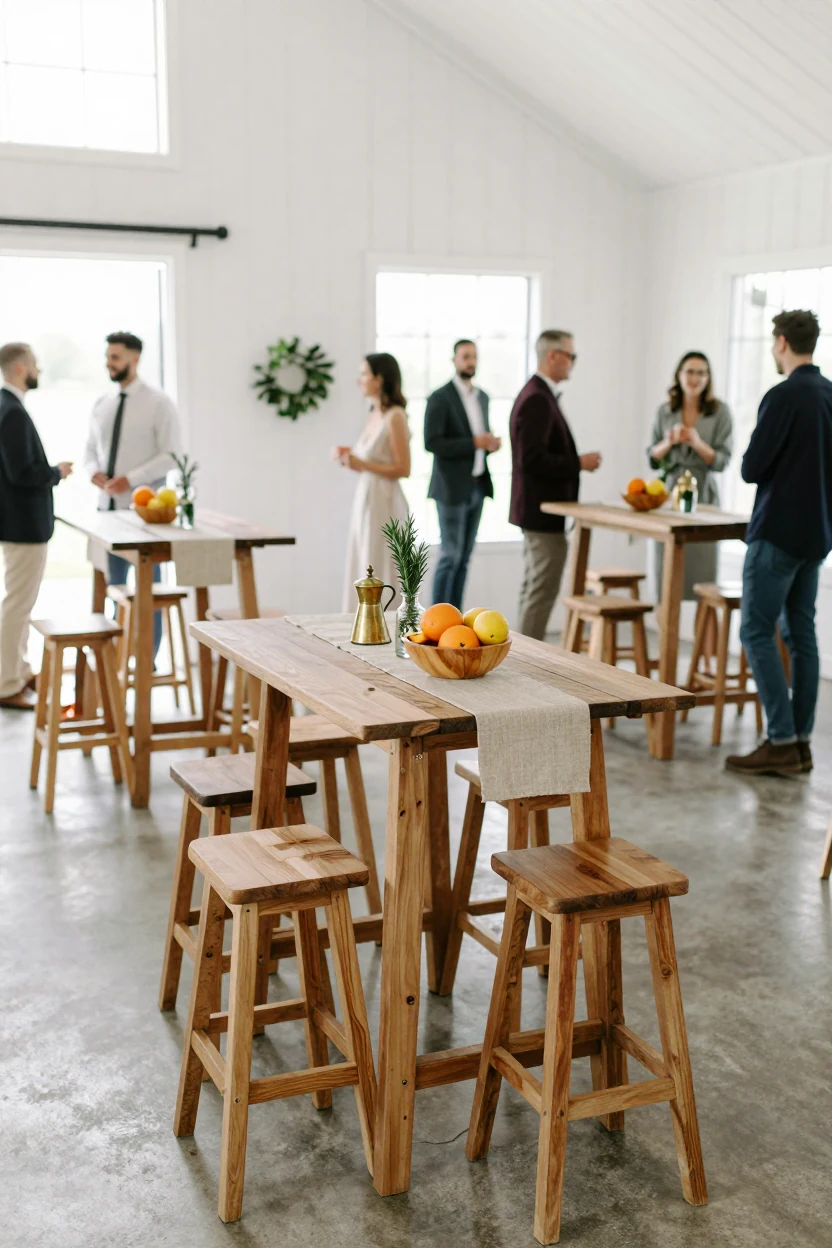
Swap standard banquet chairs for high-top tables and bar stools to create a casual, social atmosphere that encourages movement and conversation. This layout works well in open spaces like barns, backyards, or rented warehouses where guests can mingle freely. Style the surfaces with linen runners in warm neutrals like oatmeal or sage, paired with matte white dinnerware that is easy to handle without heavy napkin rings. Keep centerpieces low and practical: shallow wooden bowls filled with citrus fruits, small brass coffee urns for self-service, and slender bud vases holding single sprigs of rosemary or eucalyptus. The lighting should be bright and natural, relying on daylight or simple pendant fixtures rather than dim mood lighting. This setup shifts the focus from formal dining rituals to shared food service and easy interaction. It is a realistic option for daytime celebrations where guests prefer standing and moving around rather than sitting in rows.
10. Textile-Only Tablescapes
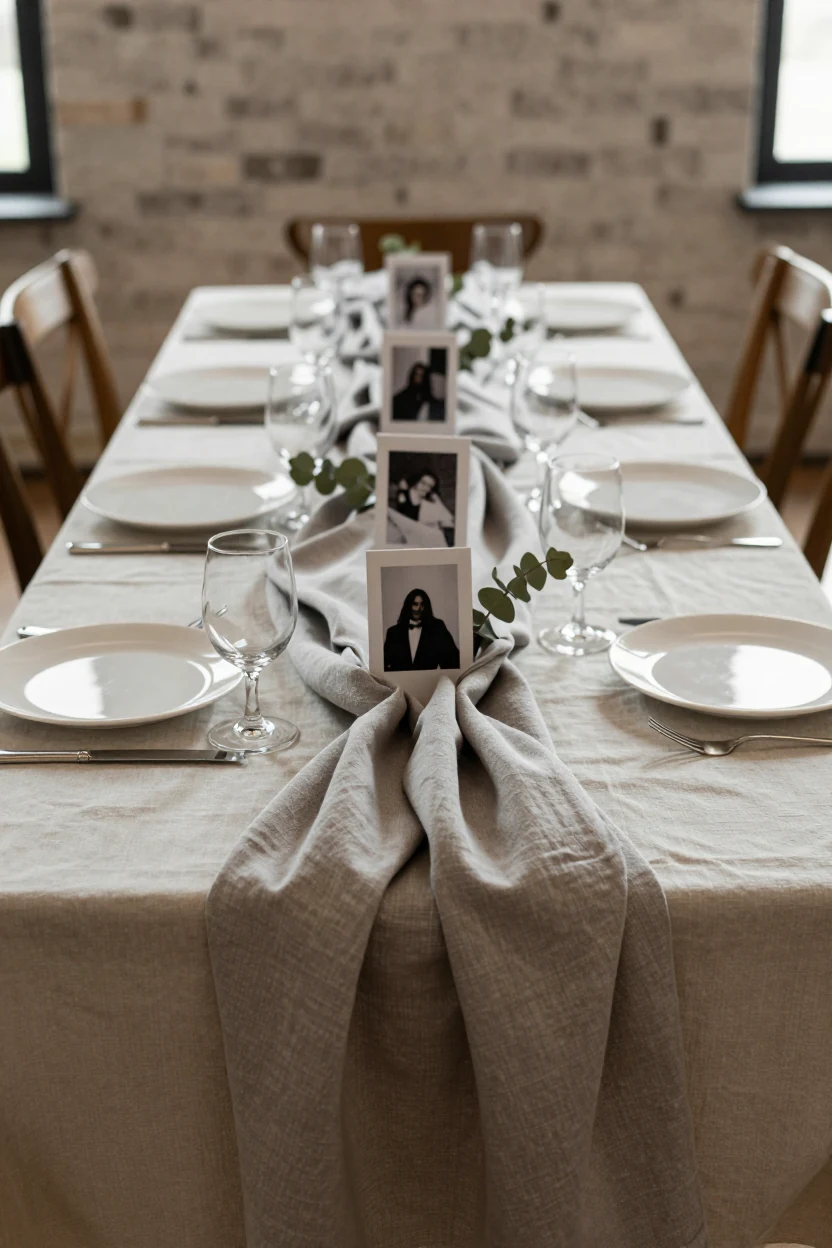
Skip floral centerpieces entirely by layering textured fabrics to create depth and visual interest. Use a neutral base of oatmeal, taupe, or warm gray linens, folding and gathering them asymmetrically across the table surface to build soft peaks and valleys. Tuck small personal items like framed polaroids, dried stems, or handwritten notes into the fabric folds rather than using tall vases. This approach keeps sightlines low and clear, encouraging conversation across the table. Pair the textiles with matte ceramic plates and simple glassware to maintain a tactile, grounded aesthetic. The result is a reception that feels intimate and curated, relying on touch and texture rather than height or volume. It is an adaptable style that works well in venues where large floral installations are prohibited or where you want to prioritize guest interaction over decor height.
11. The Intimate Dinner Party
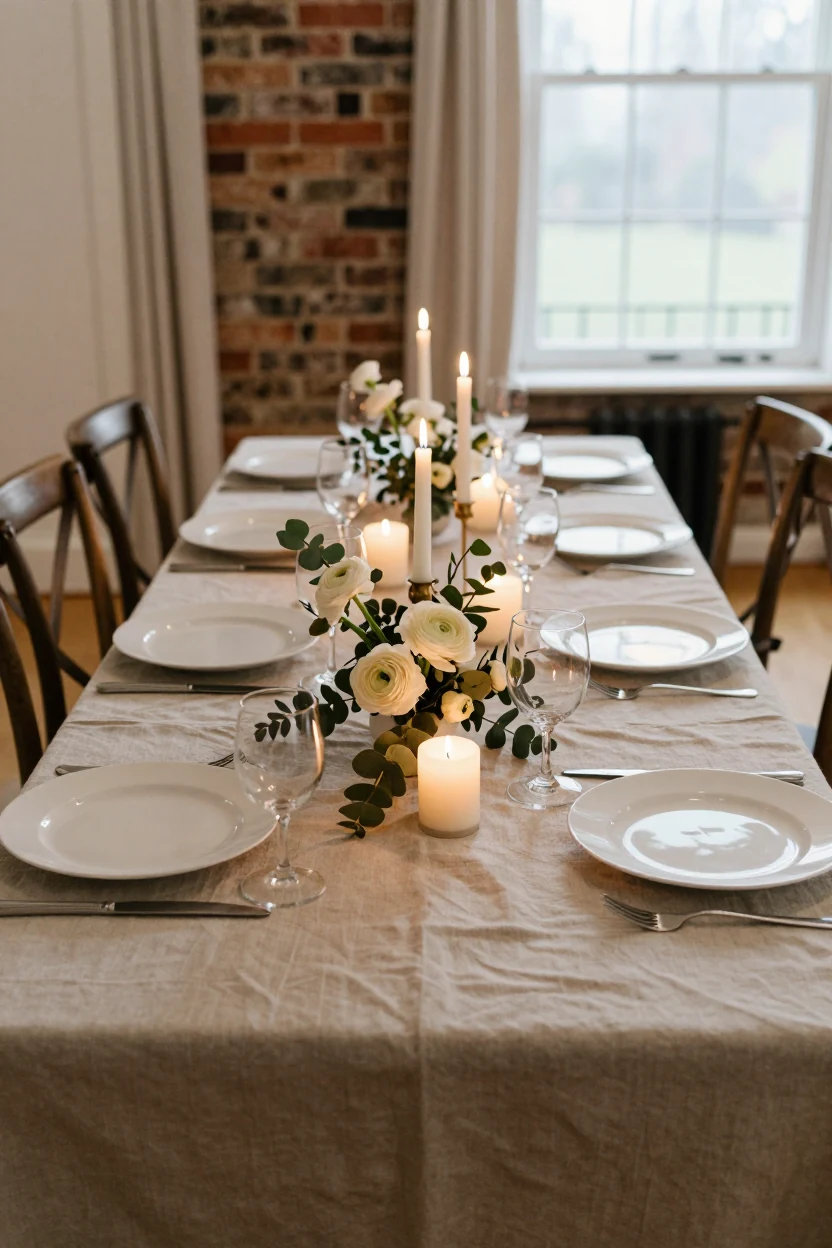
Style your reception as a high-end dinner party for fewer than twenty guests by selecting a private dining room or spacious home kitchen. Replace uniform banquet china with mismatched heirloom plates, vintage goblets, and textured linen napkins in muted earth tones. Center the table with a low, sprawling arrangement of seasonal stems like ranunculus and eucalyptus to maintain eye contact across the room. Use warm, flickering candlelight from tapered tapers in brass holders rather than overhead lighting to create a cozy, intimate atmosphere. This layout prioritizes conversation and domestic warmth over large-scale production. You can adapt this concept by borrowing your own dishware and incorporating personal mementos as place settings. The visual focus is on tactile textures and relaxed elegance, proving that intimacy creates a more memorable experience than spectacle. Keep the palette neutral to let the collected objects stand out.
Choosing Your Low Key Approach
Selecting the right low-key concept depends on your venue’s architecture and your desired level of formality. A rustic backyard table works best for smaller, outdoor gatherings where natural light is available, while a minimalist monochrome banquet suits venues with strong structural character. Consider the season when choosing florals; spring and early fall offer abundant greenery for garden ceremonies, whereas winter might call for cozy fire pit lounges. Adapt these ideas by swapping materials to match your personal style, ensuring the layout remains practical for your specific guest count. The goal is a celebration that feels curated yet relaxed, allowing you and your guests to enjoy the moment without the distraction of complex decor.
