13 Sage Green Italian Inspired Wedding Ideas for Timeless Elegance
Sage green offers a versatile foundation for Italian-inspired weddings, pairing naturally with warm earth tones, textured wood, and organic greenery. This palette works well across various venue types, from stone courtyards to open-air pavilions, allowing couples to achieve a sophisticated look without relying on dense floral installations. The following ideas focus on tactile materials like terracotta, linen, and marble, creating a cohesive aesthetic that feels both timeless and relaxed. Whether you are planning an outdoor ceremony or an intimate reception, these setups prioritize clear sightlines and natural textures. By integrating practical details such as potted herbs and simple signage, you can build a celebration that reflects authentic Mediterranean character while remaining adaptable to your specific space, season, and budget.
1. Terracotta and Eucalyptus Ceremony Arch
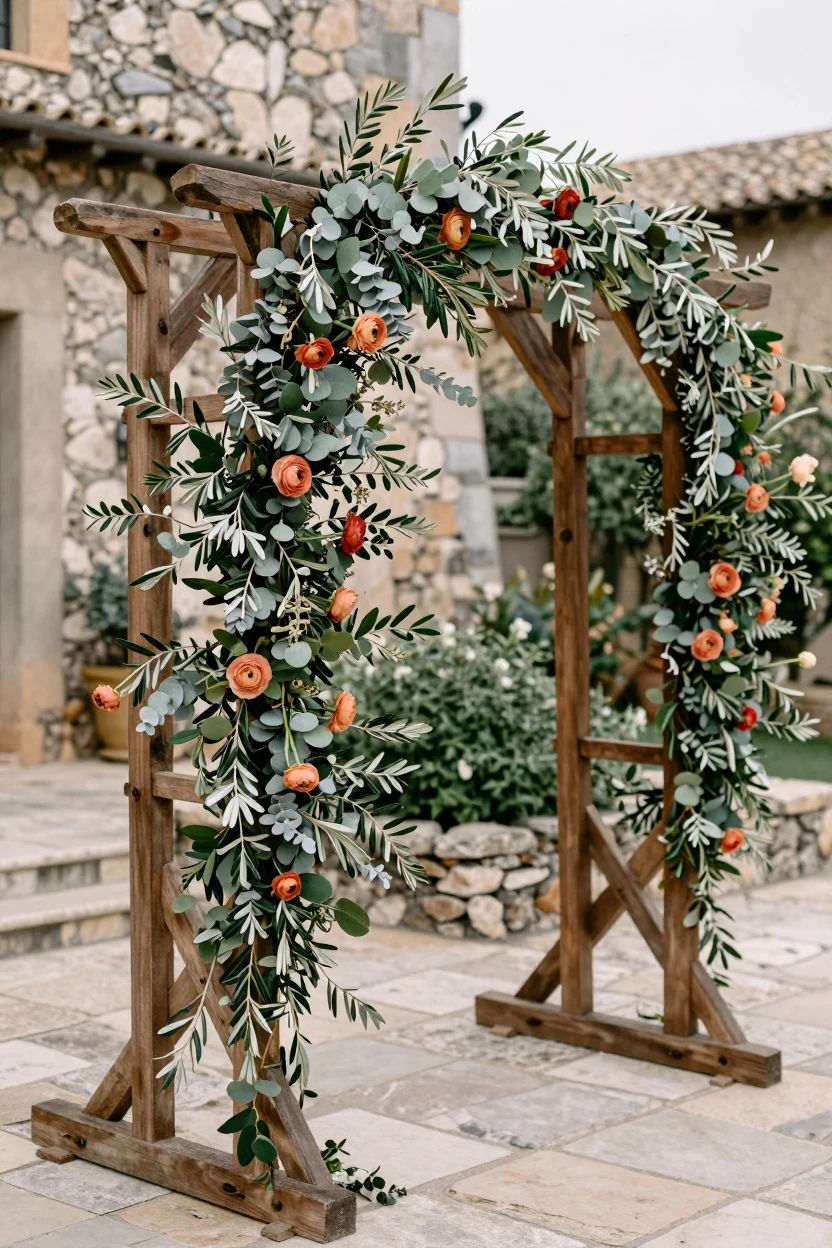
Ground the ceremony in a Mediterranean courtyard vibe by pairing weathered wooden beams with abundant eucalyptus and olive branches. This rustic arch avoids heavy floral arrangements, keeping the aesthetic airy and natural while highlighting the raw texture of wood against soft green foliage. Accent the structure with terracotta-colored ranunculus to add warmth without overwhelming the greenery. Place the arch on uneven stone pavers to anchor the setup in an authentic outdoor setting. For real-world adaptation, select a sturdy A-frame or rectangular frame that can support the weight of dense branches. Ensure the wood is sealed or naturally weathered to handle outdoor conditions. If stone pavers are unavailable, use a large area rug with a textured border to define the space. Keep the aisle clear for safe guest movement and emergency access. This setup works best in late spring through fall when these types of foliage are naturally lush. The color palette relies on desaturated greens, warm earth tones, and natural wood hues, creating a timeless look that photographs beautifully in soft, diffused daylight.
2. Long Wooden Table with Linen Runner
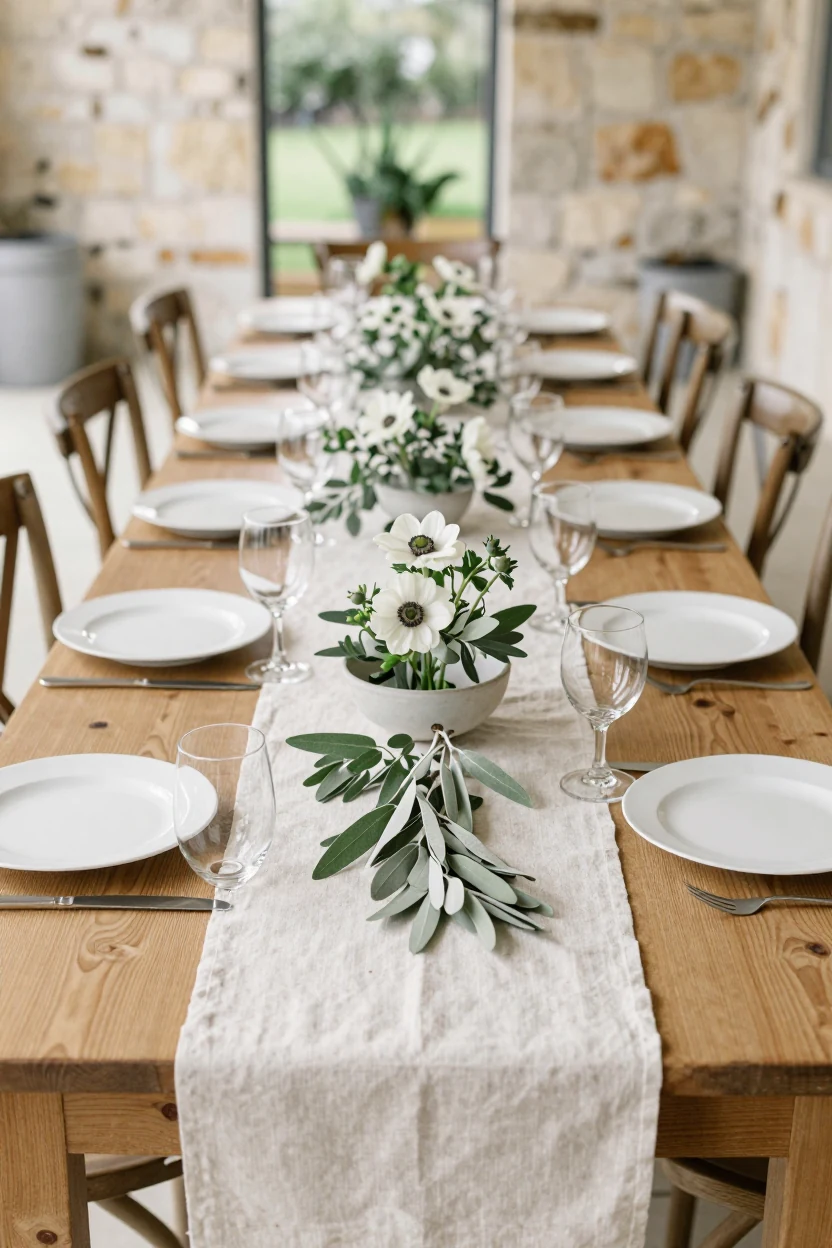
This table setting prioritizes open space and tactile texture over dense floral arrangements. A long, reclaimed oak table serves as the anchor, dressed in crisp white linen with a narrow, natural flax runner centered down the aisle. Instead of high centerpieces, low clusters of loose sage leaves and single white anemones sit directly on the wood or in shallow ceramic bowls. This layout keeps sightlines clear for guests to see one another while maintaining a relaxed, Italian-inspired vibe. The greenery is left slightly wild and untamed, contrasting with the clean lines of simple stoneware plates and clear glassware. Candlelight from low pillar candles adds warmth without obstructing conversation. This approach works well for long rectangular tables in barns, farmhouses, or open-air pavilions. It emphasizes the quality of the fabric and the natural beauty of the foliage rather than relying on expensive, structured floral design.
3. Citrus and Greenery Centerpieces
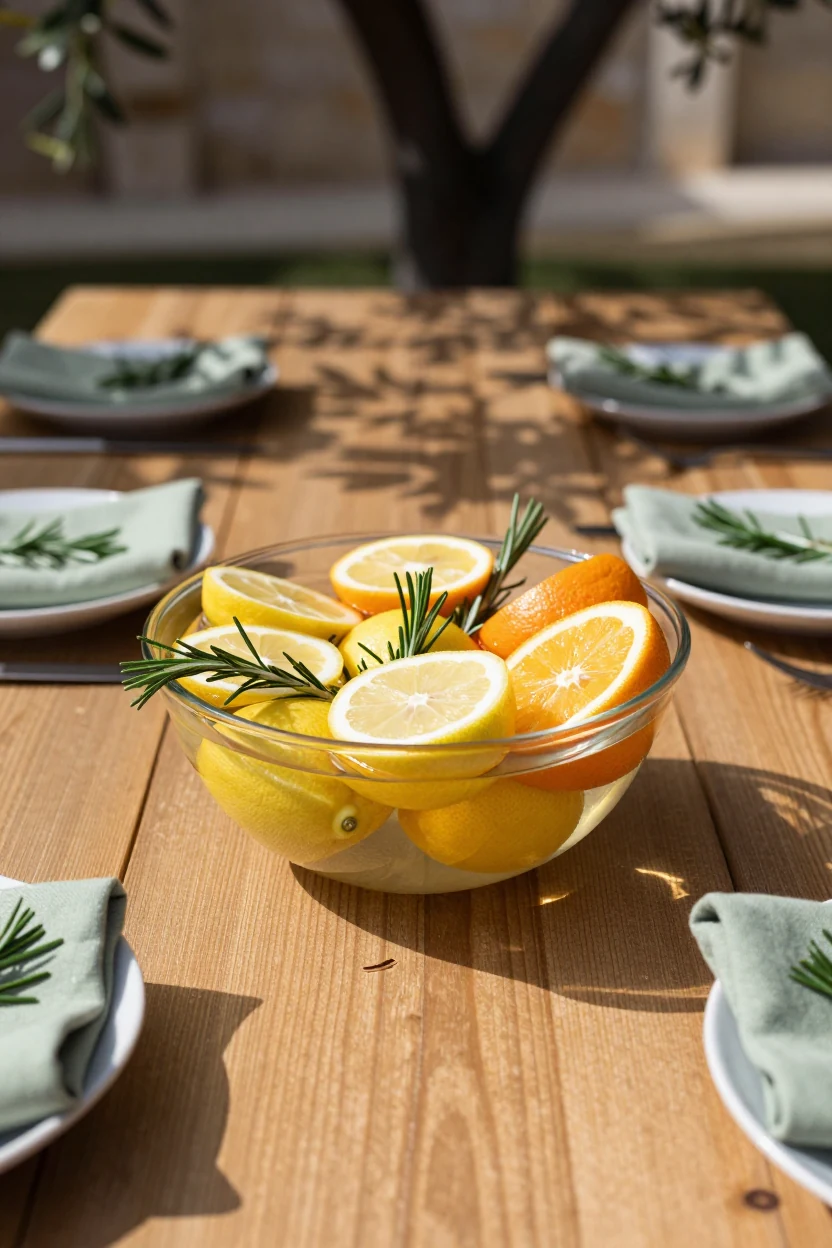
This low-profile centerpiece replaces traditional floral arrangements with fresh citrus and aromatic herbs, offering a vibrant yet grounded aesthetic for an Italian-inspired wedding. Halved lemons and oranges rest in shallow glass bowls filled with water, their translucent rinds catching the afternoon light. Sprigs of rosemary and bay leaves emerge from the fruit, adding texture and a subtle herbal scent to the dining experience. The bright yellow and orange hues create a striking contrast against muted sage green linens and rustic wooden tableware. This setup is particularly effective for daytime receptions where natural light enhances the fruit's translucency. It serves as a practical alternative for couples seeking visual interest without the expense or maintenance of fresh cut flowers. Guests can enjoy the aromatic presence throughout the meal. For adaptation, consider varying the citrus types based on seasonal availability or using smaller bowls for intimate round tables to maintain clear sightlines between guests.
4. Stone Terrace Candlelight Reception
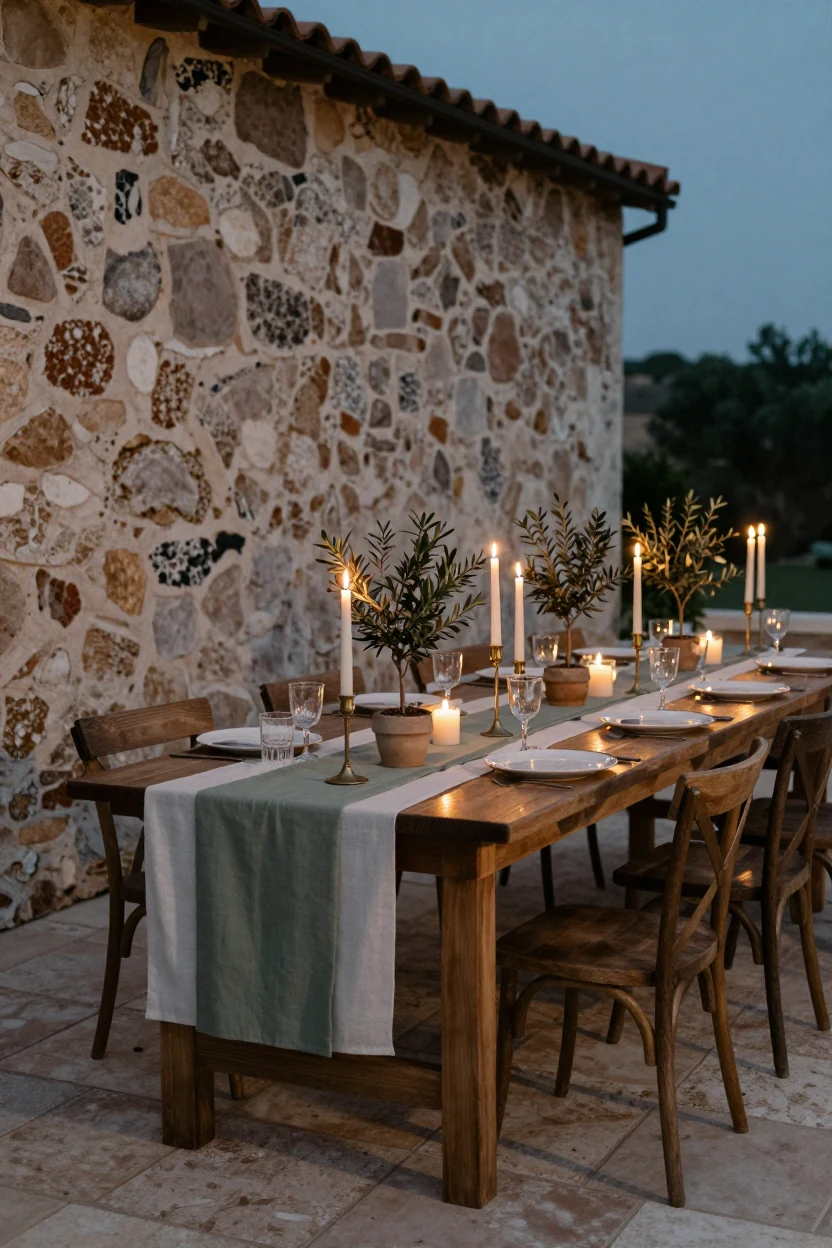
Lean into the venue’s existing architecture by using the stone terrace itself as the primary backdrop. Arrange a long rectangular table against the wall, dressed in crisp white linen with a subtle sage green runner down the center. Place tall taper candles in aged brass holders at regular intervals along the table’s edge, interspersed with small potted olive trees to add height and organic texture. The warm flicker of the candles reflects off the rough-hewn stone, creating a soft, intimate glow that requires no additional overhead lighting. Keep place settings simple with matte white dinnerware and clear glassware to let the ambient light take center stage. This setup works best in cooler months when guests appreciate the warmth of candlelight. If the venue has restrictions on open flames, substitute with battery-operated LED tapers inside brass holders to maintain the visual effect safely. The combination of textured stone, polished brass, and soft greenery creates a grounded, elegant atmosphere that feels both timeless and specific to an Italian aesthetic without requiring elaborate floral installations.
5. Minimalist Seating Chart on Wood
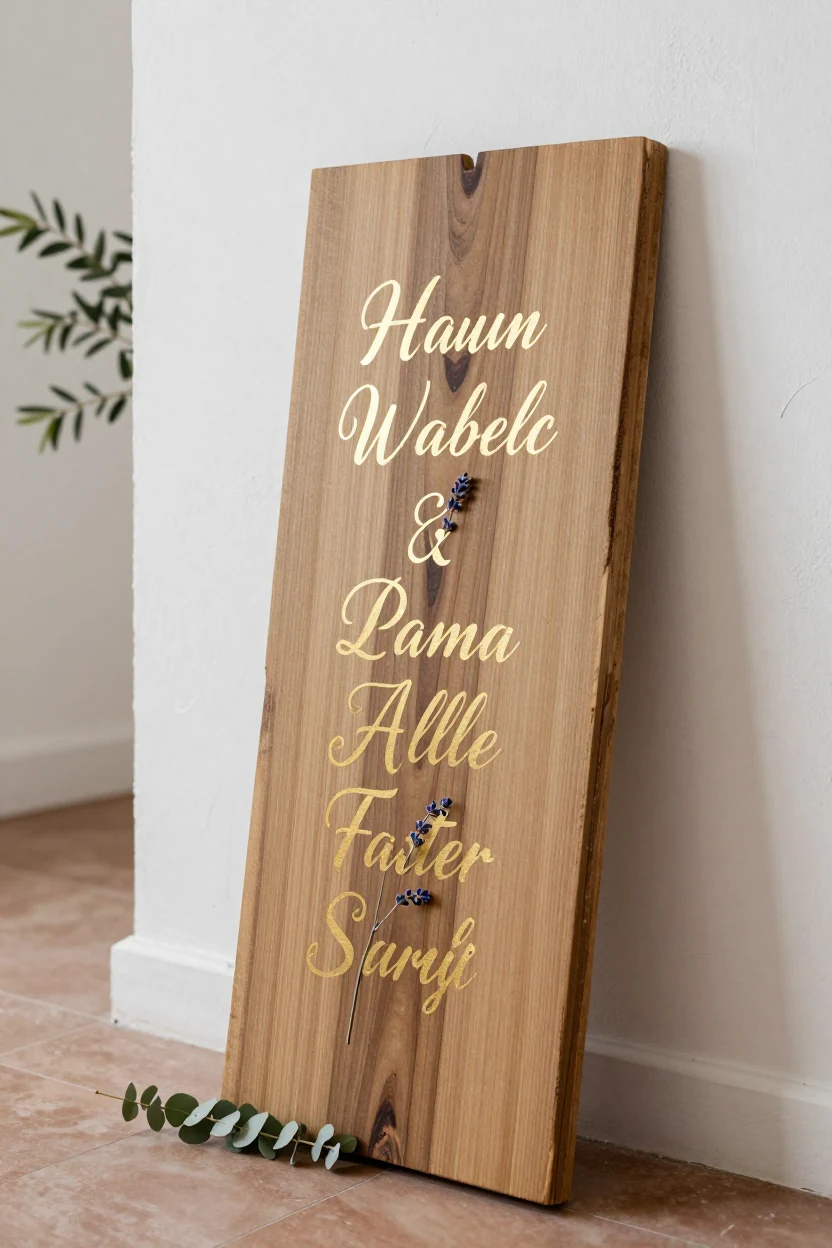
Lean a large, flat slab of reclaimed wood against the entryway wall to serve as your seating chart. This approach utilizes the natural grain and texture of the timber rather than hiding it behind paint or laminates. Use gold leaf paint to hand-letter guest names directly onto the surface, creating a warm metallic contrast against the neutral wood tones. Place a single, loose cluster of dried lavender and eucalyptus sprigs in the corner of the sign to introduce sage green tones without overwhelming the minimalist design. This setup functions as both practical information and a decorative anchor for guests arriving at the venue. The raw material complements Italian-inspired aesthetics that favor organic textures over polished finishes. For adaptation, source wood from local salvage yards or furniture stores, ensuring the slab is sanded smooth to prevent splinters. If gold leaf is too difficult for your skill level, use high-quality metallic ink in a fine-point pen instead.
6. Linen Napkin with Green Ribbon
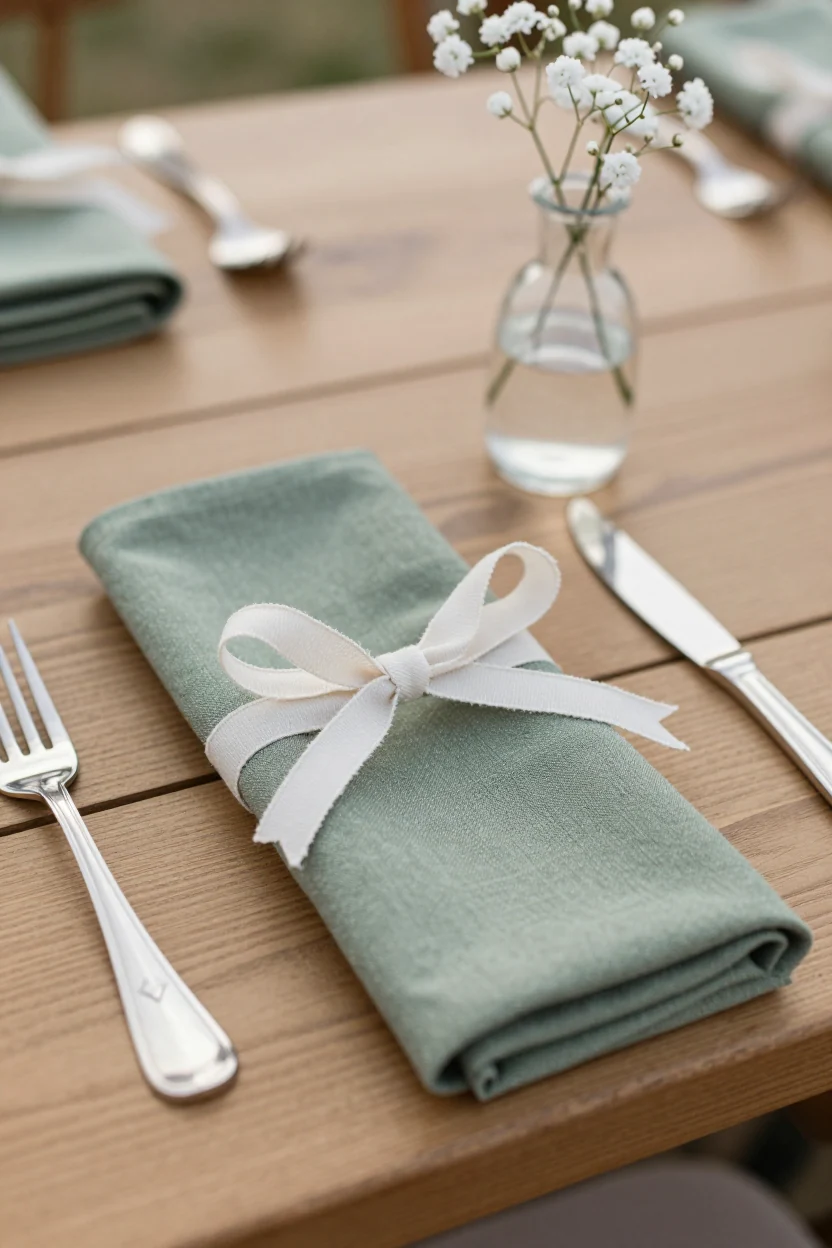
This place setting emphasizes texture over ornamentation, using natural materials to create a grounded, tactile experience for guests. The heavy sage green linen napkin is folded simply and secured with a thin, raw-edged cotton ribbon, adding a subtle textural contrast against the smooth ceramic or stoneware dinnerware. A single small bud vase of baby’s breath sits near the flatware, keeping the profile low so guests can see each other across the table. The light-colored wooden table surface provides a warm backdrop that complements the muted green tones without competing for attention. This approach works well for outdoor or rustic receptions where natural light highlights the weave of the fabric. You can adapt this look by swapping the baby’s breath for a sprig of eucalyptus or rosemary if you want more fragrance and visual height, provided it does not obstruct sightlines. The raw-edged ribbon adds a handmade quality that feels personal without requiring elaborate calligraphy or complex stationery, making it a practical detail for venues with natural wood or stone surfaces.
7. Outdoor Aisle with Potted Herbs
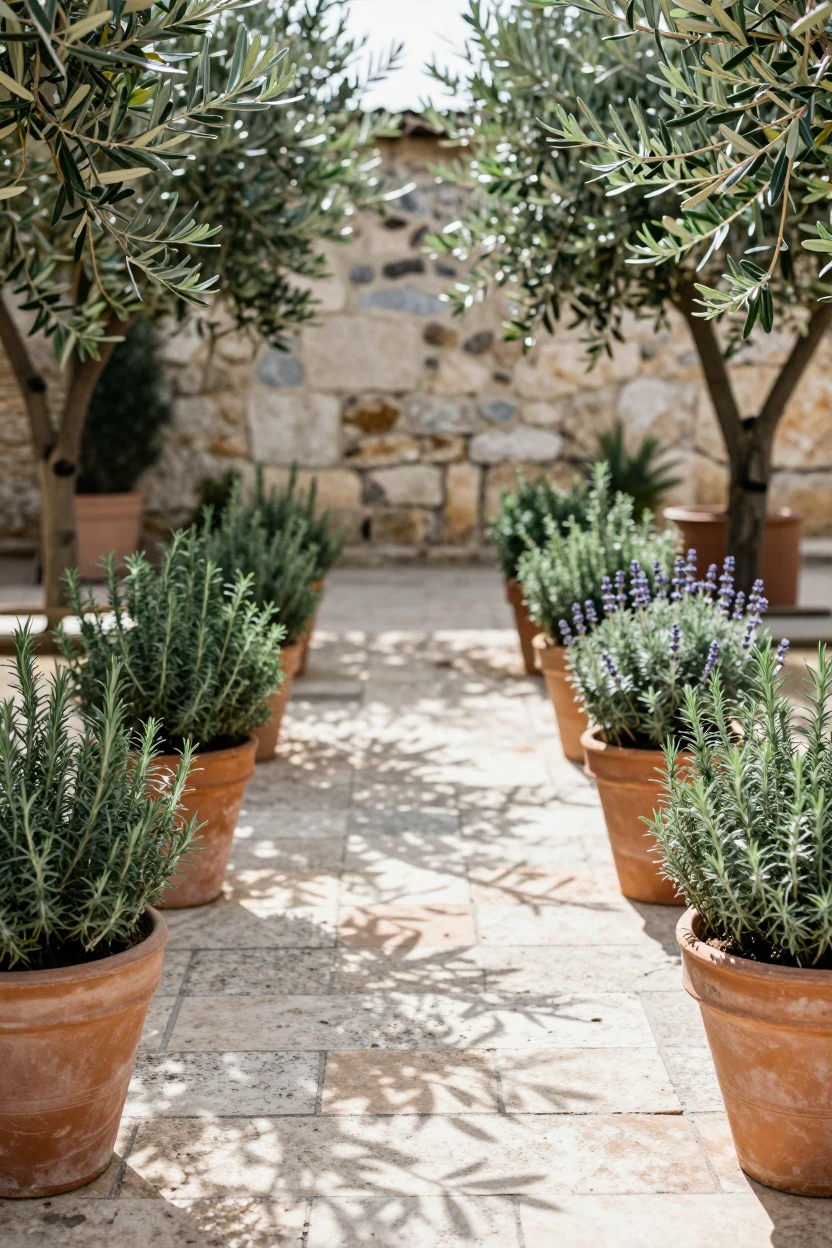
Replace traditional floral runners with rows of terracotta pots filled with live rosemary, thyme, and lavender. This setup creates a continuous, textured green border that guides guests down the aisle while introducing a distinct herbal scent to the outdoor ceremony space. The earthy orange-brown of the clay contrasts beautifully with the muted sage tones of the foliage, grounding the palette in natural materials rather than plastic or fabric. Because these are living plants rather than cut stems, they maintain their shape throughout the event without wilting, offering a durable visual anchor for photos. After the ceremony, the pots can be easily moved to reception tables as small centerpieces or donated to local gardens, reducing waste significantly. This approach works well in Mediterranean-inspired venues where stone floors or rustic wood provide a stable base. For a softer look, nest smaller pots inside larger ones to vary height. Ensure the arrangement does not obstruct the aisle width, leaving at least three feet of clear path for the bridal party and guests.
8. White Marble Cake Stand
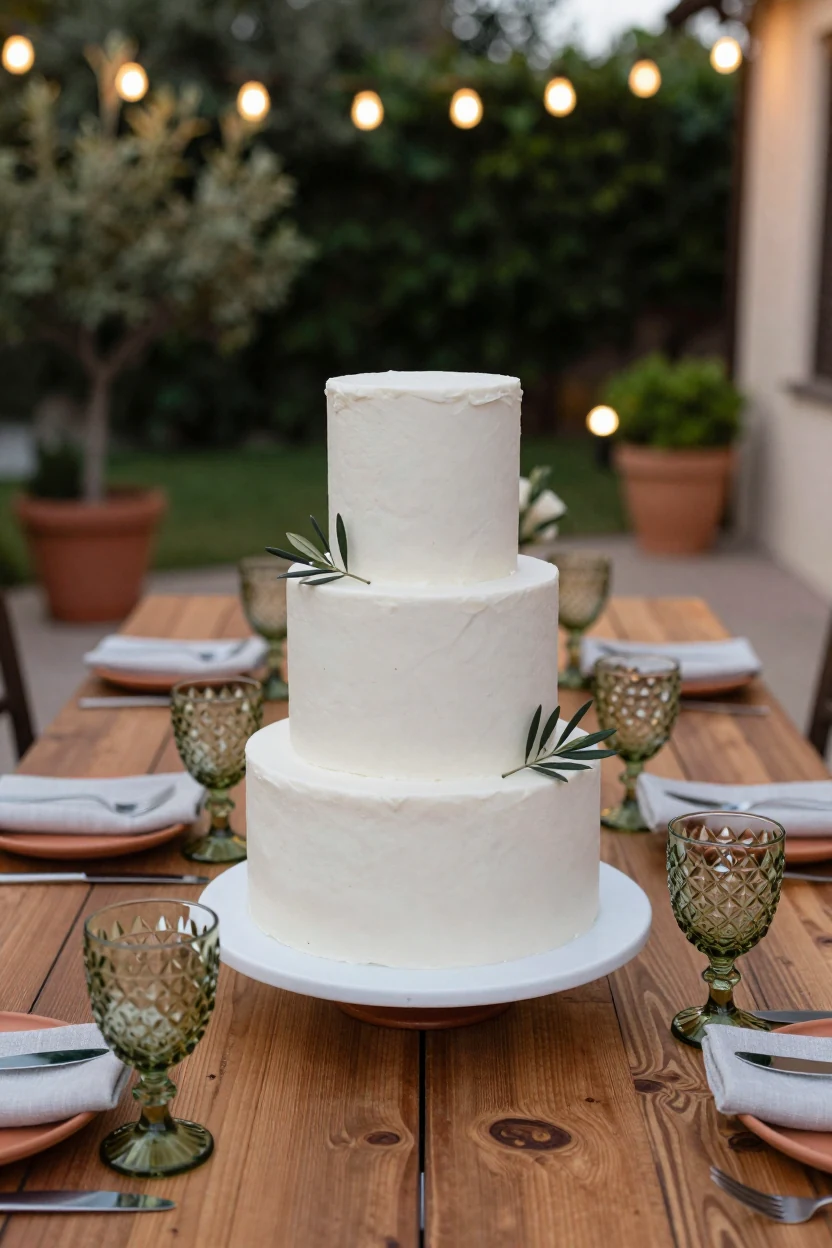
A tiered white marble stand provides a cool, polished contrast to the warm sage and terracotta tones of an Italian-inspired reception. The heavy stone base anchors the three-tier cake, offering a stable platform that requires no elaborate floral toppers to look finished. Surrounding the stand, a long wooden table features simple linen runners and sage green glassware, reinforcing the organic texture without cluttering the focal point. Soft ambient lighting highlights the natural veining in the marble, creating a visual anchor at the dessert station. This setup works because the stone’s weight balances the airy fabrics and greenery used elsewhere in the venue. For your wedding, choose a stand with a solid base to ensure stability during cutting. If marble is too heavy for your venue, consider high-quality resin replicas that mimic the veining. Pair the stand with minimal silverware and small glass plates to keep the focus on the cake’s structure. This approach creates a sophisticated dessert area that feels grounded and elegant without relying on excessive decoration.
9. Rustic Wooden Signage
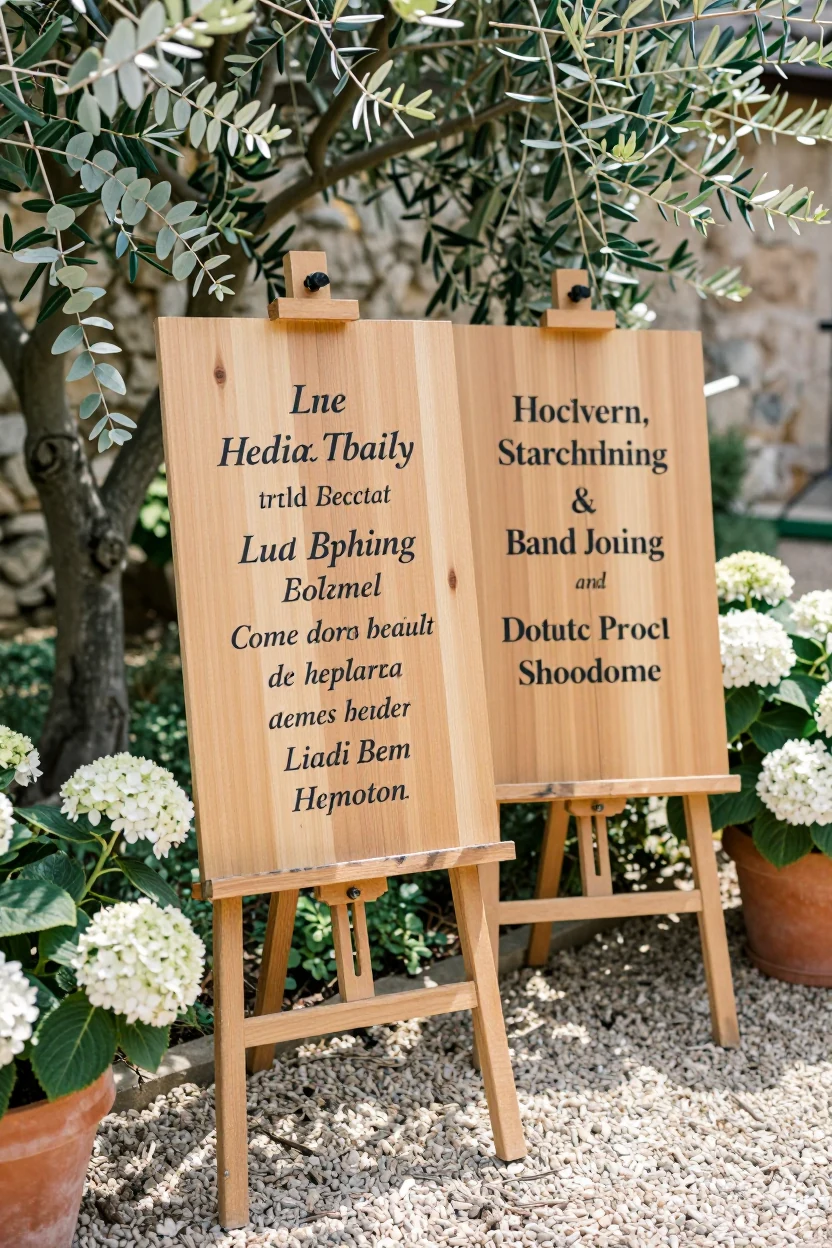
Hand-painted pine boards on wooden easels guide guests through the venue with clear, directional text in charcoal serif typography. The unfinished wood grain and simple lettering maintain a rustic, cohesive aesthetic that complements the sage green floral accents throughout the space. Place these signs at key intersections where the pathway widens or changes direction, ensuring they remain visible without obstructing guest flow or emergency exits. This approach provides practical wayfinding while reinforcing the natural, organic theme of the celebration. You can adapt this concept by using stencils for consistent lettering across multiple boards or selecting different wood tones to match existing furniture. Keep the text concise, limiting each sign to a single direction or room name to maintain readability from a distance. The combination of raw wood and precise ink creates a grounded visual anchor that feels both welcoming and intentional.
10. Sage Green Glassware
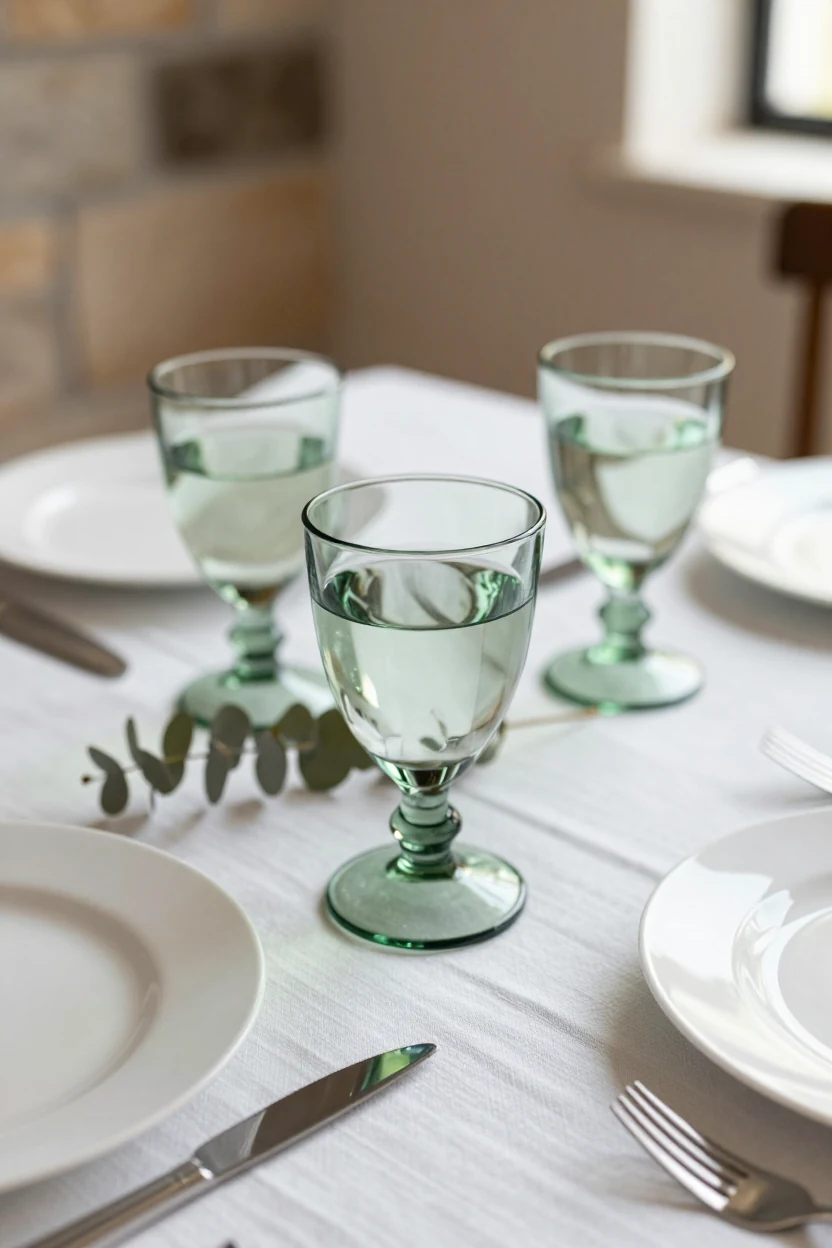
Tinted glassware offers a subtle yet effective way to integrate sage green into the reception without heavy floral arrangements. Serve water, white wine, or spritzers in stems that carry a soft, translucent olive hue. This color shift catches natural light beautifully, creating gentle reflections on the table surface that complement warm neutrals and stone textures. Pair these glasses with simple white ceramic plates or matte stoneware to let the glassware remain the focal point. The effect is particularly strong during daytime ceremonies or receptions in venues with large windows or open-air terraces. If you cannot source tinted stemware for every guest, consider using them only for the bridal party or as part of a bar setup. This approach adds visual cohesion through materiality rather than decoration, keeping the table setting clean and uncluttered. It works well alongside linen napkins in undyed or light beige tones, allowing the green tint to provide the necessary color pop without competing with other elements.
11. Olive Branch Bouquets
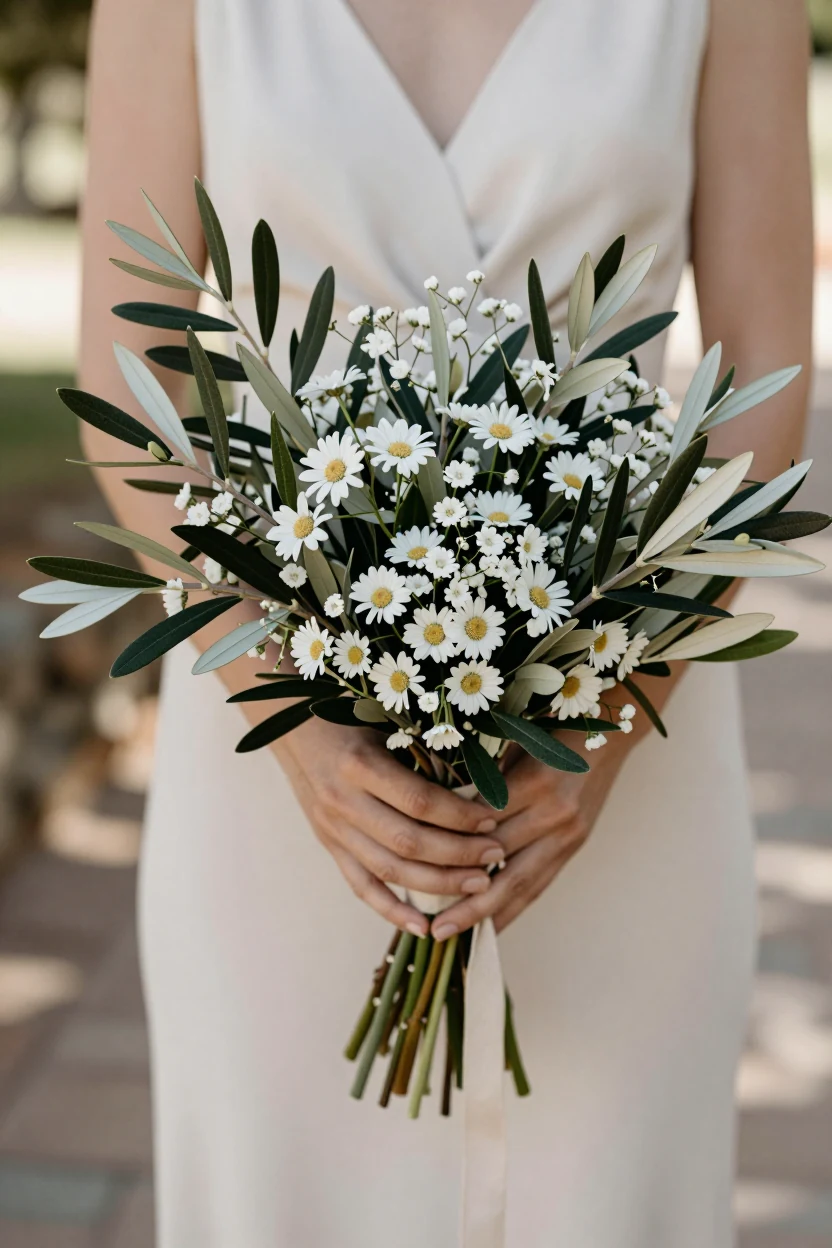
Skip traditional roses for a textural bridal bouquet built around fresh olive branches. This arrangement features long, silvery-green leaves interspersed with tiny white daisies or sprigs of baby’s breath, creating a loose, hand-tied shape that feels organic rather than rigid. The muted sage tones of the foliage complement ivory or champagne silk gowns without competing for attention. Because olive branches are sturdy and do not wilt quickly like delicate petals, they hold their structure well during outdoor ceremonies in warm weather. For bridesmaids, use shorter stems to create a cohesive but varied look across the wedding party. This style works best with a relaxed, Mediterranean-inspired theme where natural elements take precedence over formal symmetry. If live olive branches are unavailable or too fragile for your specific season, dried eucalyptus or preserved asparagus fern can mimic the linear shape while offering greater durability. Keep the base simple by wrapping stems in raw linen ribbon rather than heavy satin to maintain the rustic aesthetic.
12. Terracotta Vase Centerpieces
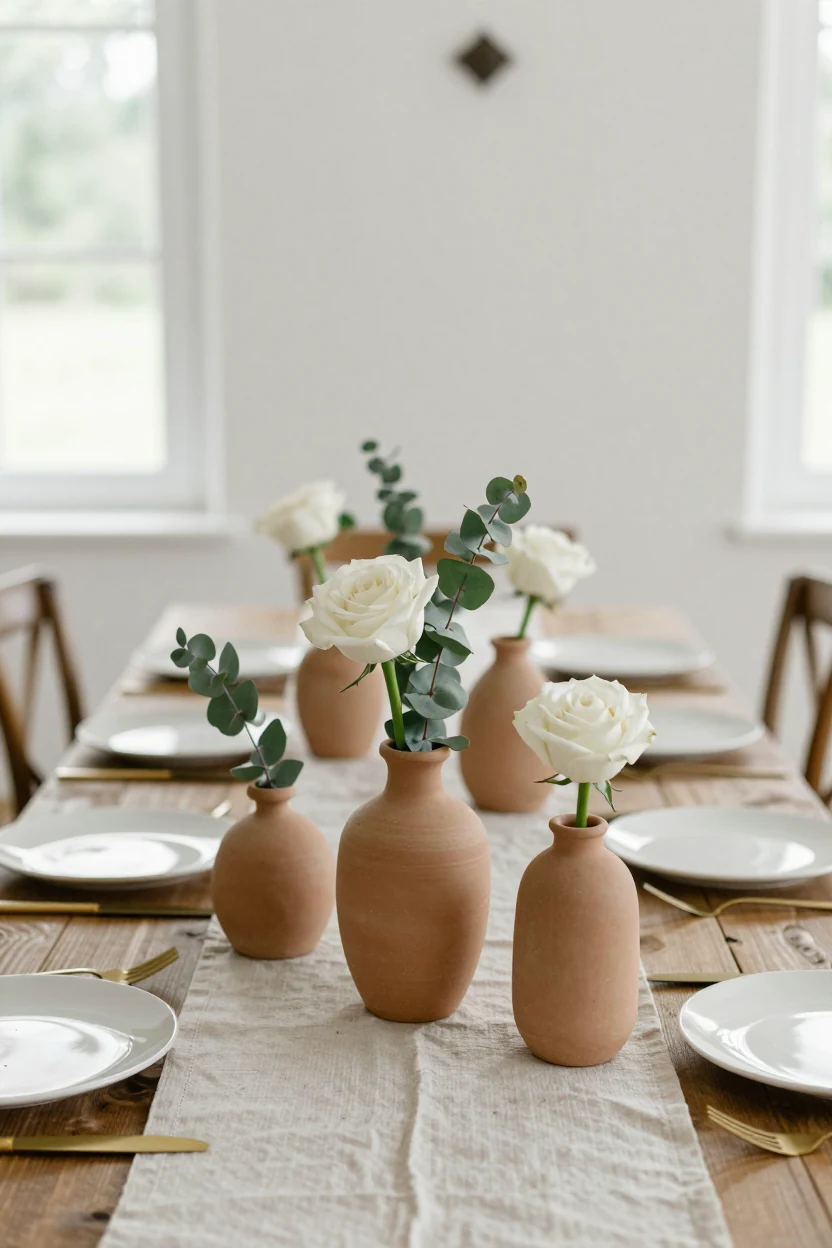
Ground your tablescape with small, hand-thrown terracotta vases that vary in height and shape to create an organic, asymmetric rhythm. Each vessel holds a single stem of white garden rose paired with a loose sprig of silver dollar eucalyptus, allowing the earthy, unglazed clay texture to contrast against the soft green foliage. This restrained arrangement keeps sightlines clear while adding tactile warmth to the setting. Place the vases directly on natural linen tablecloths or atop thin wooden boards for added dimension. The combination of warm terracotta tones, crisp white petals, and muted sage greenery evokes a rustic Mediterranean atmosphere without requiring large floral installations. For a cohesive look, pair these bases with simple ceramic dinnerware and brass flatware. This setup works well in both bright daytime light and warm candlelight, offering a grounded visual anchor that feels collected rather than rigidly uniform.
13. String Lights in Olive Trees
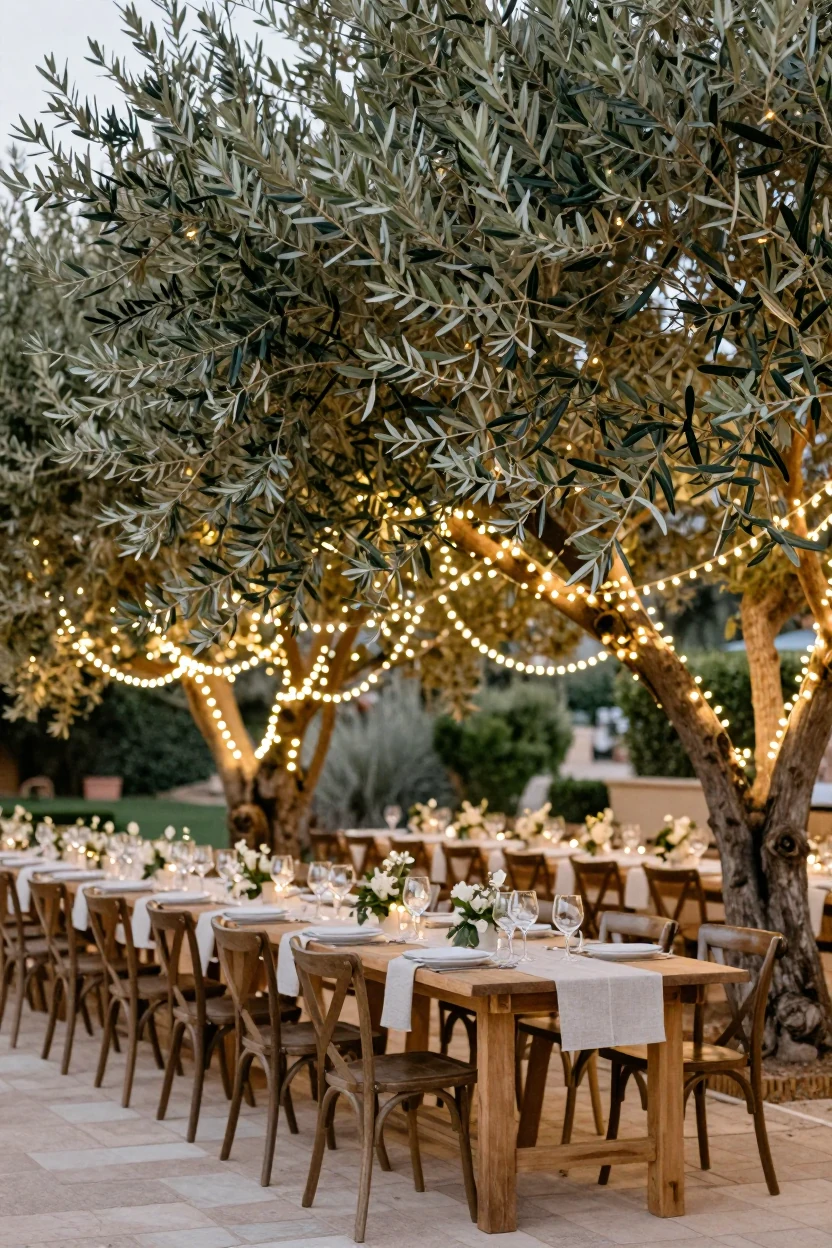
String lights woven through mature olive trees create a soft, warm canopy over an outdoor reception area. The illumination highlights the silvery-green foliage without overwhelming the space, offering a realistic alternative to large lighting rigs. This setup works well in vineyards, historic estates, or properties with established landscaping. The natural texture of the branches provides visual interest while the warm white bulbs maintain a cohesive, elegant tone. Guests can see the full extent of the canopy from the dance floor or dining area, enhancing the sense of enclosure and intimacy. The lighting is positioned to complement, not replace, table candles or ambient venue fixtures. For venues without large trees, this concept adapts to pergolas with climbing vines or standalone olive planters arranged in clusters. Ensure all electrical connections are concealed and secured by a licensed electrician to meet local safety codes. The result is a grounded, atmospheric backdrop that feels rooted in the Mediterranean landscape.
Selecting Ideas for Your Venue
When choosing from these ideas, consider how each element interacts with your specific venue architecture and seasonal conditions. Stone terraces suit candlelight receptions, while open lawns accommodate potted herb aisles more effectively than paved areas. Evaluate the structural requirements for arches and hanging lighting to ensure safety and stability. You can mix and match elements, such as pairing sage glassware with a wooden table setting, to create a cohesive look without committing to a single style. Focus on materials that age well and feel tactile, ensuring the final design remains grounded and authentic.
