14 European Inspired Garden Wedding Ideas for Timeless Elegance
European garden weddings often rely on existing architecture, natural textures, and restrained color palettes to create a sense of history and refinement. This collection focuses on realistic setups that leverage stone, linen, greenery, and seasonal blooms rather than heavy temporary structures. Whether you are planning a ceremony in a historic courtyard or a backyard with mature landscaping, these ideas offer adaptable styling cues. Each concept considers practical factors like venue constraints, seasonal availability, and setup complexity, ensuring the aesthetic remains grounded and achievable for your specific celebration.
1. Classic Stone Arch Ceremony
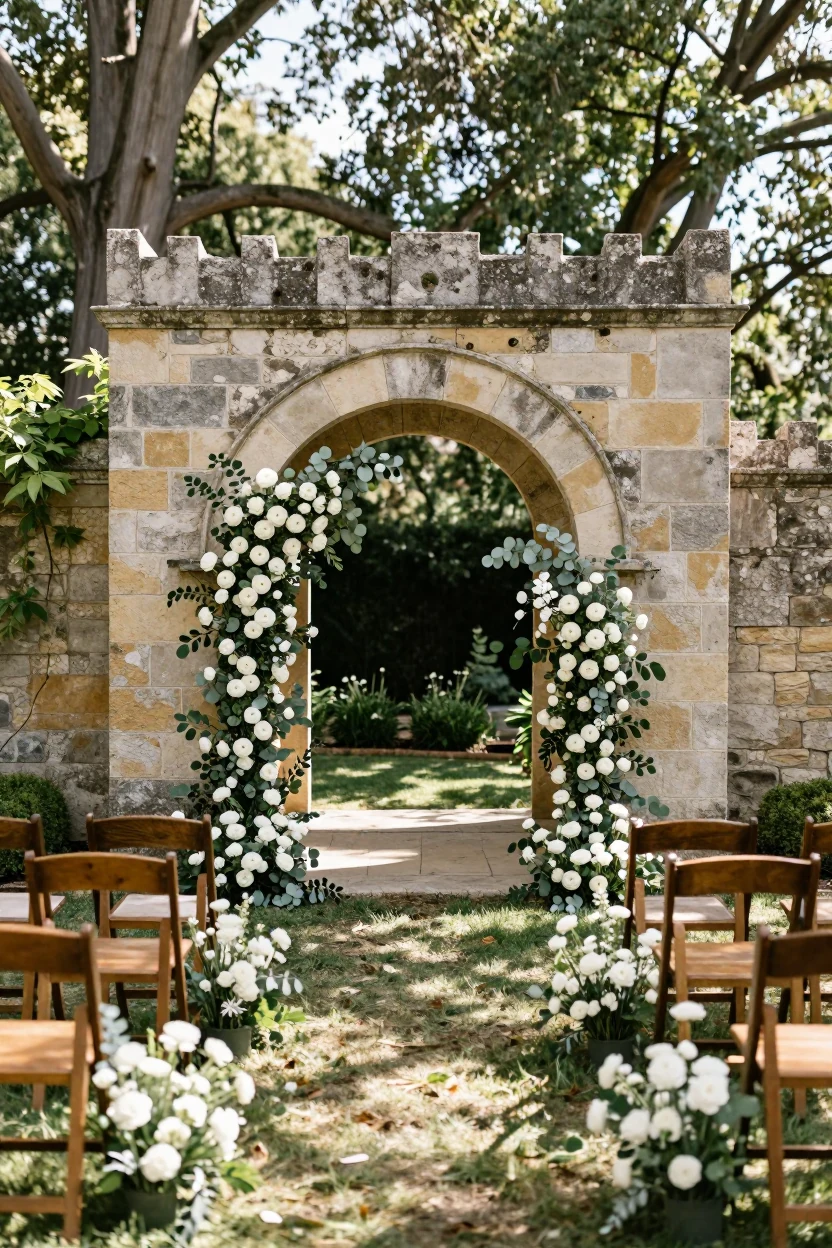
Anchor your ceremony in existing architecture rather than temporary builds by using a weathered limestone archway integrated into a garden wall. This approach grounds the ritual in the venue’s history, offering a sturdy focal point that feels permanent and refined. Drape cascading eucalyptus and clusters of white ranunculus from the stone structure, allowing the greenery to soften the masonry without obscuring its texture. Arrange simple wooden chairs facing the arch to maintain a rustic yet elegant aesthetic that complements the estate setting. The natural light filtering through the foliage creates soft shadows on the stone, enhancing the romantic atmosphere. This setup works best in late spring or summer when the surrounding garden is lush. If your venue lacks a built-in arch, consider renting a freestanding stone replica or using a sturdy wooden frame wrapped in textured fabric to mimic the weight of masonry. Keep the aisle clear for safe guest movement and ensure the floral arrangements are securely anchored to prevent wind damage.
2. Lavender Field Vow Setup
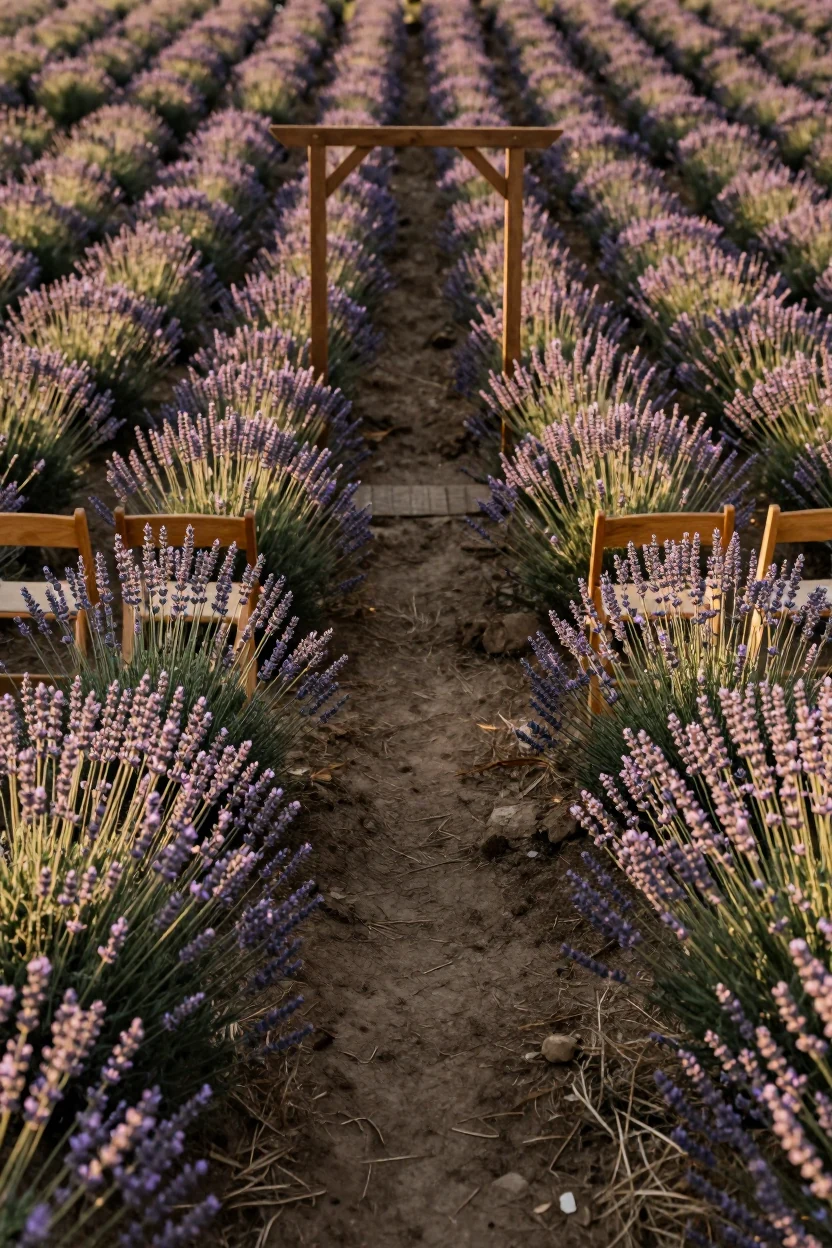
Position the ceremony within a cultivated lavender field at golden hour to utilize natural purple and green hues as the primary palette. Use minimalist wooden markers for the aisle path to avoid visual clutter, letting the rows of plants define the space. This concept relies on seasonal color and scent rather than heavy floral installations for a soft, monochromatic aesthetic. The setup features a simple wooden arch or minimal stand at the end of the aisle, surrounded by tall lavender stalks that sway gently in the breeze. Guests sit on plain wooden chairs arranged along the natural rows of plants, creating an intimate and grounded atmosphere. The lighting is warm and diffused, highlighting the texture of the dried flower heads and the rough wood grain. This approach emphasizes natural beauty over elaborate decor, making it ideal for late summer weddings where the garden is in full bloom. Adapt this look by selecting a venue with existing lavender plantings or using potted lavender as a substitute if the field is unavailable.
3. Terracotta Pot Centerpieces
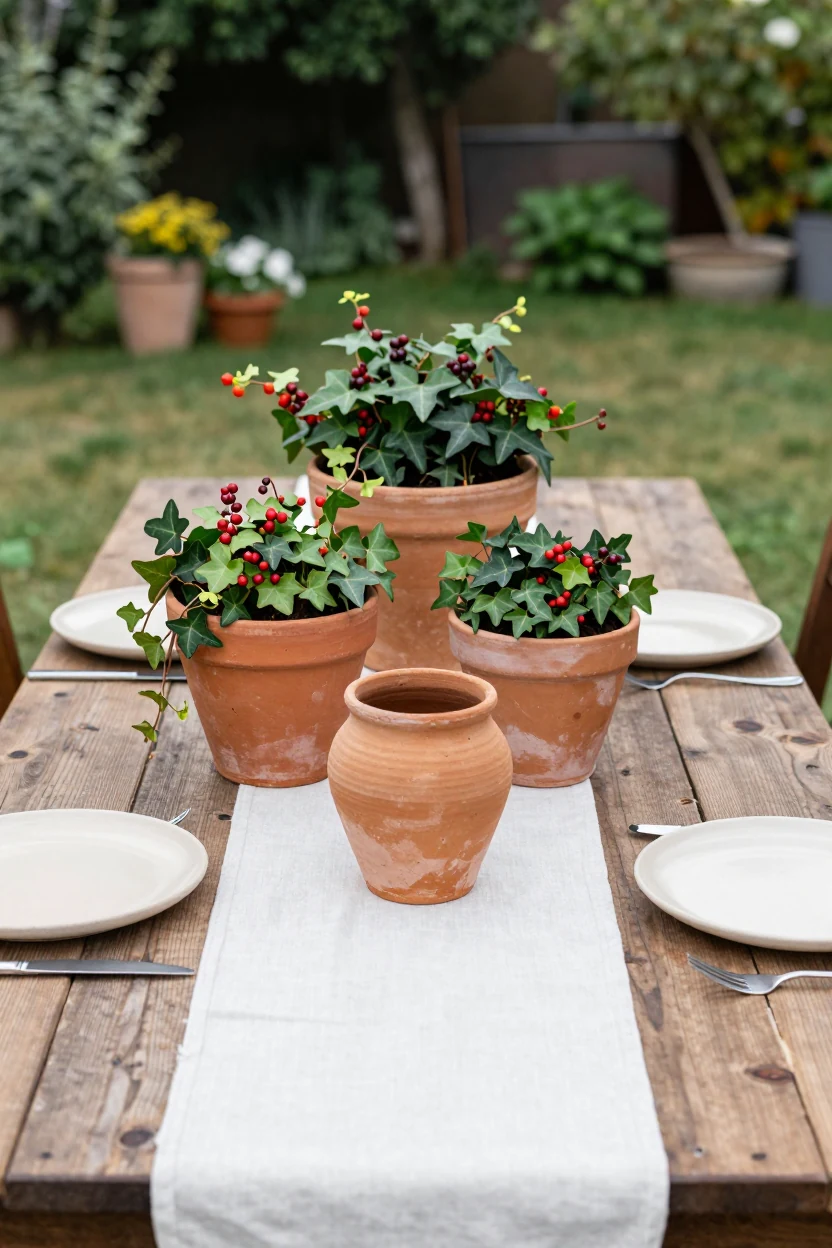
Swap standard glass vases for aged terracotta pots to anchor your reception tables in a grounded, Mediterranean aesthetic. Fill each vessel with dense, trailing greenery like eucalyptus or ivy, interspersed with clusters of red berries and small, informal blooms. The pots should vary slightly in height and width, creating an organic rhythm rather than rigid uniformity. Place them unevenly along long wooden farm tables, allowing some to sit closer to the center and others slightly off-axis. This asymmetry encourages a relaxed, lived-in feel that contrasts beautifully with crisp white linens. Use unglazed ceramic plates and simple glassware to maintain the earthy tone. The visual weight of the terracotta grounds the table, while the overflowing foliage adds necessary texture and height without blocking guest sightlines. This setup works well for late summer or fall weddings, where the warm clay tones complement natural light and outdoor greenery.
4. String Light Pergola Reception
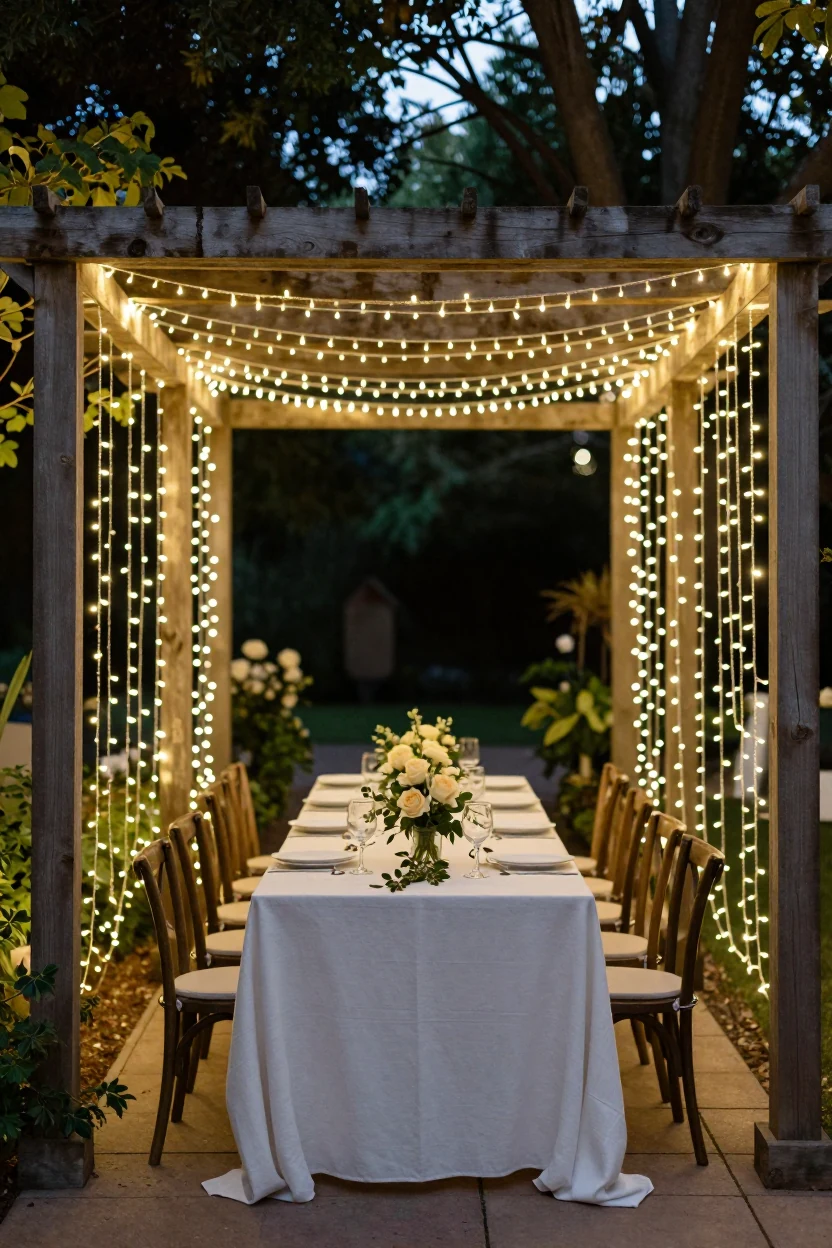
A wooden pergola structure frames the reception head table, draped in dense strands of warm string lights that glow against the darkening garden sky. The tables are covered in crisp white linen, creating a neutral backdrop that allows the illumination to remain the focal point. Simple, low-profile floral arrangements in soft cream and sage green sit at the center, keeping sightlines clear for guests seated across from one another. The surrounding garden features manicured grass and distant trees, providing a natural frame without visual competition. This setup transforms an open outdoor space into an intimate dining area suitable for evening receptions. The lighting creates a cozy, lantern-like atmosphere that feels welcoming rather than overly formal. To adapt this look, coordinate with your venue regarding electrical safety and weight limits for the pergola structure. If a permanent installation is not possible, consider renting a freestanding frame designed specifically for draping lights. Keep the table setting minimal to ensure the glow remains the star of the evening.
5. Mossy Stone Pathway
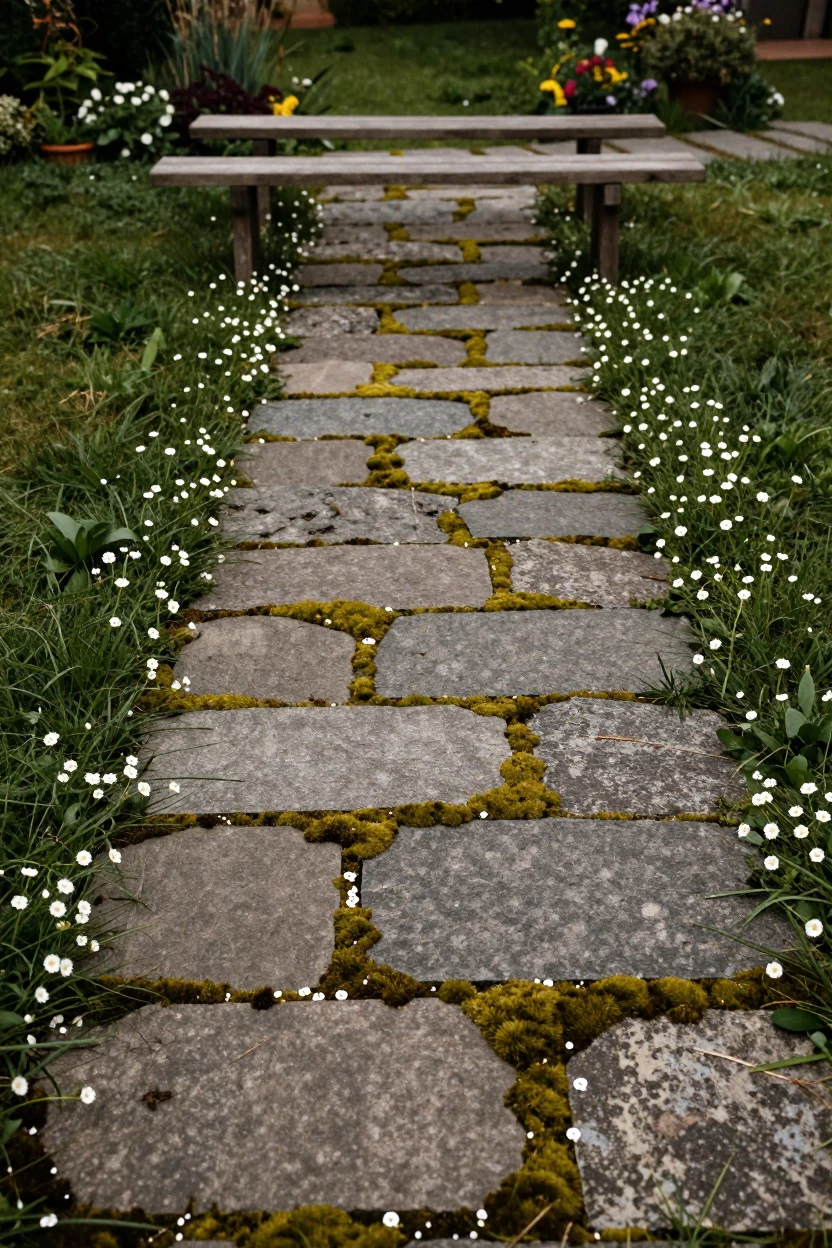
Replace traditional aisle markers with a natural stone pathway that winds through the garden, allowing patches of moss and small wildflowers to grow between the stones. This approach emphasizes texture over symmetry, creating a woodland atmosphere that feels ancient and discovered rather than constructed. The visual focus remains on the landscape itself, where the irregular edges of the flagstones blend seamlessly into the surrounding greenery. For the ceremony, place two simple stone benches or wooden crates at the end of the path to anchor the space without introducing artificial arches or fabric. Keep the color palette earthy, focusing on slate gray, moss green, and muted cream. If your venue has a flat lawn, consider renting large, irregular flagstones to create a temporary path, ensuring they are stable and level for guest safety. This setup works best in late spring through autumn when natural ground cover is lush. It offers a grounded, organic alternative to white carpeting or floral runners, suitable for couples who prefer a raw, unpolished aesthetic that highlights the venue’s existing character.
6. Ivory Linen Table Runner
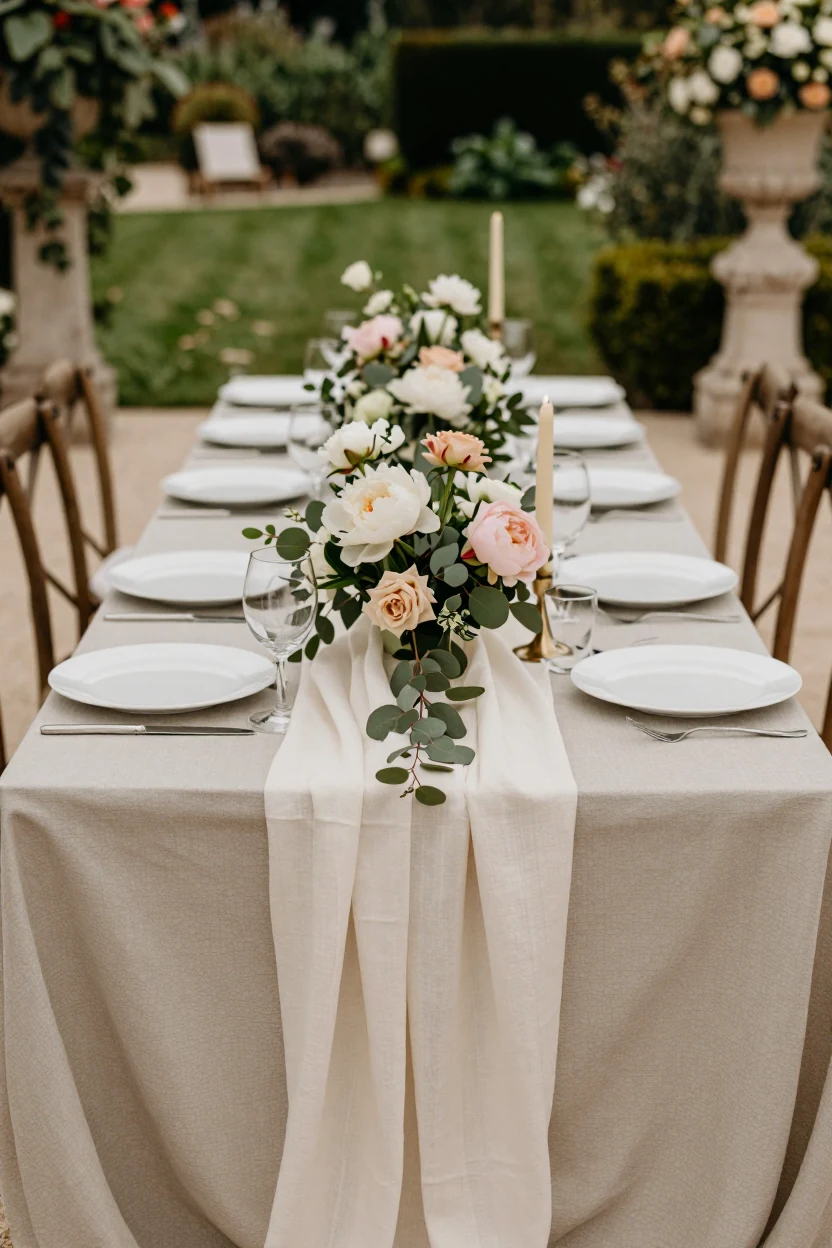
This setup captures the refined simplicity of classical European interiors by focusing on texture rather than ornamentation. Long, flowing ivory linen runners drape over rectangular tables, their natural wrinkles softening the hard edges of garden furniture and creating a sense of relaxed formality. Low-profile floral arrangements feature loose clusters of peonies and garden roses in shades of blush and cream, interspersed with eucalyptus for depth. These low stems keep sightlines open, allowing guests to see each other across the table while maintaining an elegant, uncluttered look. Pair the linen with simple white ceramic dinnerware and clear glassware to let the fabric’s texture stand out. For lighting, use taper candles in brass holders placed sparingly along the runner, ensuring they are secure on flat surfaces. This approach works well for outdoor venues where wind might disturb heavier fabrics; the lightweight nature of linen allows it to move gently without looking disheveled. It is a versatile style that adapts easily to different seasons by adjusting the floral colors.
7. Vintage Chair Backs
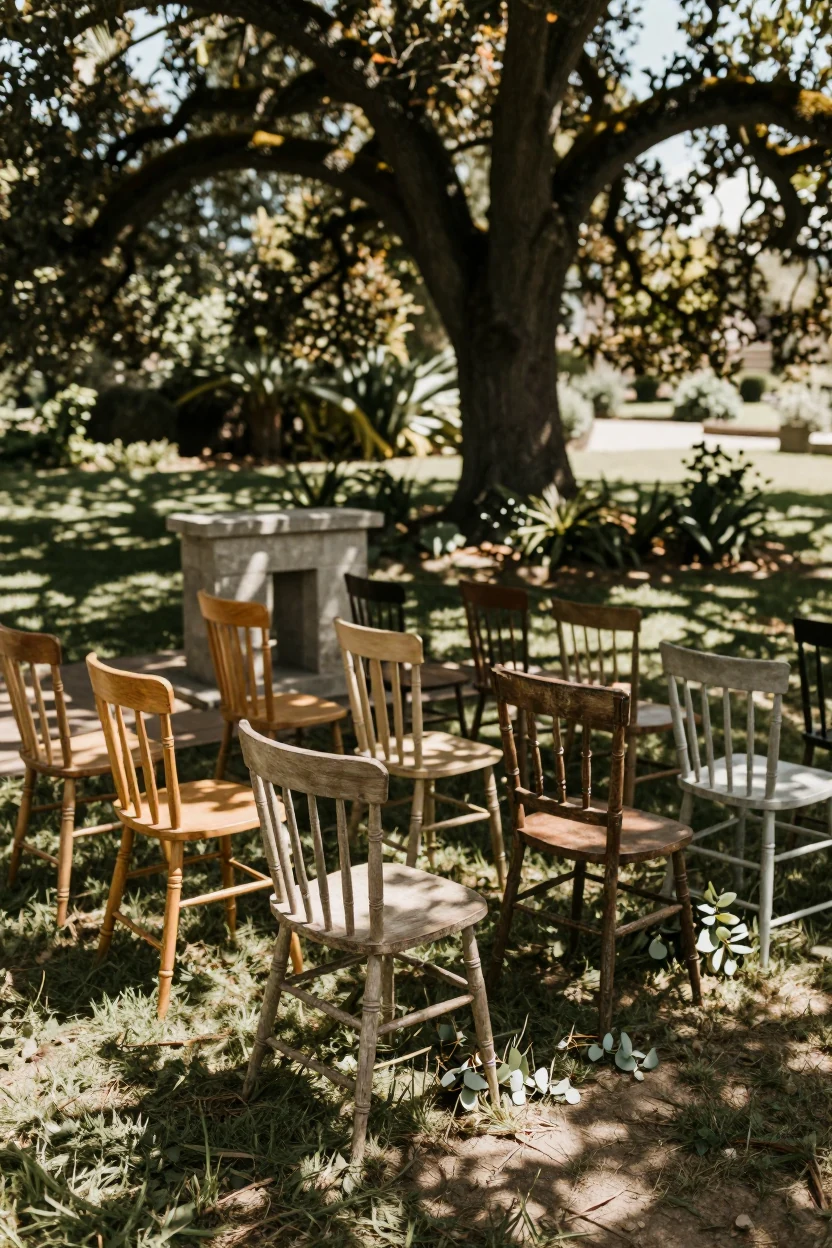
Replace rigid rows with a loose U-shape or circle of mismatched vintage wooden chairs to foster intimacy and conversation. This seating arrangement breaks from formal structures, using the unique grain and varied shapes of each chair to add character. It works best for smaller ceremonies where guests can hear one another easily. Pair these seats with simple greenery garlands draped across the back of the aisle or head table to soften the wood without overwhelming the natural textures. Use this layout for outdoor garden weddings, backyard celebrations, or relaxed daytime receptions. Keep the floor clear around the perimeter to ensure safe guest circulation and easy access for the wedding party. If you have a long rectangular venue, place chairs on the sides and ends rather than in tight rows to maintain sightlines for photography and officiants.
8. Candlelit Garden Courtyard
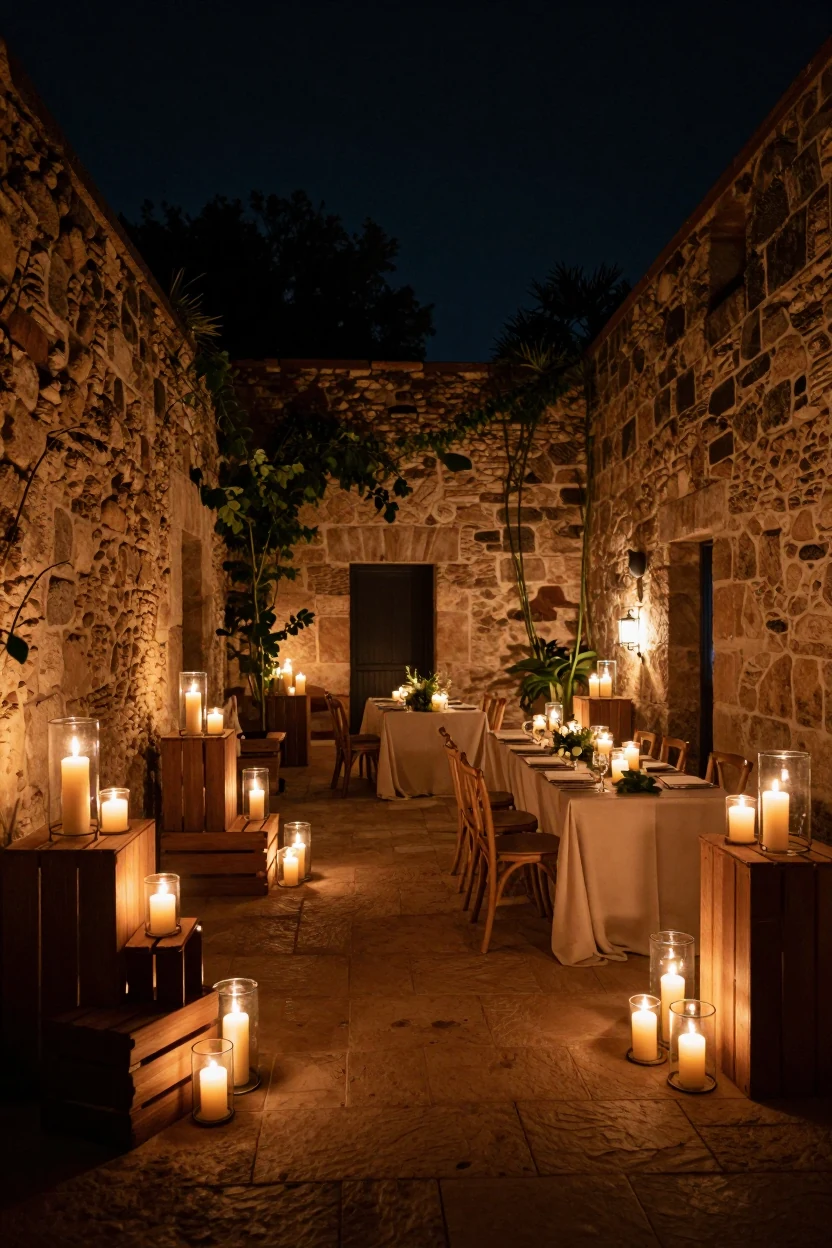
Transform an enclosed garden courtyard into a dramatic evening venue by relying on candlelight rather than electric string lights. The high stone walls act as a natural container, keeping the warm glow contained and creating a striking contrast against the dark sky outside. Arrange pillar candles of varying heights on tiered wooden stands, low crates, or the floor, ensuring they are placed securely in heavy glass or metal holders to prevent tipping. Use these light sources to illuminate tables draped in textured linen, guiding guests’ eyes through the space without overwhelming brightness. This setup creates an intimate, enclosed atmosphere that feels distinct from open-air receptions. Keep aisles and emergency exits clear of candle clusters to ensure safe guest circulation. The flickering light highlights natural stone textures and deep green foliage, offering a cozy, grounded aesthetic. This approach works best in venues with solid boundaries that can safely contain open flames while maintaining a sense of seclusion.
9. Herb Garden Tablescapes
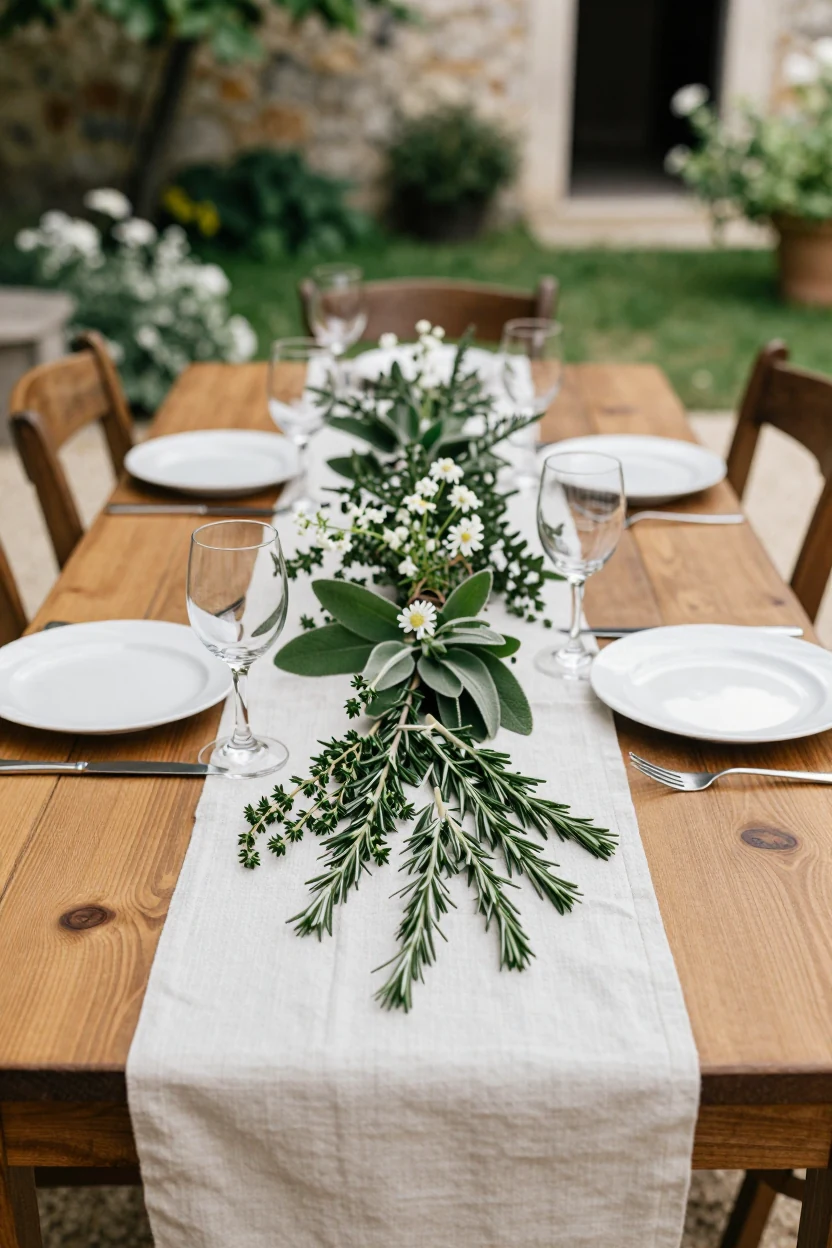
Replace traditional floral centerpieces with living culinary herbs to create a tactile, aromatic dining experience that mirrors a farm-to-table menu. Use long, narrow tables draped in crisp white or natural linen runners to provide a neutral canvas for the greenery. Arrange sprigs of rosemary, thyme, and sage in low, scattered clusters along the table's center, interspersed with single stems of seasonal wildflowers like chamomile or baby's breath. This layout keeps sightlines open while adding vertical texture without blocking guest conversation. Pair the herbs with rustic ceramic plates and simple glassware to maintain a grounded, organic aesthetic. The visual effect is one of fresh, edible elegance rather than ornamental excess. Guests can even take small sprigs home as favors. For adaptation, source herbs from local farms or grocery stores on the day of the event to ensure maximum freshness. Keep the arrangement low and wide to avoid obstructing views across the table.
10. Stone Bench Seating
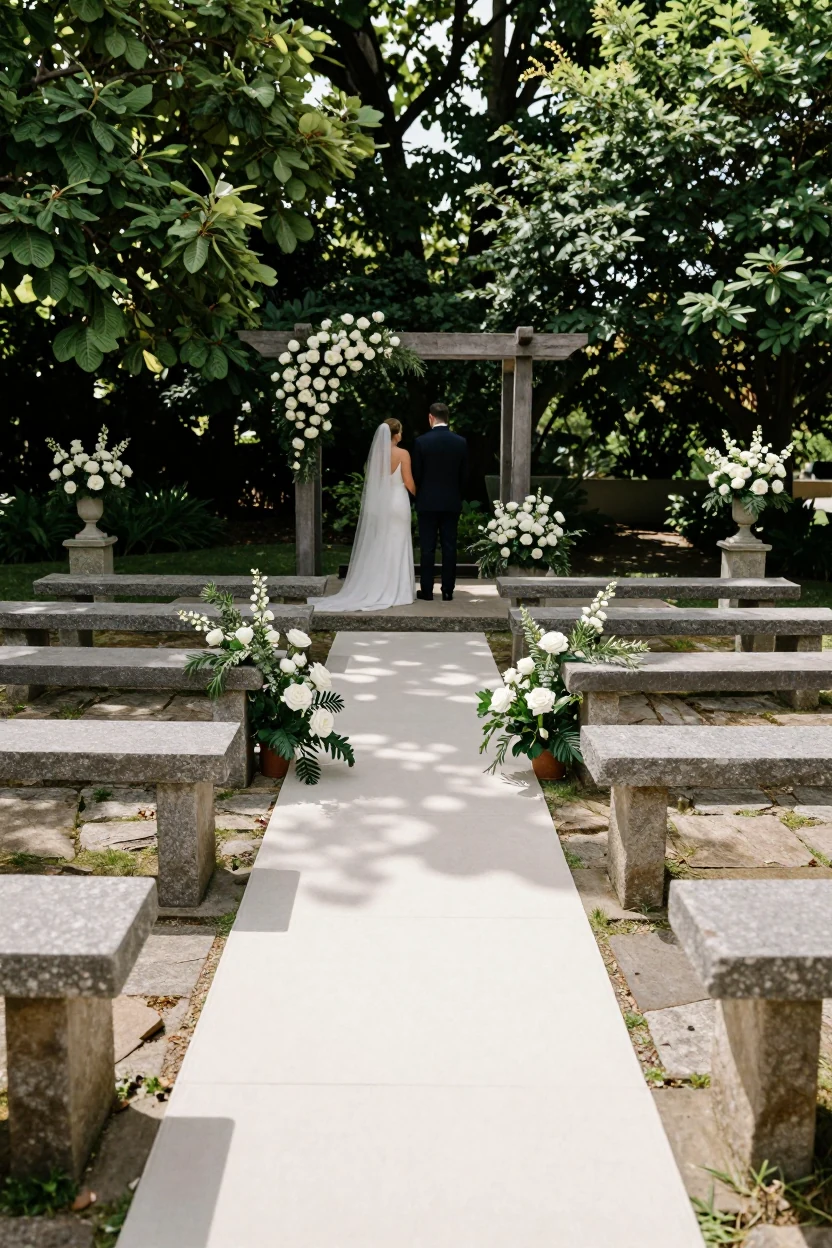
Trade rows of delicate folding chairs for long, low stone benches to anchor your ceremony in a historic European garden aesthetic. This grounded seating lowers the guest line of sight, making the couple appear more prominent against a backdrop of mature trees or open sky. The sturdy texture offers a distinct departure from standard wooden furniture, creating a rustic yet refined atmosphere. Keep the design restrained by pairing the raw stone with simple ivory linen runners and low-profile floral arrangements. Use seasonal greenery like eucalyptus or ferns to soften the hard edges without blocking visibility. This setup works best in venues with flat, stable ground that can support the weight of the stone. For a practical variation, consider renting used slate slabs or salvaged granite blocks if full stone benches are unavailable. Ensure all pathways remain clear for safe guest movement and emergency access.
11. Draped Fabric Canopy
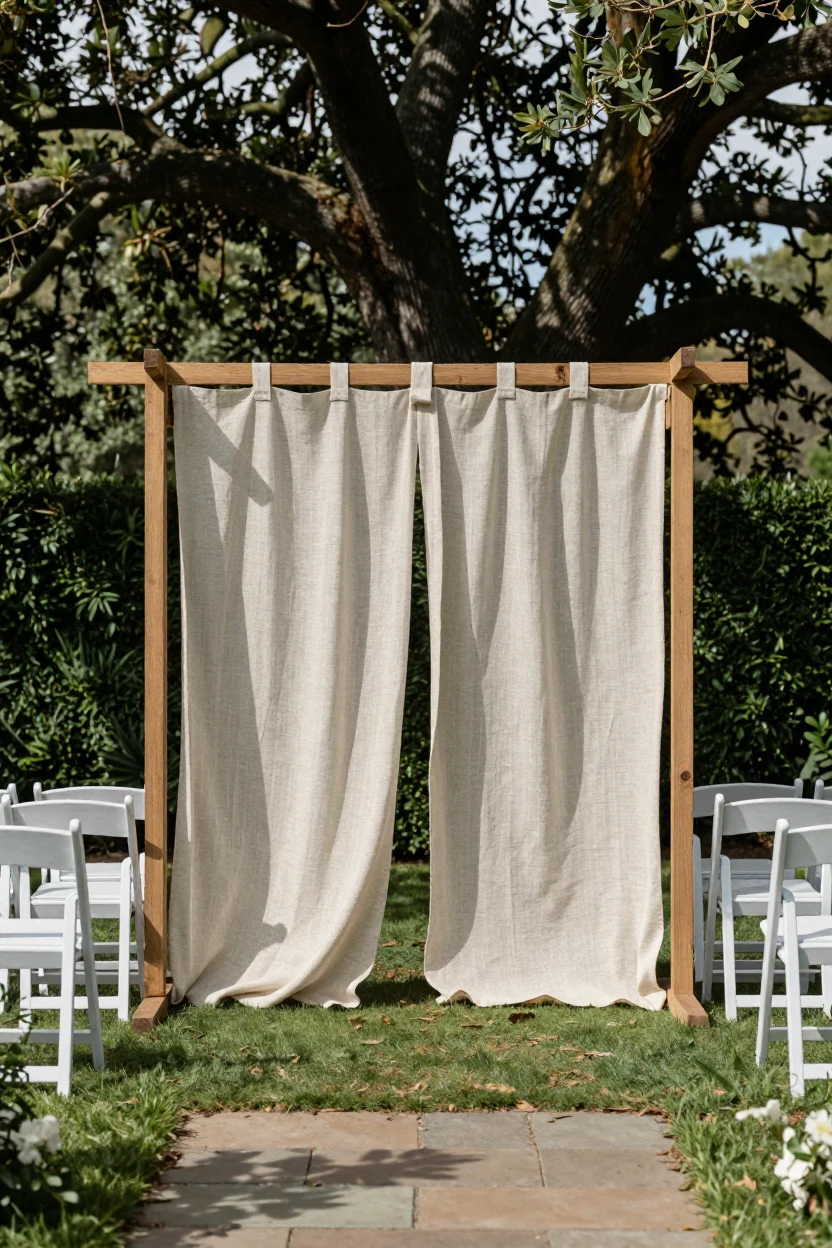
A freestanding wooden frame draped in heavy, natural linen creates a soft, shadowed enclosure for the ceremony. The fabric hangs loosely from the crossbars, allowing wind to create gentle movement and dynamic texture against the static garden backdrop. This setup provides a sense of luxury and visual weight without requiring permanent architectural changes. Place the structure on a level patch of grass or stone terrace, ensuring the frame is securely anchored to withstand breezes. Pair the neutral fabric with simple white chairs arranged in neat rows facing the altar. The loose drape contrasts beautifully with crisp stone pathways or wooden furniture nearby. This concept works well for late spring through early fall weddings when natural light shifts create interesting shadows. For a reception, a similar but smaller frame can define a cocktail hour area. Keep the fabric color in off-white, beige, or soft taupe to maintain a timeless European aesthetic. Ensure the structure does not block emergency exits or guest circulation.
12. Wildflower Meadow Aisle
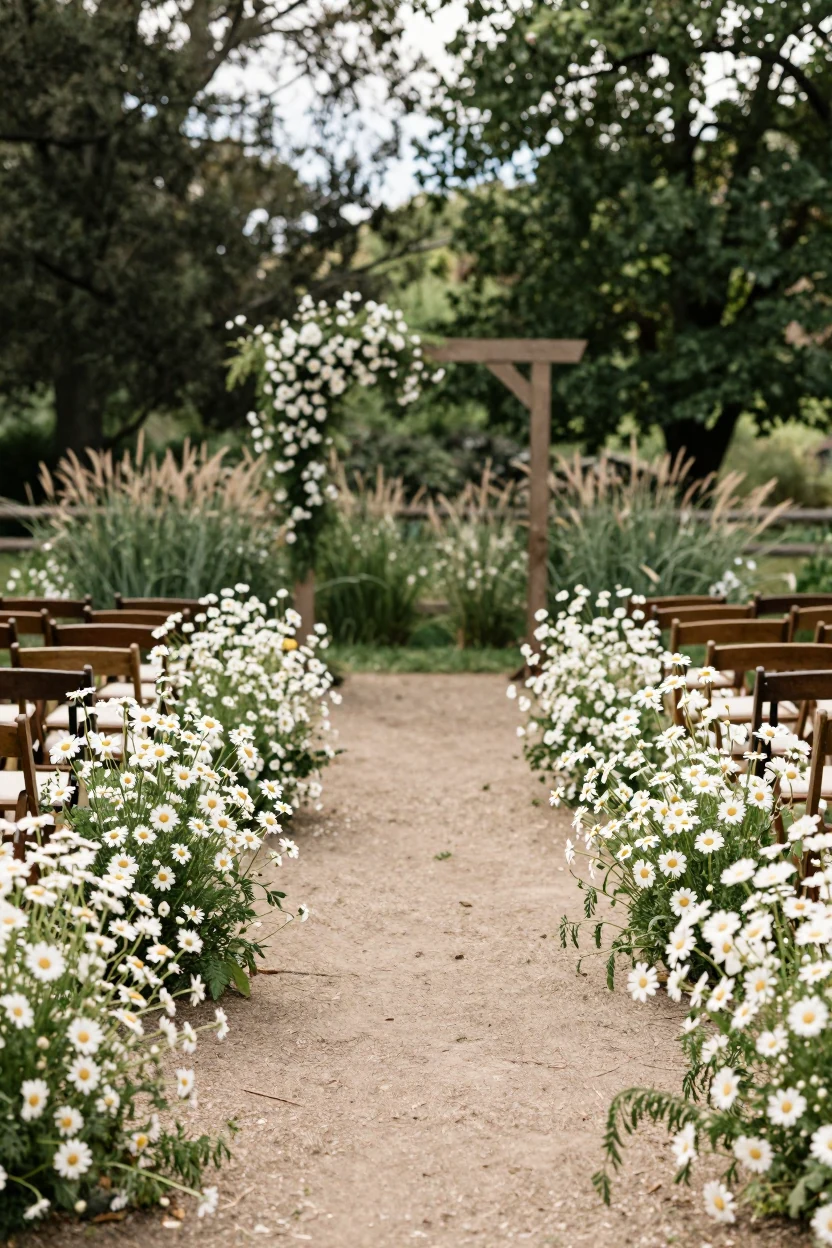
Skip traditional aisle markers and let the venue’s natural landscape guide the ceremony. This approach clears a straight path through a meadow of native wildflowers, such as chamomile, daisies, and Queen Anne’s lace, creating a bright, airy visual that feels organic rather than staged. The unmarked path emphasizes the beauty of the surrounding greenery while keeping guest sightlines open. For a realistic adaptation, work with your floral designer to identify existing plantings that match your preferred palette, or introduce potted wildflowers along the edges to define the aisle without blocking movement. This setup works best in late spring through early summer when blooms are abundant. Keep the ceremony arch simple, such as a bare wood frame or a low stone pedestal, so it does not compete with the natural backdrop. The result is a low-maintenance, high-impact aesthetic that photographs beautifully in natural light.
13. Classic White Picket Fence
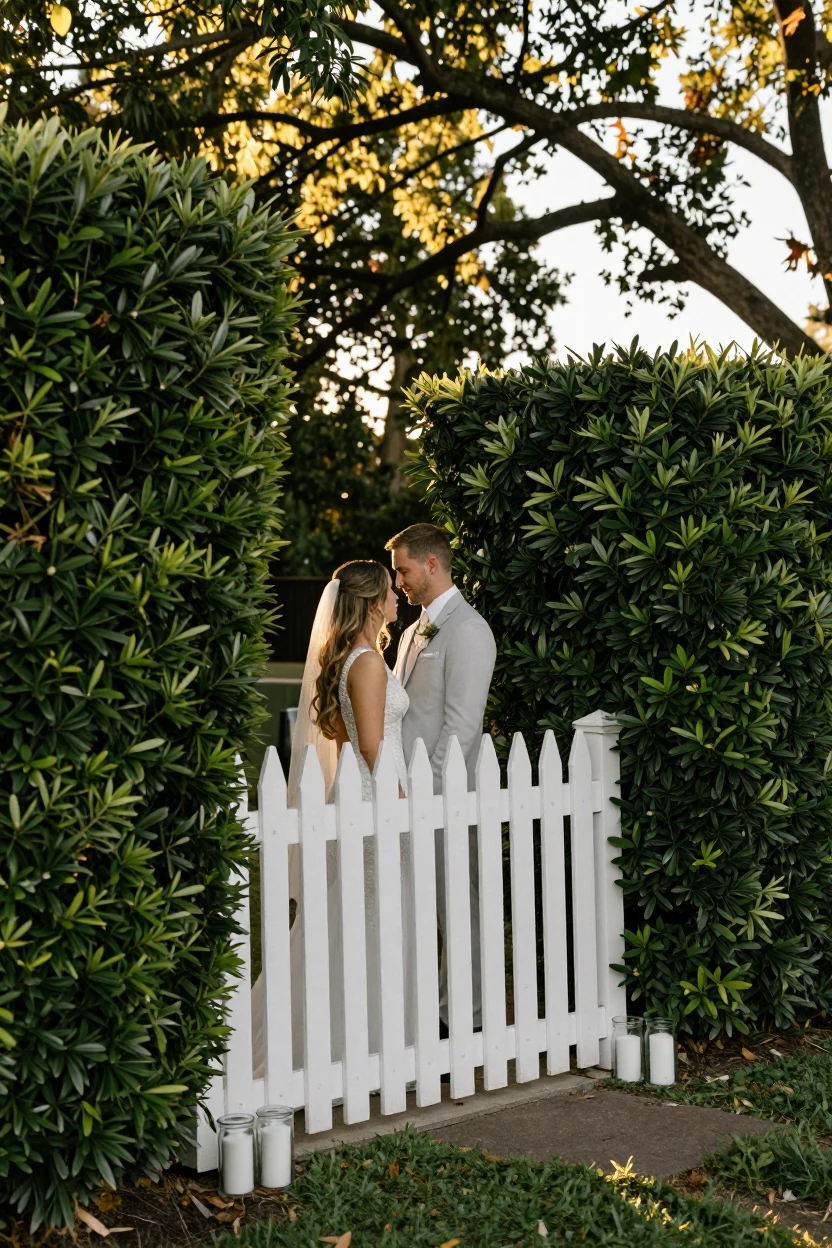
A section of white picket fence leans against dense, dark green boxwood hedges to create a crisp, cottage-style backdrop for ceremony portraits. This setup introduces strong vertical lines and bright contrast to lush garden settings that might otherwise feel visually heavy. The fence serves as a neutral frame, allowing couples to stand out without needing elaborate floral installations. Use two or three sections to define a clear focal point near the altar, ensuring enough space remains on either side for guest seating and officiant movement. Pair the white wood with simple white candles in glass jars placed at the base of the fence for soft evening light. This approach works well in late spring or early summer when gardens are full but not overgrown. It offers a traditional, romantic aesthetic that feels grounded rather than staged. For a different look, swap the boxwood backdrop for a row of potted olive trees to add texture and height variation while maintaining the clean white border.
14. Antique Mirror Wall
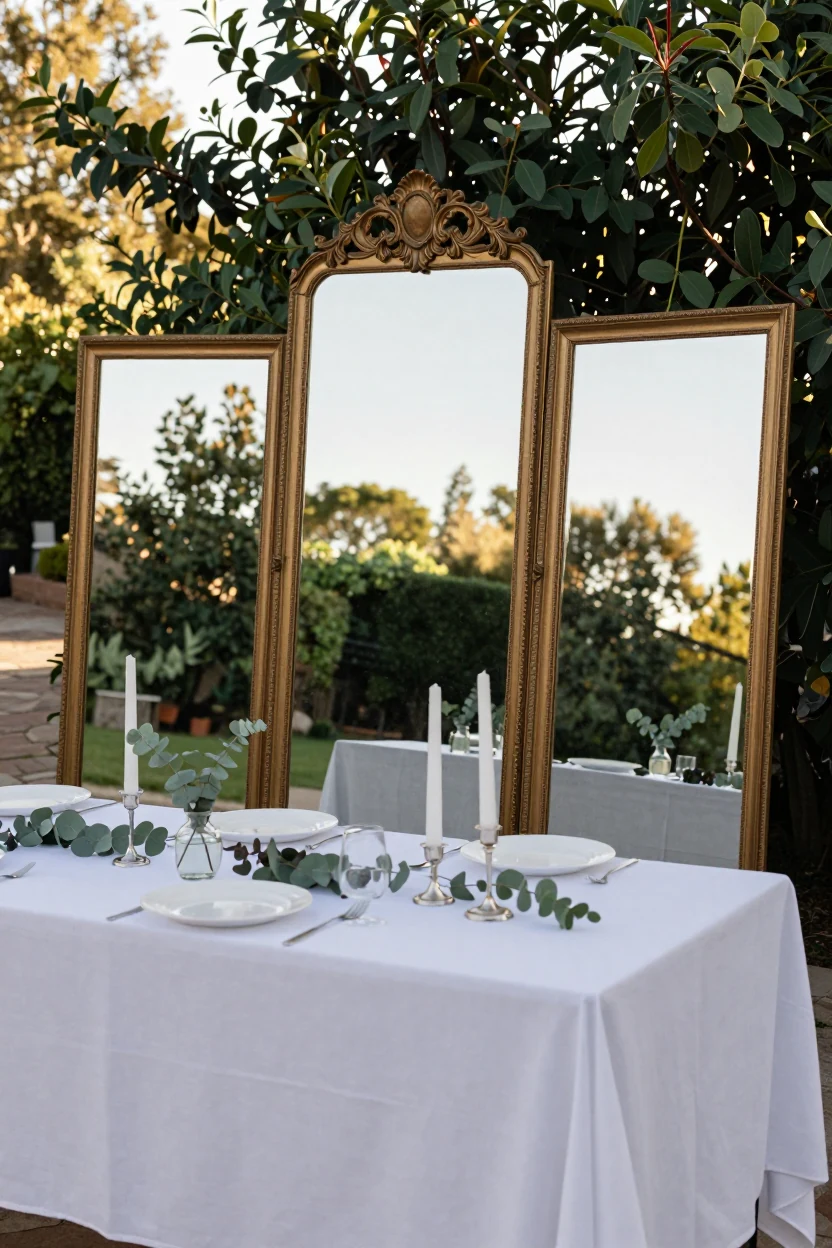
Position three to five oversized, vintage-style mirrors with ornate or rustic frames leaning against the head table or ceremony backdrop. This arrangement reflects the surrounding garden foliage and natural light, creating an illusion of expanded space and depth. The reflective surfaces catch dappled sunlight or evening candlelight, adding a shimmering quality without requiring dense floral arrangements. Style the mirrors with minimal greenery, such as trailing eucalyptus or ferns tucked behind the frames, to soften the edges. This setup works particularly well in open garden settings where visual boundaries are needed but physical walls are absent. For reception use, lean the mirrors against a clean white or linen-draped table, allowing them to reflect the dinnerware and centerpieces. Ensure the mirrors are secured with hidden straps or weighted bases to prevent tipping, especially on uneven grass. This approach provides a glamorous, ethereal focal point that emphasizes light and texture rather than volume, offering a distinct alternative to traditional floral backdrops.
Choosing Your Aesthetic
Selecting the right idea depends on your venue’s existing features and your preferred level of formality. Stone-heavy setups suit historic estates, while linen and wildflower concepts work well in open lawns. Consider the season for floral availability and lighting needs. Adapt these concepts by adjusting materials to fit your budget and ensuring all structures meet safety guidelines. The goal is a cohesive look that feels rooted in place, not just decorated.
