15 Wedding Flower Arrangement Ideas for Every Style and Budget
Choosing the right floral display requires balancing aesthetic goals with the physical realities of your venue, season, and budget. Whether you are planning an intimate backyard dinner or a large barn reception, the arrangement should enhance the space rather than compete with it. These fifteen ideas focus on structural integrity, sightlines, and material textures to help you create a cohesive look. Each concept includes specific guidance on placement and pairing, ensuring your design remains stable, safe, and visually distinct without requiring complex professional installations.
1. Low-Profile Banded Runners
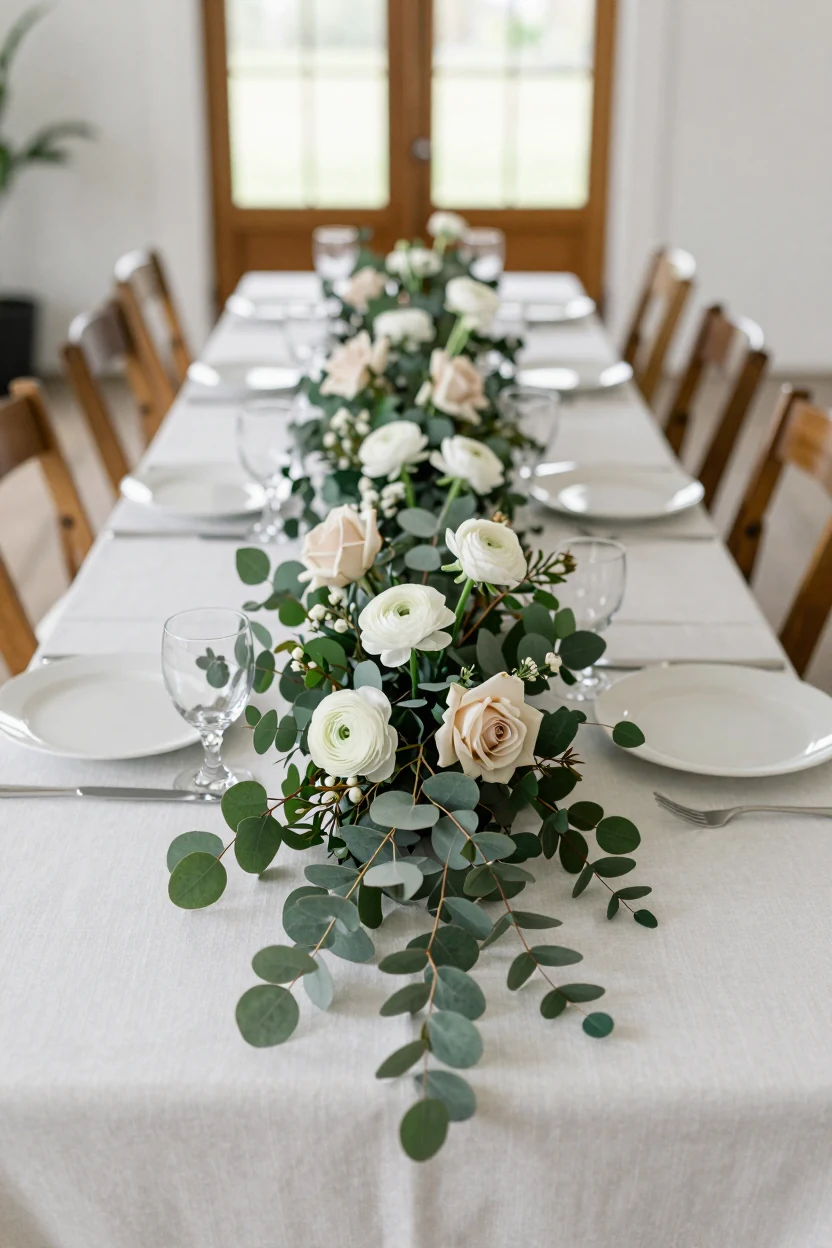
This low-profile arrangement transforms long banquet tables into inviting conversation hubs by keeping sightlines clear. A continuous band of trailing eucalyptus and ivy stretches down the center, interspersed with compact clusters of seasonal blooms like white ranunculus or blush garden roses. The greenery sits directly on the tablecloth or in shallow, low-profile glass troughs, ensuring no element rises higher than a seated guest’s eye level. This layout works exceptionally well for intimate dinners where face-to-face interaction matters more than dramatic vertical displays. The organic texture of the foliage contrasts beautifully with smooth ceramic dinnerware and simple linen napkins. For a cohesive look, match the table runner to the bouquet and aisle markers. If your venue has strict fire codes, skip open candles and use battery-operated LED tea lights nestled among the stems for a soft, flickering glow without the smoke risk. This approach feels grounded, modern, and accessible, proving that less height can create more impact.
2. Asymmetric One-Sided Vases
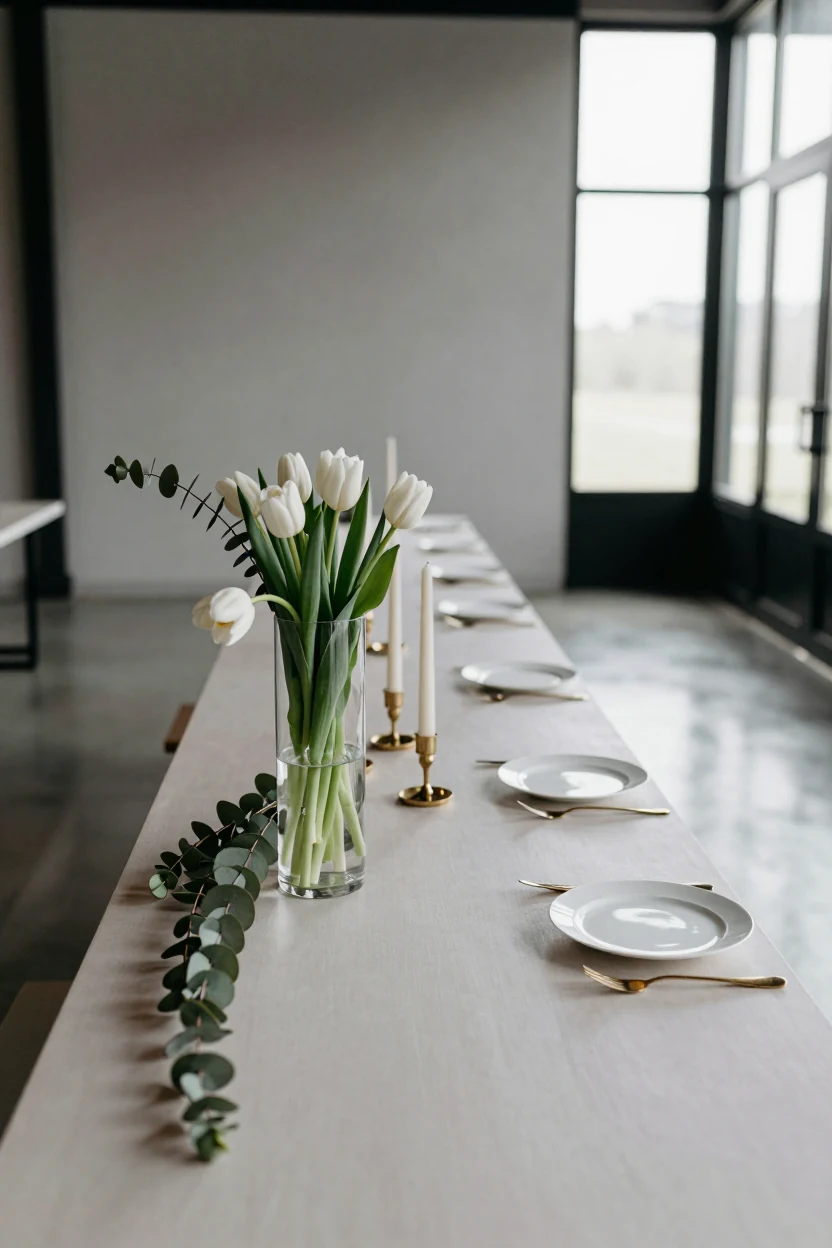
This contemporary table setting relies on negative space and architectural lines rather than traditional full-circle blooms. Place a single, tall vase at one end of each rectangular table, leaving the center completely clear for dinnerware and candlelight. The arrangement should feature a loose, airy cluster of long-stemmed flowers like white tulips or ranunculus, mixed with tall greenery such as eucalyptus or olive branches. This layout works best in modern venues with sleek furniture, allowing the eye to travel along the table's length without obstruction. For a cohesive look, pair the floral display with textured linen napkins and simple glassware. The height of the vase should be significant enough to create vertical interest but low enough that guests can still see each other across the table. This approach is ideal for couples who prefer a minimal aesthetic where the structure of the room and the quality of the materials take center stage over dense floral coverage.
3. Outdoor Meadow Scattering
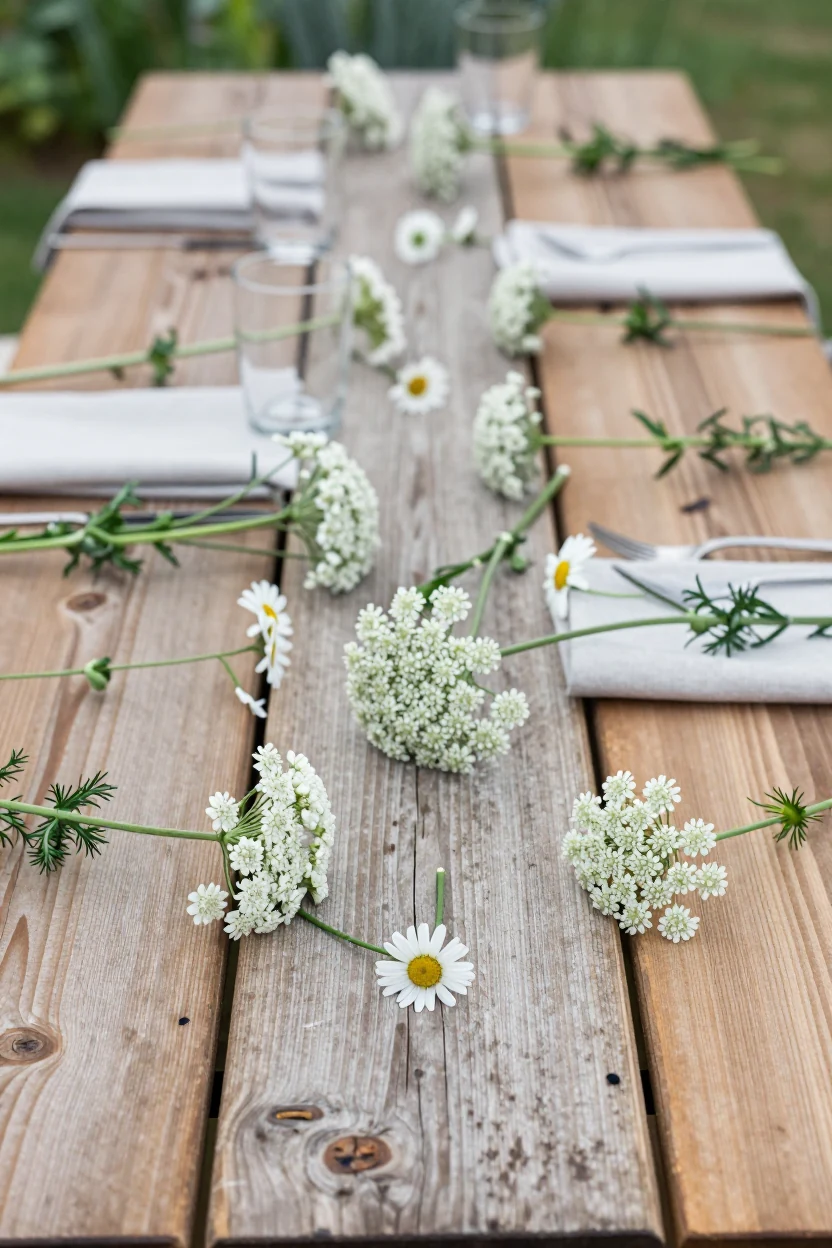
Skip traditional vases entirely for this loose, organic look. Scatter fresh stems of Queen Anne’s lace, small white daisies, and wispy wild grasses directly across a long, weathered wooden table or stone terrace surface. This technique creates an airy, unstructured aesthetic that feels grounded and natural, ideal for casual daytime ceremonies in gardens or parks. The arrangement relies on the raw beauty of the blooms rather than rigid symmetry, allowing the flowers to lie flat or lean gently against one another. Pair this floral scattering with simple linen napkins and clear glassware to keep the focus on the texture and color of the greenery. It works best when the table serves as a communal gathering space rather than a formal dining setup. This approach reduces waste and offers a relaxed, bohemian vibe that feels effortless.
4. Monochromatic White Tower
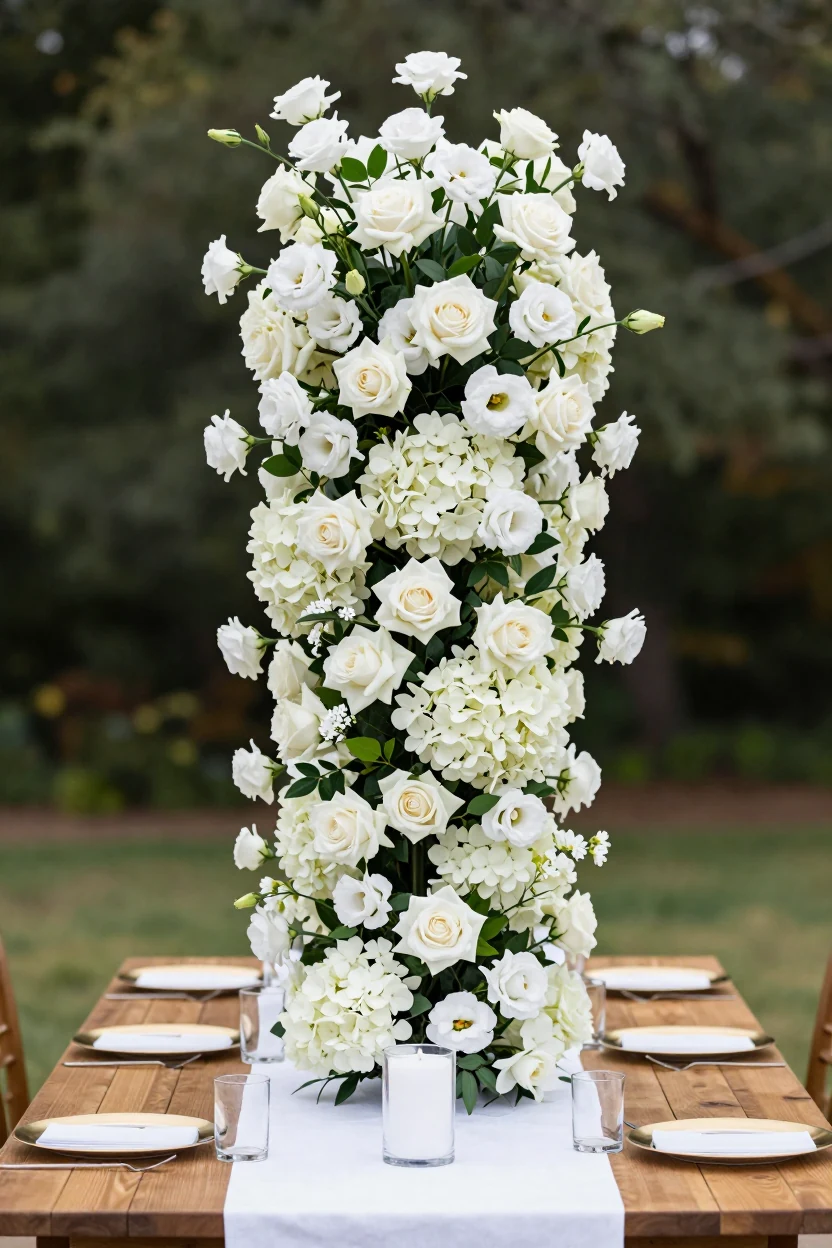
Position a substantial, multi-tiered floral column at the center of your head table to anchor the room without cluttering guest sightlines. This arrangement relies on height rather than width, using a mix of white roses, lisianthus, and hydrangea clusters layered over a dense base of eucalyptus or ruscus for textural contrast. The vertical structure should reach between four and six feet, ensuring it remains visible from the back of the room while keeping the tabletop clear for dinnerware. Because the palette is strictly monochromatic, the visual impact comes from varying flower shapes and leaf textures rather than color blocking. This setup works best in venues with high ceilings or open-air backdrops where the arrangement can rise against a neutral or sky background. Pair the towering centerpiece with low-profile white votives on the table surface to maintain light without competing for attention. For a practical adaptation, ask your florist to design the base of the column to sit securely on a weighted stand, ensuring stability during toasts and dancing. This focal point creates a clean, elegant contrast if you choose bolder colors or patterns for guest table centerpieces, allowing the couple’s table to serve as the visual anchor for the entire reception space.
5. Terracotta Pot Cluster
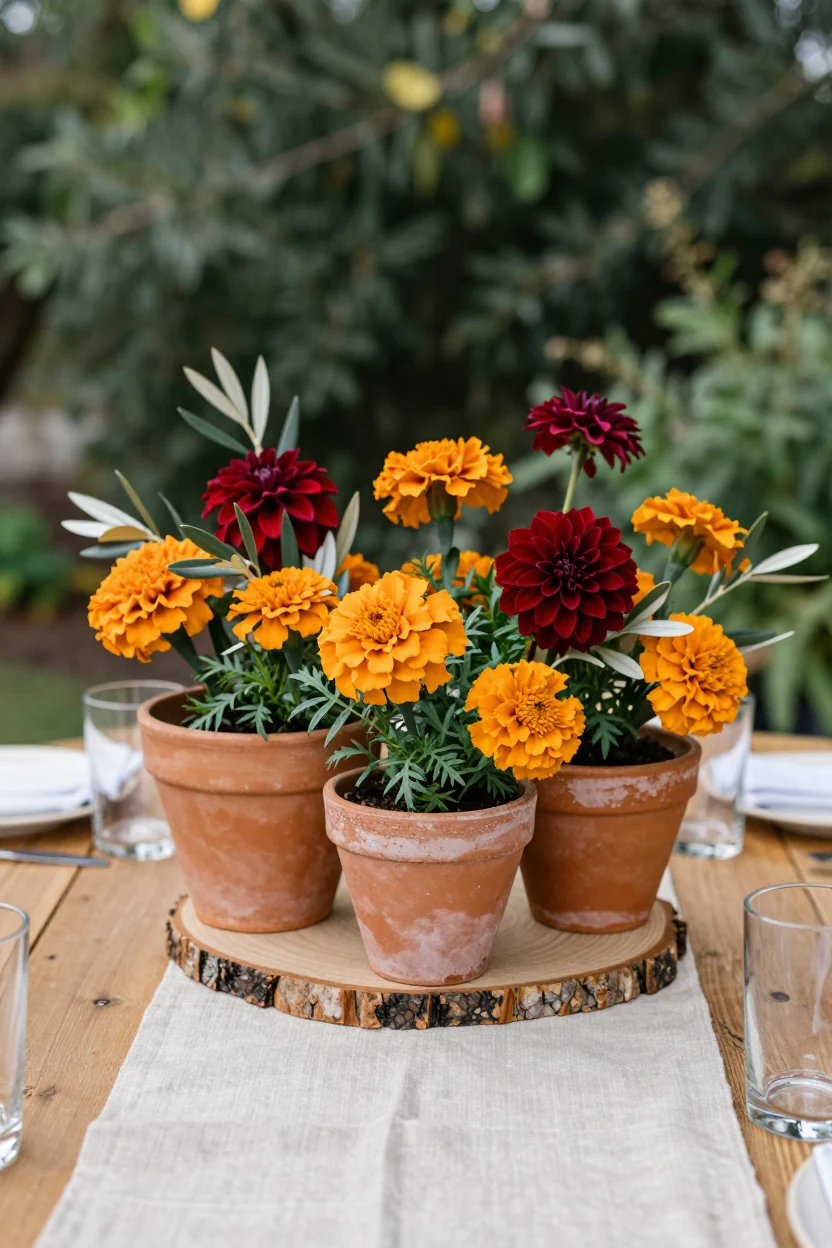
This arrangement uses unglazed terracotta pots in varying sizes to create a grounded, artistic centerpiece. Place three to five pots of different heights on a low wooden platform or directly on the table surface. Fill them with warm-toned blooms like marigolds, dahlias, or zinnias, mixed with textural greenery such as eucalyptus or olive branches. The rough clay texture contrasts beautifully with soft petals, offering an earthy aesthetic ideal for bohemian or desert-themed weddings. Keep the cluster low-profile to maintain eye contact across the table. For a cohesive look, pair with natural linen runners and simple glassware. This setup works well in spring or fall when warm-colored flowers are in season. You can adapt this concept by using painted ceramic pots for a more polished look or adding dried grasses for extra height. Ensure the platform is stable enough to hold the weight of filled pots.
6. Hanging Floral Clouds
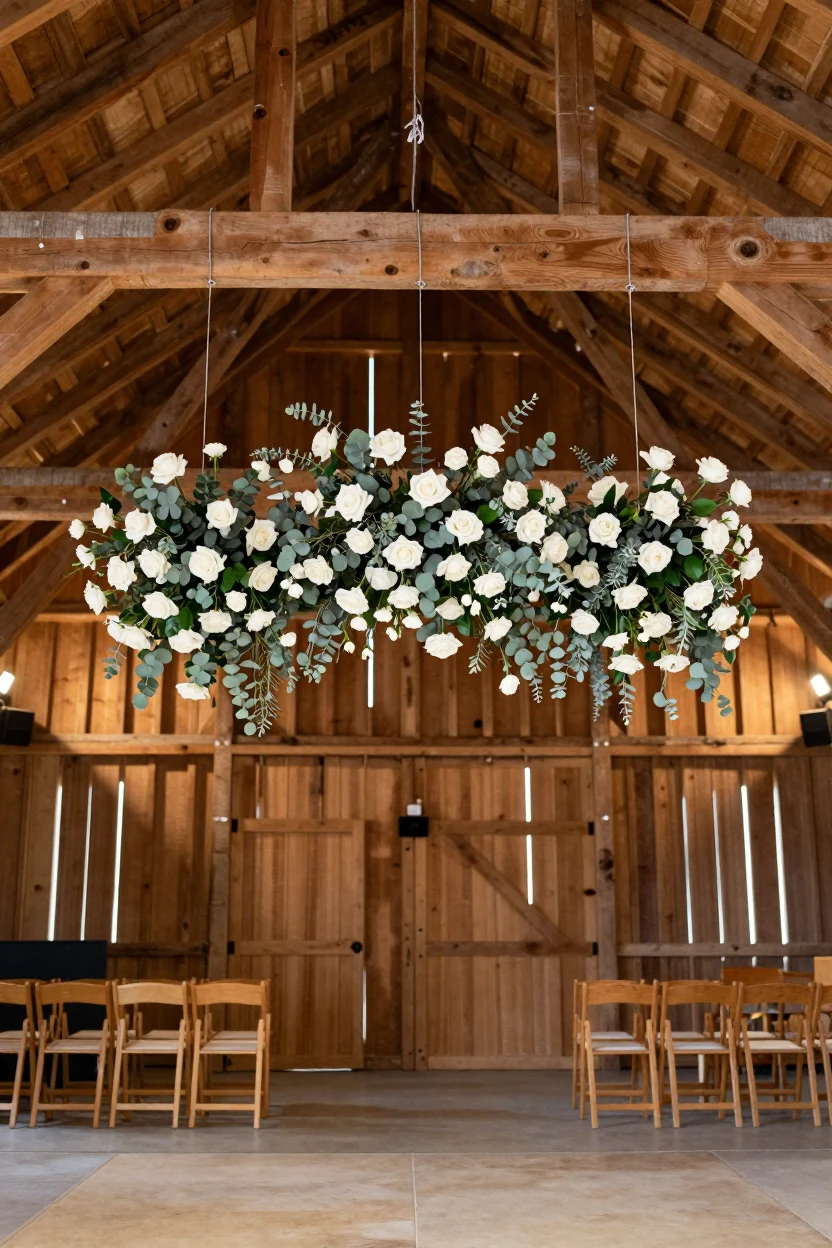
Suspend dense, rounded bundles of blooms from exposed ceiling rafters to fill vertical space without crowding tables. This hanging floral cloud works best in barns or warehouses where high ceilings create an empty void above the dance floor or bar. Use a mix of seasonal garden roses, ranunculus, and eucalyptus to create texture and volume. Keep the bundles compact and secure with heavy-duty wire or chains to ensure stability. The arrangement should hang at a height that allows guests to walk freely underneath while looking up. This setup adds depth to the room and draws eyes upward, creating a sense of airiness. It is particularly effective when paired with simple tablescapes, as the ceiling becomes the focal point. Adjust the density based on your venue’s acoustics and lighting fixtures. Ensure the floral weight does not exceed the structural capacity of the beams. This idea suits rustic, modern, or industrial wedding themes equally well.
7. Mason Jar Rustic Trio
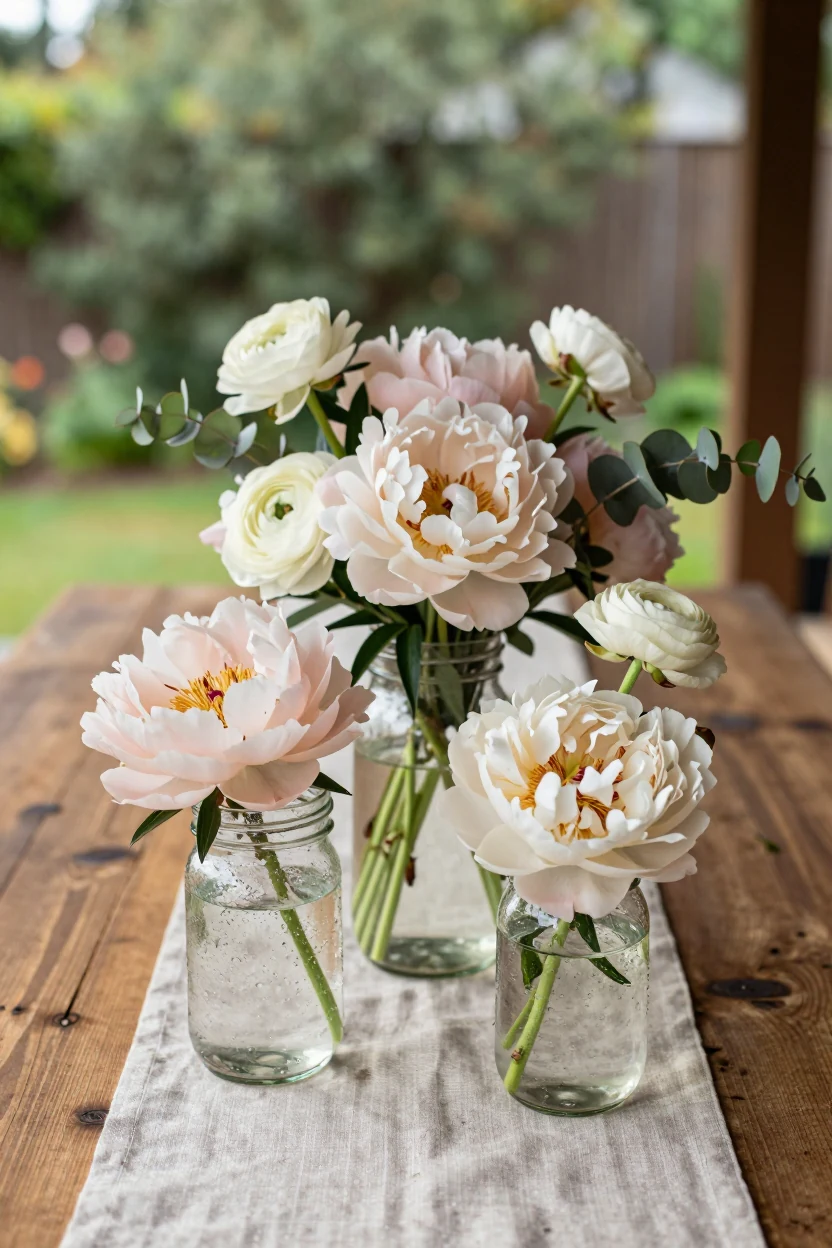
Three clear mason jars of varying heights sit on a rustic wooden table, creating a casual, tiered centerpiece. The largest jar holds a loose cluster of blush peonies and cream ranunculus, while the medium jar features a mix of both blooms with sprigs of eucalyptus. The smallest jar contains only greenery and a few small buds, maintaining visual balance. This setup works well for farmhouse or backyard weddings where a relaxed atmosphere is desired. The transparency of the glass keeps the look light, allowing natural light to pass through the stems. You can adapt this by using different jar sizes or substituting seasonal blooms like garden roses or daisies if peonies are out of season. Keep the arrangement loose and organic rather than tightly packed to maintain the rustic charm. This style is easy to assemble at home and fits comfortably on standard dining tables without obstructing guest sightlines.
8. Candle-Lit Floral Halo
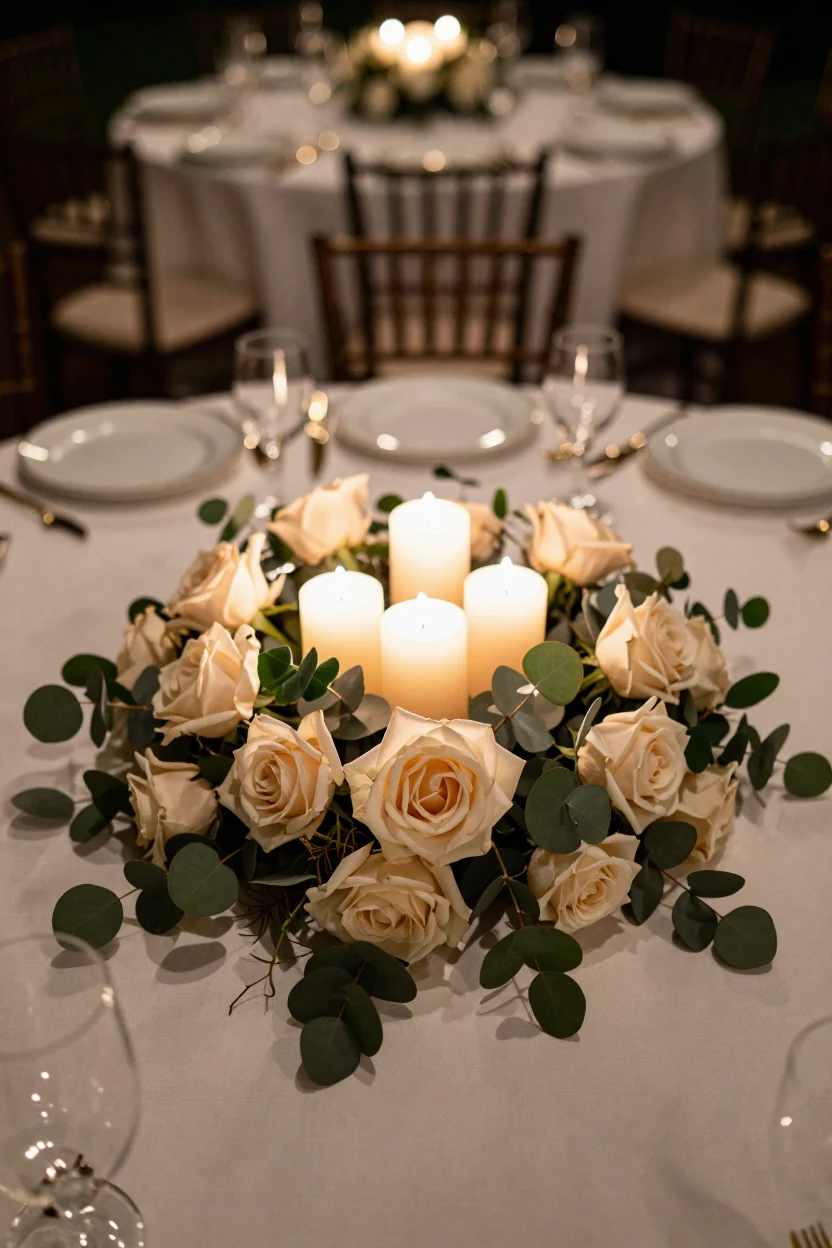
This arrangement transforms a standard round reception table into an intimate focal point by centering a cluster of pillar candles surrounded by a low ring of blooms. The candlelight radiates outward, illuminating the petals from within and casting soft, warm reflections on the surrounding glassware. Ideal for evening receptions, this setup prioritizes mood over height, keeping sightlines clear for guests to see across the table. Use sturdy, wide-mouthed glass vessels or metal tins to hold the candles securely, ensuring they are stable and not too close to flammable linens. Select flowers with thick petals, such as roses or dahlias, which hold their shape well under low heat. A mix of deep burgundies, creams, and dark green foliage creates a rich contrast against the warm glow. Keep the floral ring tight and low to maintain a unified silhouette, avoiding tall stems that would block the light source. This design works best with dimmed ambient room lighting to maximize the cozy, enclosed atmosphere.
9. Archway Frame Bloom
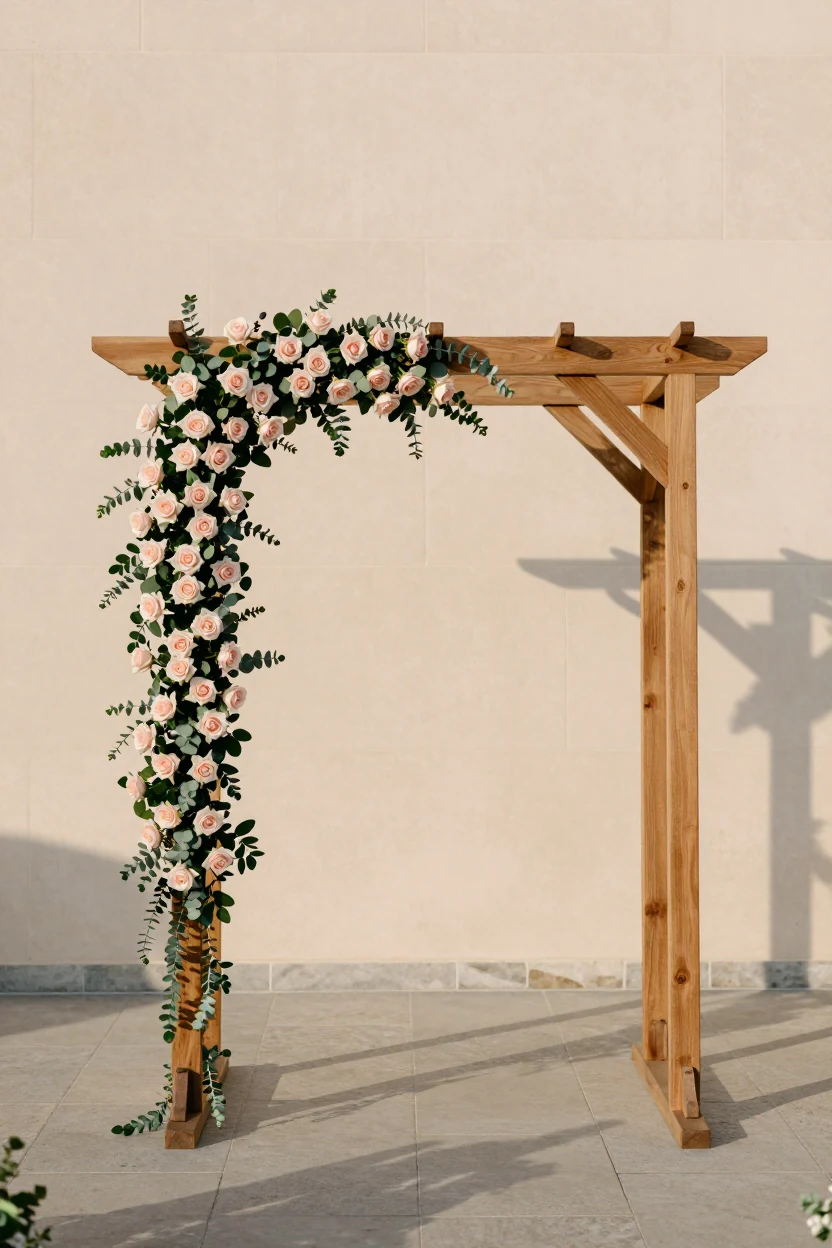
This setup prioritizes architectural clarity over floral density. A slender, raw wood or black metal arch stands against a neutral exterior wall, allowing the structure’s lines to remain the primary visual anchor. Loose stems of garden roses, ranunculus, and trailing eucalyptus are wrapped lightly around the frame, cascading down one side in an asymmetric, organic drape. This technique prevents the arch from becoming a heavy, solid block of foam and flowers, instead creating a sense of movement and airiness. The color palette remains restrained, mixing soft blush petals with deep green foliage to maintain contrast without overwhelming the couple standing beneath it. Because the stems are arranged loosely, the arch serves as a delicate frame for ceremony photos rather than a competing backdrop. This approach works well for both rustic barns and modern lofts, adapting easily to different venue textures by simply changing the arch material from reclaimed timber to polished steel.
10. Single-Table Statement Piece
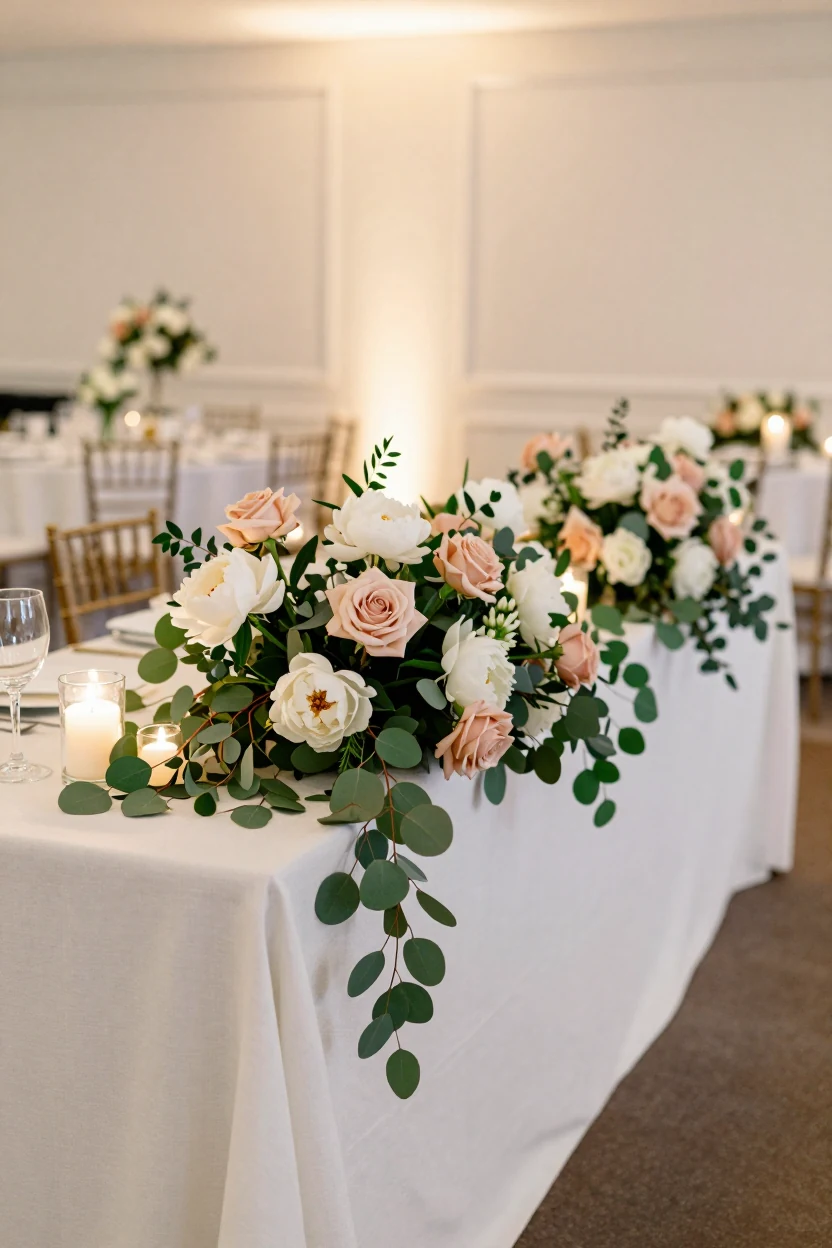
Concentrate your floral budget on a single, dramatic arrangement at the head table to create a powerful visual anchor for the reception. Instead of uniform centerpieces, place a sprawling, low-profile mix of seasonal blooms and trailing greenery across the sweetheart table’s surface, extending slightly over the edges for a natural, organic feel. Keep guest tables minimal with simple bud vases or single-stem picks to prevent visual competition. This contrast ensures the head table remains the focal point during toasts and portraits. Use textured linens and varied candle heights on the statement table to add depth without obscuring sightlines. For guests, stick to clean white dinnerware and glassware that recedes visually. This strategy offers high impact without the cost of decorating every seat, allowing you to prioritize quality flowers where they matter most.
11. Dried Grass Textural Mix
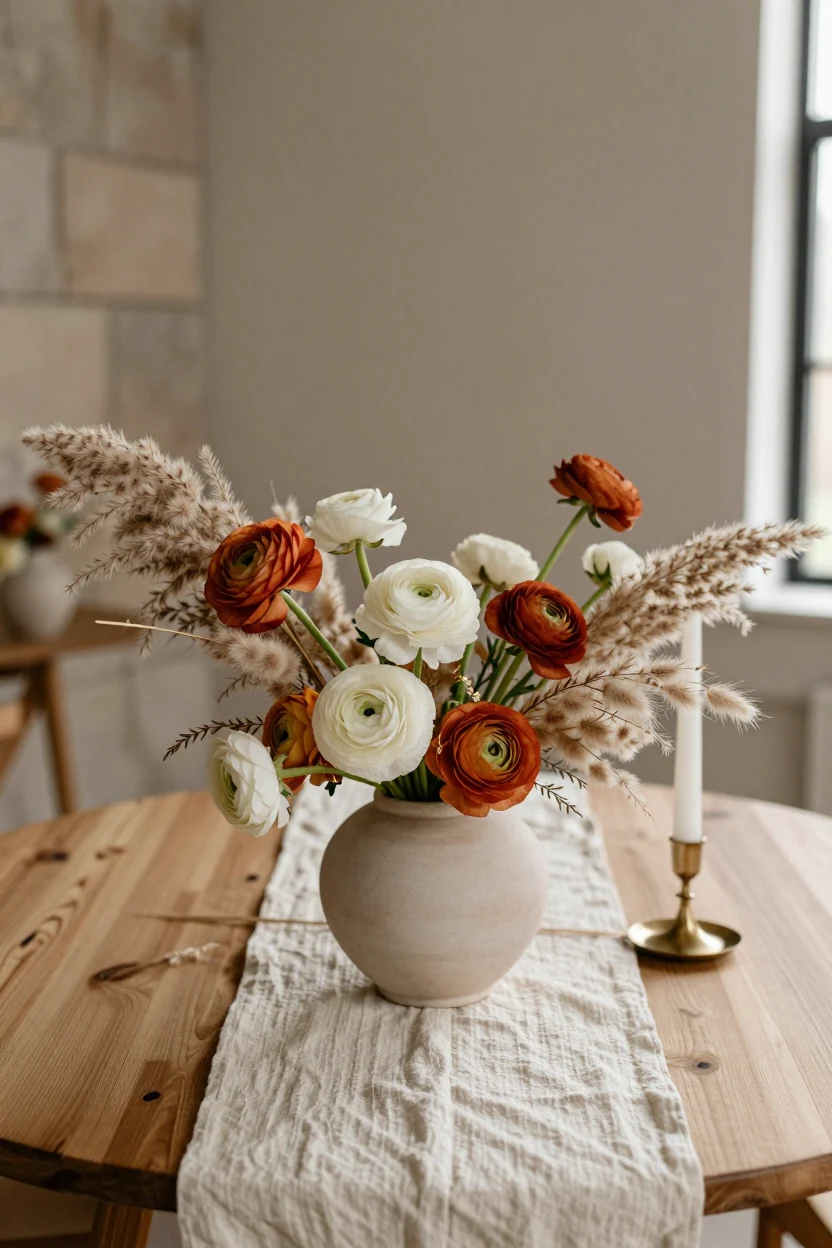
This arrangement balances the crispness of fresh blooms with the airy, permanent structure of dried grasses. A low, organic mound of dried pampas and bunny tails creates a foundation, interspersed with clusters of fresh ranunculus or garden roses in muted terracotta and cream. The feathery textures catch ambient light differently than petals, adding movement to static table settings. This style is particularly effective for late autumn or winter weddings, where it complements shorter days and cooler palettes. Use a shallow, wide ceramic vessel to keep sightlines open. The mix offers longevity; the fresh flowers provide color while the grasses maintain volume after the celebration. For a more rustic feel, swap the ceramic vase for a repurposed wooden bowl. Ensure the dried elements are fully cured before assembly to prevent brittleness. This setup works well as a centerpiece or entryway display, offering a tactile contrast to smooth linen tablecloths without requiring complex floral architecture.
12. Bar Rail Draping
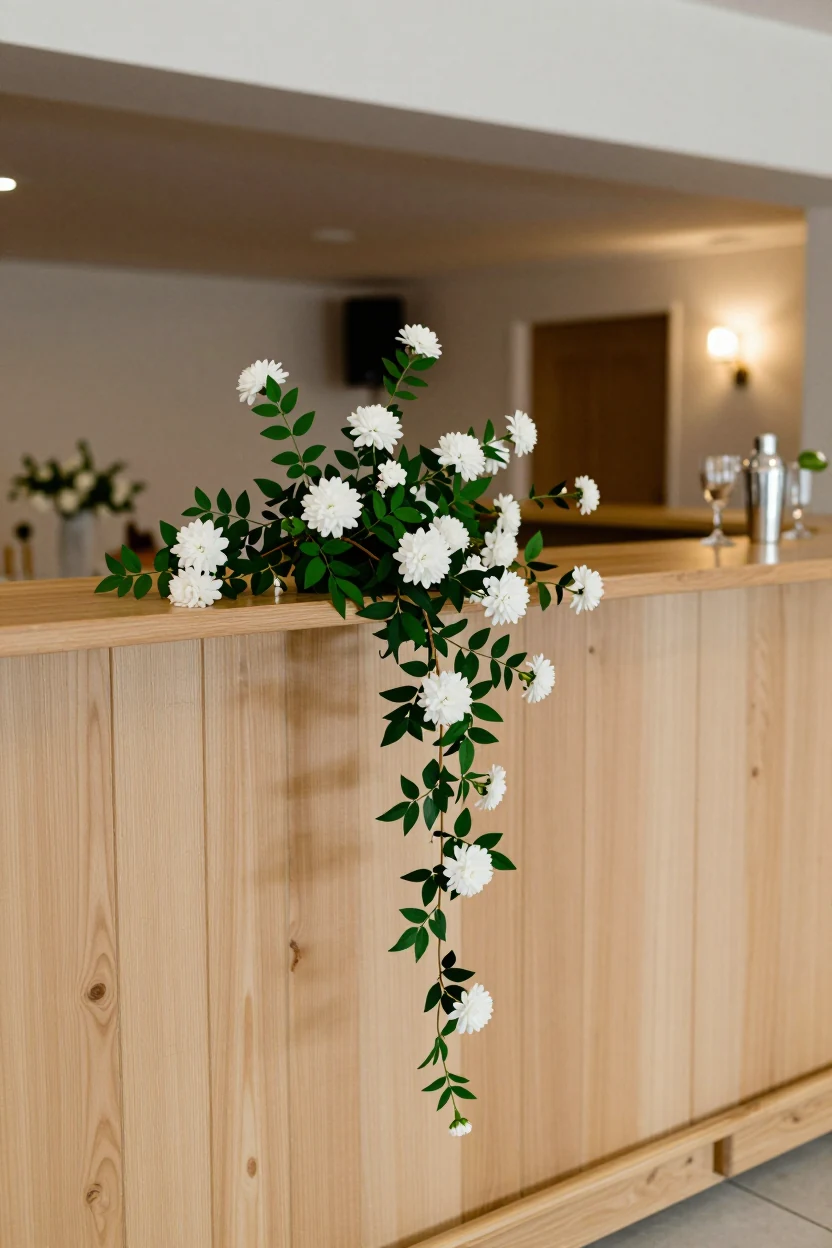
Transform your bar area into a functional yet decorative focal point by draping trailing greenery and small blooms along the front edge of the counter. Instead of blocking the surface with vases, let stems cascade down the side, creating a soft, organic border that keeps the top clear for drink service. This approach works particularly well in narrow venues where vertical space is limited. Use a mix of flexible vines like jasmine or ivy anchored with small, compact flowers such as spray roses or stock to maintain visual interest without obstructing the bartender’s workspace. The look remains airy and uncluttered, allowing guests to see the glassware and service items clearly. For color, stick to two or three complementary shades to avoid visual noise. This setup guides the eye along the length of the bar while preserving essential utility. It is a practical solution for receptions where the bar serves as both a social hub and a serving station.
13. Bench Seat Floral End Caps
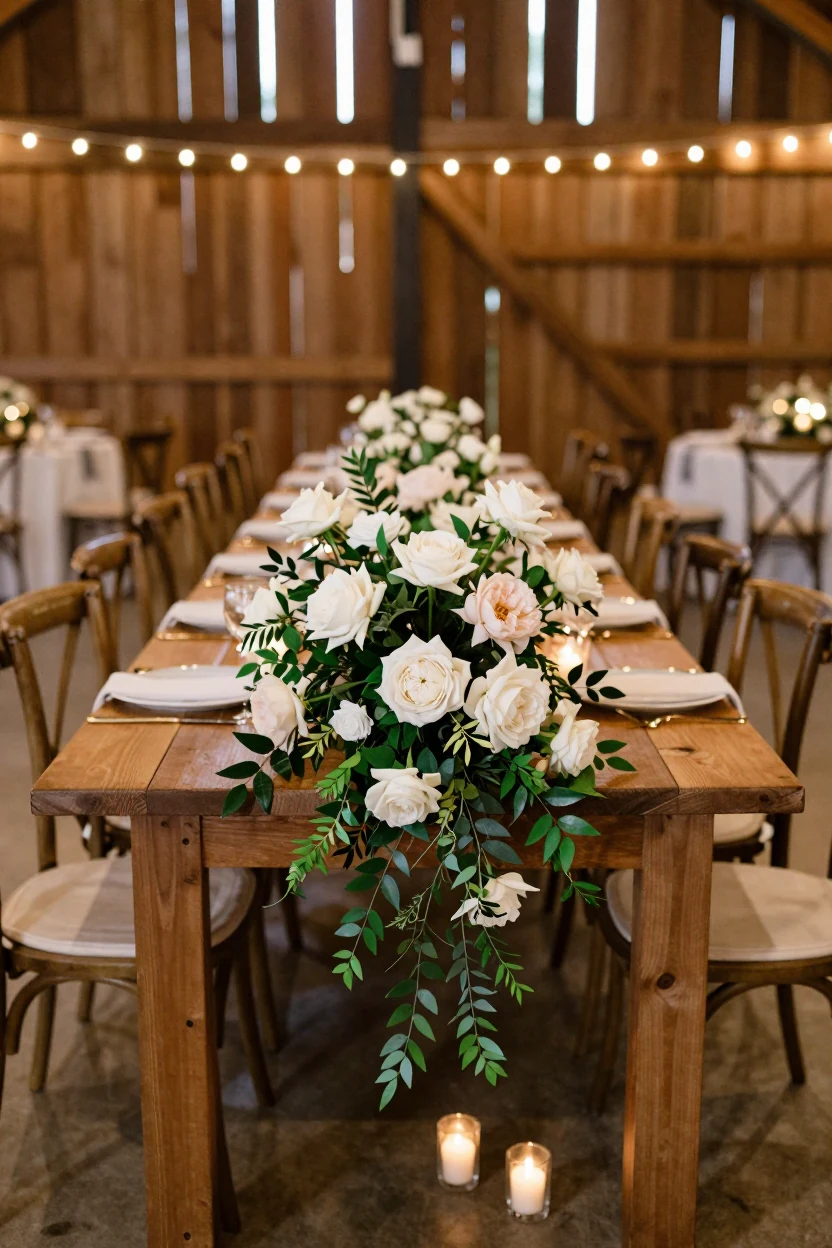
Transform banquet seating into a focal point by placing substantial, boxy floral arrangements directly on the end chairs of long communal tables. This layout lifts blooms to eye level for seated guests, creating an intimate, gallery-like experience without cluttering the table surface. Opt for low, wide containers or custom-built bases to ensure stability on standard banquet chairs. Select lush, cascading florals like garden roses, ranunculus, and trailing eucalyptus to soften the rigid geometry of the seating. The clear tabletop remains available for dinnerware, glassware, and low votive candles, maintaining a sleek, modern aesthetic. This approach works exceptionally well in barns or industrial venues where structural simplicity allows the flowers to take center stage. By anchoring the ends, you create a symmetrical visual rhythm that guides the eye down the length of the table. It is an effective way to maximize floral impact while preserving ample space for conversation and dining.
14. Glass Terrarium Centerpieces
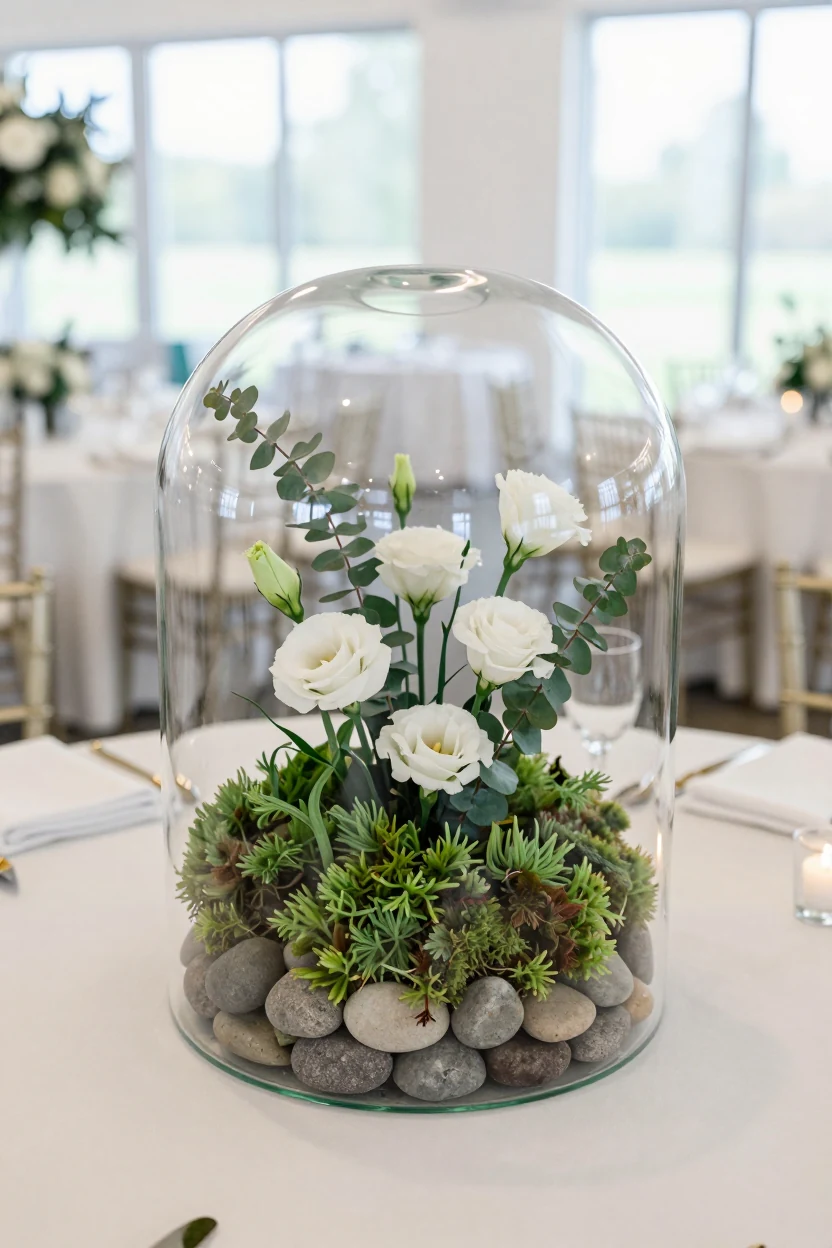
Glass terrarium centerpieces offer a contained, textural alternative to traditional vases, ideal for couples who want a nature-inspired aesthetic without the maintenance of loose florals. Inside large glass cloches or geometric terrariums, layer a base of smooth river stones and preserved sphagnum moss. Nest small, hardy blooms like white lisianthus, eucalyptus sprigs, and baby’s breath into the arrangement to create a miniature garden effect. The glass enclosure protects the flowers from wind and table spills while allowing guests to view the intricate greenery structure from all angles. This setup works beautifully on round reception tables or long banquet chairs, adding height without obstructing sightlines. For a cohesive look, pair the terrariums with neutral linen runners and simple white dinnerware. The enclosed nature of the piece makes it particularly effective for outdoor ceremonies or venues with high foot traffic. Consider using preserved florals for a maintenance-free option that retains its shape and color throughout the event.
15. Staircase Step Blooms
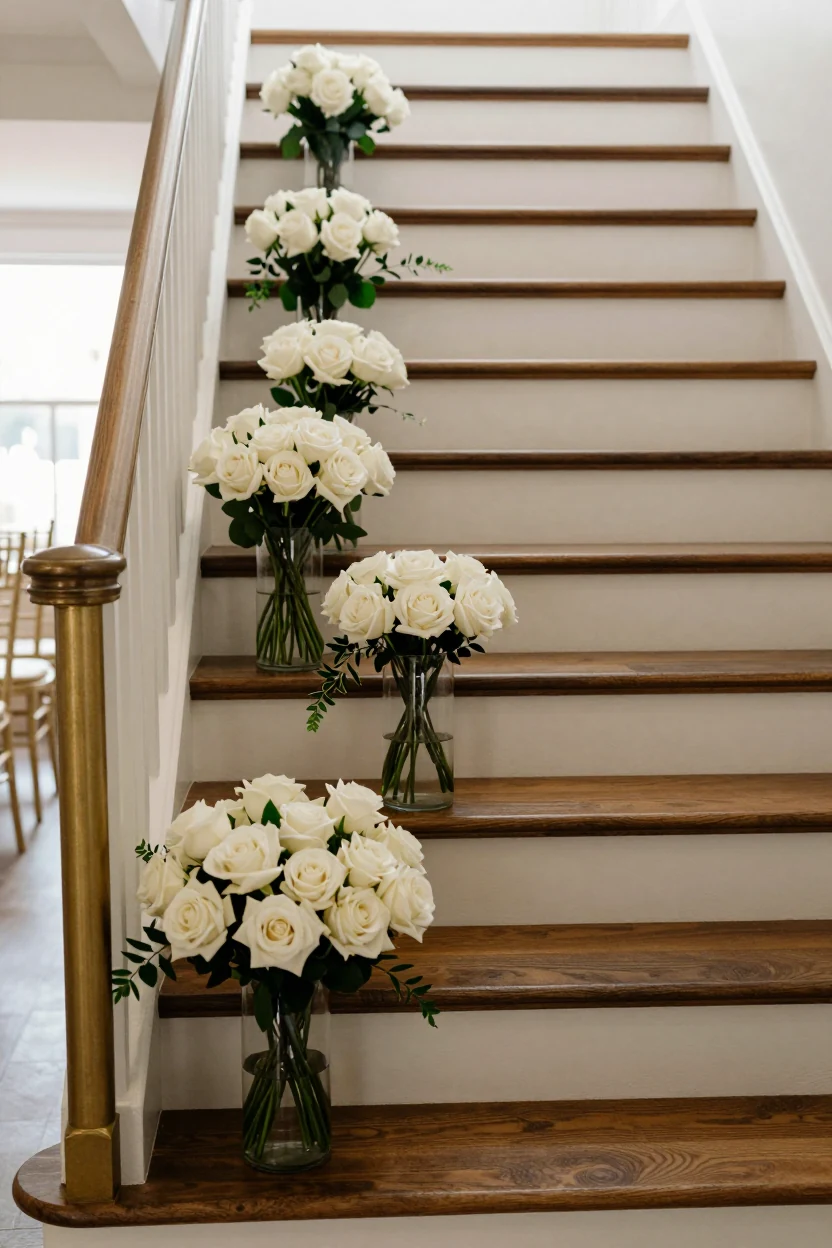
This setup transforms a standard interior staircase into a dynamic floral installation by placing a series of vases on alternating treads. The arrangement uses a descending scale, starting with taller, fuller compositions at the base and transitioning to smaller, simpler stems near the landing. This creates a visual line that guides the eye upward, adding vertical interest without obstructing guest circulation. Select clear glass cylinders or weighted ceramic vessels to ensure stability on the sloped surface. A palette of ivory garden roses, soft blush lisianthus, and trailing eucalyptus provides a romantic contrast against dark wood or stone steps. The arrangement should remain compact enough to preserve the handrail and maintain safe footing for guests. This concept works particularly well for ceremonies held in venues with architectural staircases, such as historic manors or modern lofts. It serves as both aisle decor and a backdrop element, eliminating the need for a traditional arch. For a rustic adaptation, swap glass vases for weathered copper buckets filled with wildflower-inspired stems.
Choosing Your Floral Approach
Selecting the right arrangement depends on how much space you can dedicate to florals and where you want guests to focus their attention. Consider your venue’s ceiling height, table dimensions, and fire safety codes before finalizing a design. A low-profile runner may suit an intimate dinner, while a hanging cloud works best in high-ceiling barns. Adapt these concepts by swapping seasonal blooms or adjusting container heights to fit your specific aesthetic and practical needs.
