15 DIY Wedding Decor Ideas That Look High-End
You don’t need a massive floral budget or a full-time design team to create a visually striking wedding. Many of the most memorable decor elements are achievable with simple materials, a steady hand, and a clear vision. This collection focuses on DIY projects that balance aesthetic impact with practical execution. Whether you are planning a rustic barn reception, a modern loft gathering, or an outdoor garden ceremony, these ideas offer specific styling cues for colors, textures, and layouts. Each concept includes guidance on safety, stability, and placement, ensuring your handmade elements feel intentional rather than makeshift. By adapting these designs to your venue’s architecture and seasonal palette, you can create a cohesive atmosphere that feels both personal and professionally curated.
1. Hanging Jar Chandelier Cluster
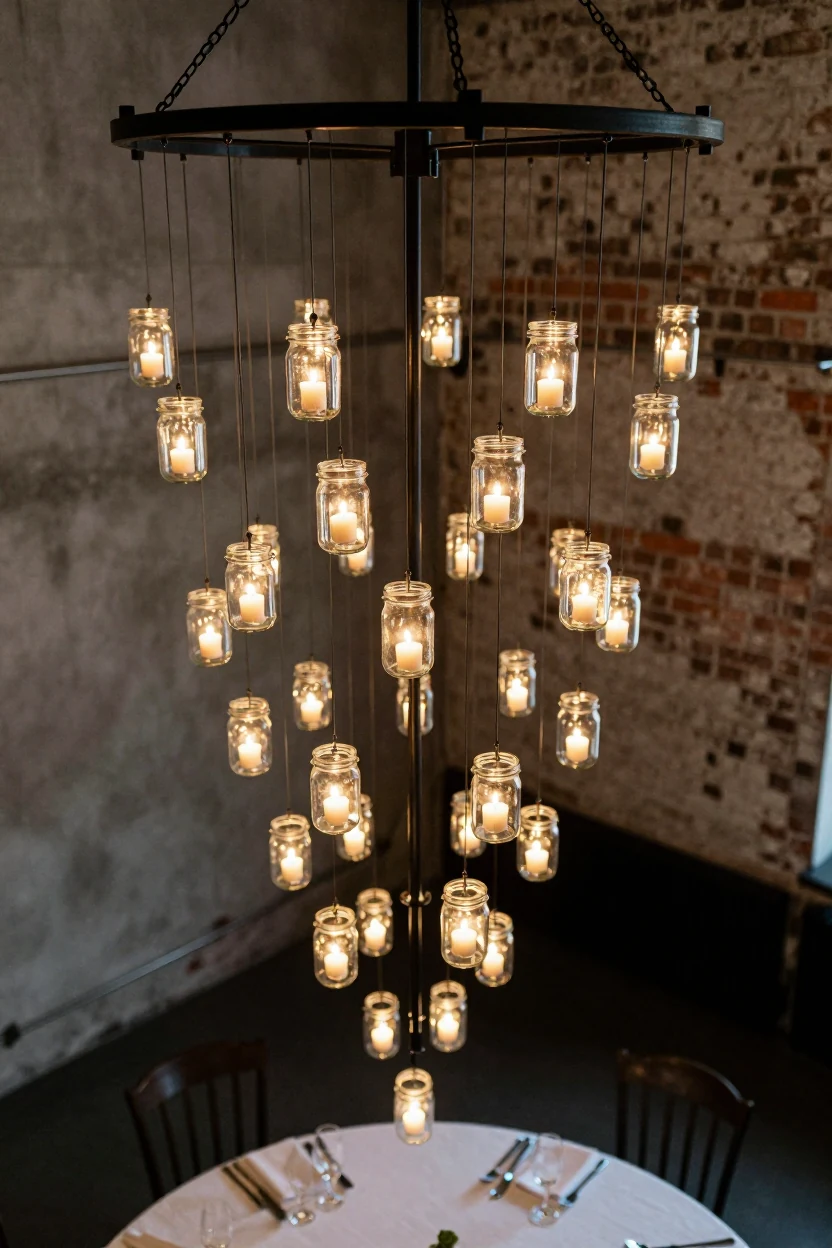
This hanging jar chandelier cluster transforms a standard reception ceiling into a modern focal point by suspending mason jars from a sturdy metal frame. Each clear glass jar holds a single tea light, casting a warm, diffused glow that mimics the softness of traditional crystal fixtures without the bulk. Varying the suspension heights using clear fishing line creates geometric depth, preventing the installation from looking flat or rigid. This setup works exceptionally well in industrial lofts or rustic barns where exposed beams and high ceilings provide the necessary vertical space. The neutral tones of the glass and metal allow the surrounding decor to remain flexible, pairing naturally with white linens, wood accents, or seasonal greenery. For safety, ensure the main frame is securely anchored to a permanent ceiling joist rather than drywall anchors or temporary fixtures. Keep the cluster centered over the dance floor or sweetheart table, maintaining at least seven feet of clearance above guest heads to prevent accidental contact. This DIY approach offers a custom lighting feature that feels designed and intentional rather than generic.
2. Macrame Wall Art Ceremony Backdrop
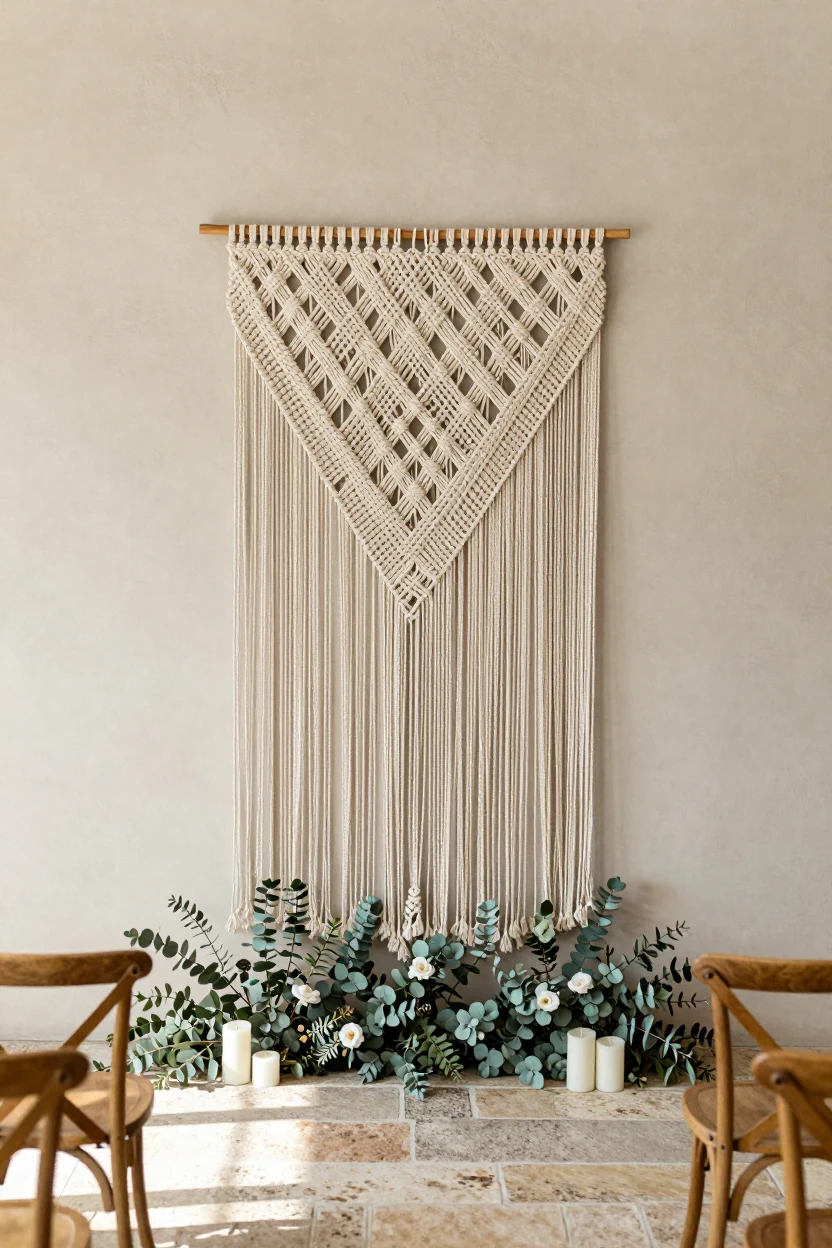
A large, custom-knotted macrame panel serves as a textured focal point against the ceremony wall. The natural fiber weave creates an organic, neutral backdrop that contrasts beautifully with soft greenery and candlelight at the base. This setup works well for outdoor or rustic indoor venues, providing warmth without the need for elaborate floral installations. The panel’s earthy tones complement simple wooden chairs and potted plants arranged along the aisle. For a cohesive look, pair the macrame with linen fabrics in cream or sage and minimal white candles. Ensure the panel is securely mounted to a stable surface, keeping the area behind it clear for emergency access. This DIY-friendly concept allows for personalization through knot patterns and fiber colors, making it a versatile choice for bohemian or modern rustic weddings. The soft texture diffuses natural light, creating an inviting atmosphere that feels both grounded and elegant.
3. Painted Terracotta Pot Centerpieces
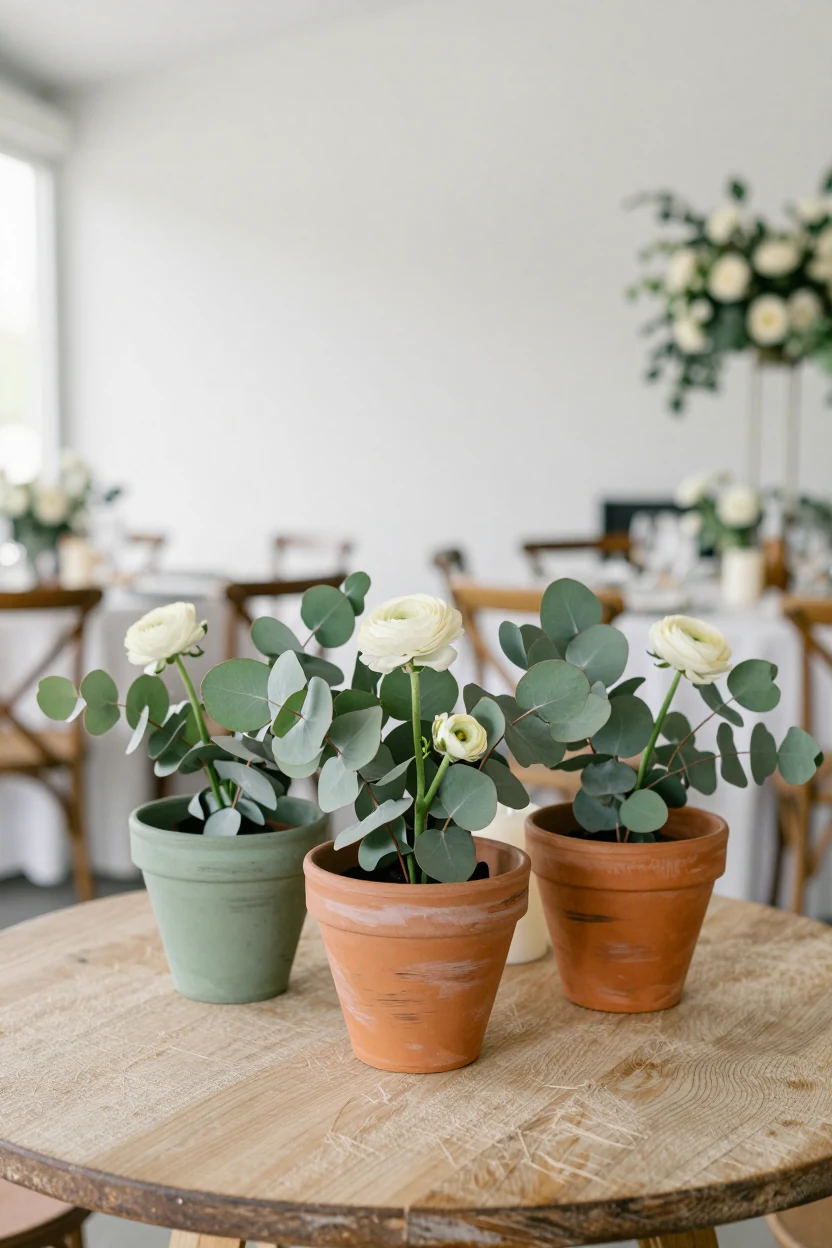
Standard terracotta pots offer a rustic base that responds well to matte acrylic paint. Apply two coats in monochromatic shades like sage, terracotta, or slate gray, using dry-brush techniques for abstract texture. Once cured, fill the pots with a dense mound of eucalyptus or olive branches to hide the soil line. Insert a small cluster of seasonal blooms, such as ranunculus or garden roses, positioned slightly off-center for a natural, asymmetrical look. This mixed-media approach reduces floral volume while maintaining visual weight. Place three painted pots in a triangular arrangement on a 60-inch round table draped in unbleached linen. Add a single pillar candle between the pots to provide vertical interest without blocking sightlines. The earthy tones create a cohesive, grounded aesthetic suitable for fall or spring receptions.
4. Ladder and Loom Table Runner
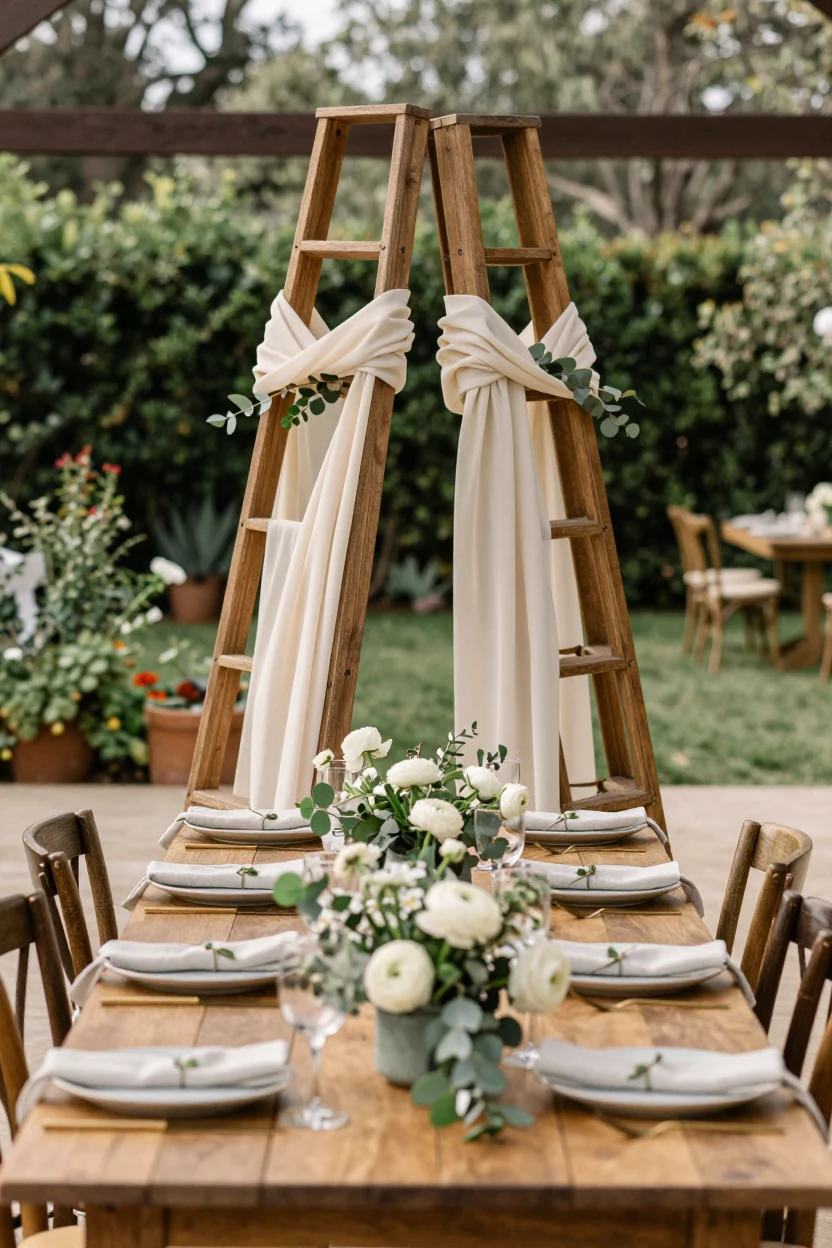
Lean two wooden ladders against the long rectangular table to create a vertical backdrop that adds height without blocking guest sightlines. Wrap eucalyptus stems and sheer chiffon ribbons loosely around the ladder rungs, allowing fabric tails to drape naturally down the table’s sides. This setup works well for farmhouse or garden weddings where natural textures are central. Pair the ladders with low-profile centerpieces of white ranunculus and greenery to keep the visual focus on the vertical structure. Use warm-toned linen tablecloths and matte ceramic dinnerware to enhance the rustic elegance. The ladder frames the table’s end, creating a defined anchor point for the reception layout. Ensure the ladders are secured with heavy-duty brackets or weighted bases if placed on hard surfaces to prevent tipping. This arrangement provides a textured, organic look that contrasts nicely with smooth porcelain plates and simple taper candles in glass holders.
5. Vintage Mirror Table Reflections
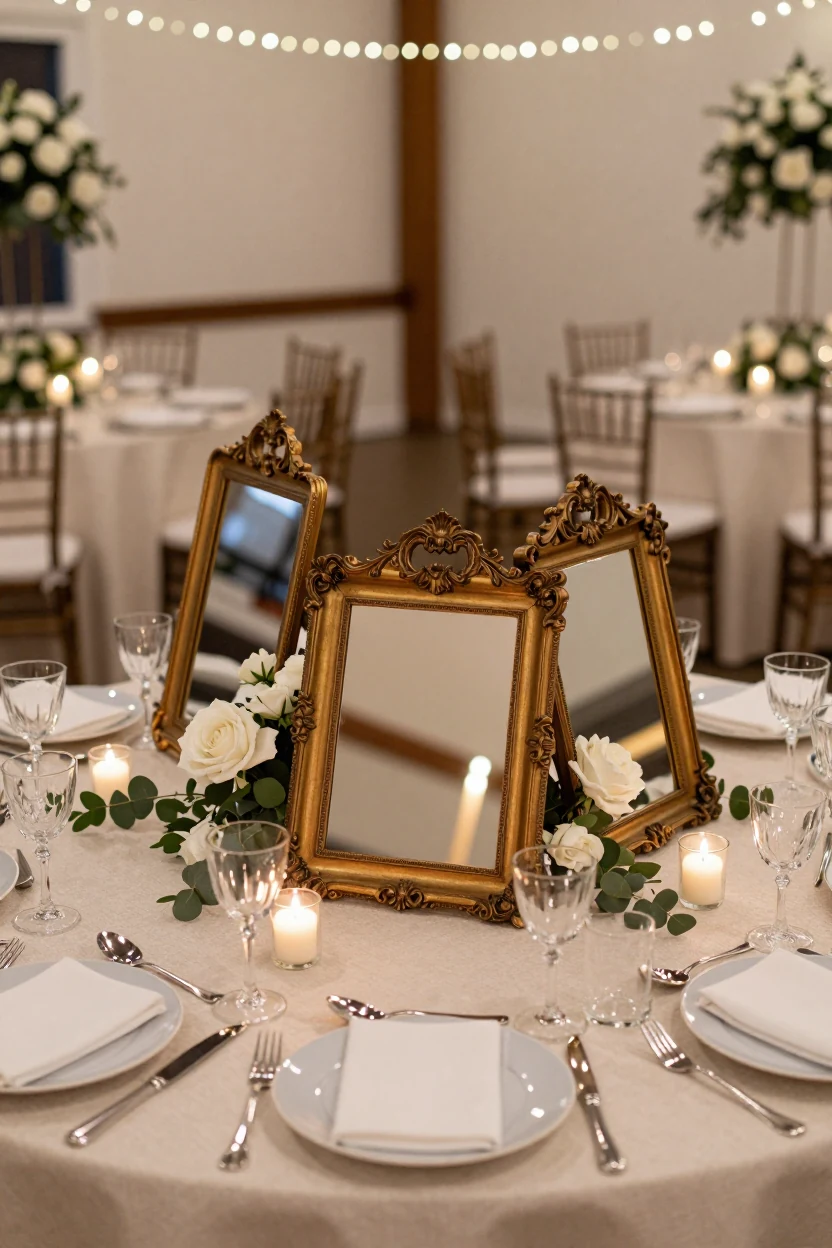
Scatter three to five vintage-style mirrors across the center of a round reception table, leaning them against low floral arrangements and clusters of lit taper candles. This arrangement creates layered reflections that multiply the warm glow of the flames and bounce light from surrounding blooms into the room. Choose mirrors with ornate gold or silver frames to add texture, or use simple silver-backed glass for a modern edge. Ensure each mirror is weighted securely at the base with sandbags or heavy stands so they remain stable during service and guest movement. Pair this setup with cream linen, polished silver flatware, and white dinnerware to keep the focus on the reflective surfaces. The visual effect is glamorous yet grounded, turning a standard table into a dynamic focal point without requiring large floral installations or expensive structural builds.
6. Paper Lantern Aisle Markers
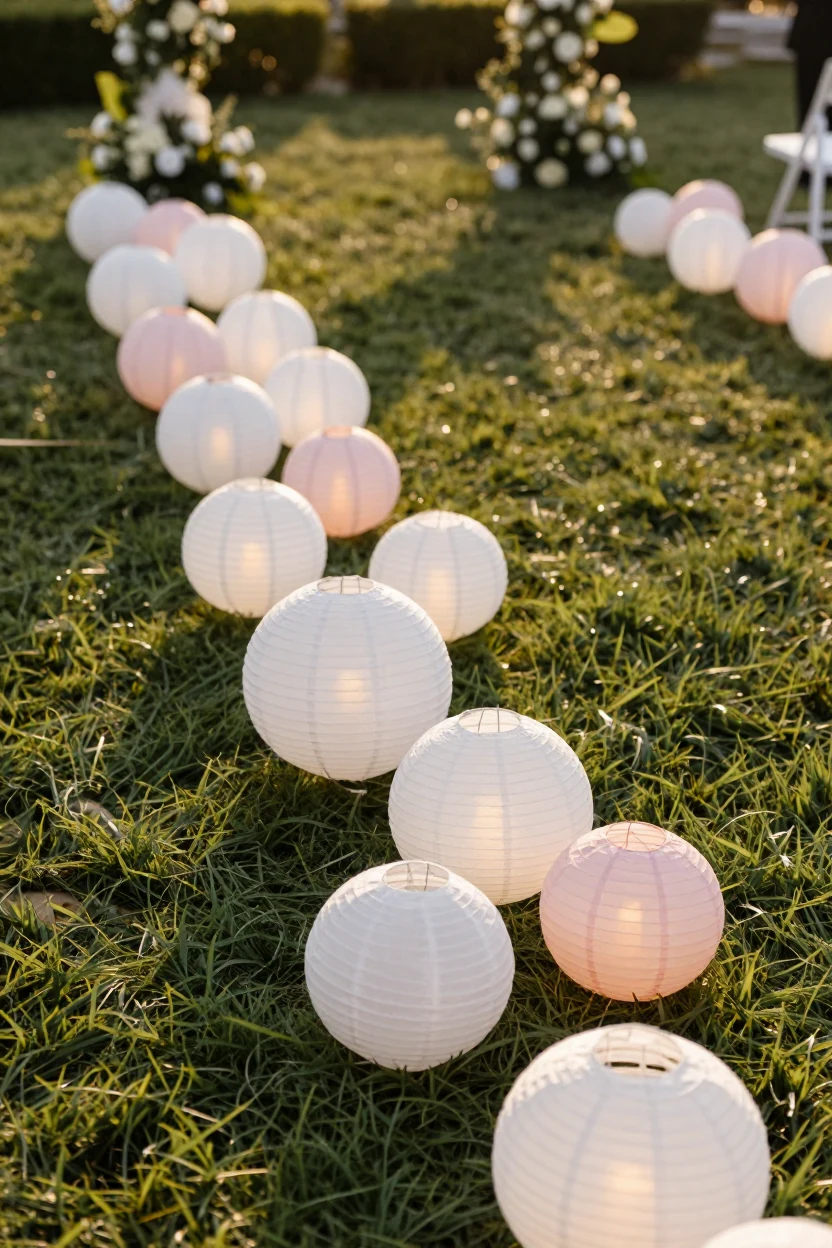
Transform a standard outdoor aisle into a glowing pathway by placing clusters of paper lanterns directly on the grass. Group three to five lanterns together, varying their diameters from six to twelve inches, and alternate between warm white and soft blush tones for subtle depth. This arrangement creates a low-profile marker that guides guests without obstructing sightlines or blocking the walkway. The lightweight material allows for easy placement and removal, making it ideal for lawns, gravel paths, or paved courtyards. As evening falls, the internal LED candles provide a consistent, flicker-free glow that enhances the romantic atmosphere without the safety risks of open flames. This setup works particularly well for late summer or early autumn weddings when natural light fades earlier. To adapt the look, swap pastel lanterns for metallic gold or silver spheres to match a more formal reception aesthetic, or use clear glass globe lanterns with battery-operated tea lights for a modern, industrial touch.
7. Driftwood and Stone Signage

This directional signage setup pairs the rugged texture of weathered driftwood with the smooth, cool surface of river stones to create a grounded, organic aesthetic. Mount small, rectangular wooden planks onto sturdy, naturally shaped branches using hidden screws or wire loops. Alternatively, stack flat, smooth stones in a stable pyramid shape and rest a small wooden marker on top. Use a stencil or high-quality paper transfer to apply clean, modern typography in charcoal or cream directly onto the wood. Place these markers at key decision points, such as the entrance to the ceremony space or the transition to the reception. The irregular shapes of the wood contrast sharply with the straight lines of the text, creating visual interest without clutter. This concept works best for beach, garden, or park venues where natural elements are abundant. Ensure all stone stacks are wide enough at the base to remain stable on uneven ground and do not obstruct foot traffic.
8. Neon Name Signage
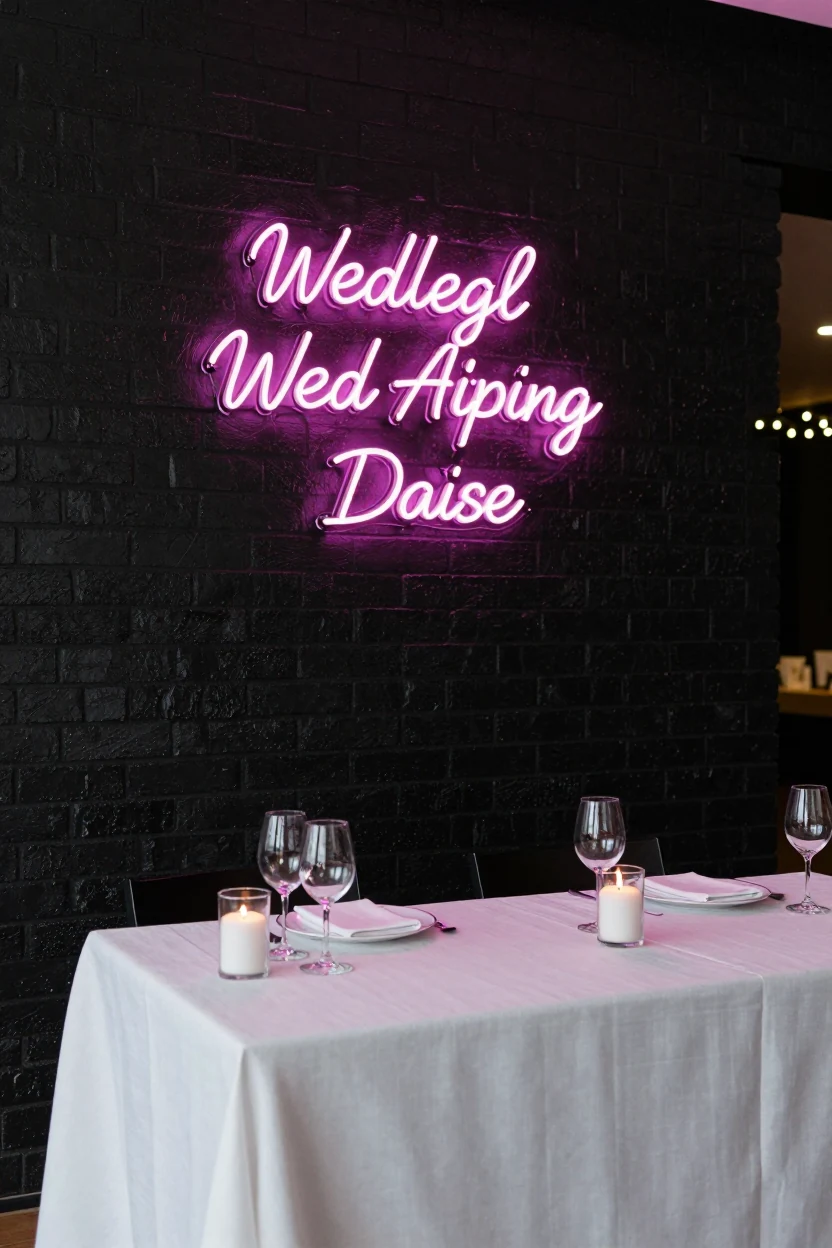
A glowing neon sign spelling out the couple's names serves as the visual anchor for a modern reception space. The warm pink and white light contrasts sharply with the dark, textured backdrop of a brick wall or black-painted wooden paneling. Below the signage, the head table features crisp white linens and simple glassware, keeping the focus on the illuminated text rather than cluttered centerpieces. This setup works well in venues with existing architectural character, such as lofts, warehouses, or renovated barns, where the sign can lean against a wall or mount securely to a stable structure. The light source provides ambient illumination for late-night dancing, reducing the need for overhead spotlights that might wash out the mood. For a softer look, choose a frosted glass finish on the neon tubes to diffuse the brightness. This piece functions as both art and utility, creating a memorable photo spot for the wedding party without requiring extensive floral installations or complex structural builds.
9. Pallet Wood Floor Accent
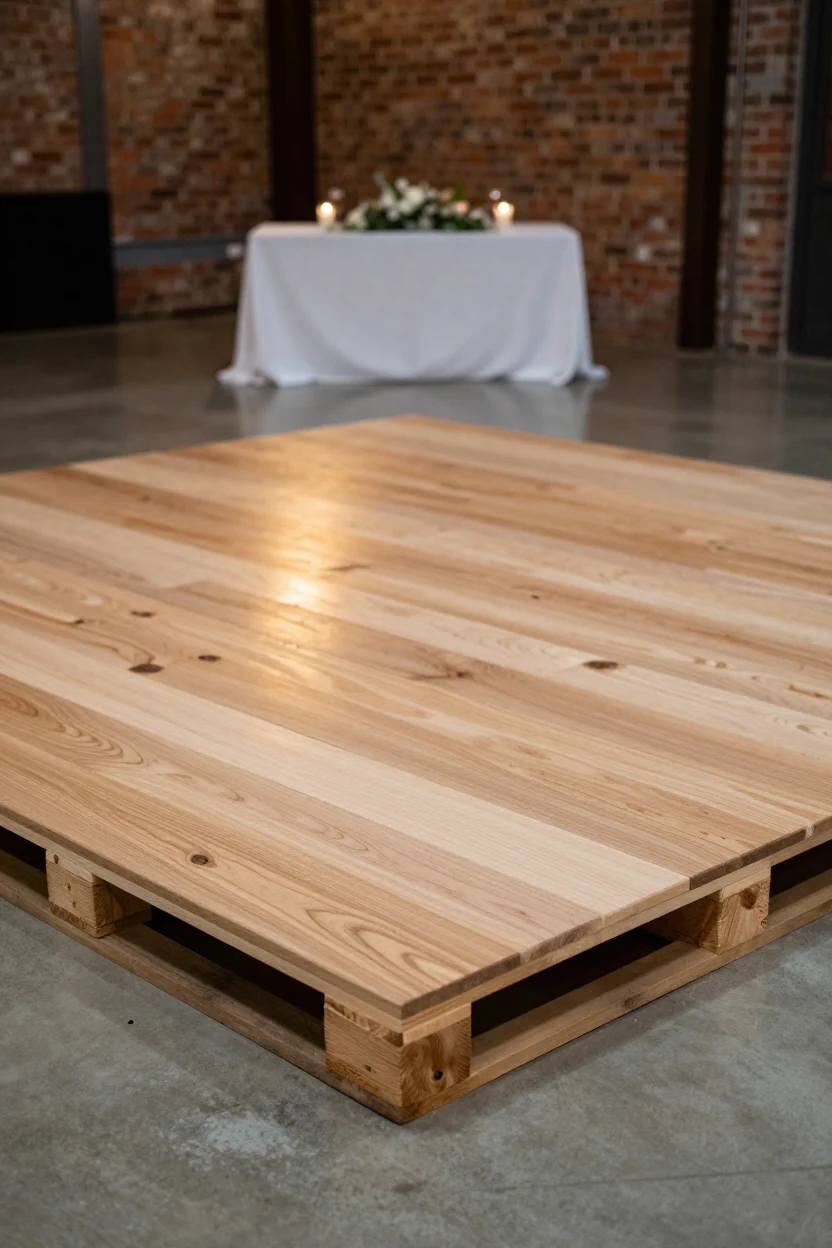
Transform a plain dance floor into a textural focal point by installing a rectangular section of reclaimed pallet wood. This DIY accent works best in industrial, warehouse, or barn venues where raw materials complement the architecture. Sand the planks thoroughly to remove splinters and apply a clear, water-based sealant for durability underfoot. Arrange the boards in a herringbone or straight pattern to create visual rhythm against smooth concrete or polished stone surroundings. Keep the finish natural or lightly whitewashed to maintain a rustic aesthetic without overpowering the room's lighting. Surround the wooden square with low-profile string lights or uplighting to highlight the grain texture during evening receptions. This setup adds warmth and character without requiring permanent structural changes. It is particularly effective when paired with linen drapery on adjacent walls or simple floral arrangements at the head table, ensuring the wood remains the primary visual anchor for the celebration space.
10. Hanging Plant Garland
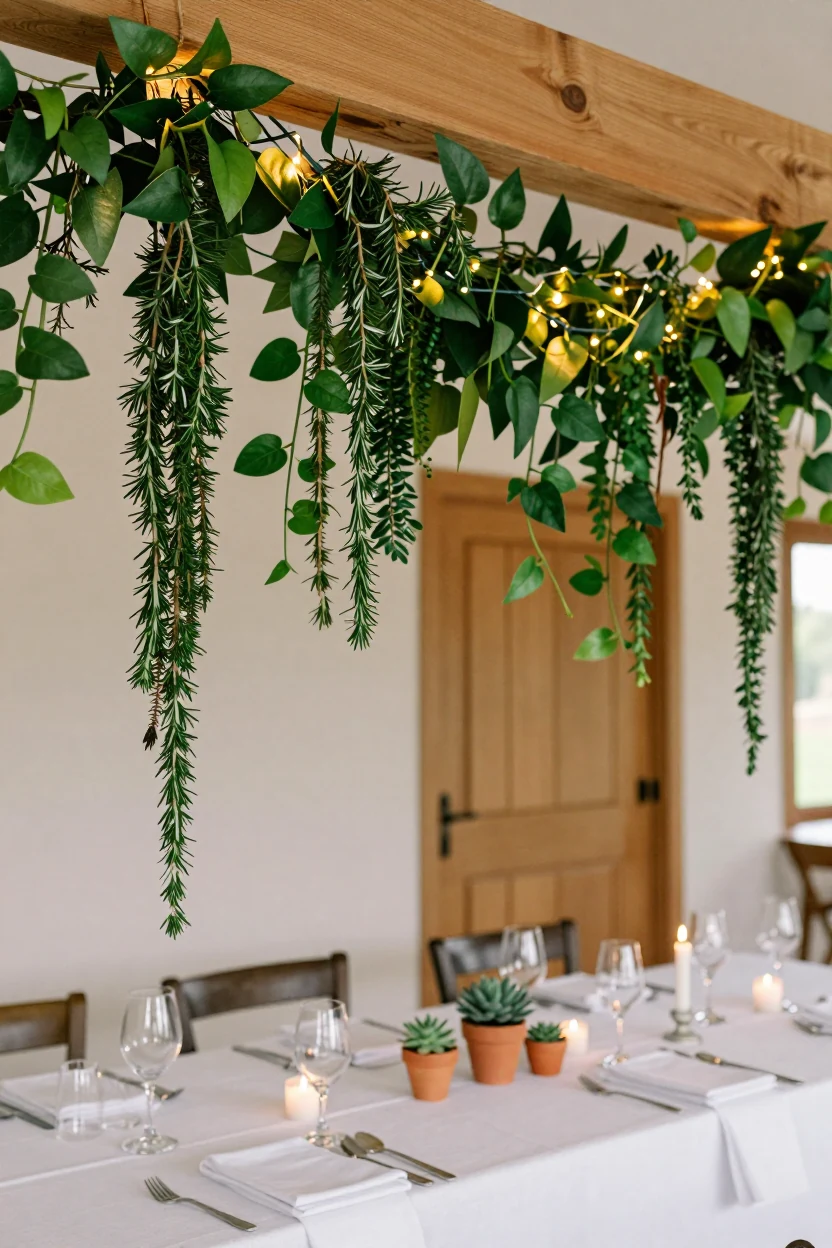
Suspend a cascading garland of trailing pothos, rosemary, and small terracotta pots from the ceiling frame above the head table. This living installation introduces vertical texture and organic movement, contrasting with the rigid geometry of the room. The plants should be securely weighted in their containers to prevent shifting or falling during the reception. Pair the greenery with warm Edison bulb string lights woven through the foliage to cast a soft, amber glow on the guests below. This setup works well for rustic, garden, or bohemian themes, adding freshness without requiring a massive floral budget. Keep the garland low enough to feel intimate but high enough to maintain clear sightlines and safe headroom for dancing. The natural materials create a grounded, earthy atmosphere that complements simple linen table settings and wooden furniture.
11. Chalkboard Menu and Seating Charts
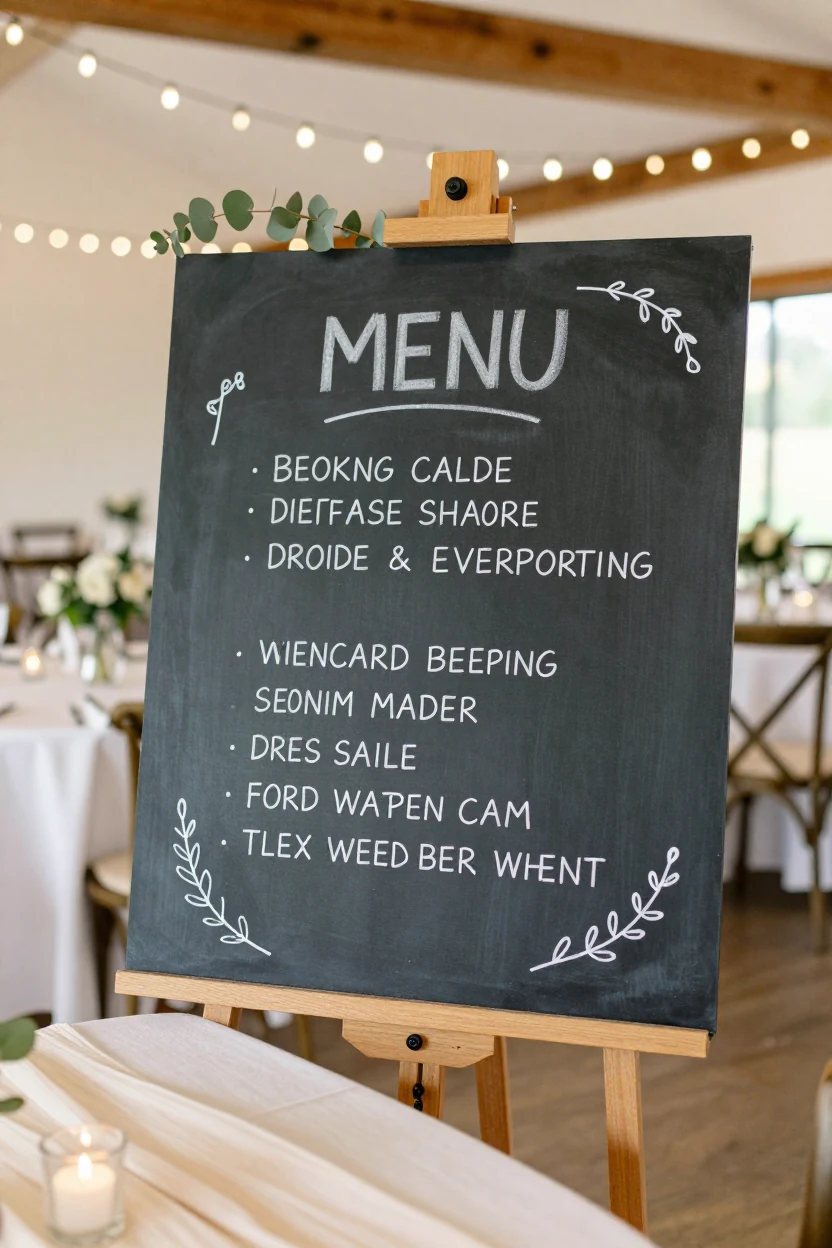
Transform standard signage into a visual anchor by using large, unframed chalkboards for your menu and seating charts. The deep matte black surface creates immediate contrast against crisp white or soft pastels chalk, ensuring legibility while adding an artisanal, handcrafted feel that feels more personal than printed acrylic. Use this setup at the head of the reception table or near the entrance to guide guests without cluttering the space. For a cohesive look, pair the boards with simple wooden easels or lean them against rustic beams in barn or loft venues. Add small sprigs of eucalyptus or dried wheat tucked behind the boards to soften the rigid edges. This approach works well for casual or semi-formal weddings where you want functional information to double as decorative elements without the expense of custom engraved metal signs.
12. Fabric Drape Ceiling Swag
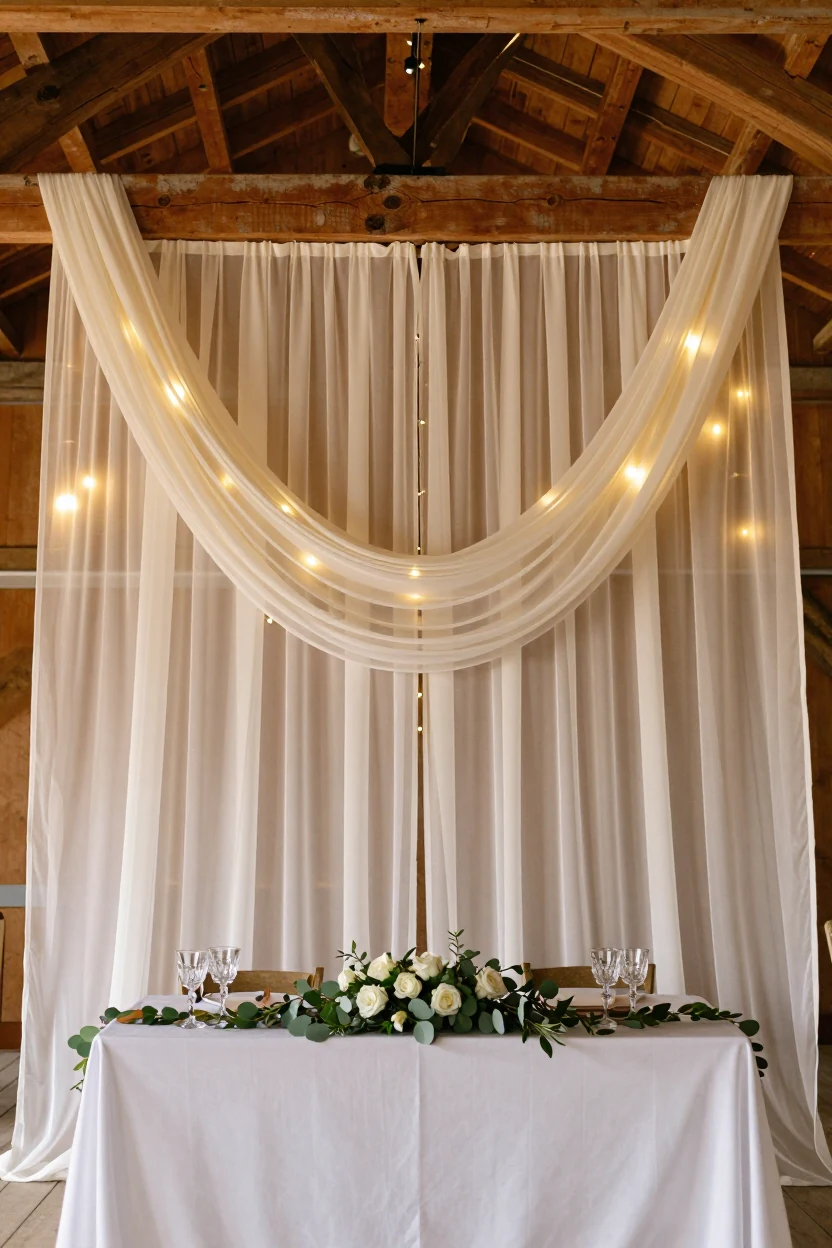
A sheer organza drape cascades from the ceiling beams above a long rectangular head table, creating a soft, ethereal canopy that diffuses overhead lighting. The fabric, in a warm ivory tone, hangs loosely to soften hard architectural lines while allowing ambient string lights to glow gently through the material. Below, a crisp white linen runner anchors the table setting, paired with clear glassware and low-profile floral centerpieces featuring eucalyptus and white roses. This setup works best in venues with high ceilings or exposed beams, where the drape can span at least eight feet to create a defined focal point. Ensure all draping hardware is securely anchored by professionals, as overhead structures must support significant weight. For a modern twist, layer two tones of fabric, such as blush and champagne, for subtle depth without adding extra floral costs.
13. Recycled Glass Bottle Centerpieces
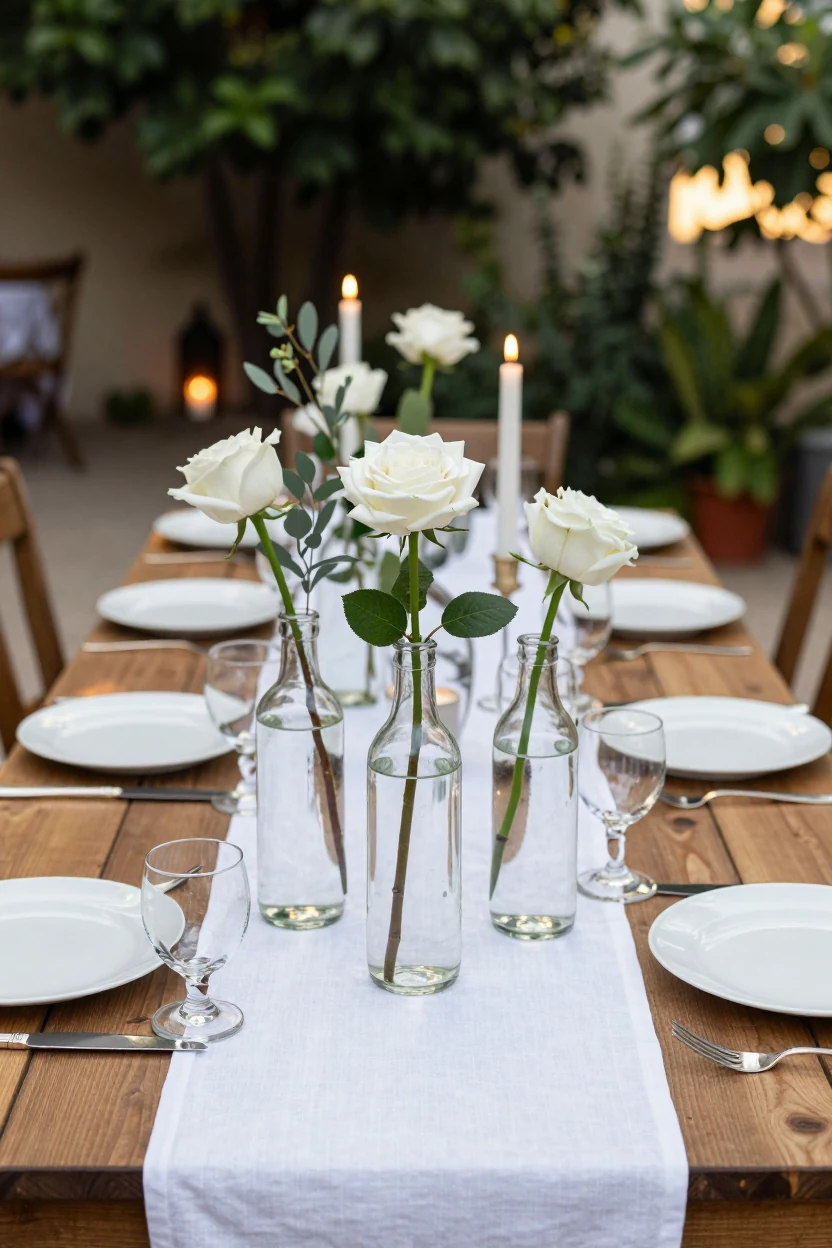
Transform empty glass jars into a layered centerpiece by cleaning them thoroughly and removing labels. Arrange five to seven bottles of varying heights in a loose cluster down the center of a rectangular table. Insert single stems of seasonal flowers or sprigs of eucalyptus into each vessel. The transparency of the glass allows natural light to refract through the water and stems, creating subtle color shifts across the linen. This setup works well for rustic barns, garden patios, or modern lofts where a casual, collected-over-time aesthetic is desired. Pair the bottles with simple white ceramic plates and unlit taper candles in brass holders to maintain visual balance without overcrowding the table. The staggered heights ensure sightlines remain open for guests facing each other. This approach minimizes floral waste while adding texture and depth to the reception tables.
14. Wooden Crate Stack Tables
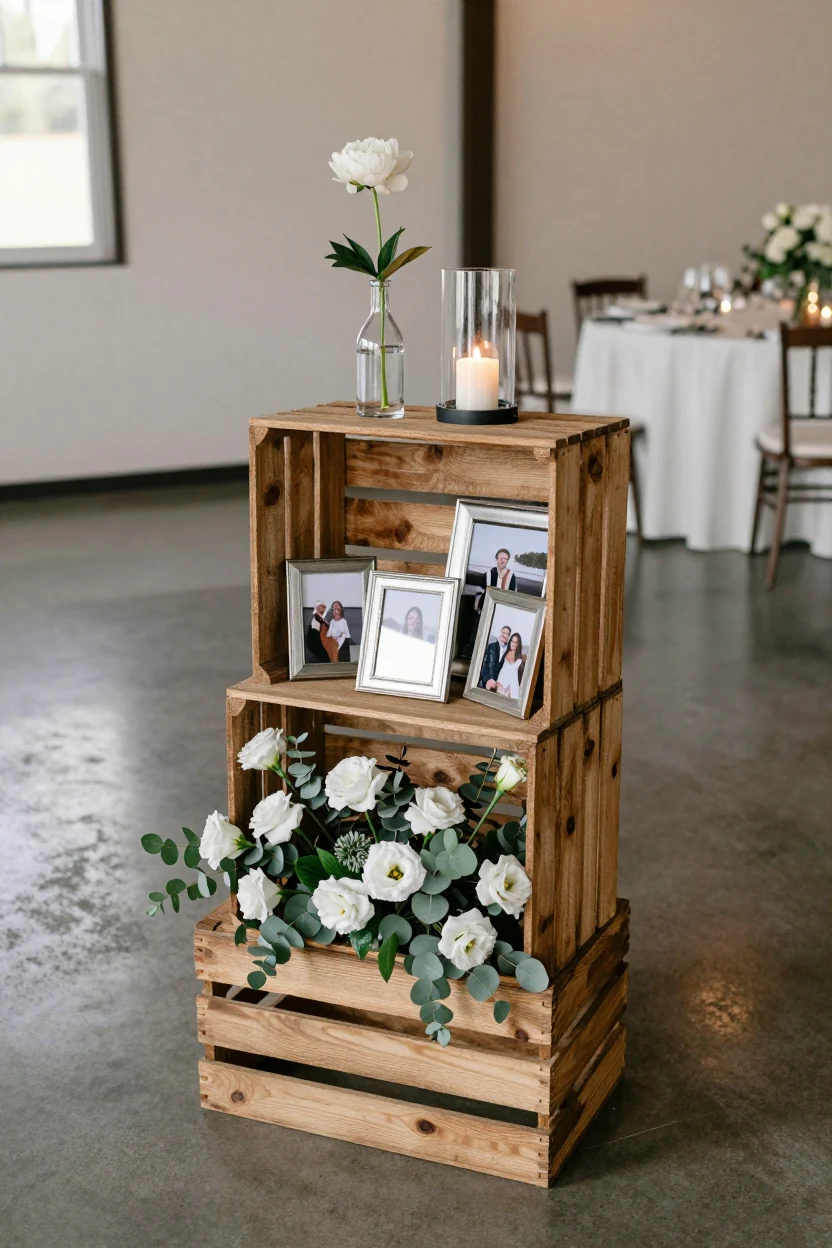
Convert flat side tables into vertical display structures by stacking sturdy wooden crates in staggered tiers. This modular approach adds depth to buffet stations, photo walls, or entrance displays without requiring permanent construction. The setup works best in rustic, garden, or barn venues where natural wood textures complement the surrounding architecture. Use three to five crates of varying heights, securing them with hidden brackets if the surface is uneven. Layer the tiers with distinct focal points: place a large vase of white hydrangeas on the lowest level for stability, cluster small framed engagement photos on the middle tier, and reserve the top crate for a collection of small glass votives or a single statement floral piece. Keep the color palette neutral—natural oak, cream linens, and sage green florals—to allow the wood grain to remain the primary visual texture. This arrangement guides the eye upward, creating a structured focal point that feels curated rather than cluttered. For indoor spaces, ensure crates are sanded smooth to prevent snagging on clothing.
15. String Light Canopy
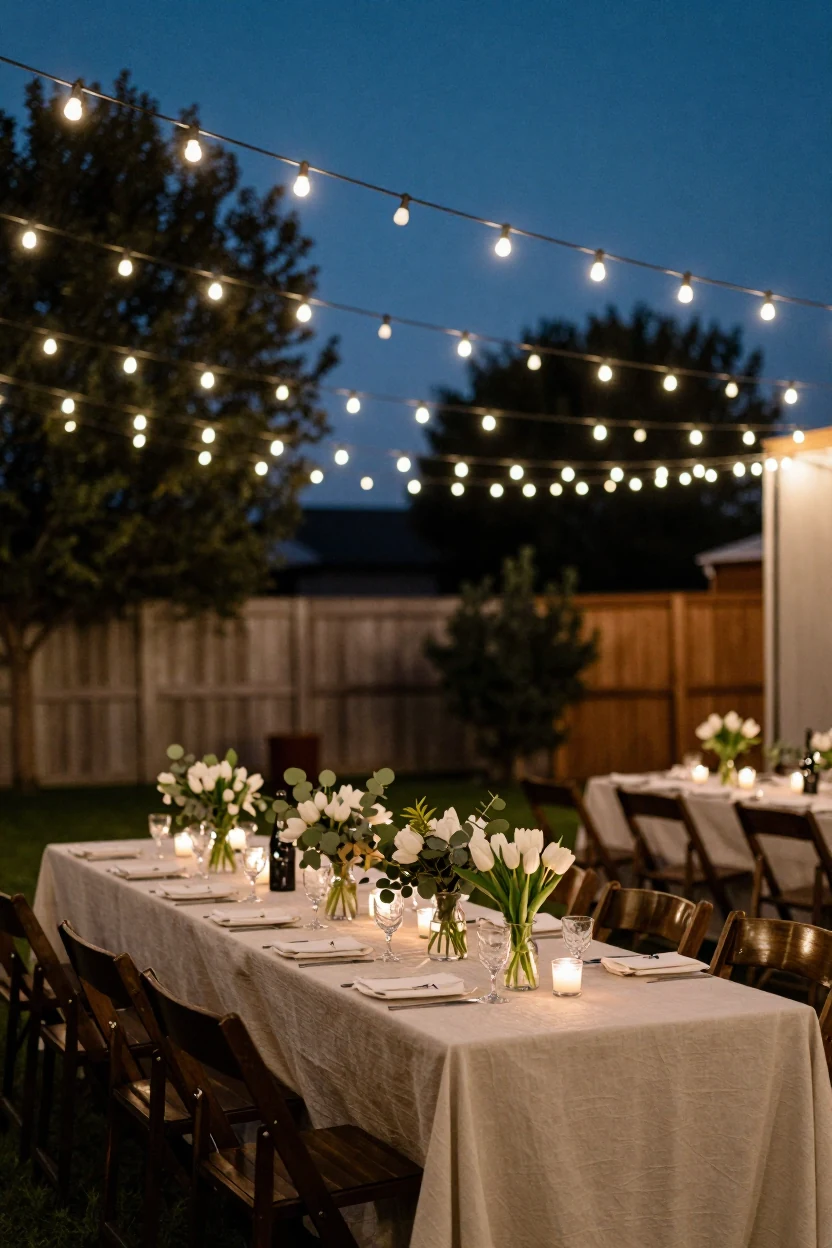
Transform an outdoor patio into a warm gathering space by suspending a grid of weather-resistant string lights above the dining area. This canopy creates a soft, amber glow that replaces harsh overhead fixtures, making the evening feel intimate without requiring heavy structural changes. The setup works best when the lights are spaced evenly to avoid dark spots between strands. Pair this lighting with neutral linen tablecloths and low-profile centerpieces to keep sightlines clear for guests looking up at the display. Use G60 bulbs for a classic look or Edison-style filaments for a vintage feel. Ensure all connections use outdoor-rated plugs and are properly grounded, checking local fire codes before installation. This method is ideal for backyard receptions where power sources are accessible but permanent lighting is limited.
Choosing Your DIY Decor Strategy
Selecting the right DIY projects depends on your venue’s structural capabilities and your comfort level with setup complexity. Start by identifying one or two focal points, such as a hanging light installation or a textured backdrop, rather than attempting to decorate every surface. Consider the season for material durability and the scale of your guest list for sightline management. If you are not comfortable with electrical work or heavy lifting, prioritize non-structural items like painted ceramics or fabric draping. The goal is to create a cohesive look where handmade elements complement, rather than compete with, the venue’s natural character.
