13 Winter Cabin Wedding Ideas for Cozy, Rustic Elegance
Planning a winter wedding in a cabin venue offers unique opportunities to leverage natural architecture and cozy textures. These thirteen ideas focus on practical styling choices that enhance the inherent warmth of a log or timber structure without requiring excessive decoration. Whether you prefer a minimalist white palette, a deep navy evening setup, or a fully rustic botanical theme, these concepts prioritize guest comfort and visual clarity. Each suggestion accounts for realistic spatial constraints, such as low ceilings or open-concept layouts, ensuring the design feels integrated rather than imposed. Use these ideas as a starting point to adapt your venue’s specific features into a cohesive, inviting celebration.
1. The A-Frame Ceremony Arch
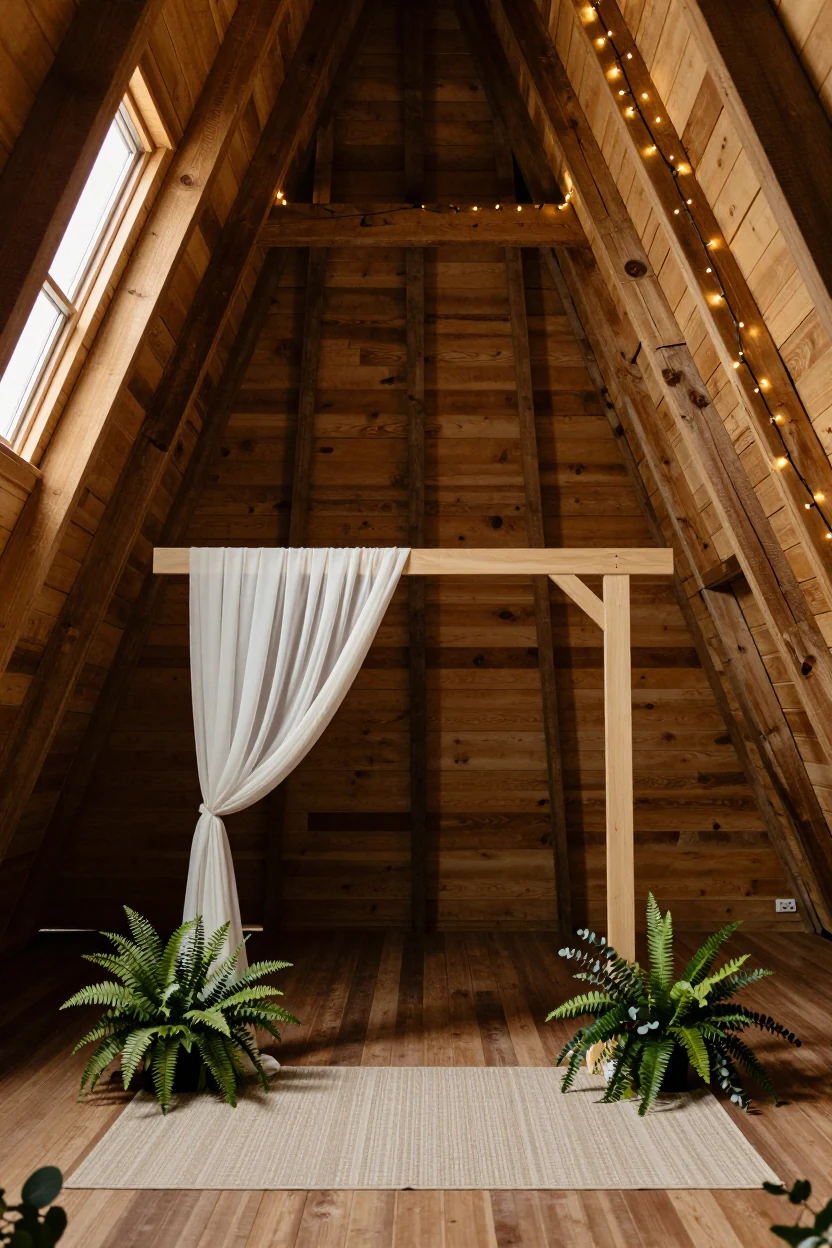
Transform the cabin’s distinctive peaked ceiling into a natural ceremony backdrop by positioning a simple wooden arch directly beneath the apex. This setup leverages the existing architecture, eliminating the need for large, standalone structures that might obstruct sightlines or feel out of scale in an intimate interior space. Drape sheer ivory fabric from the roof peak down to the floor on one side, creating a soft, asymmetrical curtain that diffuses light and tempers the raw wood beams. Anchor the arch’s base with substantial potted ferns and eucalyptus to ground the structure visually without blocking emergency exits or guest circulation. Warm string lights tracing the roofline enhance the cozy atmosphere, offering a gentle glow that complements natural daylight during the day or provides ambient illumination for evening vows. This approach works particularly well in compact living spaces where furniture can be cleared to create a clear aisle. For adaptation, consider using weighted floor stands if drilling into cabin walls is prohibited, and ensure all lighting fixtures are rated for indoor use with proper heat management near the fabric.
2. Candlelit Forest Tablescape
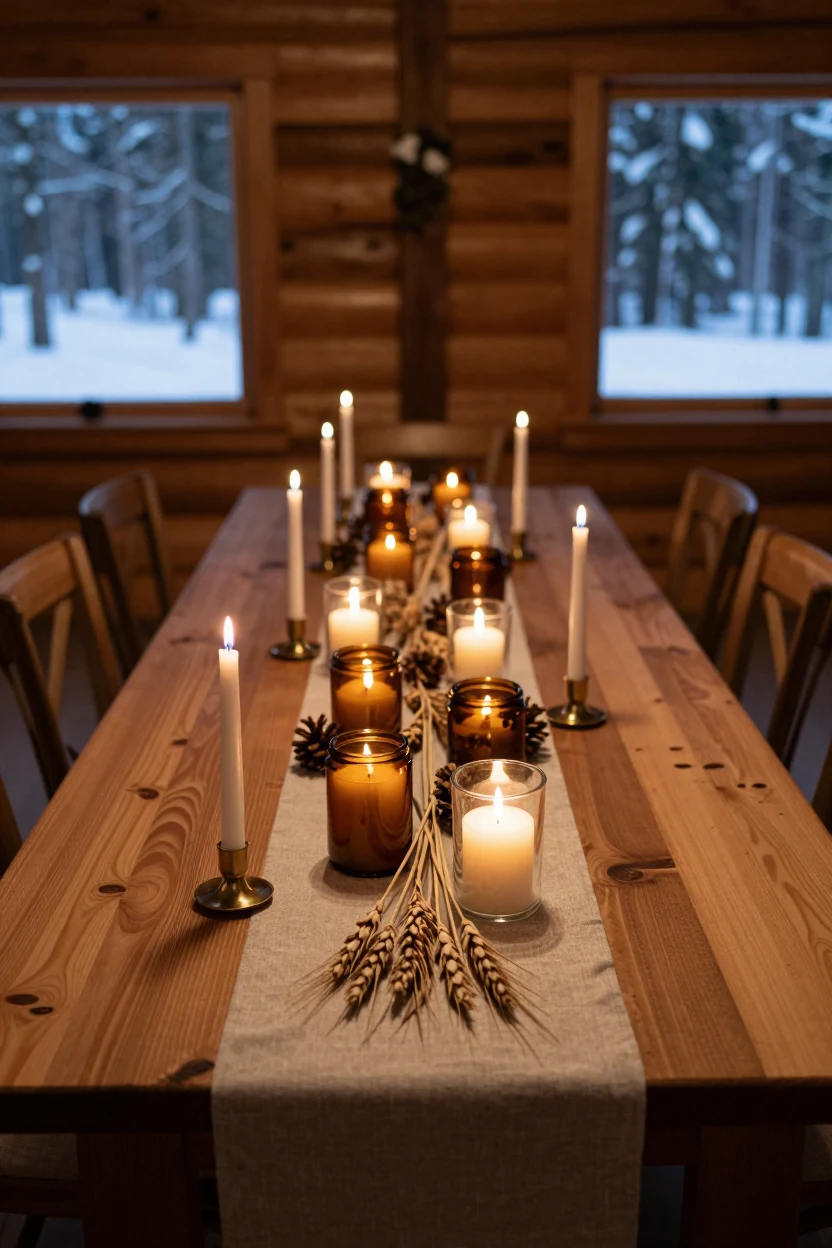
This communal dining setup transforms a rustic cabin hall into an intimate gathering space by focusing on warm, layered lighting and natural textures. A long table constructed from raw wood planks serves as the anchor, dressed with neutral linen runners that soften the grain without hiding it. Instead of tall floral arrangements, the centerpiece consists of dense clusters of pillar candles in amber and clear glass vessels of varying heights. These are interspersed with sprigs of dried wheat and pinecones to maintain a low profile, ensuring guests can see each other across the table. White taper candles in brass holders provide vertical interest at the periphery without obstructing sightlines. The low-light environment casts a golden glow on diners' faces, creating a cozy atmosphere suitable for evening receptions. This layout works well for smaller groups or long rectangular tables where conversation is prioritized over grand floral displays. To adapt this concept, ensure all candles are in stable glass containers and maintain clear pathways around the table for serving and movement.
3. Frosted Window Panes Display
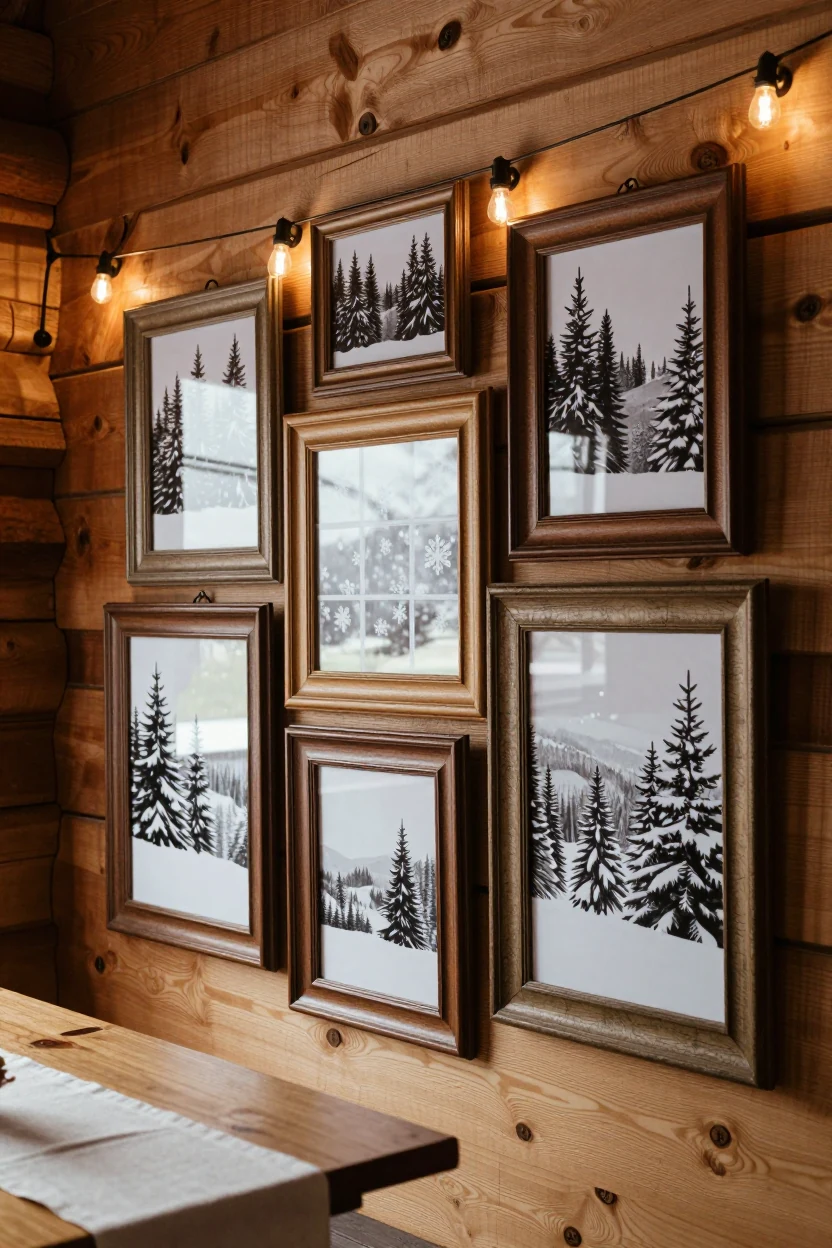
Lean large, antique-style picture frames against the cabin walls to create a gallery of framed winter views. Inside each frame, place a printed photo of a local winter landscape or a frosted glass pane with hand-painted etching. This non-floral decor adds texture and nostalgia, allowing the natural wood of the cabin to remain the primary visual element while providing subtle, personal background art.
The setup works because it treats the cabin interior as a gallery space rather than a venue requiring heavy decoration. Use frames in varying sizes—some landscape, some portrait—in reclaimed wood or distressed black metal to match the rustic aesthetic. For the inserts, select high-contrast black-and-white prints of pine forests or snowy fields to maintain a monochromatic calm. Alternatively, use frosted glass panels with delicate etched snowflake patterns that catch the light from nearby string lights.
Arrange the frames in a loose, asymmetrical cluster near the entrance or along the main wall behind the head table. Ensure the bottom of each frame rests on a sturdy base or is secured with hidden brackets to prevent tipping. Keep the surrounding area clear of bulky furniture so guests can appreciate the depth and scale of the display without obstruction.
4. The Snow-White Minimalist Altar
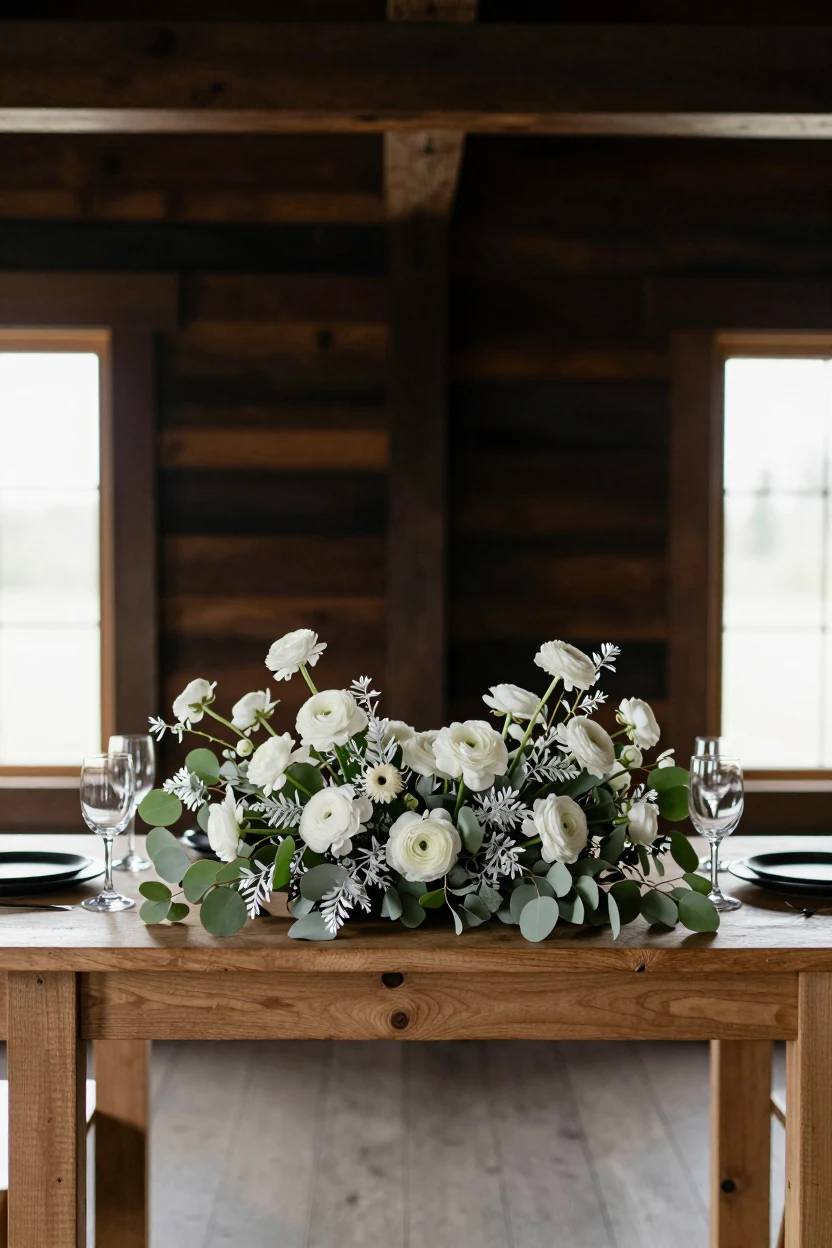
Set a simple wooden table against dark reclaimed wood beams to create high contrast. Place a low, wide arrangement of white ranunculus or peonies with silver dollar eucalyptus in the center. The monochromatic palette relies on form rather than color, keeping the look modern and clean. Use unadorned glassware and matte black dinnerware to maintain the silhouette focus. This setup works well for small ceremonies or as a focal point in a rustic cabin living room. The stark white florals pop against the deep brown timber, offering a crisp, editorial aesthetic without needing excessive decoration. It is a restrained approach that emphasizes texture and shape over volume.
5. Fireplace Mantel Centerpiece
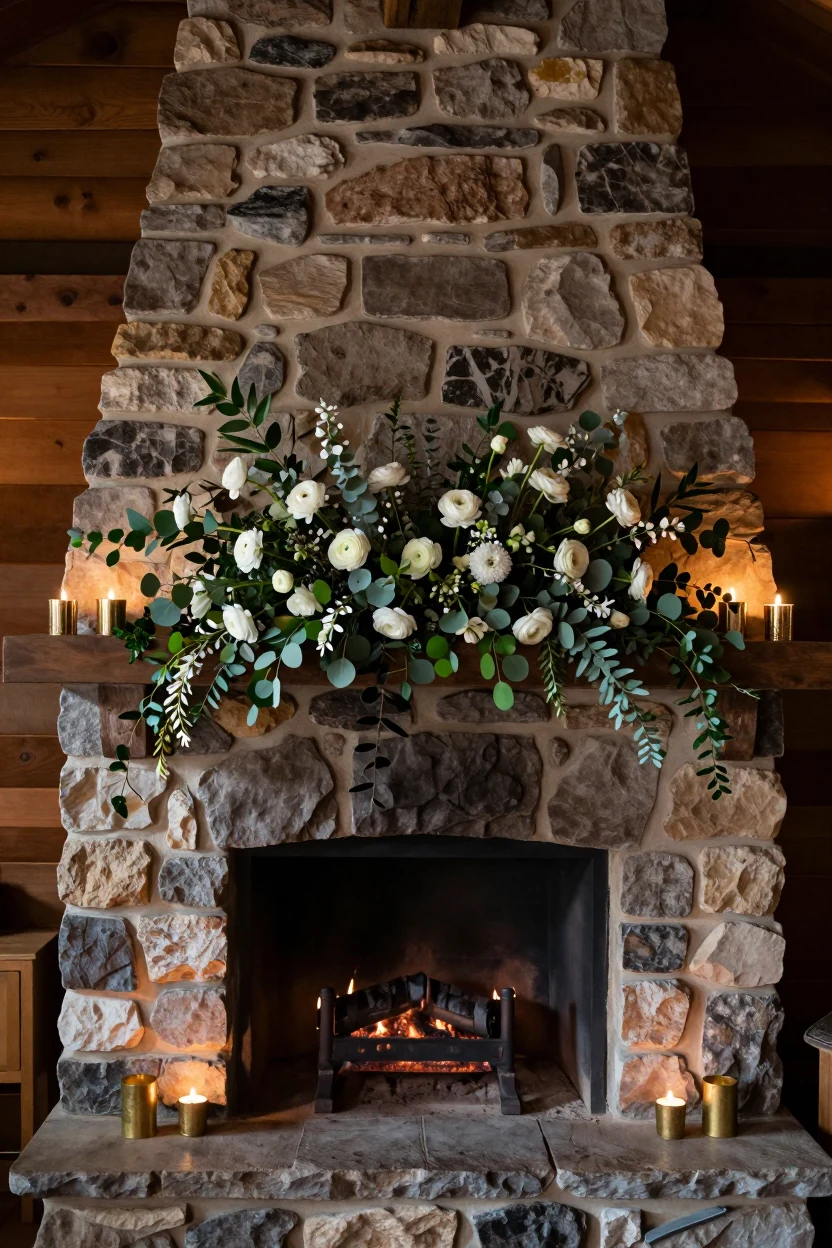
Transform the existing stone hearth into the reception’s primary visual anchor by styling the mantel shelf rather than relying on a traditional sweetheart table. Extend a low, sprawling arrangement of eucalyptus, ivy, and seasonal white ranunculus across the full width of the shelf, allowing trailing stems to cascade naturally over the front edge onto the stone surface below. Intersperse small brass votive holders among the greenery to provide warm, flickering light that complements the fire without obstructing the view. This layout works best when the mantel is wide enough to accommodate a continuous floral line; if your space is narrower, focus on two substantial clusters at the corners with a connecting garland in the center. Keep the arrangement height under eight inches to ensure guests seated nearby can still see across the room. The visual impact comes from the contrast between the rigid stone architecture and the soft, organic drape of the greenery, creating a cozy, grounded atmosphere that feels intimate rather than formal.
6. Midnight Blue and Gold Evening
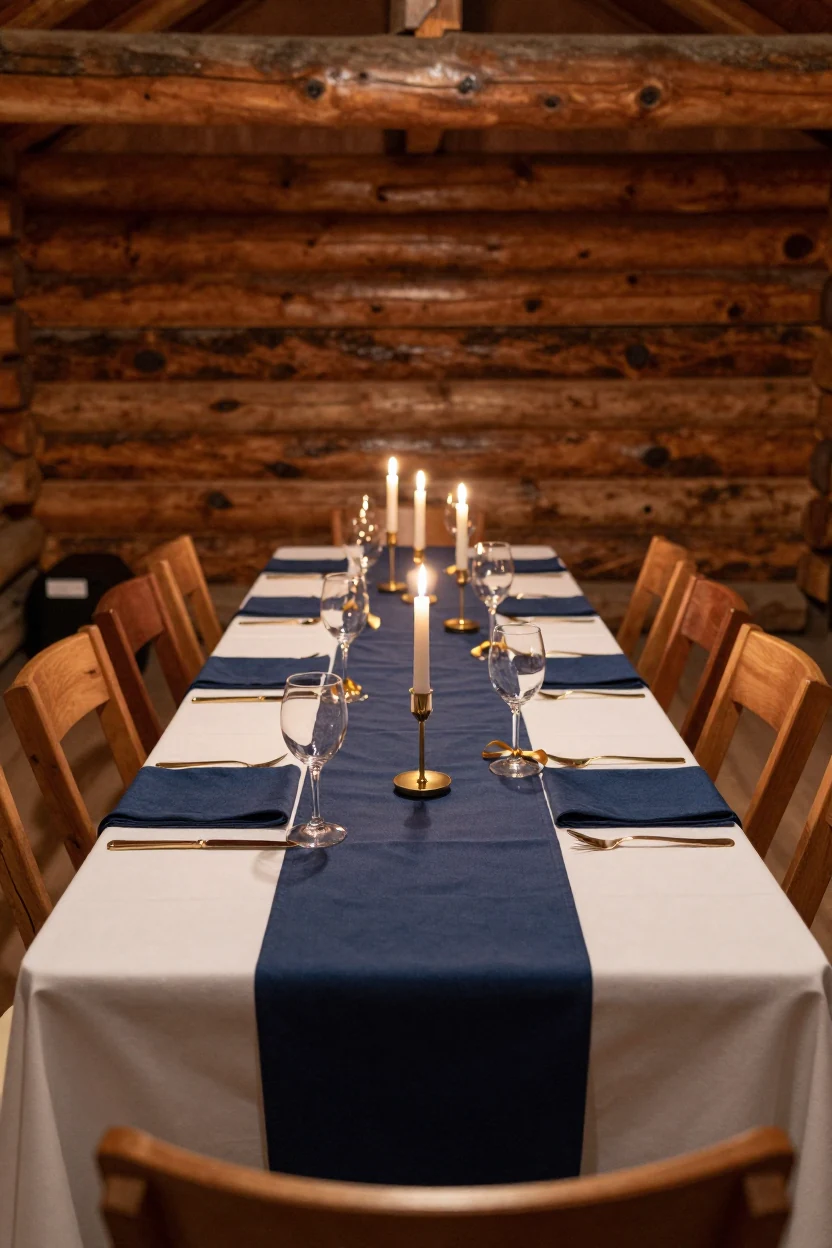
Swap out standard white linens for deep navy blue fabric to anchor this sophisticated cabin reception. Layer a crisp white base cloth beneath the rich navy runner to add depth without overwhelming the wood tones. Gold flatware and slender candlesticks catch the dimmed ambient light, creating a warm contrast against the cool blue. Thin gold ribbon tied around wine glasses adds a subtle metallic accent that ties the table setting together. This palette works best in an evening setting where natural light is low, allowing the candlelight to highlight the textures of the wool and glass. For a cohesive look, match the bridesmaid dresses or groomsmen pocket squares to the navy or gold tones. Avoid mixing too many metal finishes; stick strictly to gold to maintain the refined aesthetic. This setup transforms a rustic log cabin interior into a polished evening venue, proving that dark colors can feel cozy rather than cold when balanced with warm lighting.
7. The Outdoor Fire Pit Vow Circle
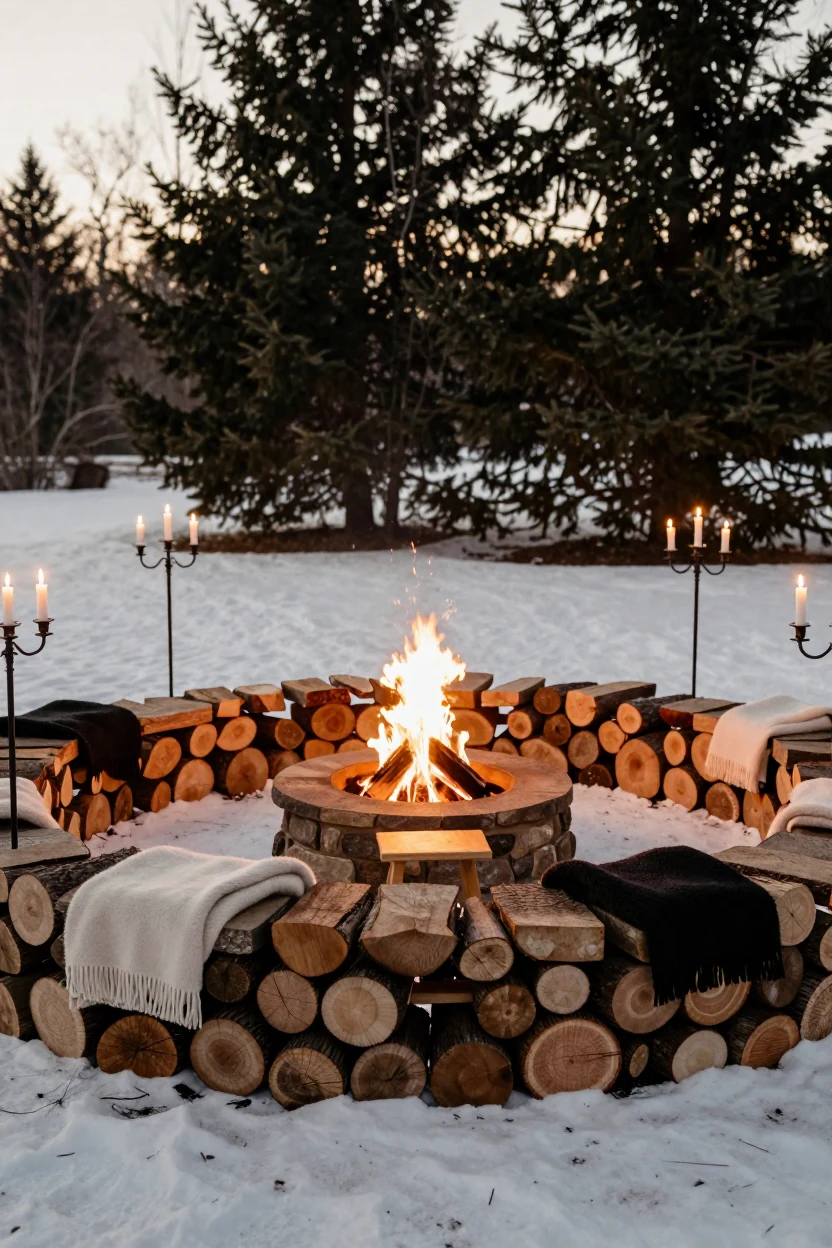
Move the ceremony to a cleared outdoor area centered on a stone fire pit, arranging stacked log seating in a full circle rather than traditional rows. Place a simple wooden stool or stump at the center for the couple, positioning them near the flame to anchor the space. Drape provided wool blankets over guests’ shoulders and surround the perimeter with tall candelabras, ensuring they are stable and safely away from the fire source. This layout emphasizes community and warmth, removing the barrier between the couple and their guests. Use muted earth tones like charcoal, cream, and pine green for textiles to complement the natural wood and stone. Keep the floral elements minimal, perhaps using a single dried botanical arrangement on a low table nearby to avoid competing with the fire’s glow. Ensure clear pathways for movement and emergency access remain unobstructed around the circle.
8. Botanical Dried Flower Arrangements
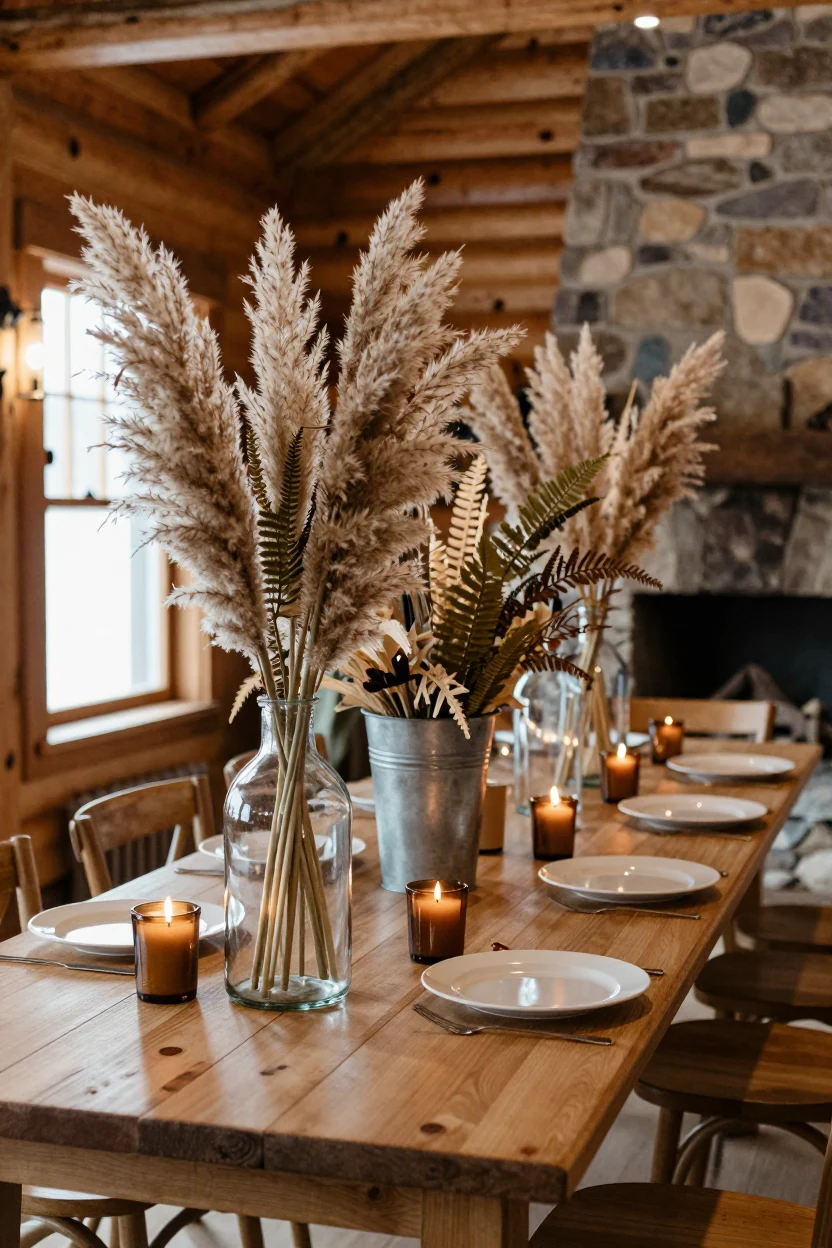
Lean into the cabin’s natural aesthetic by replacing fresh florals with substantial arrangements of dried botanicals. Use large clear glass carboys or repurposed vintage metal buckets as vases, placed directly on the wood table without a runner to emphasize the raw grain. Fill these containers with airy stems like pampas grass, bunny tail grass, and dried fern fronds. The palette should remain strictly neutral, featuring shades of beige, tan, and muted olive that mirror the surrounding timber and stone. This setup eliminates the need for daily water changes and provides a textural contrast to smooth glass or worn metal. For a cohesive look, pair these tall, organic silhouettes with simple white stoneware dinnerware and unscented pillar candles in amber glass. The vertical height of the dried grasses adds dimension without blocking guests’ line of sight across the table. This approach works best for long rectangular farm tables where the rustic architecture can be fully appreciated.
9. The Breakfast Bar Sweetheart Table
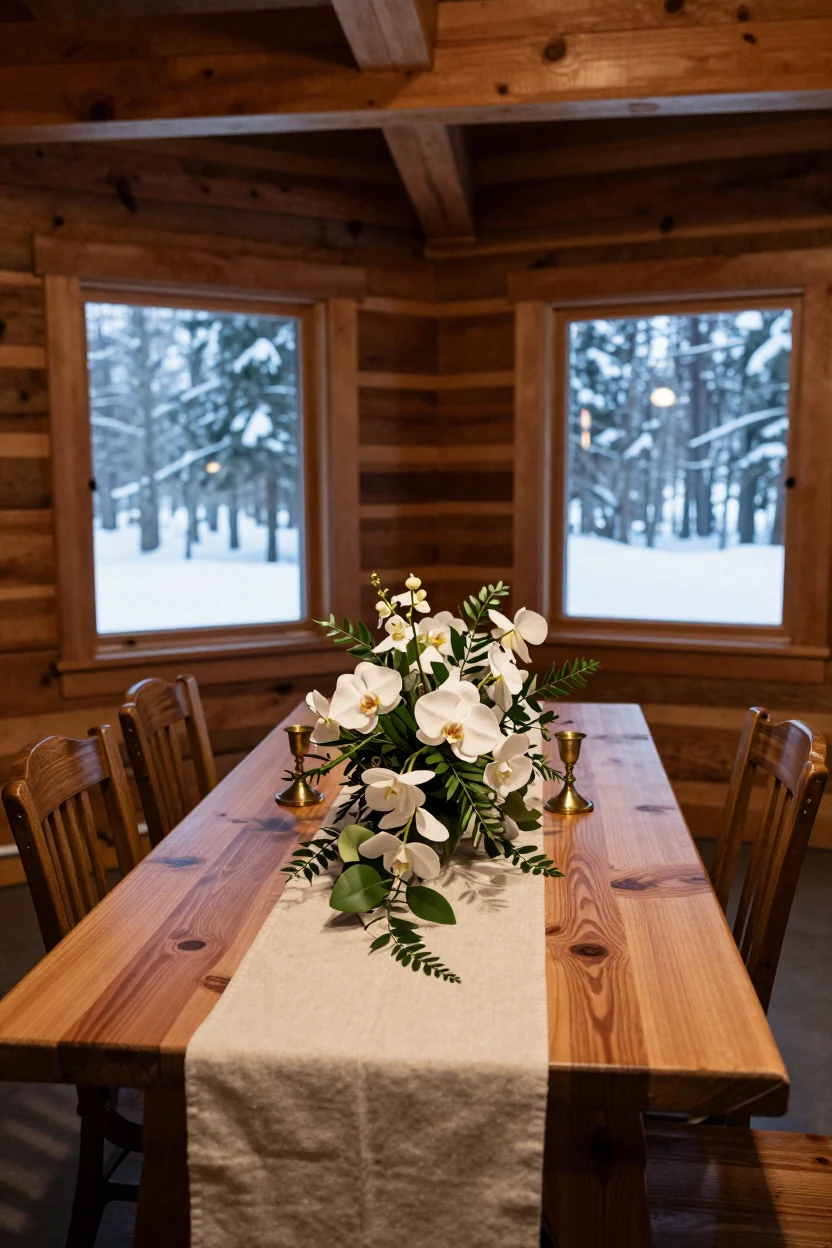
Skip the traditional sweetheart table and anchor the couple at the edge of a sturdy butcher-block counter or built-in bar area. This setup works best in open-concept cabin spaces where the kitchen flows into the main living area, offering a casual yet intimate focal point for toasts and first dances. Lean two vintage wooden chairs against the counter’s side facing the room, rather than placing them behind it, to maintain a relaxed posture. Dress the counter surface with a low, linear arrangement of white orchids mixed with eucalyptus or ruscus, keeping the height under eight inches so guests can see across the wood grain. Use a single, wide linen runner in oatmeal or undyed cotton to protect the surface while adding softness. Scatter a few small taper candles in brass holders for warm, flickering light that complements the cabin’s natural wood tones without overwhelming the space. This arrangement keeps the area functional for serving drinks or placing gifts while maintaining a romantic, modern aesthetic that feels integrated into the home’s architecture rather than imposed upon it.
10. Layered Wool and Fur Textures
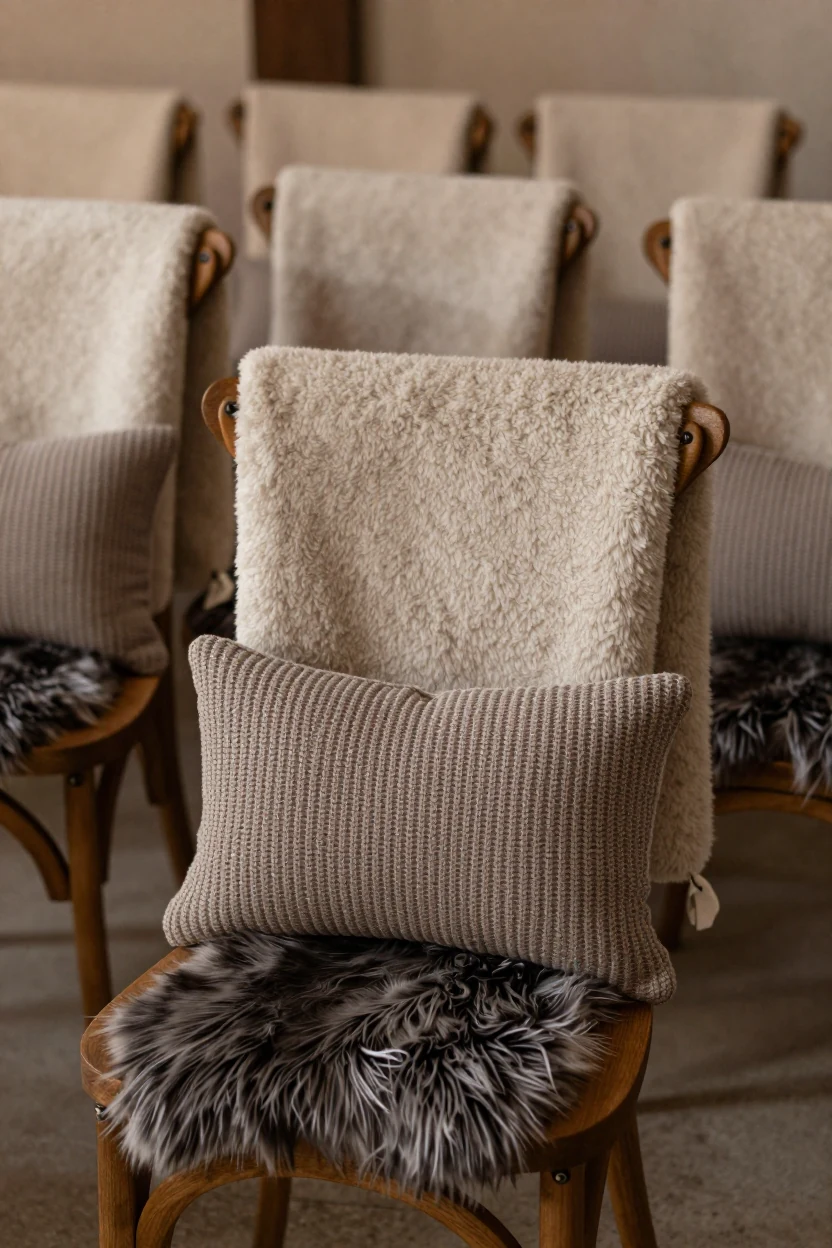
Transform standard banquet chairs into plush seating by layering thick wool throws, faux fur runners, and chunky knit pillows. Restrict the palette to natural neutrals like oatmeal, taupe, and charcoal to let the tactile variations stand out. Drape a heavy wool blanket over the back of each chair, securing it with a safety pin or clip to prevent slipping. Place a long strip of faux fur down the center of the seat cushion for warmth against cold wood or metal legs. Add a single square pillow with a visible knit pattern at the front edge of the seat. This arrangement prioritizes comfort and visual softness, making the space feel enveloping and warm for winter guests. The texture contrast between the smooth wool, the shaggy fur, and the ribbed knit creates visual interest without relying on bright colors. For a cohesive look, ensure all textiles are undyed or lightly washed to maintain a matte finish.
11. The Stained Glass Lighting Installation
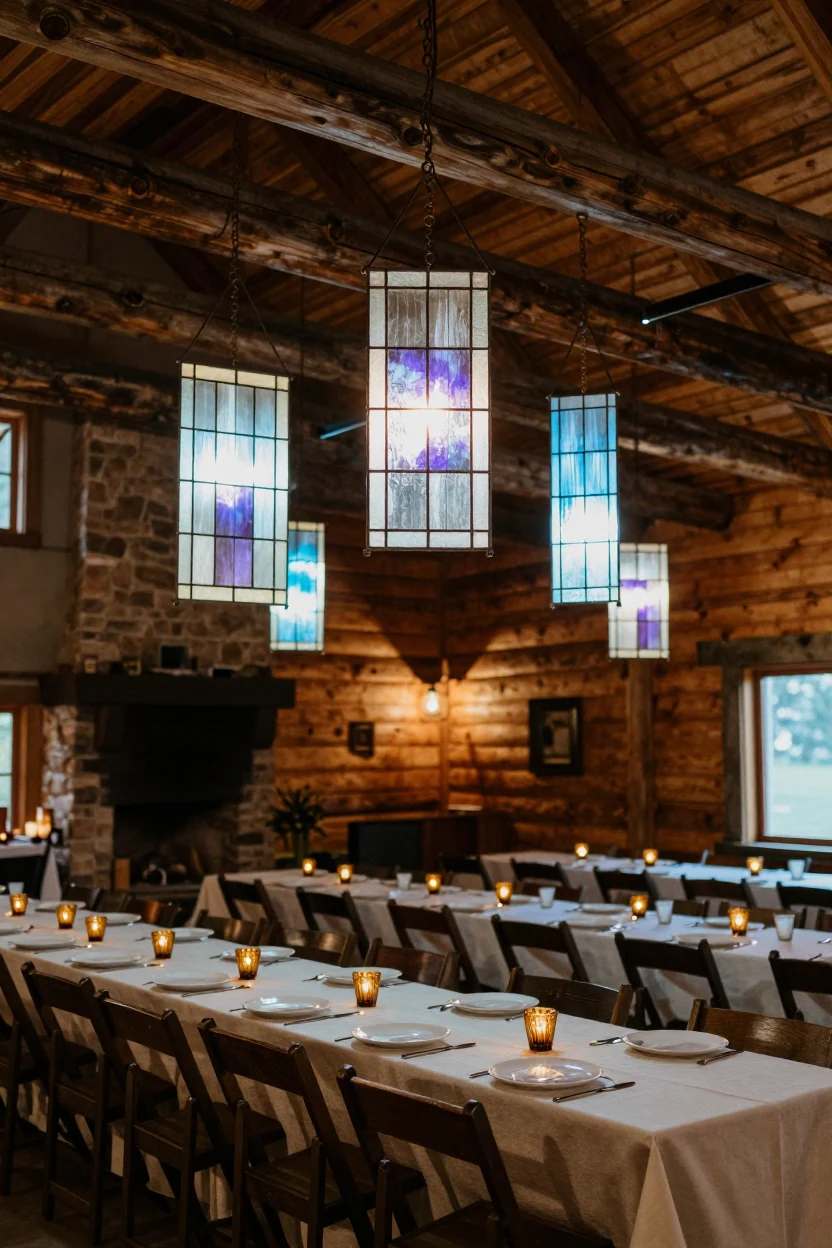
Transform the ceiling into a dynamic focal point by suspending a series of stained glass panels or illuminated acrylic sheets from the heavy timber beams. Use cool tones like ice blue, lavender, and translucent white to mimic light filtering through snowy branches, creating a striking contrast against the warm, honeyed wood of the cabin interior. This architectural lighting feature replaces traditional floral chandeliers, offering a modern, artistic backdrop that feels airy despite the enclosed space. The colored light casts soft, diffused patterns onto the linen-covered tables below, enhancing the cozy atmosphere without requiring heavy structural support. For a realistic setup, ensure the panels are securely mounted to load-bearing points and positioned high enough to maintain clear sightlines for guests and photography. This concept works best in venues with exposed beams and high ceilings, allowing the light to travel further and create a layered, twilight effect that feels both intimate and expansive.
12. Rustic Signage and Paper Goods
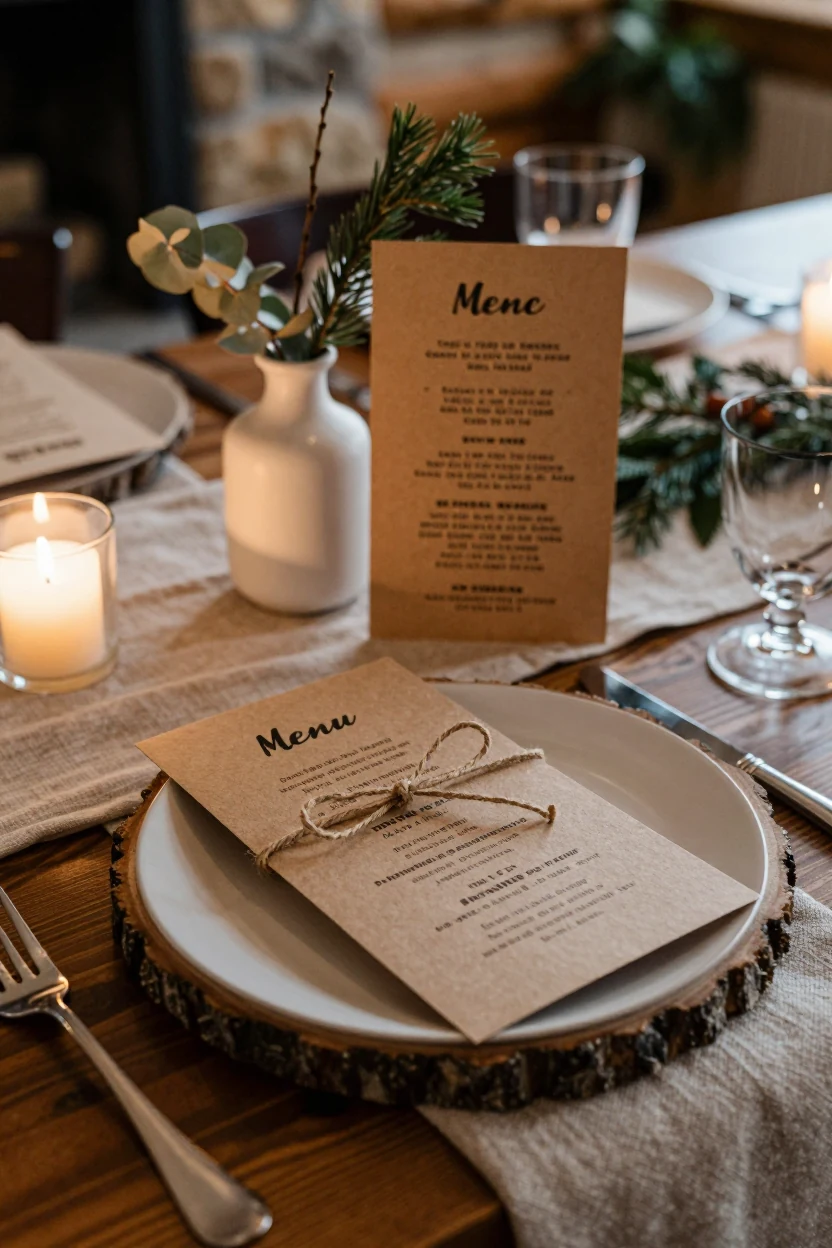
Hand-lettered kraft paper menus and seating charts tied with natural twine create a grounded, artisanal focal point for your winter cabin wedding. Rest these elements on wood slice chargers or directly on linen tablecloths to emphasize the rustic aesthetic. The warm beige tones of the paper contrast beautifully against deep forest green or charcoal textiles, while the visible brushstrokes add a personal, human element that mass-produced stationery lacks. Place individual name cards at each guest setting and larger charts on the head table or entryway stand. This approach works well because it leverages the natural textures already present in a cabin venue, such as exposed wood beams and stone fireplaces. For a cohesive look, ensure your calligraphy style remains consistent across all paper goods. If you prefer a polished finish without extensive DIY work, hire a local artist to handle the lettering while you manage the assembly. The result is an intimate, tactile experience that feels authentic and warmly inviting for guests.
13. The Greenery Wall Backdrop
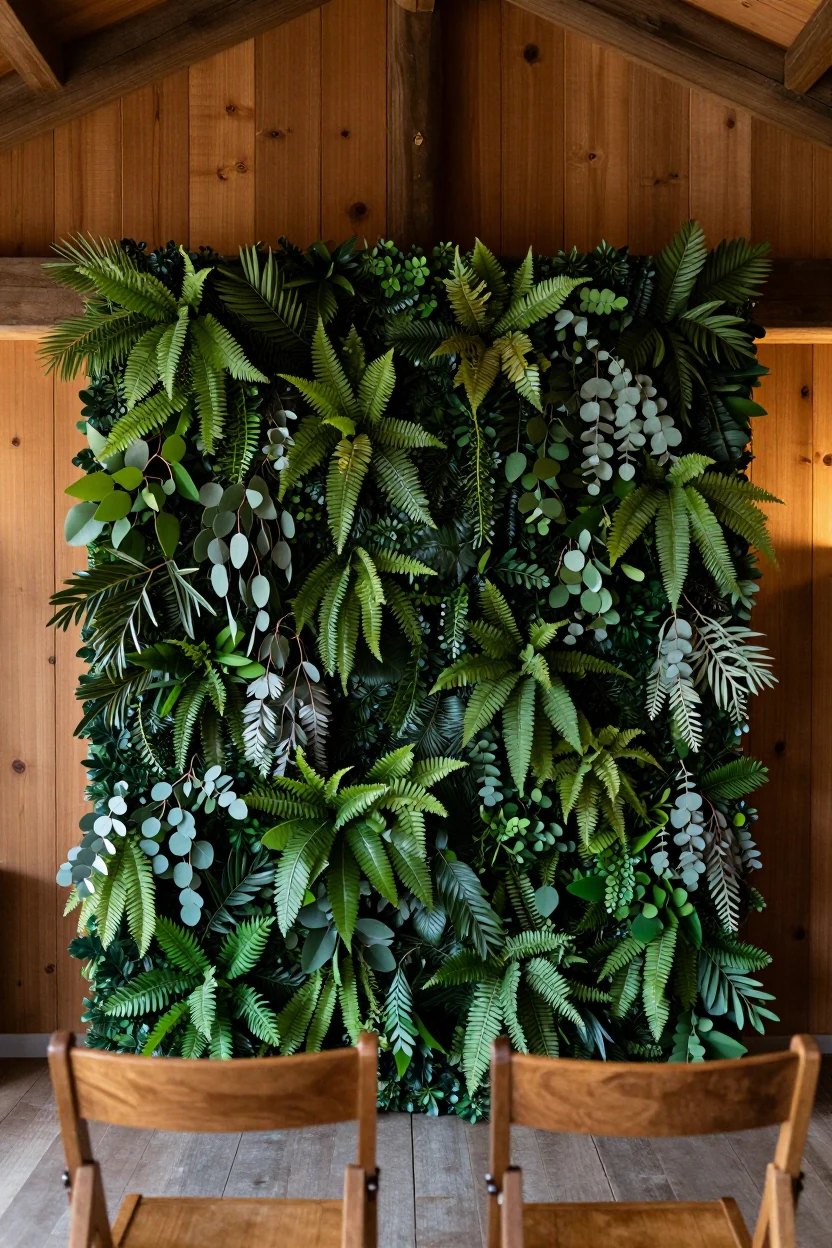
A dense, leafy wall of mixed greenery anchors the ceremony space against a plain wooden cabin wall. This structured backdrop provides a lush, textured contrast to the rustic interior, creating a focal point for vows or photos without requiring a traditional arch. Use fresh boxwood, eucalyptus, and ferns attached to a secure grid frame for stability. The deep greens pop against warm timber tones, adding visual weight and natural elegance. This setup works well for smaller ceremonies where a solid background improves photo composition. It also serves as a striking photo booth station after the ceremony. Ensure the structure is anchored safely to the wall or floor to prevent tipping. Pair with simple wooden chairs and a clear aisle to maintain safety and flow. The result is a grounded, organic look that feels intentional rather than cluttered.
Choosing Your Cabin Wedding Style
Selecting the right mix of these ideas depends on your cabin’s specific architecture and your desired atmosphere. A fire pit ceremony works best for outdoor-capable venues, while an A-frame arch suits intimate indoor spaces. Consider your guest count when deciding between a long communal table or individual seating with layered textiles. Always prioritize safety by securing hanging elements and keeping pathways clear. Adapt these concepts to fit your budget and style preferences, ensuring the final result feels authentic to both the venue and your personal vision.
