10 Restaurant Wedding Reception Decor Ideas for Stylish Dining
Holding your reception in a restaurant offers a distinct advantage: the venue is already equipped for service. Your decor should enhance this functionality rather than compete with it. The following ideas focus on realistic setups that respect dining logistics, such as keeping centerpieces low to allow conversation and using stable materials that do not obstruct service paths. Whether you prefer the organic texture of a rustic runner, the sleek glow of minimalist candles, or the vibrant pop of seasonal fruit, these concepts prioritize visual impact without compromising guest comfort. Each suggestion is designed to adapt to various venue sizes and budgets, ensuring your space feels curated rather than cluttered.
1. The Rustic Table Runner
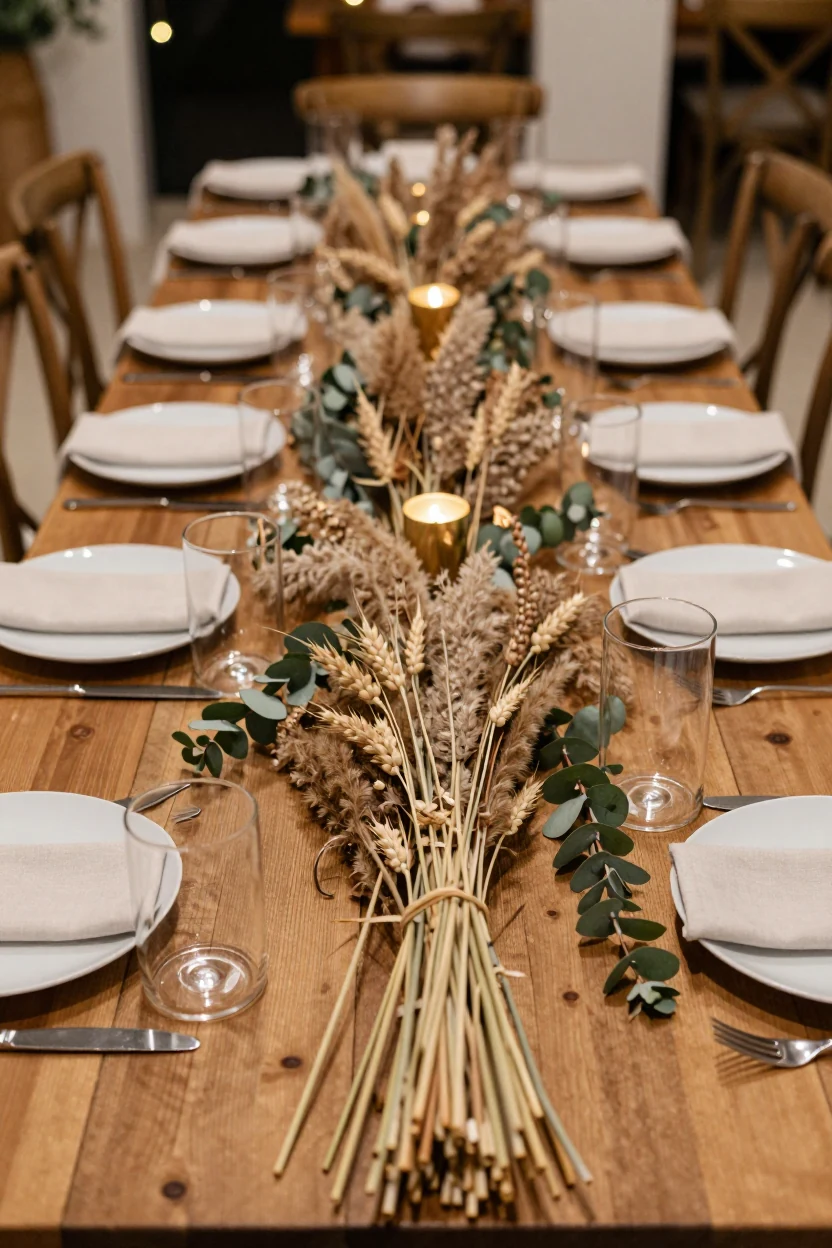
Transform a long banquet table into an organic focal point by running a single, continuous strip of dried botanicals down the center. This low-profile arrangement features tall stalks of pampas grass, eucalyptus, and wheat stems clustered together to create height and movement without blocking sightlines. The texture contrasts beautifully with smooth white linen and simple ceramic dinnerware, maintaining a conversation-friendly atmosphere for guests seated on either side. Ideal for barn-style restaurants or backyard venues, this setup uses a warm palette of creams, browns, and muted greens. The dried materials offer longevity and require minimal maintenance compared to fresh florals. To adapt this concept, source bulk dried stems from local florists or craft suppliers. Keep the profile under six inches high to ensure guests can see each other. Pair with brass candlesticks at the head of the table for added warmth without cluttering the central runner.
2. Minimalist Linear Candles
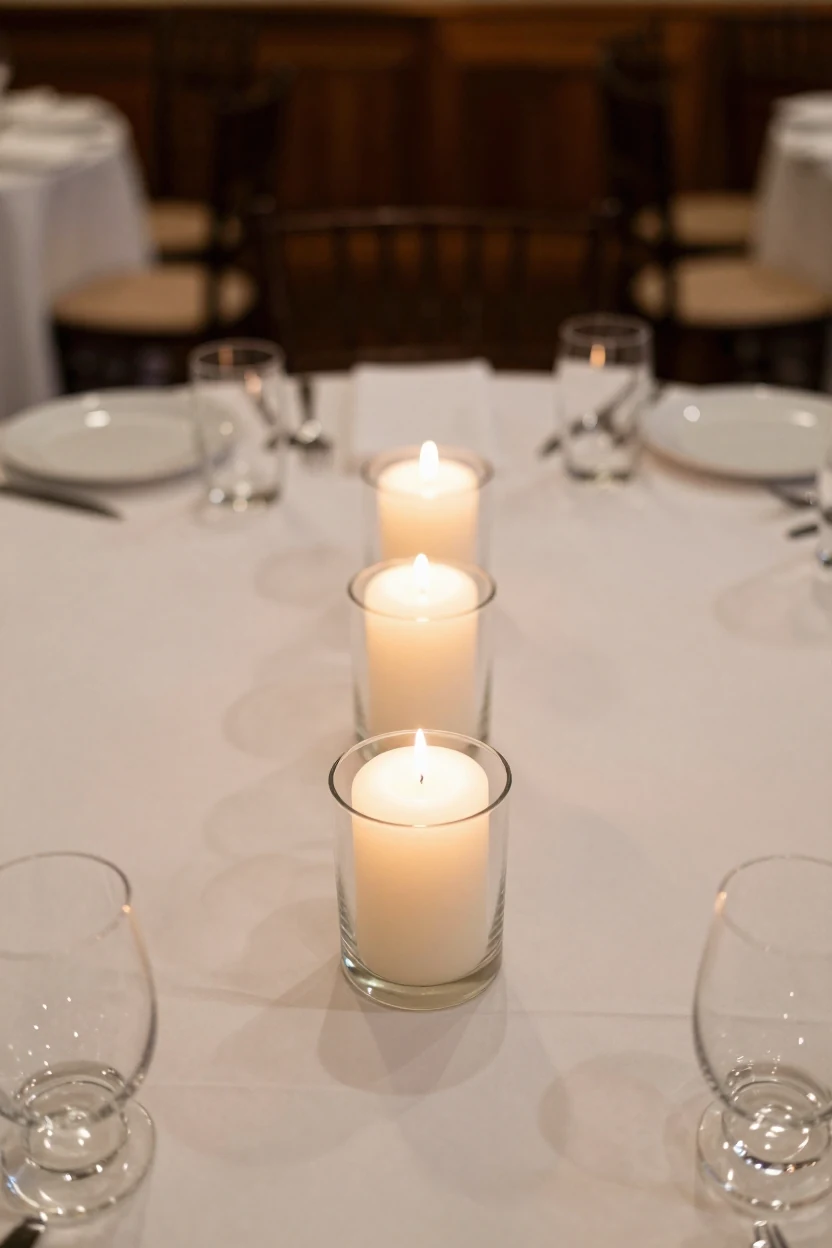
This minimalist arrangement replaces bulky floral centerpieces with three pillar candles of varying heights, creating a clean, modern focal point on round dining tables. Placing the candles in clear glass vases or directly on the table surface allows their light to interact with crisp white linens and simple glassware. Neutral tones like ivory or soft black maintain a sophisticated aesthetic that relies on shadow and glow rather than color saturation. This setup is particularly effective in contemporary hotel ballrooms or upscale restaurants where uncluttered sightlines are valued. It works well for couples who prefer a sleek evening atmosphere over traditional floral abundance. To adapt this concept, ensure the candle heights allow guests to see each other across the table while maintaining a distinct vertical rhythm. Pairing this linear arrangement with minimal dinnerware and understated place settings keeps the focus on the interplay of light and texture. It is a practical choice for venues that prioritize clean lines and modern elegance.
3. The Greenery Wall Backdrop
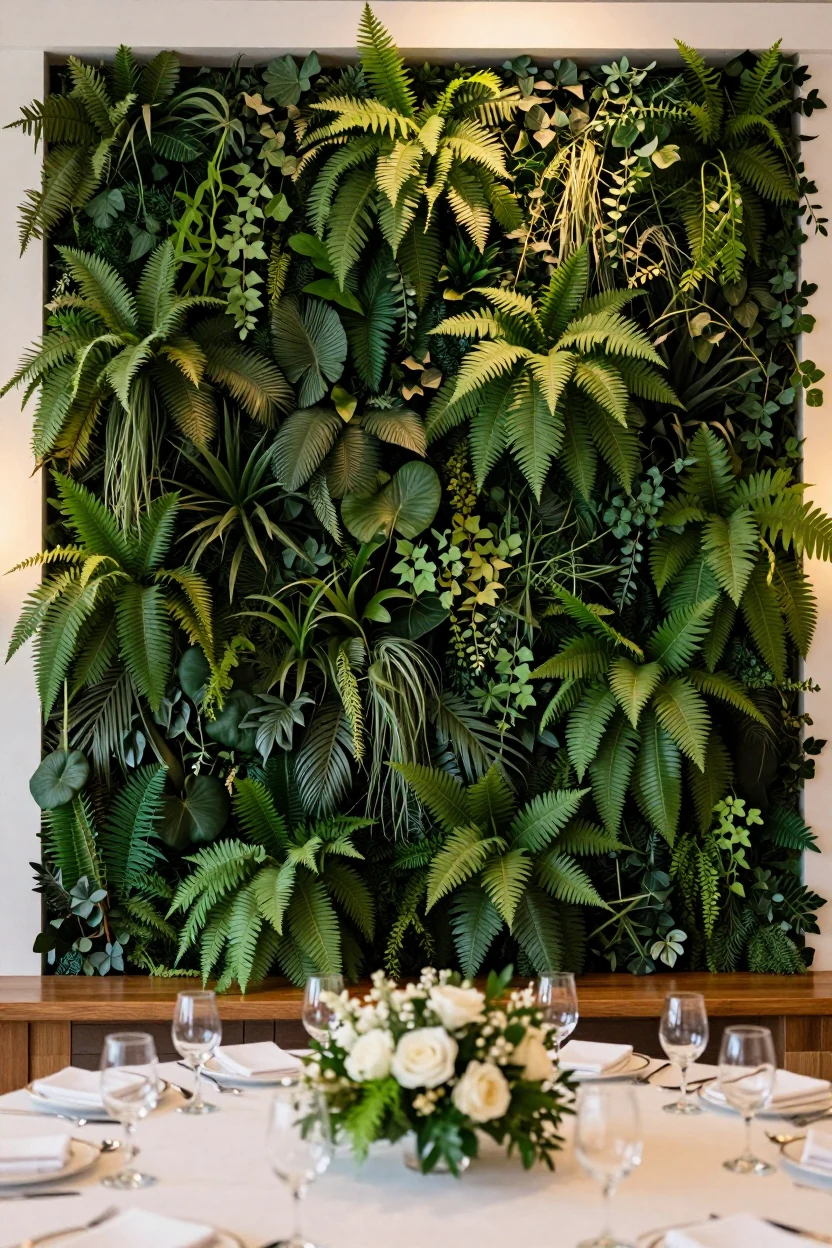
Transform a blank restaurant wall into a striking botanical focal point by layering dense fresh greenery against the existing surface. This setup creates a lush, immersive backdrop for portrait photography without obstructing the dining room’s sightlines or emergency exits. Use a mix of textured foliage, such as trailing ivy, feathery ferns, and olive branches, to add depth and movement. Keep the foreground simple with low-profile centerpieces and neutral linens so the vertical impact of the leaves remains the visual anchor. This approach works well for spring and summer weddings where a fresh, vibrant aesthetic is desired. The green wall provides a natural frame for guests while maintaining the casual elegance of a restaurant setting. It serves as a versatile background that complements various floral palettes without competing with tablescapes.
4. Vintage Mirror Statement Pieces
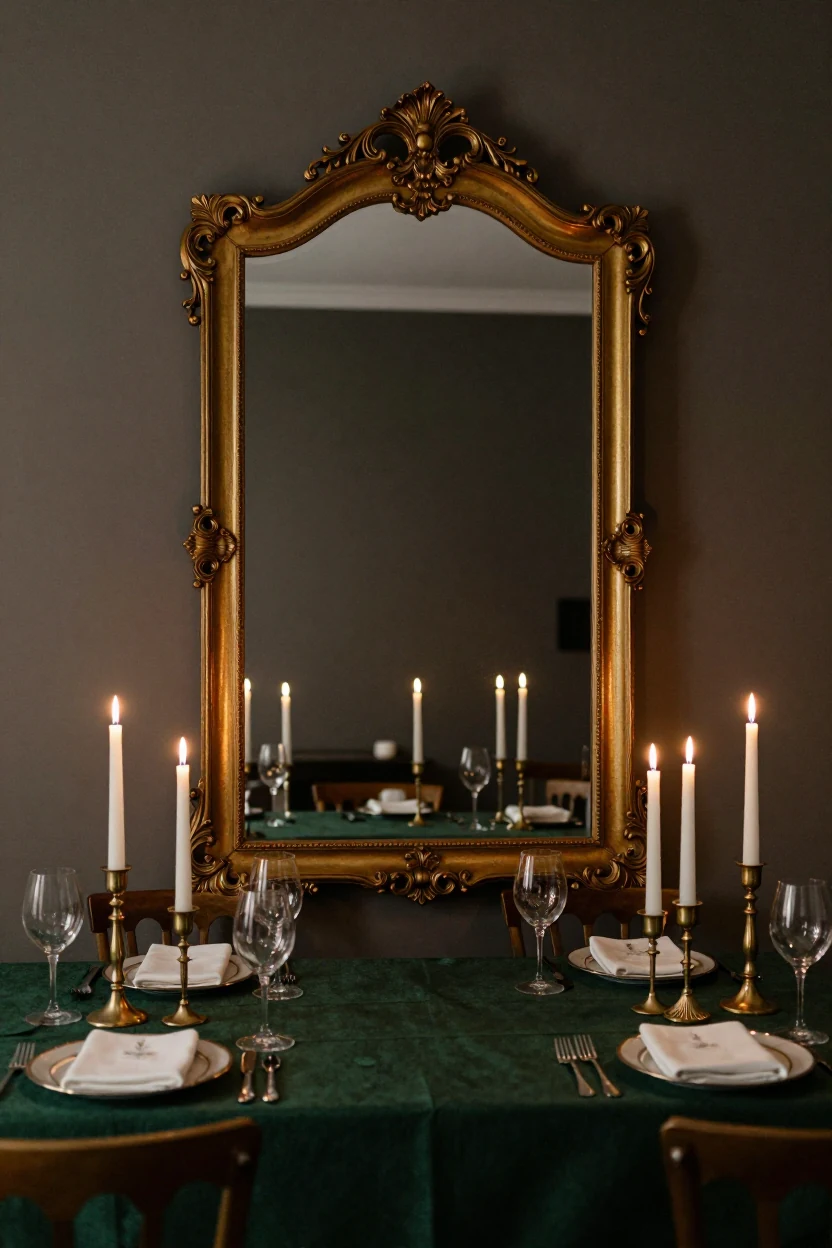
Transform a dimly lit restaurant dining room into an intimate jewel box by anchoring the head table with large, ornate vintage mirrors. Position these reflective surfaces upright against the wall or on sturdy easels to bounce the warm glow of taper candles in brass holders, effectively expanding the perceived depth of the space. Pair the gold and amber light with deep emerald or burgundy linens to create a rich, textured contrast that feels both historic and modern. This setup works best for formal evening receptions where you want a dramatic, cinematic atmosphere without installing heavy structures. The mirrors catch the flickering flame light, casting soft, dynamic shadows across the tableware and glassware. For a practical application, source mirrors from estate sales or antique shops to keep costs manageable. Ensure the frames are stable and placed well behind the seating area so they do not obstruct service paths or emergency exits. This layout turns a standard restaurant wall into a focal point that enhances the dining experience.
5. The Monochromatic Floral Table
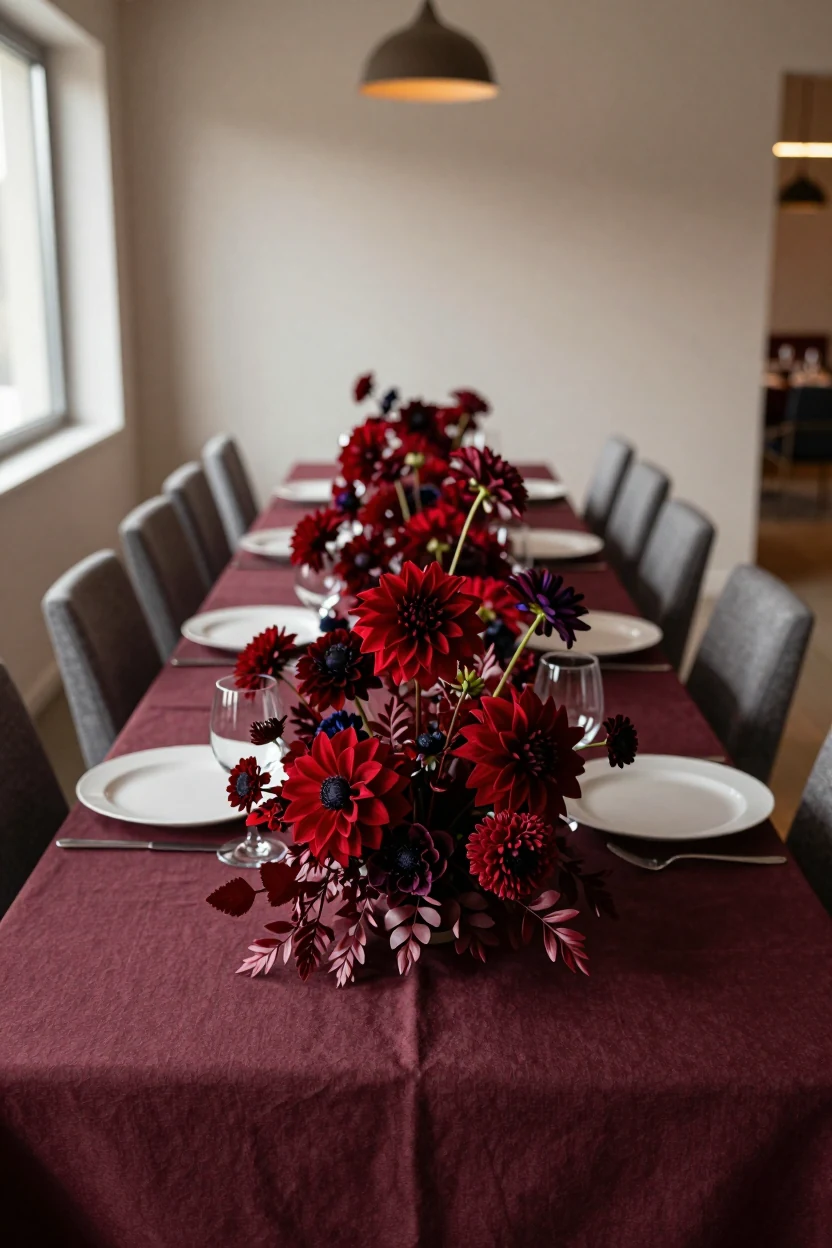
A monochromatic floral table transforms a standard banquet setup into a cohesive visual statement by committing to a single color family. Instead of mixing hues, this approach relies on texture and form within one shade, such as deep burgundy dahlias paired with dark anemones or all-white roses with hydrangeas. The lack of competing colors forces the eye to notice petal layers, stem density, and leaf shapes, creating depth without clutter.
To recreate this look, select a long rectangular table draped in a linen runner that matches the dominant flower tone. Use matching napkins and minimal glassware to keep the focus on the floral arrangement. The centerpiece should be low and wide, allowing guests to see each other across the table while maintaining a lush, abundant appearance. This style works particularly well in restaurants with neutral backgrounds, as the bold color palette provides contrast against plain walls or simple wood paneling.
6. Industrial Pipe and Glassware
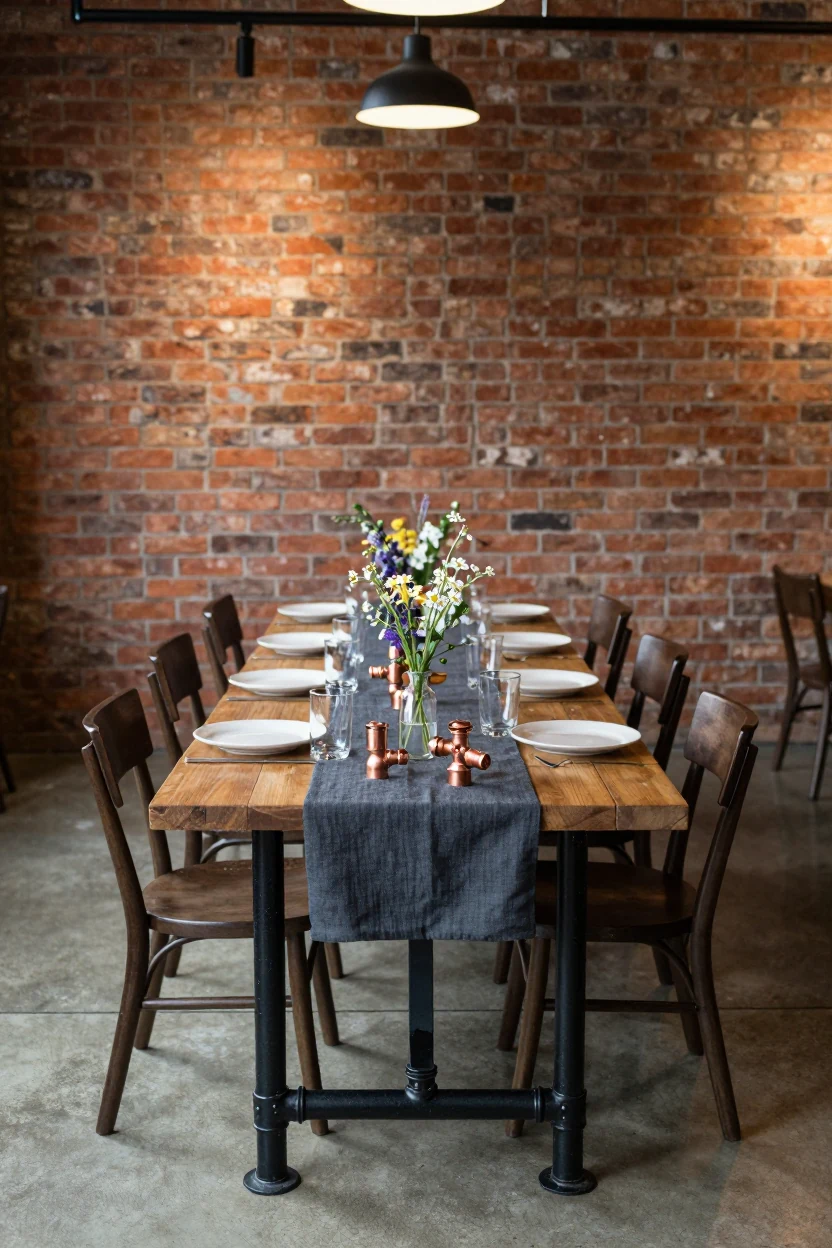
Lean into your restaurant’s urban character by pairing raw industrial elements with delicate floral details. This concept works best in venues featuring exposed brick, polished concrete, or visible ductwork, where the architecture is already part of the aesthetic. Instead of fighting the rugged environment, highlight it. Arrange a linear cluster of unpainted black metal pipes or copper fittings along the center of a rectangular table, creating a low-profile base that does not obstruct guest conversation. Nestle small, clear glass vases or mason jars among the metal hardware, filling them with loose, wildflower-inspired stems like chamomile, statice, or small dahlias. The contrast between the hard, cold metal and the soft, organic petals creates visual interest without requiring massive floral installations. This setup is particularly effective for couples who prefer a relaxed, edgy vibe over traditional formal styling. To complete the look, keep the table linen in a neutral tone like charcoal or cream to let the textures speak. This approach is practical because it uses simple, easily sourced materials that remain stable on the table surface, ensuring guest safety and clear sightlines throughout the reception.
7. The Floor-Sweeping Fabric Drape
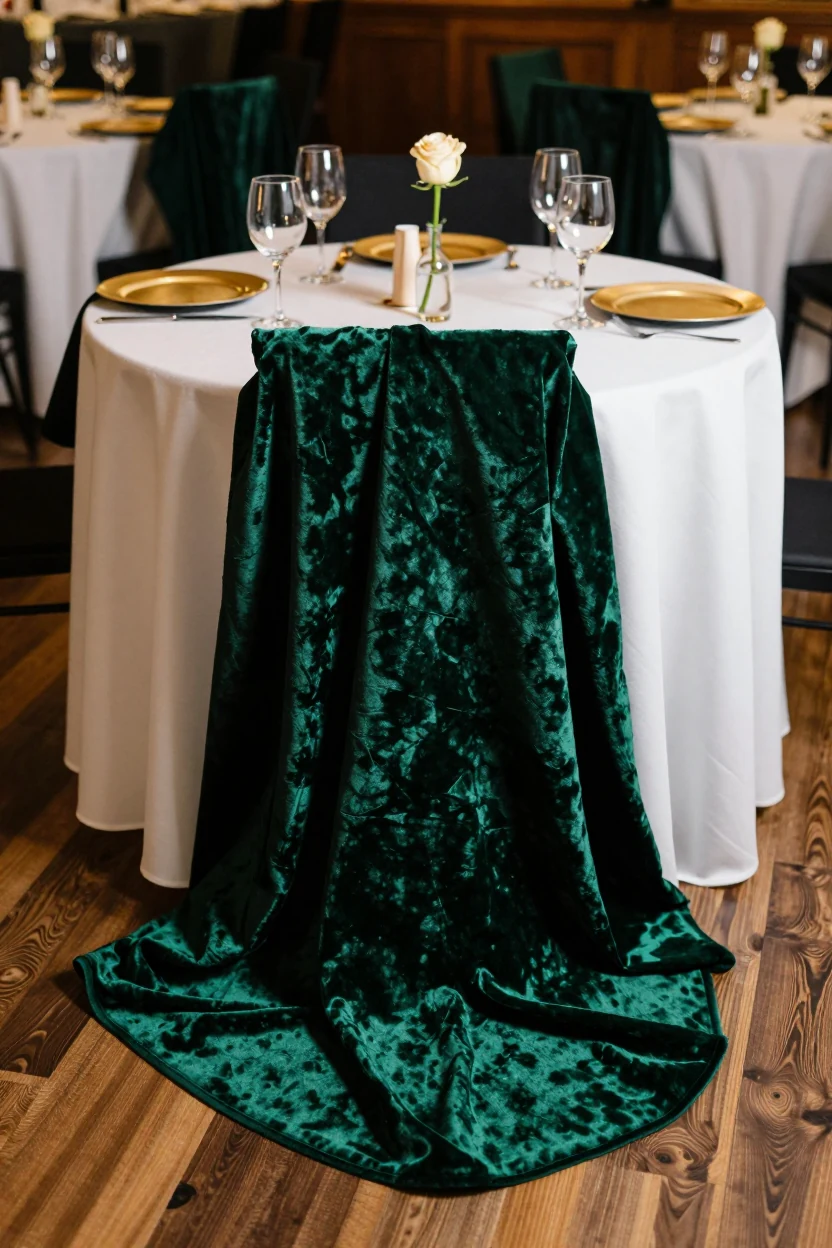
Transform a standard restaurant dining room by anchoring the space with floor-length fabric drapes in deep emerald or navy velvet. This technique softens hard architectural edges and adds tactile richness without requiring structural modifications. The heavy material pools gently around the base of round tables or lines the perimeter of the dance floor, creating a grounded, enveloping atmosphere that catches low evening light. Keep the table settings restrained to let the texture dominate; use simple gold flatware, clear glassware, and small bud vases rather than tall floral arrangements that would obscure the fabric movement. The contrast between the matte sheen of the velvet and the crisp white linens creates visual depth. This setup works best in dimly lit spaces where candlelight or warm overhead fixtures can highlight the folds and shadows of the material, turning a simple venue into a moody, sophisticated backdrop for your reception.
8. Seasonal Fruit Centerpieces
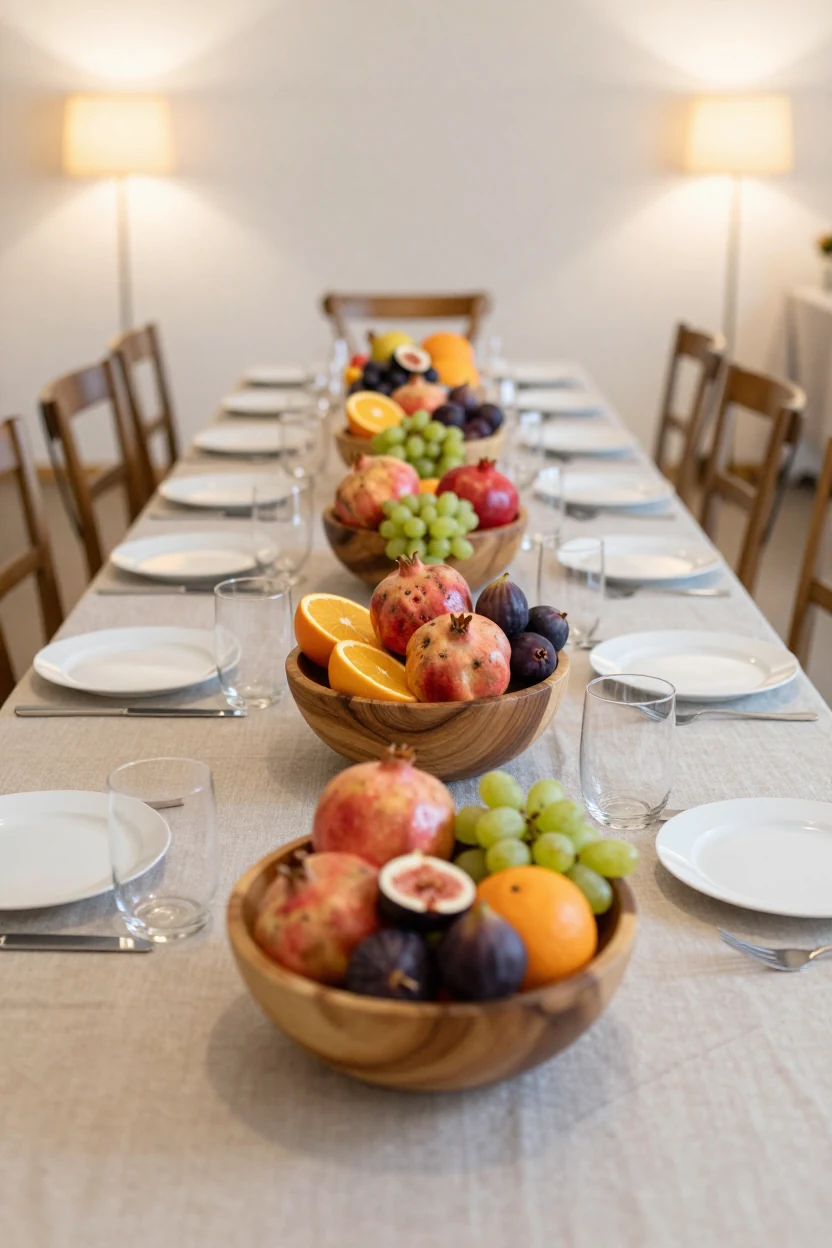
Swap traditional floral arrangements for abundant seasonal fruit to create a vibrant, aromatic tablescape that doubles as part of your dessert spread. In this setup, shallow wooden bowls or hammered metal baskets are filled with pomegranates, figs, citrus halves, and bunches of grapes, arranged at varying heights across a long rectangular table. The rich reds, purples, and oranges contrast beautifully against neutral linen and simple white dinnerware, making the fruit the undeniable focal point. This approach minimizes waste, as guests can enjoy the edible decor afterward, and it introduces natural scent to the dining experience. Ideal for autumn or winter receptions, this style supports earthy palettes and textured linens. Keep pieces low enough that guests can maintain eye contact across the table, ensuring the arrangement enhances the room rather than obstructing conversation.
9. The Hanging Lantern Cluster
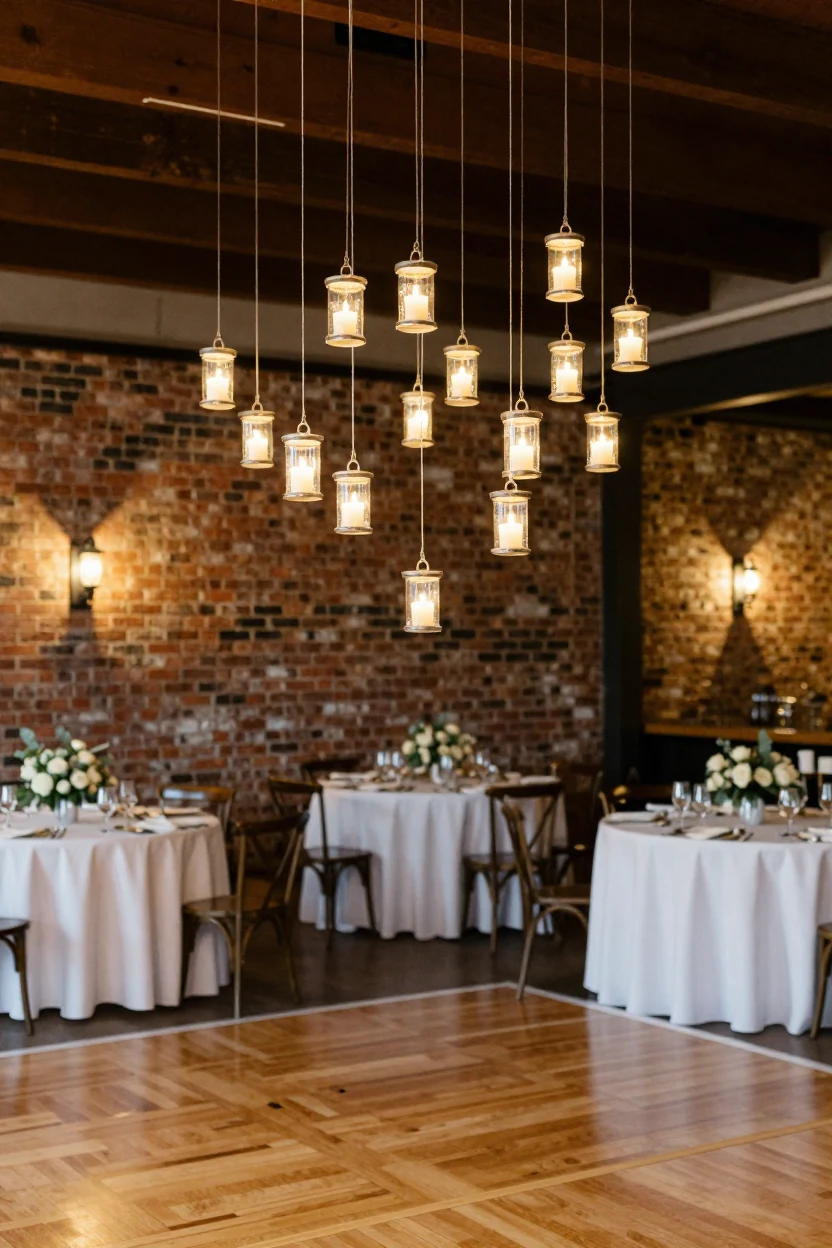
Suspend a loose cluster of small glass lanterns above the dance floor or head table to add vertical interest to low ceilings. Use sturdy, invisible fishing line to hang the lanterns at varying heights, ensuring they do not interfere with guest movement or sightlines. Fill each vessel with LED tea lights rather than open flame, which is safer for enclosed restaurant spaces and easier to manage during dinner service. The warm, diffused glow creates a floating island of light that draws the eye upward without overwhelming the room. This setup works particularly well in patio restaurants or venues with high ceilings where traditional chandeliers feel too static. Keep the cluster centered and compact, leaving clear space below for dancing or dining. For a cohesive look, pair the lanterns with simple white linens and low-profile floral arrangements to prevent visual clutter. The result is an intimate, glowing focal point that enhances the room’s architecture while keeping the atmosphere relaxed and practical.
10. The Personalized Place Card Bar
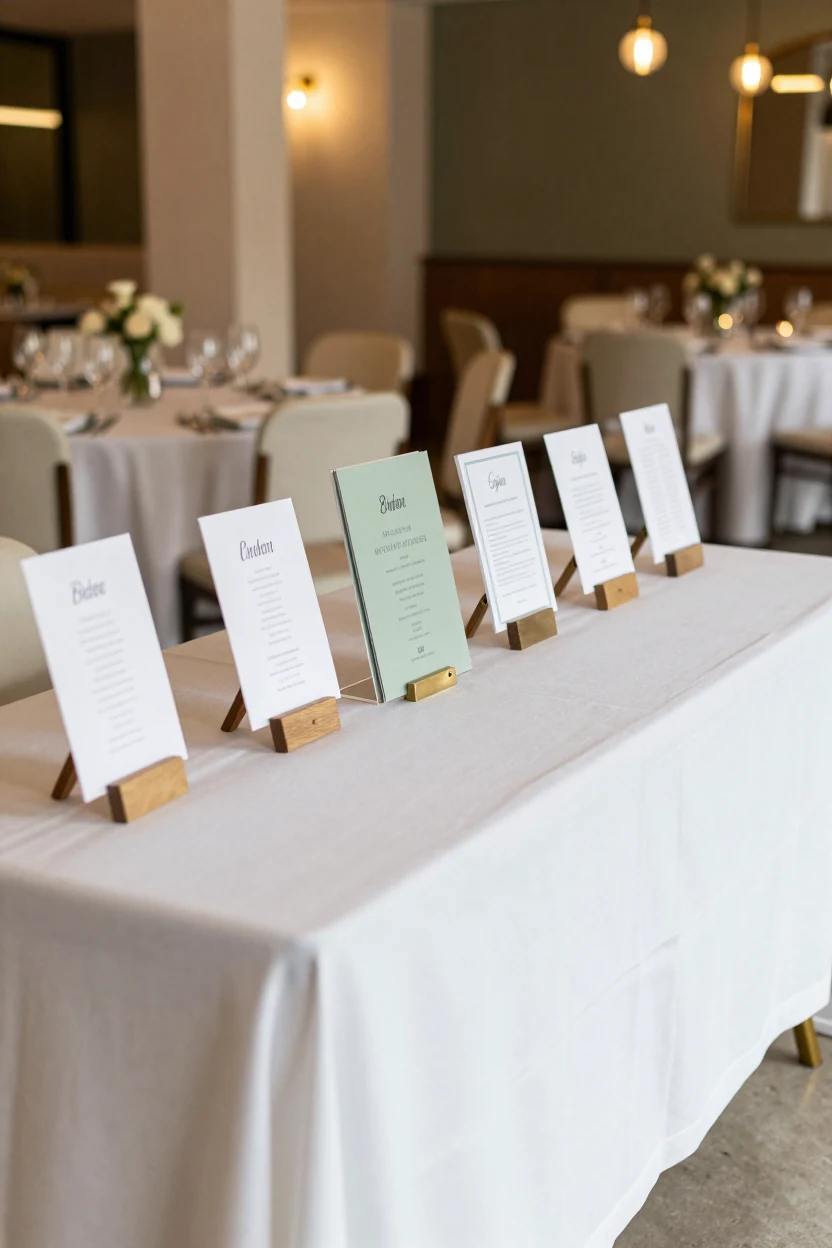
Transform the guest arrival experience by staging a dedicated signature table near the entrance or bar area. This functional display features custom-printed place cards, menus, and directional signage, all unified by a consistent color palette and typography. Instead of cluttering the main dining tables with paper goods, this setup creates a cohesive visual anchor that helps guests navigate the room while showcasing the couple’s design identity. Use sturdy acrylic stands or small wooden easels to keep items upright and visible. The arrangement should be neat but accessible, allowing guests to easily view their seating assignments. This approach works well in various venue types, from hotel ballrooms to modern restaurants, as it requires minimal space and no structural changes. By concentrating the stationery at a single point, you maintain clean table settings for dinner while injecting personality into the reception flow.
Selecting Your Decor Approach
To choose the right direction, consider your restaurant’s existing architecture and your desired level of formality. If your venue features exposed brick or industrial elements, lean into raw textures like metal pipes or simple glassware. For softer, more traditional spaces, focus on fabric drapes or lush greenery walls to add depth. Always prioritize safety and sightlines; ensure candles are stable and arrangements do not block aisles. By aligning your decor with the specific constraints and character of your chosen restaurant, you create a cohesive atmosphere that feels both intentional and effortless.
