Jazz Club Inspired Wedding Reception Ideas for a Sophisticated Night
A jazz club reception swaps the standard banquet hall for an atmosphere of dimmed lights, live music, and close conversation. This style works best in venues with high ceilings or exposed brick, where moody amber uplighting can hide harsh overhead fixtures and highlight textured surfaces like velvet and brass. Whether you are planning a mid-sized wedding in a converted industrial space or a backyard event with a hired stage, these ideas focus on tactile details and practical layouts. From low-profile candlelight tablescapes to vinyl record place cards, each concept helps you build a cohesive, sophisticated look that encourages guests to linger and connect.
1. Velvet Booth Seating with Brass Accents
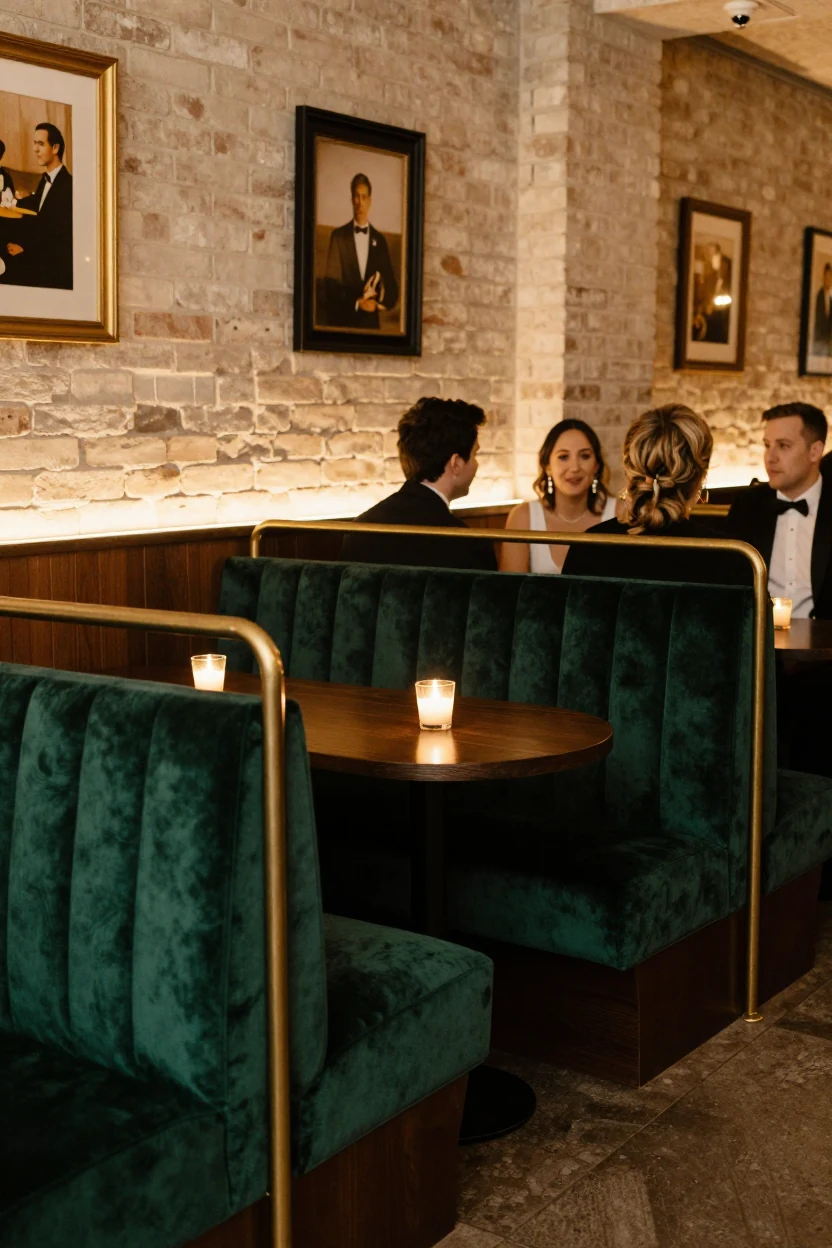
Transform the perimeter of your reception space by replacing standard banquet chairs with deep emerald or burgundy velvet booth seating. Arrange these upholstered sections along the walls, separated by polished brass railings and small round tables to mimic the intimate layout of a mid-century jazz lounge. This configuration creates semi-private pockets for conversation while keeping the center floor open for dancing. The heavy fabric texture contrasts sharply with the sleek metallic finishes, fostering a warm, enveloping atmosphere. For a cohesive look, pair the velvet with dark wood accents and amber-toned lighting to enhance the moody, sophisticated vibe. If custom booth fabrication is not feasible, consider renting high-backed upholstered chairs in matching velvet fabrics and grouping them closely together to simulate the enclosed feel. Ensure aisles remain clear for safe guest circulation.
2. Low-Profile Candlelight Tablescapes
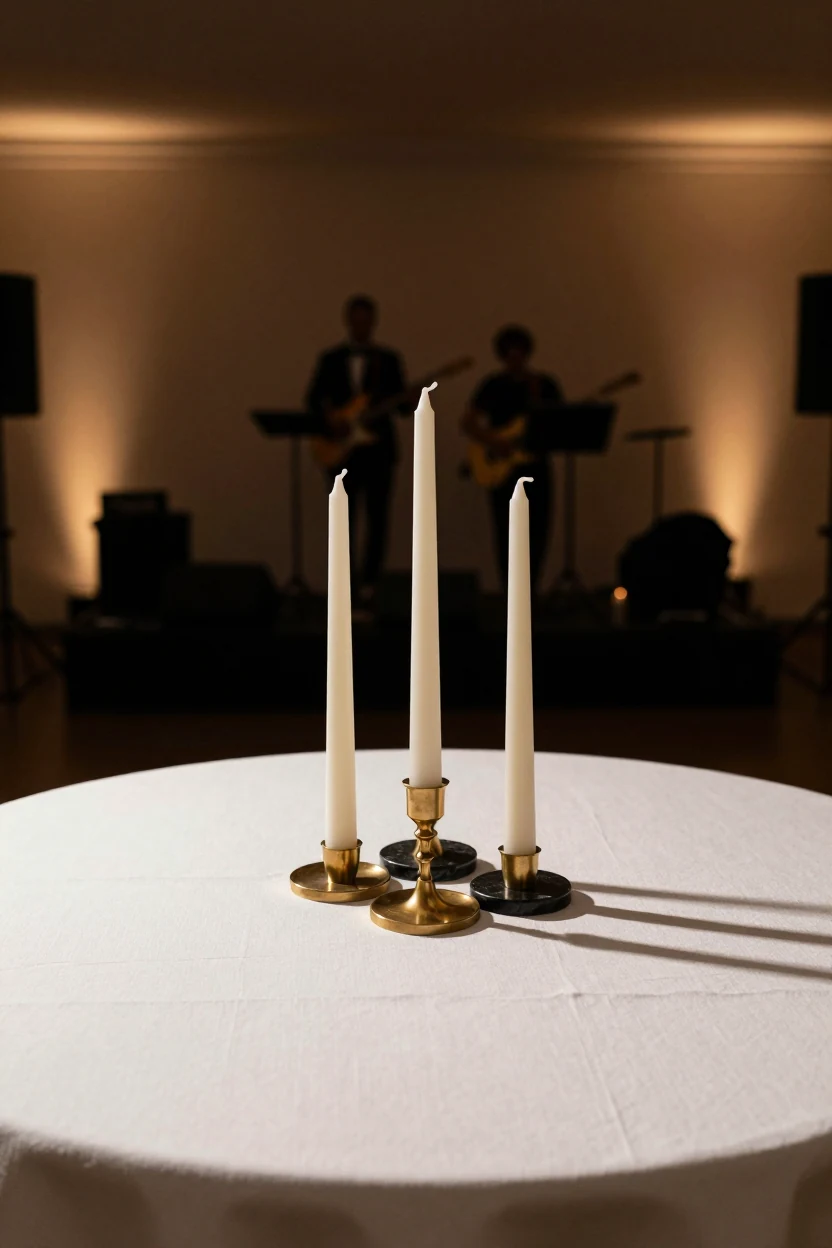
Skip towering floral arrangements in favor of low-profile clusters that preserve guest sightlines to the band and dance floor. Group three to five beeswax taper candles of varying heights on small, solid bases made of raw brass or polished black marble. The natural texture of the wax contrasts beautifully with the smooth, dark stone or warm metal, creating a tactile focal point that remains well under ten inches tall. This restrained height allows guests seated at the far end of a long table to see across the room without obstruction, maintaining an open, airy feel despite the dim lighting. Pair these bases with crisp white linen or deep emerald velvet runners to ground the look. The flickering flame provides localized warmth, reducing the need for harsh overhead fixtures and enhancing the intimate, late-night atmosphere. For safety, use LED taper candles if open flames are restricted, ensuring the visual effect remains consistent while adhering to venue guidelines.
3. Vintage Record Menu Place Cards
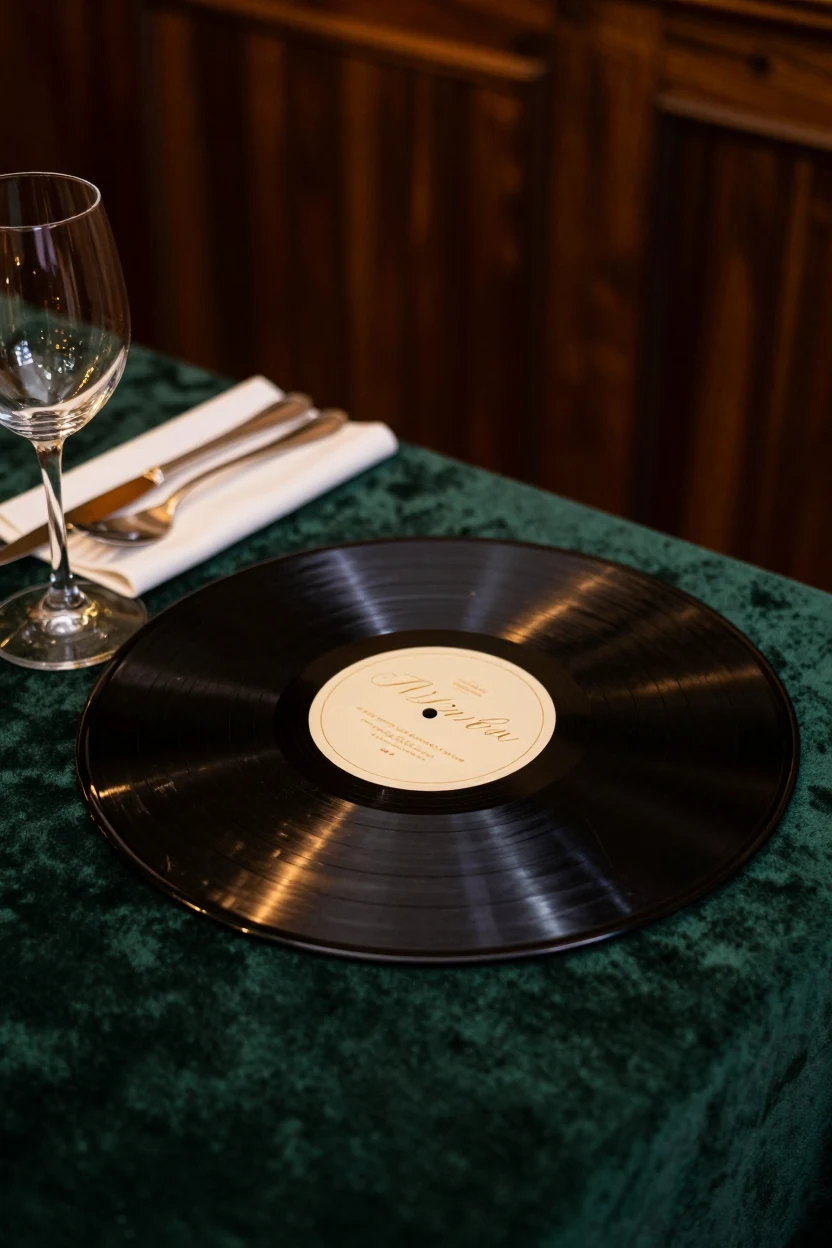
Transform standard seating assignments into tactile keepsakes by placing vinyl records at each setting. Instead of generic cardstock, print guest names in elegant calligraphy on custom adhesive labels sized to fit over the center spindle hole. This detail turns a functional seating aid into a memorable favor that guests can take home. The matte black surface of the record provides high contrast for gold or white ink, reinforcing the sophisticated jazz club aesthetic without overwhelming the table setting. Keep the rest of the place setting minimal, using simple glassware and a neutral linen to let the vinyl stand out as the focal point. This approach works well for smaller receptions where every guest has a dedicated seat. For a practical variation, use blank records with gold foil stamps for key family members or the wedding party, while standard guests receive printed labels. Ensure the records are clean and free of scratches to maintain a polished look. This detail adds a layer of curated retro charm that feels personal rather than generic.
4. Moody Amber Uplighting
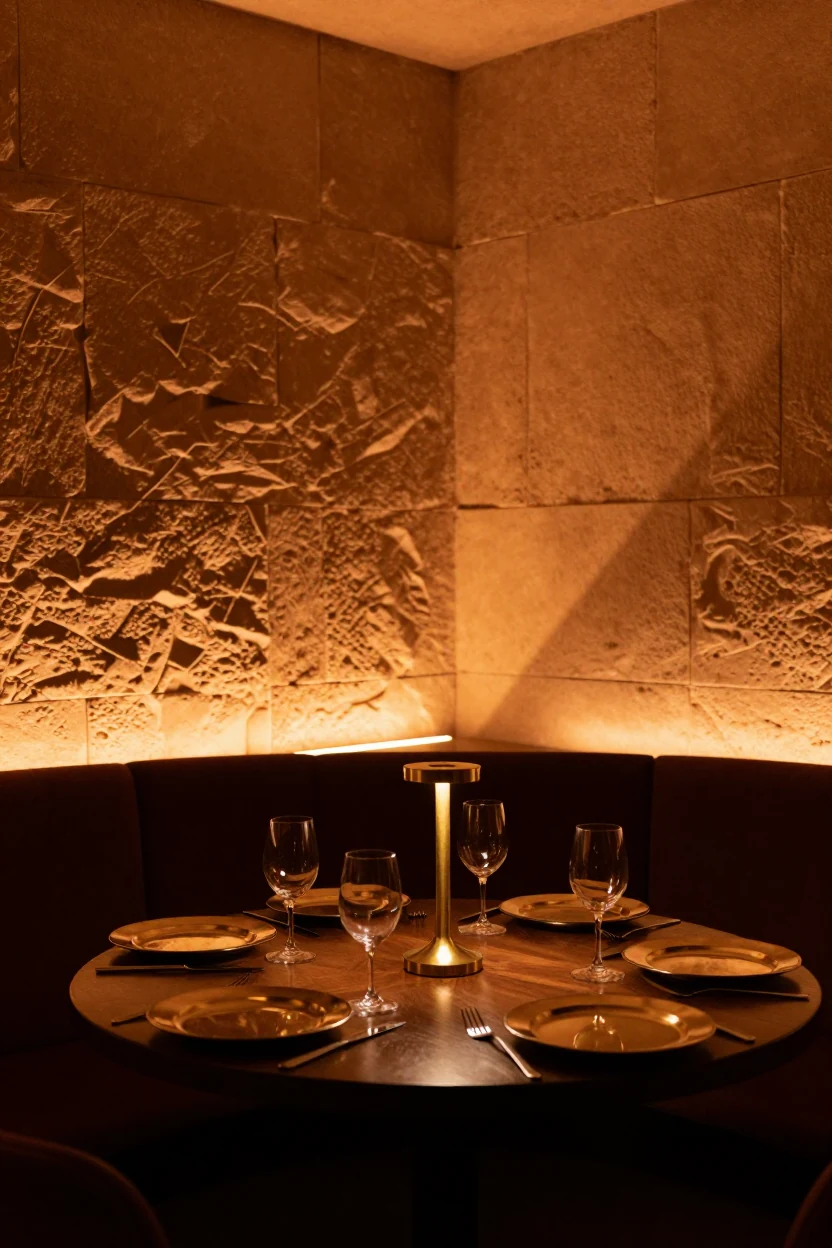
Transform a standard banquet hall into an intimate lounge by replacing harsh overhead lighting with floor-mounted uplighters. Position these units at the base of walls, columns, or behind heavy drapery to cast a warm amber, burnt orange, or soft violet glow upward. This technique obscures ceiling fixtures and creates deep, atmospheric shadows that emphasize architectural textures like brick or plaster. The dimmed environment encourages guests to linger in conversation rather than rush through dinner, mimicking the relaxed social energy of a late-night jazz session. Pair this lighting wash with gold-rimmed glassware and brass candlesticks on tables to reflect the colored light across the room. Ensure all electrical cords are taped down and routed away from walkways to maintain safety. This setup works well in venues with high ceilings, where standard lighting often feels sterile. It provides a cohesive visual backdrop that makes any table setting look intentional and sophisticated without requiring extensive floral installations.
5. Live Trio on a Raised Stage
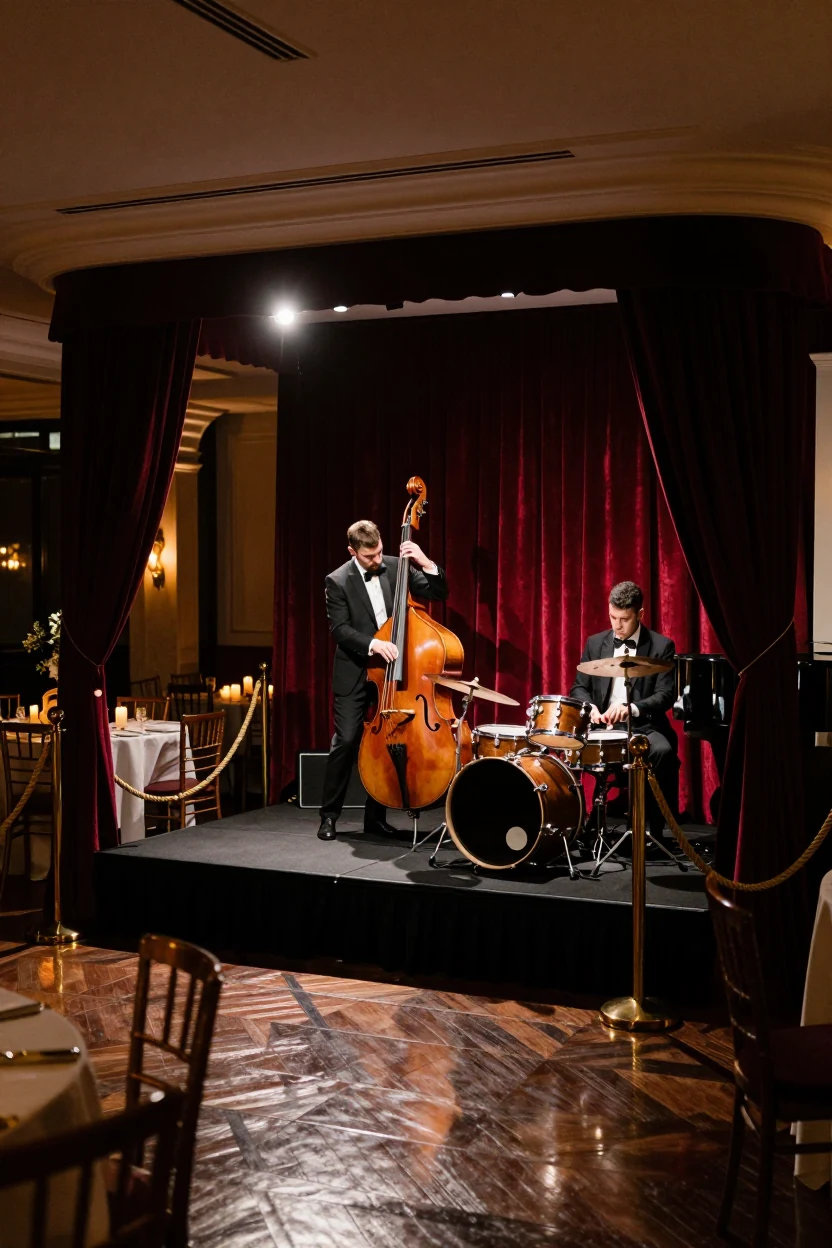
Transform one corner of your reception space into a dedicated performance area to anchor the evening’s atmosphere. Construct a low platform using sturdy plywood or carpeted risers, keeping the height low enough for safe sightlines and easy access for musicians. Drape the front edge with heavy velvet curtains in deep burgundy or midnight blue to add texture and absorb sound reflections. Position a live trio—upright bass, piano, and drums—with focused spotlights from above, cutting through the dimmed ambient room lighting. This creates a dramatic focal point without overwhelming the dinner tables. Use brass stanchions with velvet ropes to define the stage boundary, ensuring guest circulation remains clear while maintaining an exclusive feel. The contrast between the bright performers and the moody room keeps energy high during dinner, providing a sophisticated backdrop that feels more intimate than a standard DJ booth.
6. Retro Cocktail Bar Station
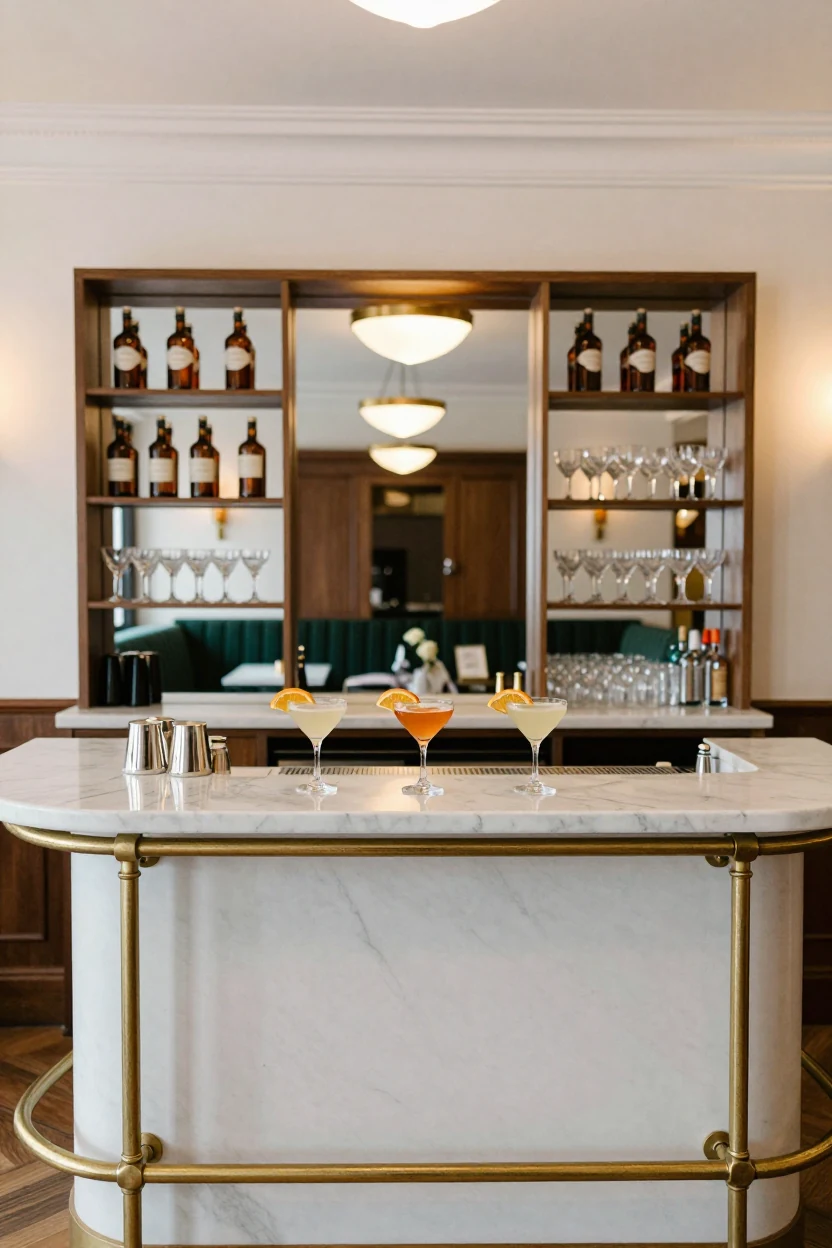
Anchor your bar area with a dedicated station styled to evoke the mid-century soda counter aesthetic. Use a solid marble or honed stone countertop paired with a polished brass rail that defines the service boundary clearly. Behind the bar, install a mirrored panel to reflect the ambient lighting and expand the visual depth of the room. Display vintage-inspired glassware on open shelves set into the mirror frame, keeping the arrangement sparse to maintain a clean line of sight.
Serve three signature cocktails with simple, evocative names like "The Blue Note" or "Velvet Swing." Garnish each drink with fresh citrus wheels or sprigs of dried rosemary to add vertical texture without clutter. The setup functions as a social hub, encouraging guests to gather and converse rather than remaining seated at their tables. This layout mirrors the communal energy of a classic jazz lounge while maintaining the practical flow needed for a wedding reception. Keep the bar counter clear of unnecessary decor to ensure efficient service during peak hours.
7. Smokey Wood and Dark Green Palette
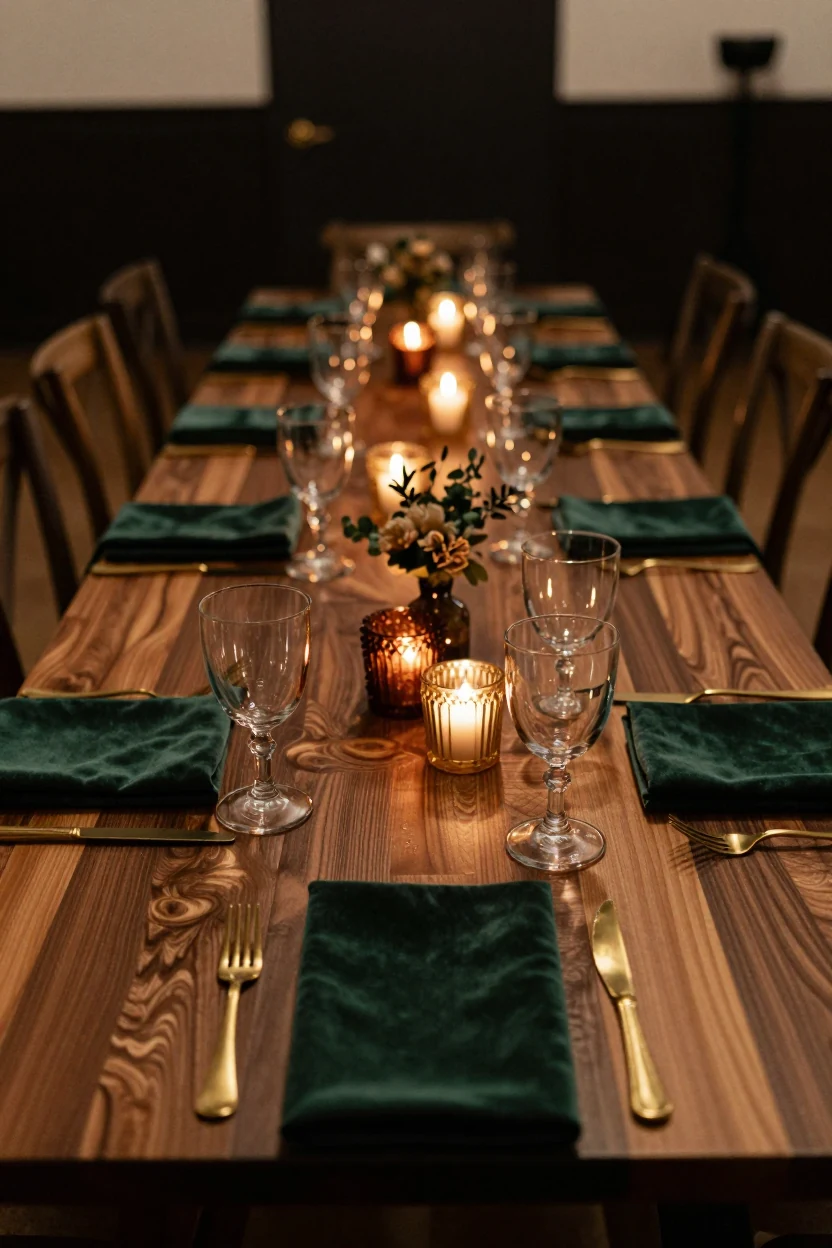
Anchor your reception design in a palette that absorbs light rather than reflecting it, creating an immediate sense of intimacy. Combine deep forest green velvet napkins with dark walnut wood table runners to establish a grounded, textural base. Layer this with gold-rimmed glassware and brass flatware to introduce just enough metallic warmth to catch the ambient glow. This specific color combination works because the matte fabrics and natural wood tones prevent the room from feeling overly bright, allowing the dim, moody atmosphere essential to a jazz club aesthetic to emerge naturally. The richness of the green provides a sophisticated backdrop that makes warm candlelight appear softer and more enveloping. If your venue features exposed brick or concrete walls, this palette offers a striking contrast that feels both modern and historic. For a variation, swap the velvet napkins for dark emerald silk if you want to maintain the color depth while introducing a subtle sheen that complements the gold accents without competing with the wood textures.
8. Vinyl Wall Feature
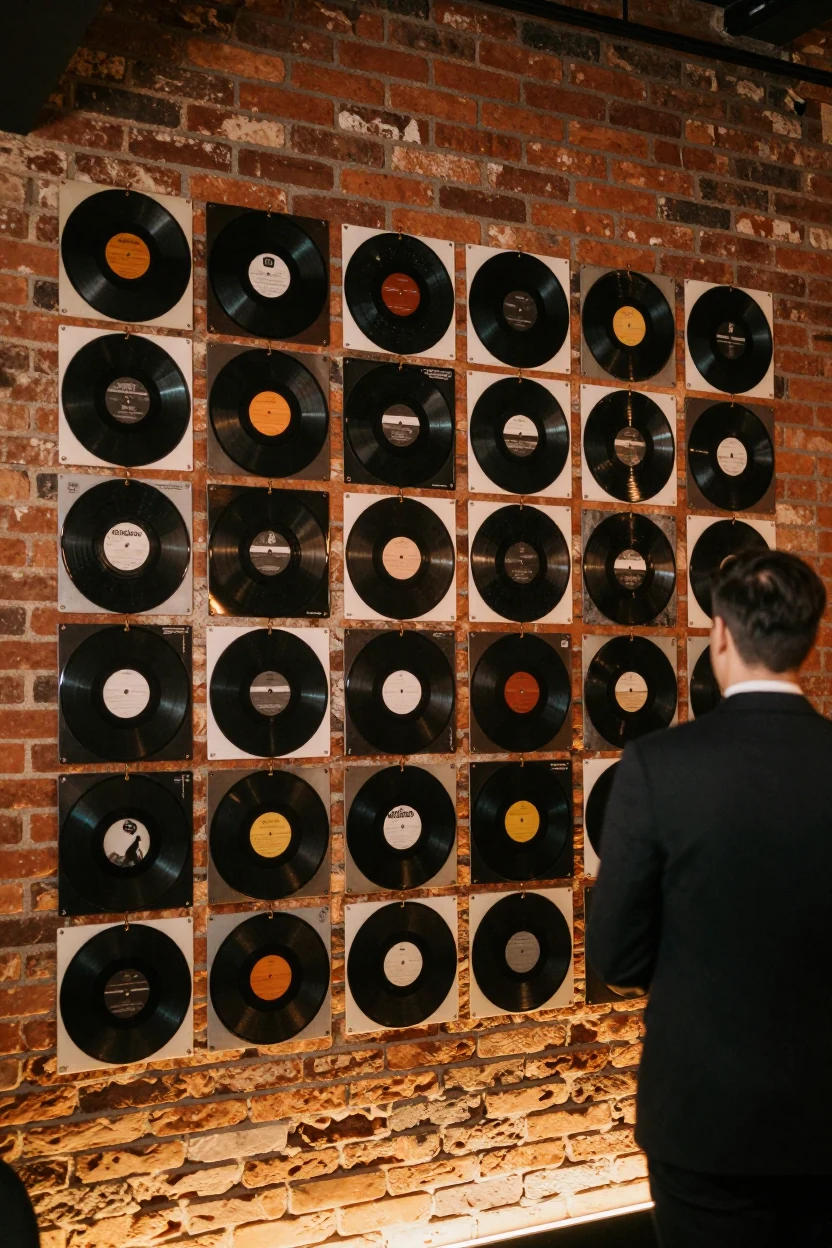
A grid of vintage vinyl records mounted on a textured brick wall creates a bold, monochromatic backdrop for the reception. The black-and-white sleeves provide strong visual rhythm against the warm, exposed masonry, serving as a non-floral focal point that contrasts with the soft, amber lighting in the room. Guests gather near this feature to pose for photos, using the textured surface to frame their portraits without the need for floral arrangements or heavy signage. The setup remains open to allow easy circulation, ensuring the wall does not obstruct sightlines to the dance floor or stage. For adaptation, source records from local thrift stores or music shops, varying sleeve designs to create a balanced patchwork. Mount them securely using small brass hooks or a wire frame system that distributes weight evenly across the wall surface. Keep the surrounding area free of clutter to let the pattern breathe, and position this feature opposite the head table or near the entrance where guests can easily access it during cocktail hour.
9. Intimate Round Table Layout
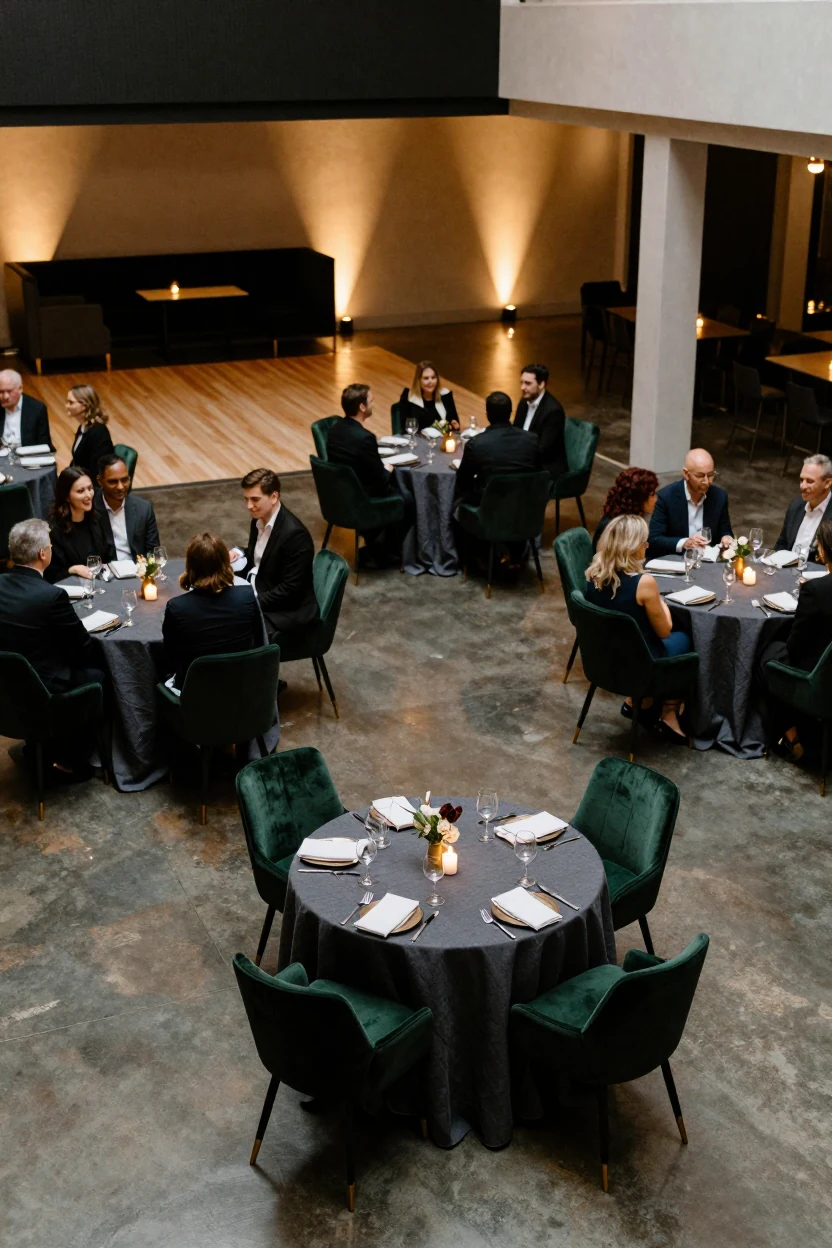
Swap rigid rectangular banquet rows for smaller round tables seating six to eight guests each. This arrangement mirrors the intimate booth layouts found in classic jazz lounges, breaking up large open spaces into conversational clusters that encourage connection. The layout creates a more relaxed dining experience, reducing the formal stiffness of traditional wedding seating while maintaining clear sightlines to any stage or bar area. Ensure ample spacing between tables to allow comfortable movement and preserve a generous dance floor area for dancing later in the evening. Pair these rounds with high-backed chairs upholstered in velvet or leather to reinforce the lounge aesthetic. This setup works particularly well in mid-sized ballrooms or converted industrial spaces where you want to maintain a sense of community rather than isolated dining islands. It transforms the reception from a static dinner into a dynamic social gathering, keeping the energy fluid and engaging throughout the meal.
10. Gold Leaf Menu Typography
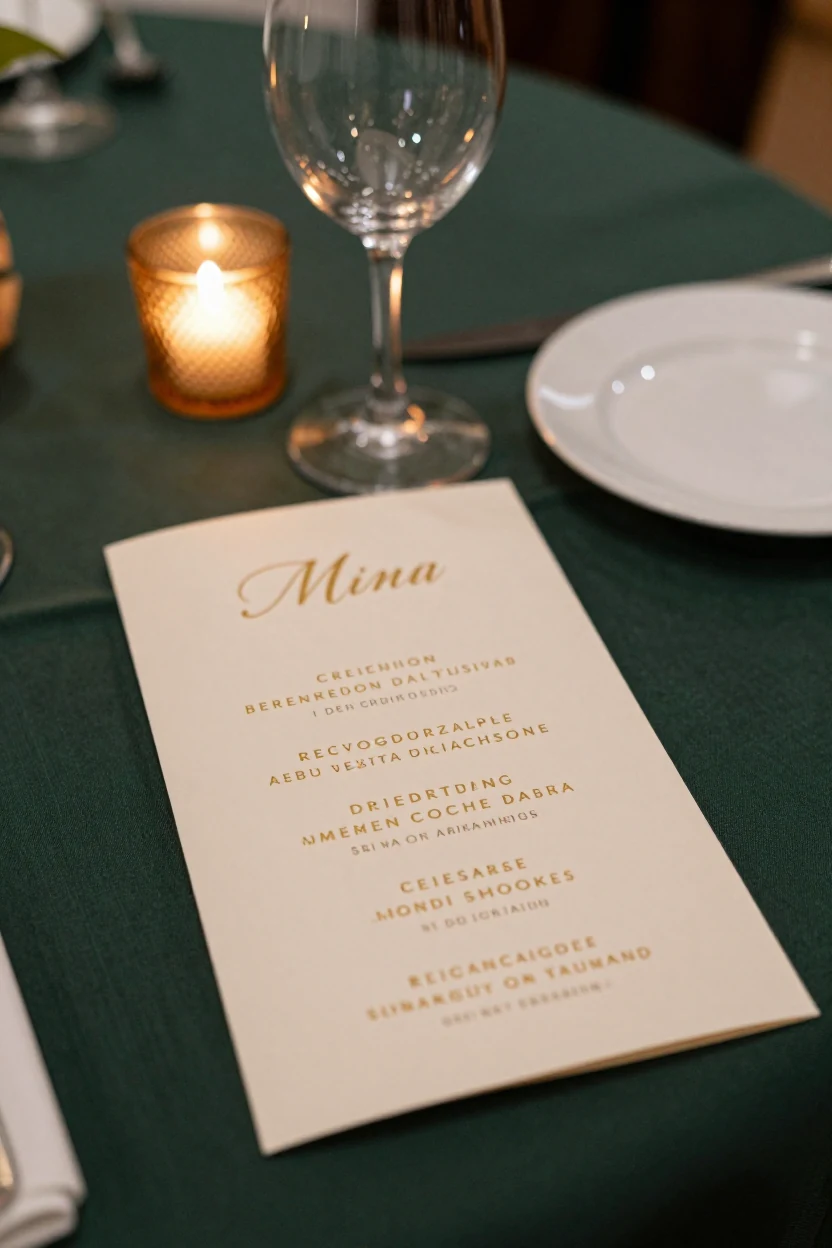
Treat the menu as a keepsake by printing it on thick cream or matte black cardstock with gold foil stamping. Choose a classic serif typeface that mirrors vintage playbill typography, ensuring the text remains legible while maintaining a retro elegance. Place these menus flat on the tablecloth, centered between glassware and dinnerware, so guests can easily read them. The metallic finish catches the warm glow of nearby votive candles, creating a subtle shimmer that complements the moody jazz club atmosphere without overpowering the room. This detail transforms a functional item into a curated piece of stationery that reinforces the sophisticated theme. For a cohesive look, match the foil color to other metallic accents in the venue, such as brass candle holders or gold-rimmed glassware. If your venue restricts loose paper items, consider mounting the menu on a small acrylic stand or tucking it under a weighted glass. This approach adds texture and visual interest to the table setting while keeping the overall aesthetic clean and intentional.
11. Bass Drum and Cymbal Decor
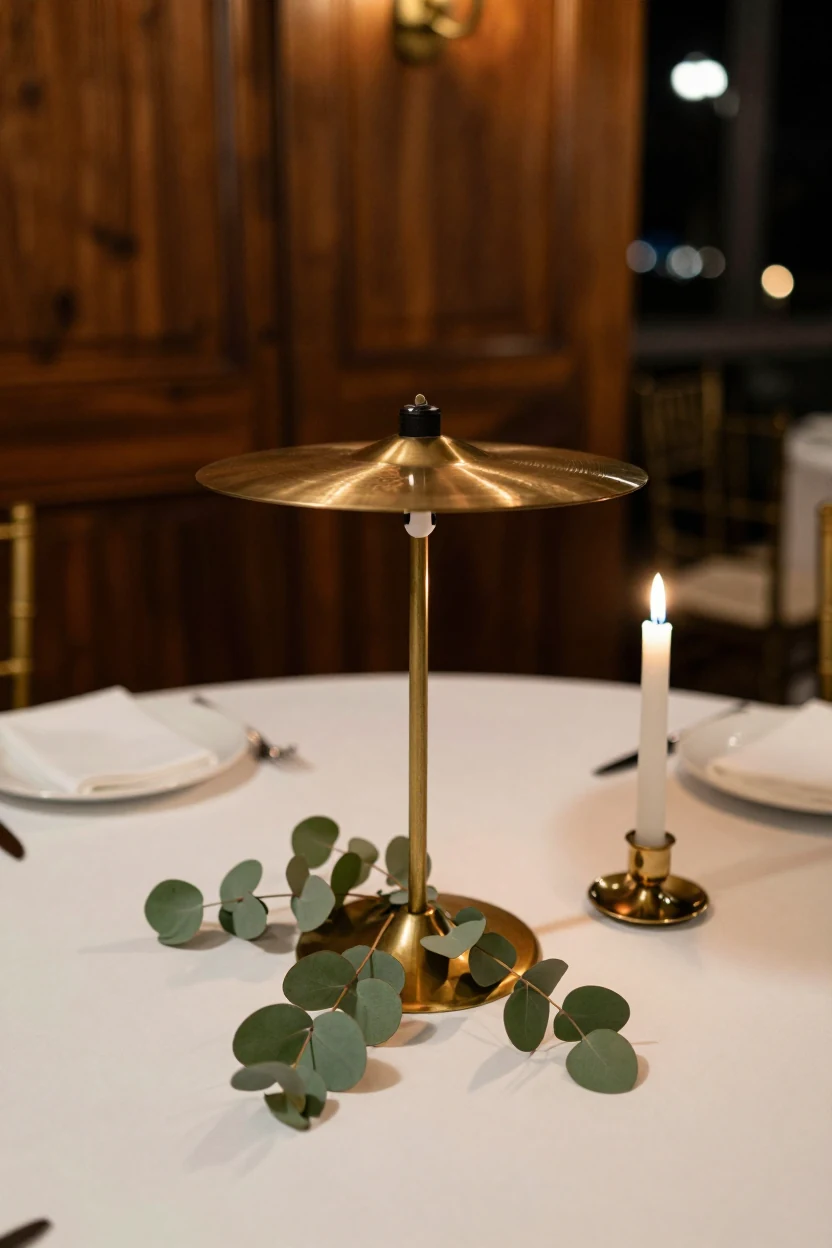
Replace standard floral arrangements with authentic musical hardware to ground your reception in the venue's history. A polished brass cymbal stand, positioned vertically on a table, serves as a striking, sculptural centerpiece. Its metallic sheen catches ambient light differently than glass or ceramic, offering warm, dynamic reflections that complement moody lighting schemes. Pair this industrial element with soft textures to prevent the look from feeling too harsh. Tuck small sprigs of eucalyptus or trailing ivy around the base to soften the metal edges and add organic movement. For a balanced composition on a 60-inch round table, place the stand slightly off-center, allowing space for a single taper candle in a brass holder. The visual contrast between the rigid, geometric instrument part and the fluid greenery creates an artistic focal point that feels curated rather than decorative. This approach works best when used sparingly; limit these unique accents to a few signature tables or the head table so they remain distinct features rather than overwhelming the entire room. It is a tactile way to tell the story of your love for live music.
Choosing Your Lounge Elements
Selecting the right combination depends on your venue’s architecture and your budget for rentals versus DIY decor. If your space lacks character, prioritize amber uplighting and a vintage record wall feature to create immediate atmosphere. For smaller receptions, focus on intimate round tables and live trio staging to maintain a fluid social energy. Always verify fire safety regulations regarding open flames and ensure that heavy velvet drapery or brass fixtures are securely installed by professionals. By mixing these tactile textures with practical layouts, you can craft a reception that feels both curated and comfortable.
