12 Fall Wedding Centerpiece Ideas Featuring Real Leaves
Real leaves offer a direct connection to autumn’s seasonal shift, providing texture and color without the formality of cut flowers. This collection of twelve centerpiece concepts focuses on practical execution, helping you visualize how specific leaf varieties interact with table linens, lighting, and venue architecture. Each idea addresses distinct setup constraints, from maintaining clear sightlines at long banquet tables to ensuring stability in outdoor settings. Whether you prefer a minimalist slate tray or a rustic wooden bowl, these designs prioritize realistic arrangements that complement your existing decor rather than competing with it.
1. Loose Cluster of Red and Amber Maple Leaves
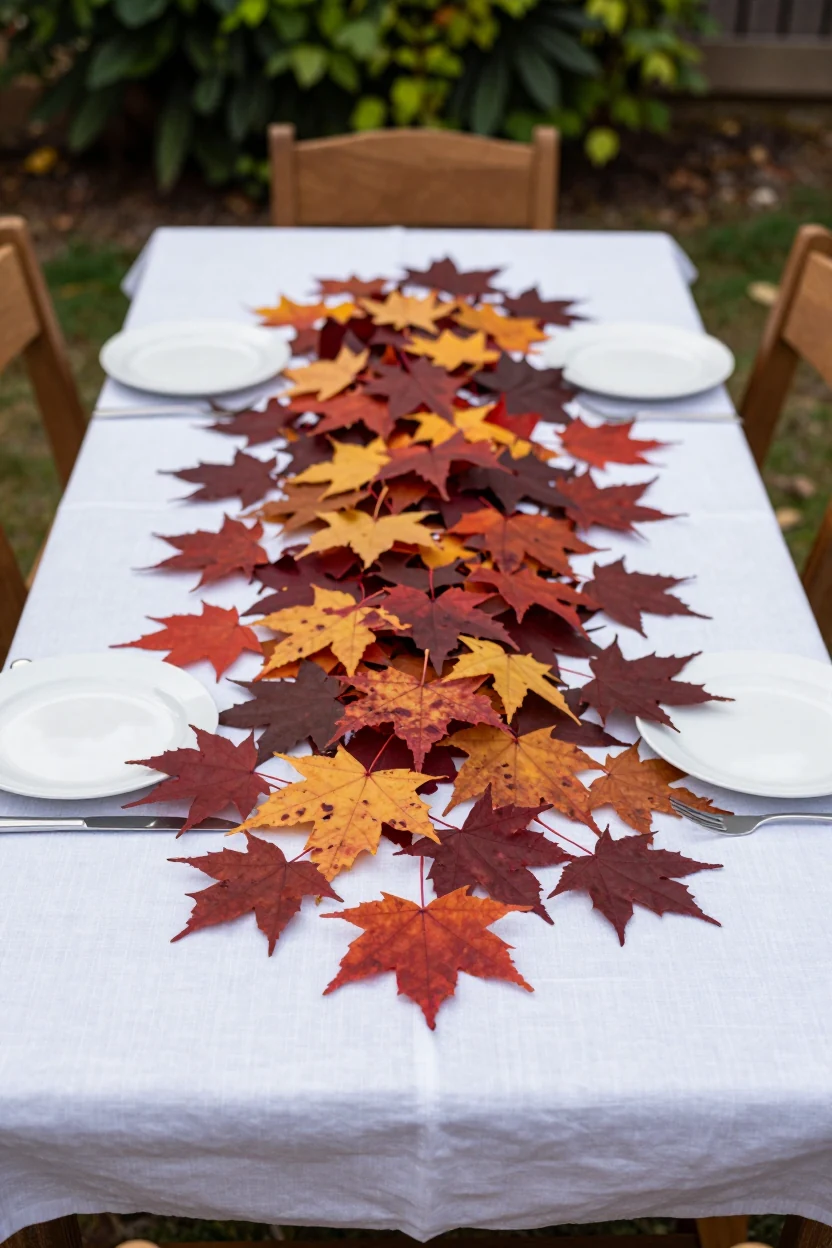
This minimalist arrangement relies on volume and color rather than structure. Spread a generous, loose cluster of vibrant red and amber maple leaves directly across the center of a rectangular table dressed in crisp white linen. Leave no vase or container visible; the leaves should appear naturally gathered, creating an organic, textured focal point that mimics foliage collected from a nearby park path. This setup works best for daytime outdoor or rustic ceremonies where natural light highlights the intricate vein details and varied hues of the leaves. Pair the table with simple wooden chairs and unadorned ceramic dinnerware to keep the focus on the raw texture of the foliage. For a cohesive look, incorporate similar loose leaf accents in the aisle markers or ceremony backdrop. This concept offers a striking visual contrast against neutral linens and is easily adaptable by substituting oak or sycamore leaves if maple is not available locally.
2. Layered Eucalyptus and Dried Seed Pods
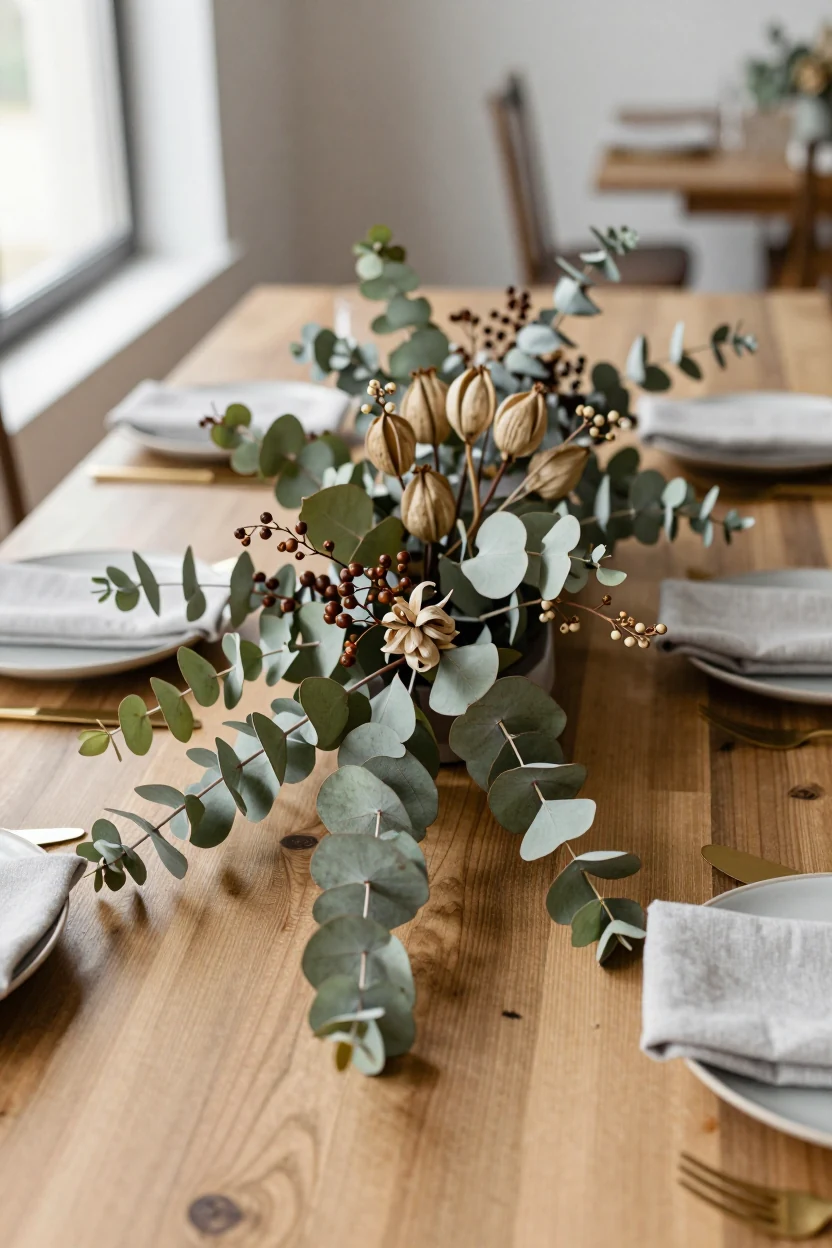
This low-profile arrangement centers on dried eucalyptus branches interwoven with delicate seed pods and small brown berries, creating a textural contrast without relying on bright colors. The muted olive greens and tan earth tones form a sophisticated neutral backdrop that allows other table settings to shine. Ideal for modern or bohemian receptions, the matte finish of the preserved foliage adds depth while maintaining visual calm. The design sits flat against the table surface, keeping sightlines open for guests across the room. To recreate this look, gather mixed dried botanicals and arrange them loosely in a shallow ceramic bowl or low wooden tray. Pair with unbleached linen napkins and matte stoneware plates to maintain the organic feel. This setup works best on long rectangular tables where guests can see each other clearly. The arrangement serves as a subtle anchor rather than a focal point, encouraging conversation. It pairs well with simple taper candles in brass holders placed at the table ends, provided the venue allows open flames. For a variation, swap the brown berries for small pinecones to enhance the autumnal texture.
3. Amber Glass Bowl with Floating Maple Leaves
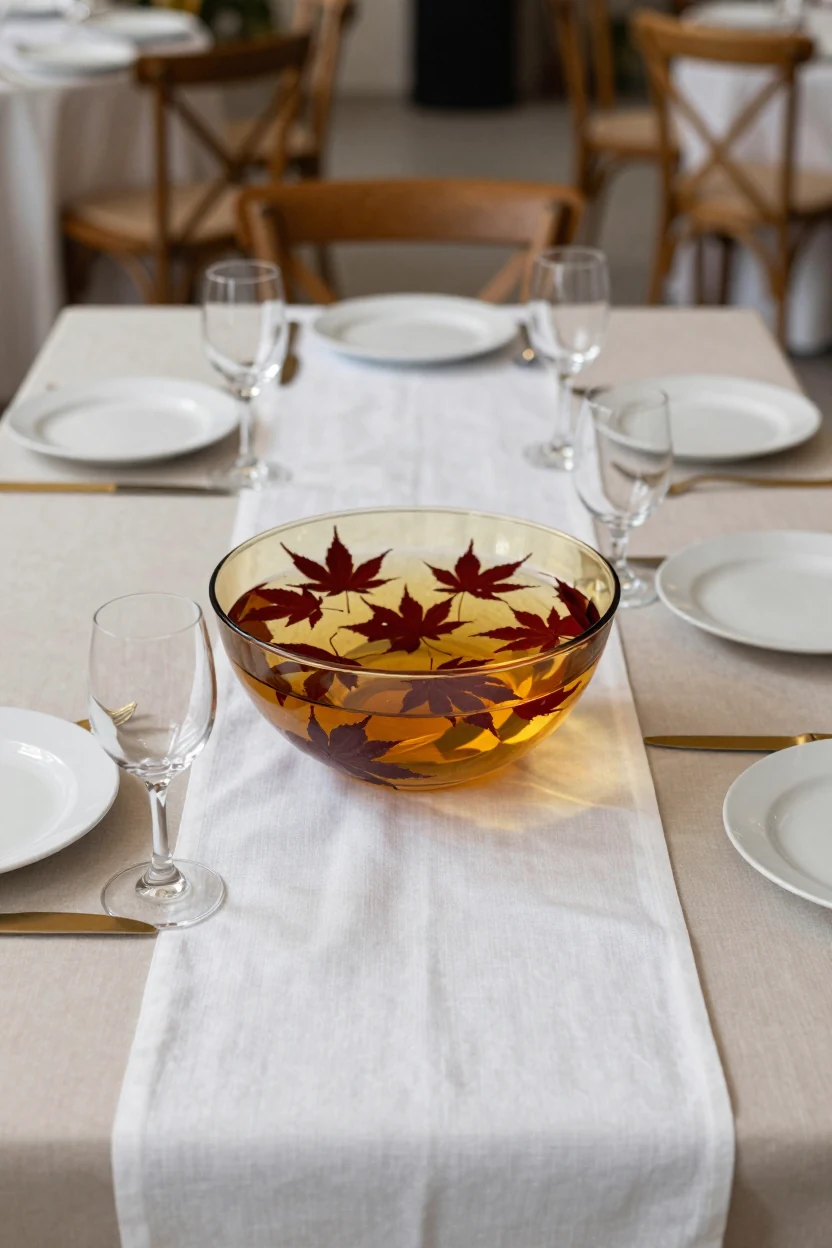
This centerpiece uses a wide, low-profile amber glass bowl to anchor the table setting. Fill the vessel with clear water and submerge three to five vibrant red maple leaves. The water creates a reflective surface that catches ambient light, adding subtle movement without the visual weight of a traditional floral arrangement. Place the bowl on a crisp white linen runner over a neutral tablecloth to maximize the contrast of the amber tones. This setup works best for rectangular banquet tables where guests can view the reflection from multiple angles. Keep the surrounding place settings minimal with simple ceramic dinnerware and unadorned glassware to let the foliage remain the focal point. For lighting, rely on natural daylight or warm overhead pendant lights that cast a golden glow through the glass. Avoid adding candles directly into the water, as this creates a fire hazard and complicates cleanup. This style suits modern indoor venues with polished wood or marble surfaces.
4. Rustic Wooden Bowl of Oak Leaves
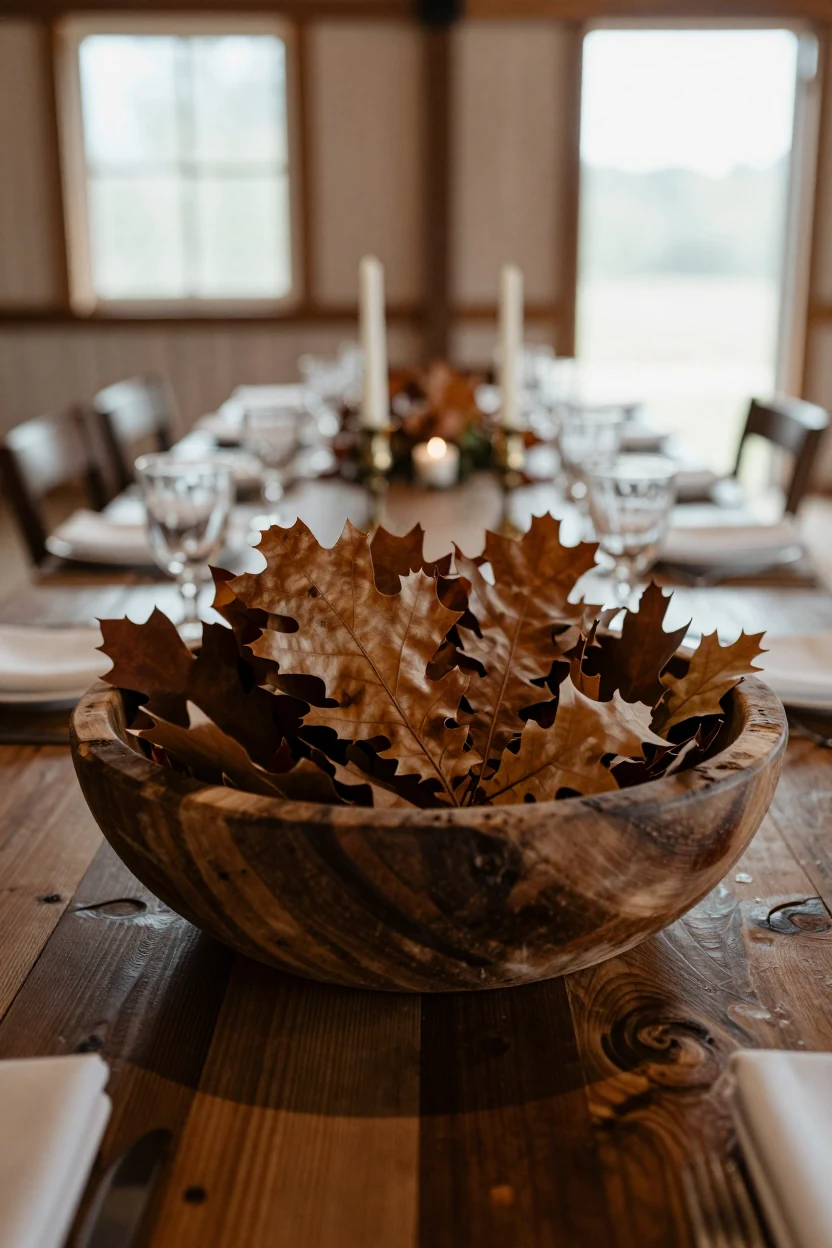
This centerpiece uses a heavy, rough-hewn wooden bowl to ground the table setting, filled densely with large, dark brown oak leaves. The broad, flat foliage contrasts sharply with the rugged texture of the wood, creating an earthy aesthetic suitable for barn or backyard venues. To recreate this look, select a sturdy vessel that can support the weight of the arrangement without tipping. Pair the centerpiece with neutral linen napkins and simple glassware to keep the focus on the natural textures. The height should remain low, allowing guests to see each other across the table. This setup works well in autumn months when dried oak leaves are readily available or preserved from earlier harvests. Avoid adding flowers or candles directly into the leaf pile, as this can obscure the structural beauty of the foliage. Instead, place candlesticks on either side of the bowl for balanced lighting. The result is a durable, grounded display that complements casual attire and rustic venue features without requiring complex floral mechanics.
5. Low Greenery Bed with Scattered Sycamore Leaves
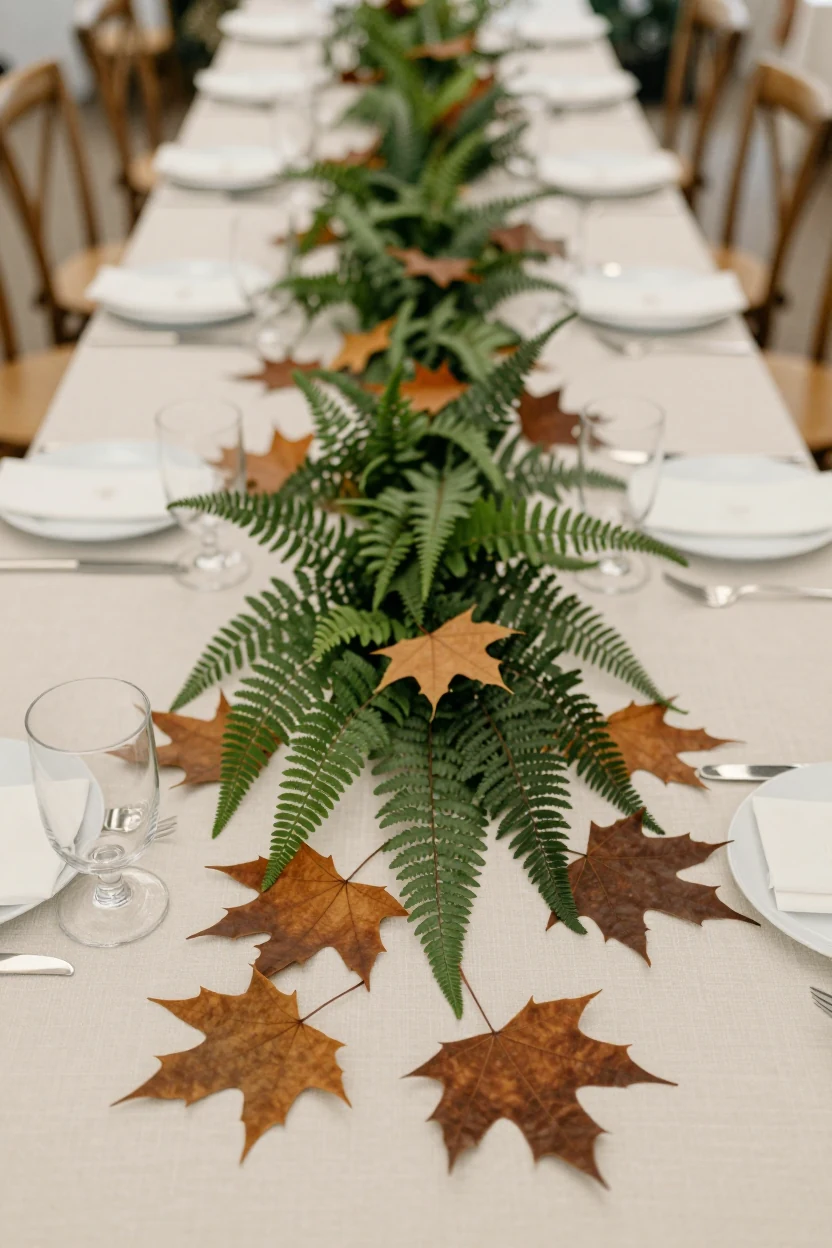
This centerpiece design relies on texture contrast rather than height to define the table. A continuous strip of asparagus fern trails down the center of a long banquet table, creating a soft, organic foundation that unifies the room without obstructing conversation. Large, star-shaped sycamore leaves in shades of amber and rust are scattered loosely across the greenery, their bold silhouettes providing visual anchors against the delicate fern fronds. The arrangement remains low to the table surface, ensuring clear sightlines for guests seated on opposite sides. Pair this look with crisp white or cream linen and simple glassware to let the natural materials stand out. If sycamore leaves are difficult to source in your region, any broad-leaf deciduous tree found in late autumn can serve as a suitable substitute. This layout works best for rectangular tables where a long, unbroken line of greenery helps guide the eye through the reception space.
6. Copper Vase with Rustic Leaf Garland
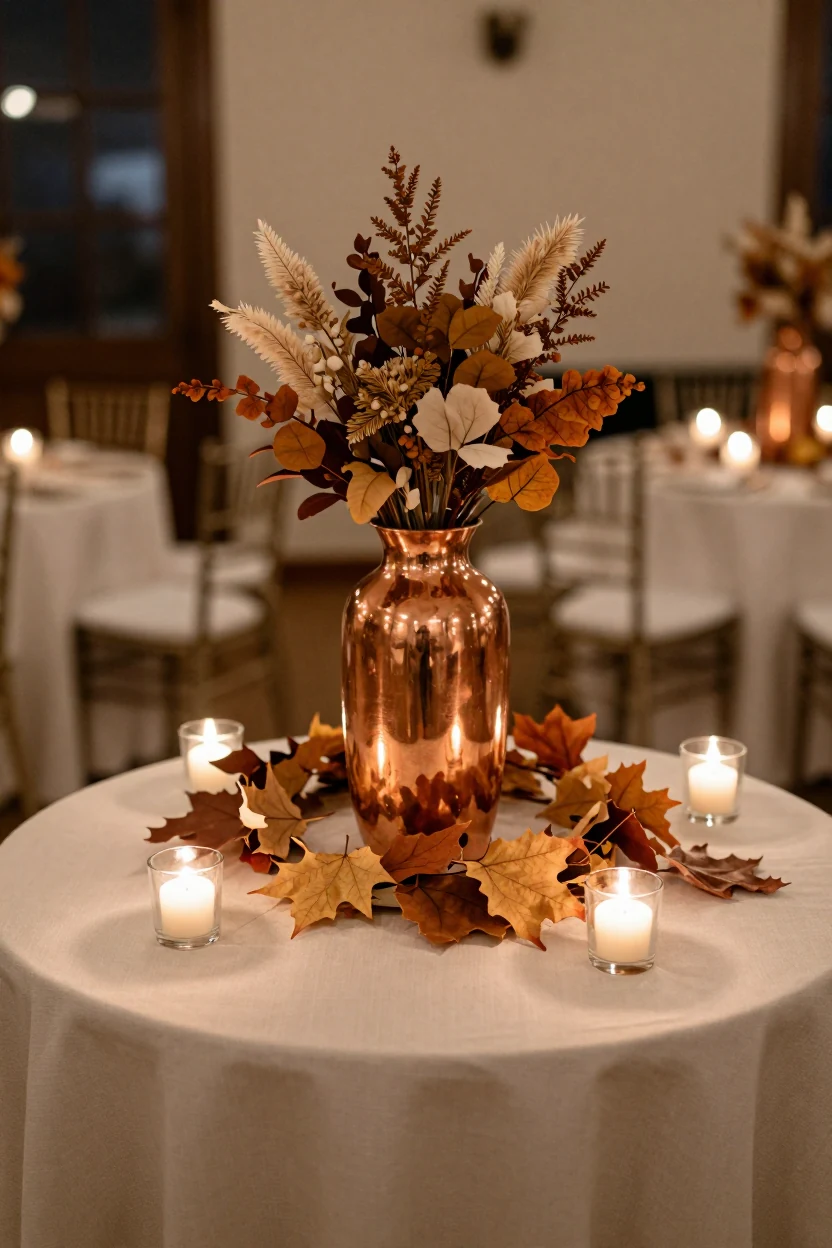
A polished copper vase serves as the anchor for this rustic yet refined centerpiece, holding a modest arrangement of dried blooms in muted ochre and cream tones. A loose garland of mixed autumn foliage, including ash and maple leaves, wraps around the base of the vessel, creating a textural contrast between the smooth metallic surface and the matte, organic leaves. The setup is designed for evening receptions, where warm uplighting enhances the reflective quality of the copper. Place this centerpiece on a round table draped in ivory linen, surrounded by small votive candles in glass holders to maximize the glowing effect. This design works best when paired with simple white dinnerware and minimal flatware, allowing the metallic sheen and natural leaf textures to remain the focal point.
7. Mason Jar Trio with Preserved Leaves
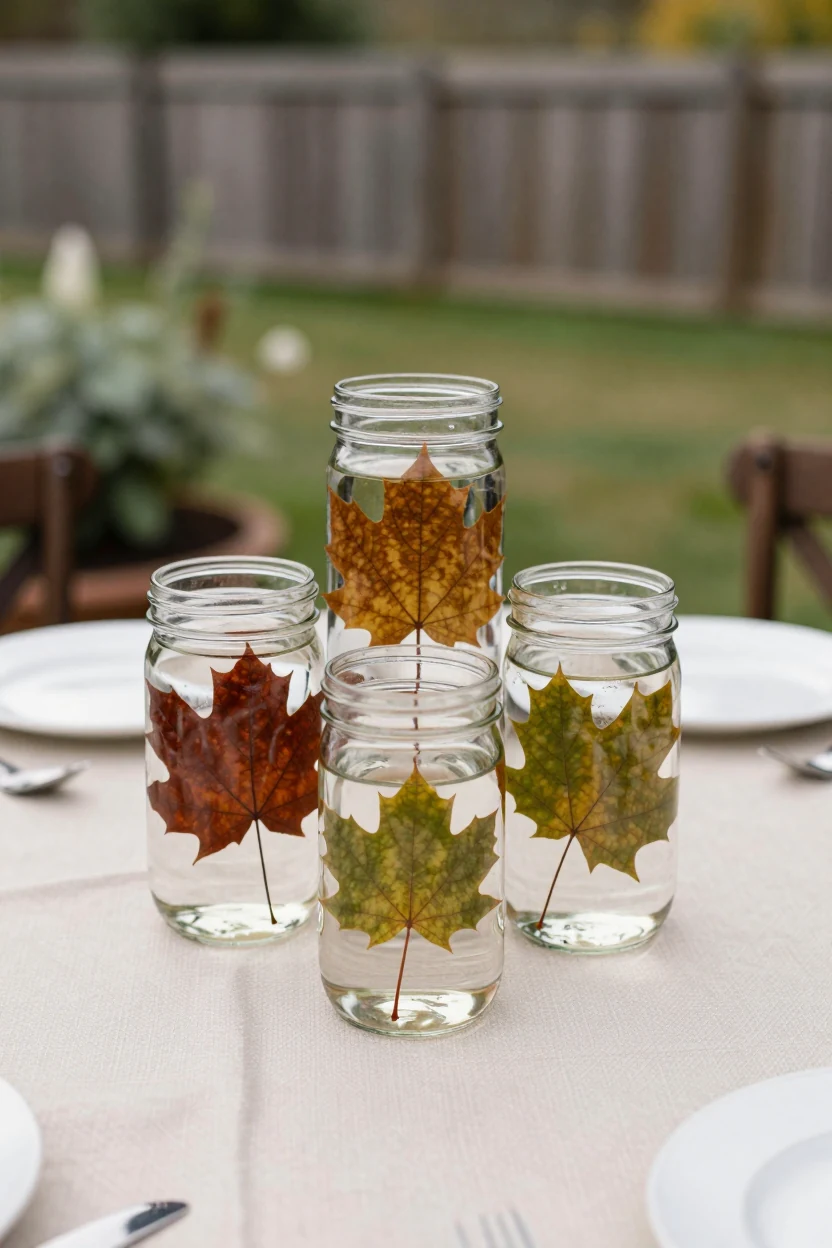
This centerpiece uses three clear mason jars of staggered heights to hold preserved leaves that have been treated to retain their rigidity and deep autumnal hues. The glass vessels allow guests to see the submerged stems, creating a vertical botanical element that feels grounded yet airy. Because the leaves are preserved rather than fresh, they maintain their shape without wilting, making this option particularly reliable for outdoor garden receptions where humidity might compromise live foliage. The transparency of the jars contrasts nicely with the solid, matte finish of the ceramic dinnerware and the soft texture of natural linen napkins. This setup works well on round tables where it does not obstruct eye contact across the setting. It suits casual to semi-formal fall weddings, particularly those in parks, backyards, or rustic barns where a relaxed aesthetic is desired. You can coordinate the leaf colors with your invitation suite or bridesmaid dresses by selecting specific shades of rust, gold, or olive. For a cohesive look, place the jars on a simple wooden tray or directly on the tablecloth to keep the visual focus on the botanical details rather than the container.
8. Dark Slate Tray with Single Statement Branch
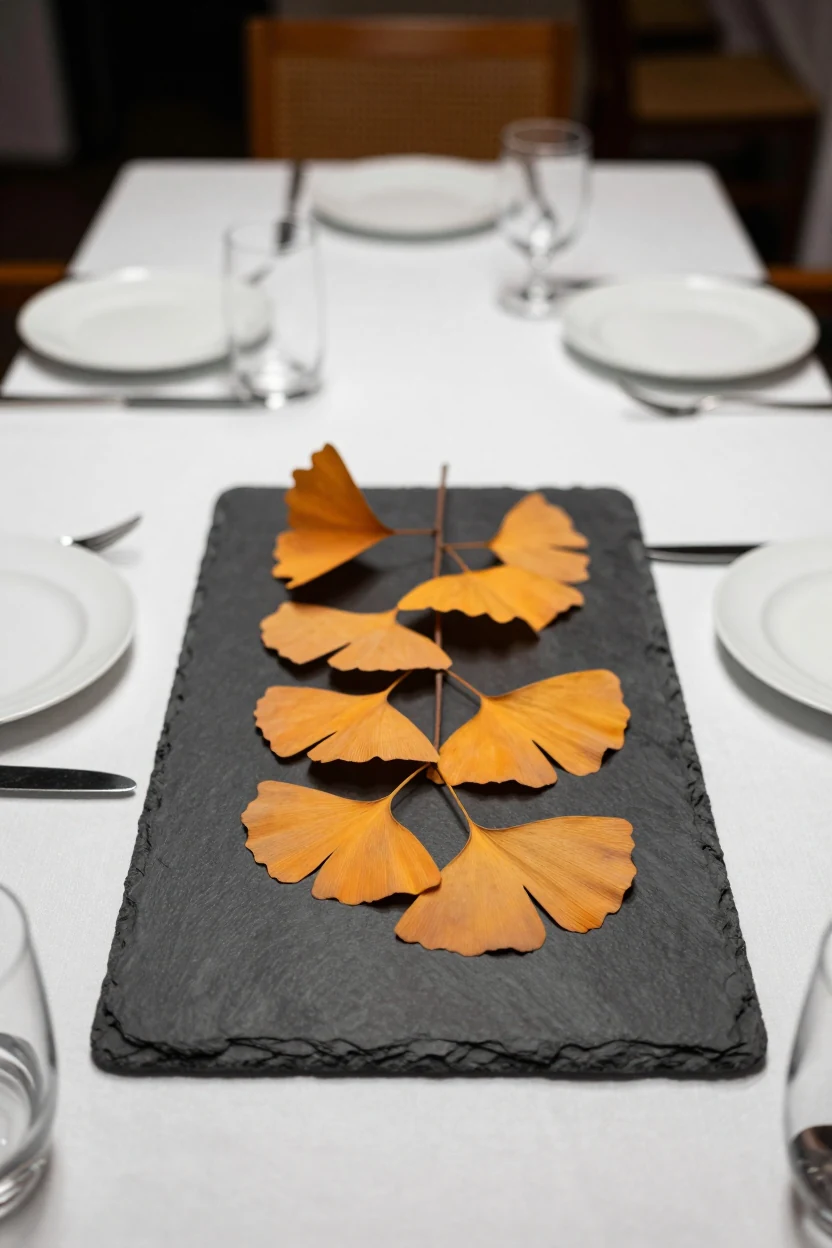
This centerpiece replaces traditional floral abundance with architectural restraint. A long, rectangular tray of polished dark slate sits flush on a crisp white linen runner, anchoring the table setting. Resting diagonally across the stone is a single, substantial branch bearing large, fan-shaped ginkgo leaves in shades of burnt orange and deep russet. The matte texture of the dried foliage contrasts sharply with the smooth, cool surface of the slate. This low-profile arrangement keeps sightlines clear for conversation, making it ideal for formal indoor venues or modern ballrooms that favor clean lines over volume. The visual impact comes from the negative space around the branch, allowing the intricate leaf structure to act as a sculptural element rather than a dense cluster. Pair this setup with simple white dinnerware and unadorned taper candles at varying heights to maintain the sleek aesthetic without overwhelming the focal point.
9. Woven Wicker Basket with Mixed Foliage
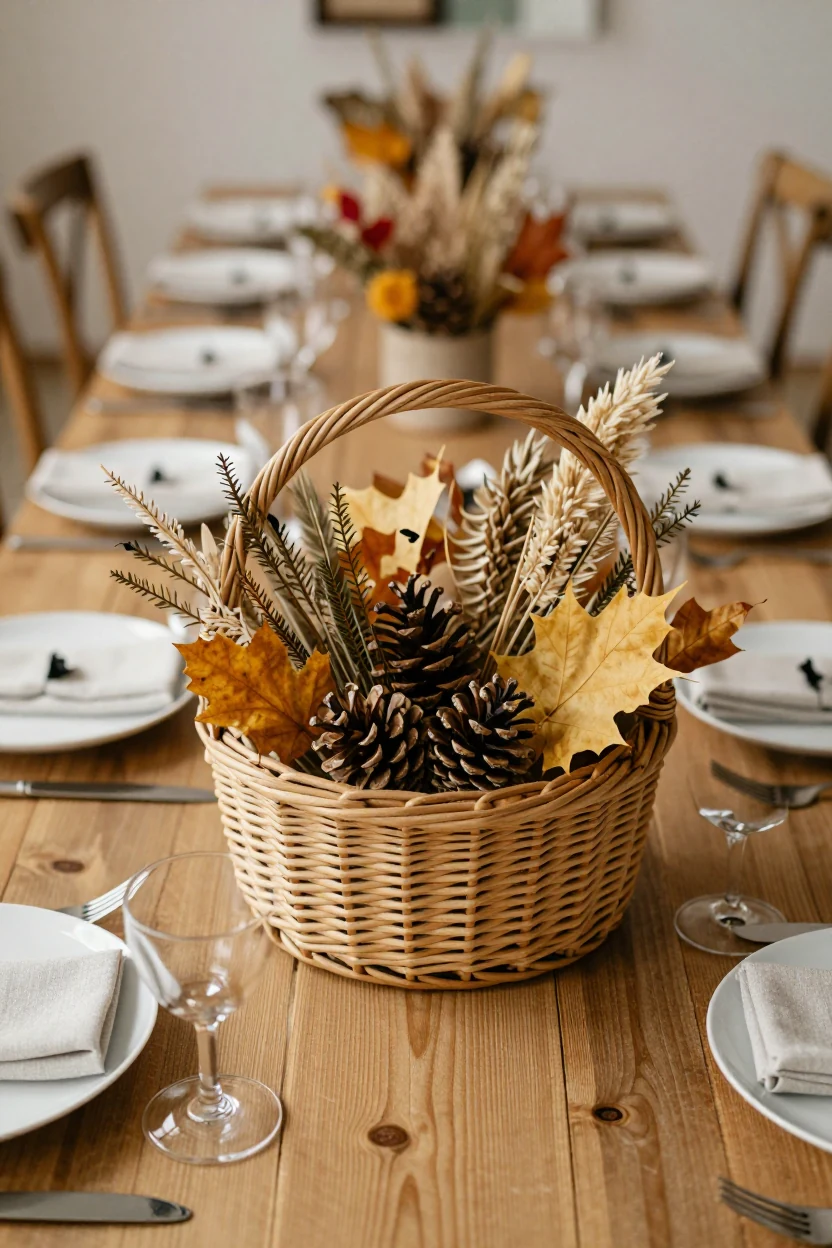
A shallow, round wicker basket sits centrally on a natural wood table, filled to the brim with a textured mix of dried grasses, small pine cones, and scattered autumn leaves in shades of gold and brown. The natural fiber of the basket adds warmth and tactile depth, creating a cozy atmosphere ideal for intimate dinners or rehearsal events. Surrounding the basket, simple white ceramic plates rest on a neutral linen runner, allowing the earthy tones of the foliage to stand out without competing with excessive decor. This low-profile arrangement keeps sightlines open between guests while anchoring the table setting with organic texture. To adapt this concept, select a sturdy wicker base that matches your venue's rustic aesthetic and fill it with a balanced mix of dried elements to ensure longevity. The design works best when paired with warm, ambient lighting, such as pillar candles placed at safe distances, enhancing the inviting feel without overwhelming the natural materials.
10. Glass Cylinder with Stacked Leaf Layers
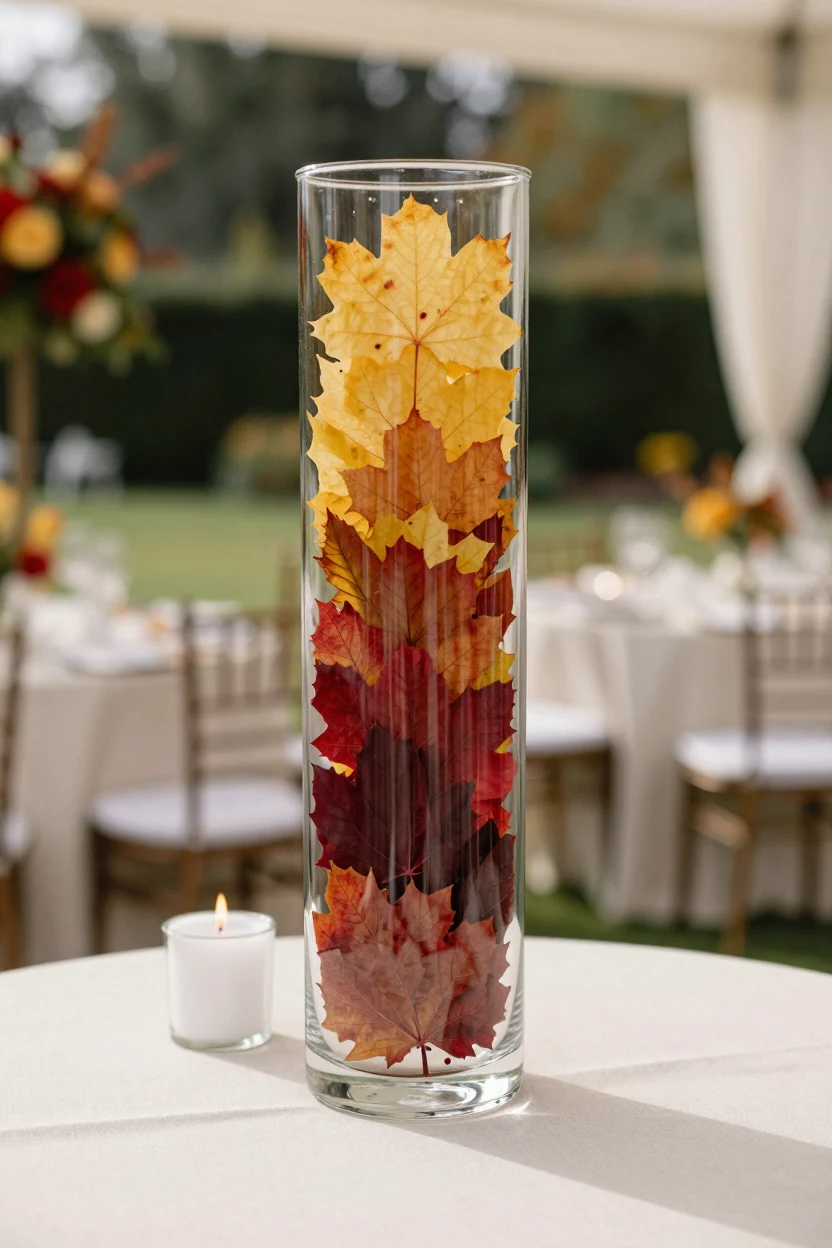
This architectural centerpiece uses a tall, clear glass cylinder to organize preserved leaves into distinct horizontal layers, creating a vertical gradient that shifts from deep mahogany at the base to bright amber near the top. The transparency of the vessel highlights the texture and color depth of the foliage, turning natural elements into a structured design feature rather than a loose arrangement. Because the cylinder is narrow and tall, it works best on cocktail tables, head tables, or bar counters where height adds visual interest without blocking guests’ line of sight across lower dining tables. Pair this setup with neutral linen tones, such as warm ivory or taupe, to allow the leaf colors to stand out without competing patterns. The rigid structure of the glass ensures stability on uneven surfaces, making it a reliable choice for outdoor or rustic venues where wind might disturb lighter arrangements. You can adapt the color story by selecting leaves that match your specific palette, ranging from golden yellow to burnt orange. This design offers a modern, gallery-like aesthetic that feels curated rather than casual, providing a striking focal point that complements minimalist table settings.
11. Ceramic Bowl with Water and Lily Pads
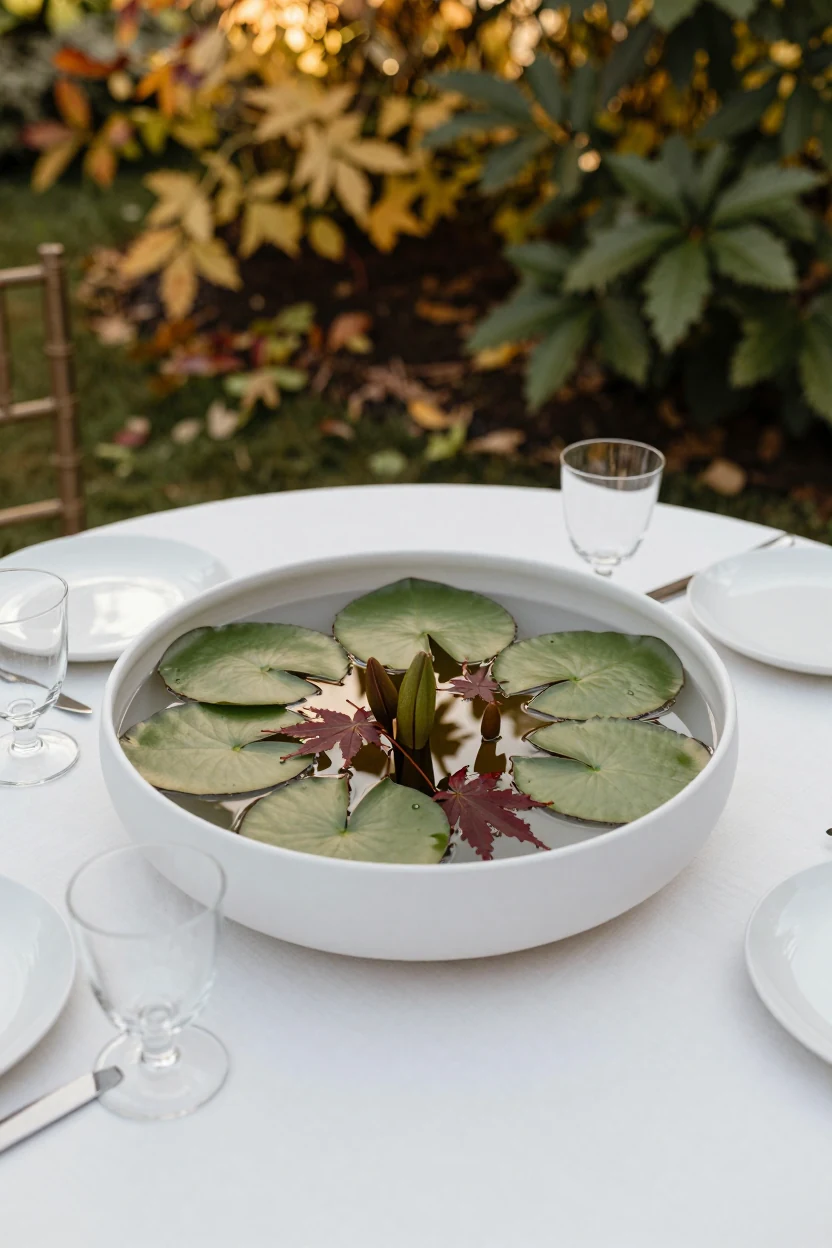
This serene centerpiece replaces traditional floral volume with reflective tranquility. A wide, low ceramic bowl in matte white holds clear water, supporting several large, round lily pads. Beneath the surface, vibrant red maple leaves are tucked under the green discs, creating a striking contrast between smooth organic curves and jagged autumn edges. The composition sits flush on a crisp white linen tablecloth, allowing guests to see one another across the table easily. This design suits daytime outdoor weddings where natural light enhances the water’s clarity. To adapt this, source large lily pads from local garden centers or botanical gardens during peak fall season. Keep the bowl shallow and wide to prevent tipping. Pair with simple glassware and minimal candlelight to maintain the airy, calm atmosphere. This setup works best on round tables where sightlines remain unobstructed by tall stems.
12. Antique Frame with Pressed Leaves
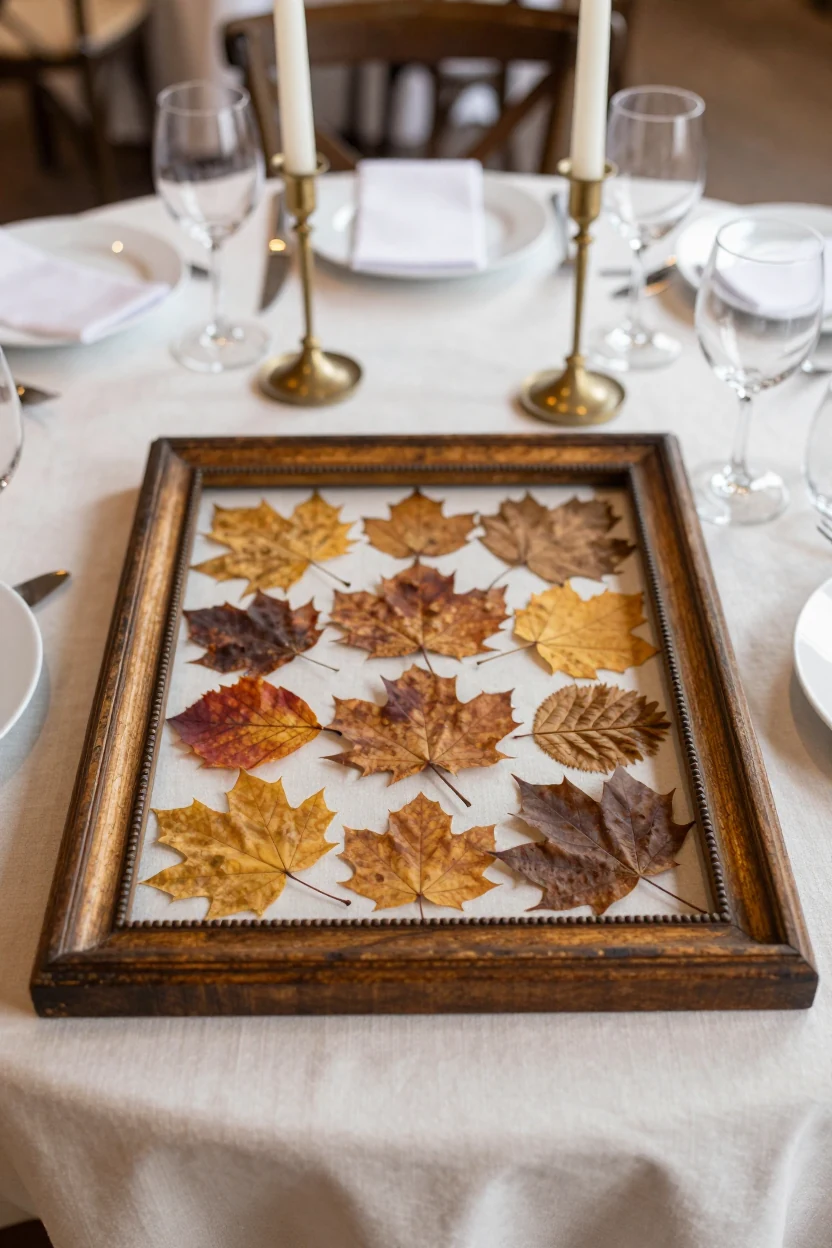
This artistic centerpiece replaces traditional floral arrangements with a repurposed antique picture frame lying flat on the table surface. Inside the frame, pressed autumn leaves are arranged in a dense mosaic pattern, showcasing intricate vein details and muted earth tones. The wooden frame adds vintage character, creating a focal point that feels personal and curated rather than generic. This setup works best on neutral linen backdrops, allowing the texture of the paper and wood to stand out. It is an ideal choice for couples who want to incorporate family heirlooms or vintage finds without the maintenance of fresh flowers. The low profile keeps sightlines open across round tables. To recreate this look, source pressed leaves from botanical shops or craft stores, ensuring they are flat and preserved. Arrange them by color gradient within the frame before securing with archival glue. Pair with simple white dinnerware and taper candles in brass holders to maintain a refined aesthetic.
Selecting the Right Leaf Style
Choosing the right centerpiece depends on balancing aesthetic preference with practical venue constraints. Consider how light interacts with your chosen materials; reflective glass works well in dim evening settings, while matte wood suits bright daytime events. Ensure your selected height allows guests to see one another across the table, and verify that any open flames are placed safely away from dried foliage. Adapt these ideas by swapping leaf species based on local availability, ensuring your final design remains cohesive with your overall color palette and venue character.
